
Tag: Curating Art

How to Convince Your Partner on an Art Purchase: A Curator’s Guide to Shared Collecting

What if the most significant investment in your home isn’t the architecture, but the silent stories hanging upon its walls? You likely understand the delicate tension that arises when your passion for a Slim Aarons poolside scene or a legendary Terry O’Neill portrait meets your partner’s hesitation over the investment or the intricacies of bespoke framing. The process of convincing your partner on art purchase decisions often feels like navigating a complex gallery negotiation rather than a simple home decor choice. It’s common to feel a sense of anxiety when trying to explain why a specific silver gelatin print is a lasting legacy rather than a fleeting household expense. Art should unite a home, not divide it.

This guide offers the sophisticated strategies you need to align your aesthetic visions and justify the investment in world-class fine art photography. We’ll examine how to articulate the technical superiority of archival production, the historical significance of our music archives, and the transformative impact of professional curation on your environment. By the end of this exploration, you’ll possess the vocabulary of a seasoned collector to transform a point of contention into a shared journey of discovery. Together, you can curate a collection that reflects your collective identity and honors the heritage of the medium.

Key Takeaways

  • Understand how to navigate differing tastes by utilizing “bridge pieces” that connect personal nostalgia with contemporary aesthetics.
  • Master the strategy of convincing your partner on art purchase by reframing high-end photography as a multi-decade investment in your home’s soul.
  • Discover how to justify the premium of museum-quality archival prints and bespoke framing using the long-term “Cost Per Year” framework.
  • Utilize practical visualization tools and the “Tape Method” to provide a concrete sense of scale and presence before committing to a significant piece.
  • Explore how iconic imagery from music archives or the Slim Aarons collection can act as a sophisticated neutral ground for shared collecting.

The Psychology of Shared Curation: Why Art Disagreements Happen

Art represents the most intimate layer of a residence, acting as a silent narrator of the inhabitants’ values, memories, and aspirations. Unlike selecting a functional piece of furniture, choosing a fine art photograph is an emotional endeavor that reveals one’s internal world. When you find yourself convincing your partner on art purchase decisions, you aren’t just discussing a budget or a wall space; you’re inviting them to share in a specific vision of beauty. This high level of personal investment is exactly why friction occurs. One person’s evocative masterpiece can feel like an aesthetic intrusion to another.

Disagreements typically arise when two distinct visual languages collide. You might be drawn to the sun-drenched, aspirational nostalgia found in the Slim Aarons Collection, while your partner prefers the grit and raw energy of our music archives. These preferences are rarely arbitrary. As explored in the Psychology of Collecting, our aesthetic choices are deeply rooted in our desire to preserve history or project a specific identity. To build a collection that lasts, you must respect the “visual veto.” Forcing a piece into a shared living space often leads to resentment, whereas validating your partner’s hesitation builds the trust necessary for future acquisitions. Frame the conversation around building a shared legacy, ensuring the art serves as an anchor for the home’s soul rather than a point of contention.

Understanding Your Partner’s Aesthetic Blueprint

Before presenting a new piece, take a moment to decode your partner’s aesthetic blueprint. Do they value the historical significance of a Terry O’Neill portrait, or are they more moved by a specific color palette that provides visual comfort? Often, resistance stems from a “fear of the unknown” regarding how a large-scale work will dominate a room. By identifying whether they prioritize the narrative story of the artist or the technical perfection of bespoke framing, you can tailor your approach to meet their specific needs for environmental harmony.

Moving from “My Choice” to “Our Collection”

The transition from individual desire to collective curation requires a subtle but powerful shift in language. Stop approaching the acquisition as a personal whim. When convincing your partner on art purchase opportunities, use “we” and “our home” to reduce natural defensiveness. It’s helpful to establish a mutual curatorial goal for the room, such as “honoring the golden age of cinema.” You might also suggest creating a shared digital mood board. This collaborative process allows overlapping interests to surface, turning the act of buying art into a sophisticated journey you take together to define your shared domestic heritage.

Finding Common Ground: Navigating Disparate Tastes

Finding common ground requires more than just compromise; it demands a curatorial eye for the “Bridge Piece.” This is an artwork that possesses enough versatility to satisfy disparate aesthetics, acting as a visual mediator between a lover of mid-century minimalism and a devotee of classic Hollywood glamour. Research into collaborative decision-making suggests that successful outcomes in shared spaces often stem from identifying shared experiences rather than forcing a blend of styles. When convincing your partner on art purchase selections, look for subjects that transcend individual preference. Iconic photography, rooted in music and film history, provides this neutral ground by tapping into a collective cultural memory that feels both personal and prestigious.

Nostalgia is a powerful tool in the curator’s arsenal. It bypasses the analytical critique of color and composition, reaching instead for the emotional resonance of a shared past. Whether it’s the sun-drenched allure of a Mediterranean coast or the electric atmosphere of a historic jazz club, these images evoke a lifestyle you both admire. By focusing on the narrative behind the lens, the art becomes a celebration of history rather than a point of decorative friction. It’s about finding that singular image that speaks to both of your souls with equal clarity.

The Universal Appeal of Iconic Photography

A Terry O’Neill portrait of a shared idol does more than decorate a wall. It anchors the room with a story everyone knows. These images serve as sophisticated conversation starters, moving the discussion away from “do I like this color?” toward “do we value this moment in history?” Integrating music photography into your home bridges the gap between mere decor and a tangible piece of your personal history. It’s much easier to justify a purchase when the subject matter evokes a sense of wonder you both share.

Neutralizing the Style Conflict

If color clashing is the primary hurdle in convincing your partner on art purchase agreements, consider the timeless elegance of black and white pictures. Monochrome photography possesses a unique ability to complement any existing palette, providing a sense of permanence and stability that color often lacks. The role of scale is equally vital. A large-format print can define the character of a room without clashing with smaller, more eclectic elements. By selecting subjects that evoke a shared aspirational lifestyle, you create an environment that feels curated rather than cluttered. You might find that a single, well-chosen piece from our Music Archives provides the exact harmony your living space requires.

Beyond Aesthetics: Framing Art as a Lasting Investment

When the conversation shifts from personal taste to financial stewardship, convincing your partner on art purchase decisions becomes a matter of logic rather than emotion. It’s essential to distinguish between disposable decor, which loses value the moment it leaves the store, and archival fine art. A high-end photograph is a durable asset. While a mass-produced print may yellow or warp within a few years, a gallery-grade piece is designed to endure for generations. By reframing the acquisition as a long-term investment, you move the dialogue away from an immediate “cost” and toward a “cost per year” perspective. Viewed over a twenty-year horizon, the price of a world-class print becomes a modest annual commitment to the soul of your home.

Serious collectors understand that the value of art lies in its permanence and its provenance. We don’t merely sell pictures; we provide access to meticulously preserved archives that capture the essence of twentieth-century elegance. This sense of stability is often what a hesitant partner needs to feel secure. Investing in a piece from a renowned archive ensures that you’re not just filling a gap on a wall, but rather anchoring your domestic space with a work of historical significance that will remain relevant as trends fade.

The Heritage Value of Iconic Archives

Owning a Slim Aarons print is more than an aesthetic choice. It’s an acquisition of a piece of cultural history. These works, along with our Getty and music archives, represent limited editions and rare collections that carry a sense of exclusivity. You aren’t just buying a photograph; you’re bringing a museum-at-home experience into your living room. This rarity acts as a safeguard for the investment, ensuring the work maintains its prestige and narrative power long after contemporary furniture has been replaced.

The Technical Superiority of Fine Art Prints

The longevity of our collection is rooted in technical excellence. We utilize archival photo paper specifically engineered for its resistance to fading and chemical stability. This artisanal approach ensures that the deep blacks and vibrant hues of a Terry O’Neill portrait remain as striking in thirty years as they are today. Furthermore, our Bespoke Framing Service isn’t just about presentation. It’s a critical preservation tool. Professional mounting and museum-quality glazing protect the print from UV damage and environmental fluctuations, effectively sealing the asset against the passage of time. This level of craftsmanship is what separates a true gallery print from a standard poster.

Visual Proof: How to Present the Vision to Your Partner

Abstract ideas rarely inspire confidence in high-stakes decorating. When you are convincing your partner on art purchase decisions, the most effective tool in your arsenal is clarity. It’s one thing to describe the allure of a poolside Slim Aarons scene; it’s quite another to demonstrate exactly how that vibrant turquoise will interact with your mid-century sideboard. Shifting the conversation from the theoretical to the tangible reduces the perceived risk and allows your partner to inhabit the vision alongside you.

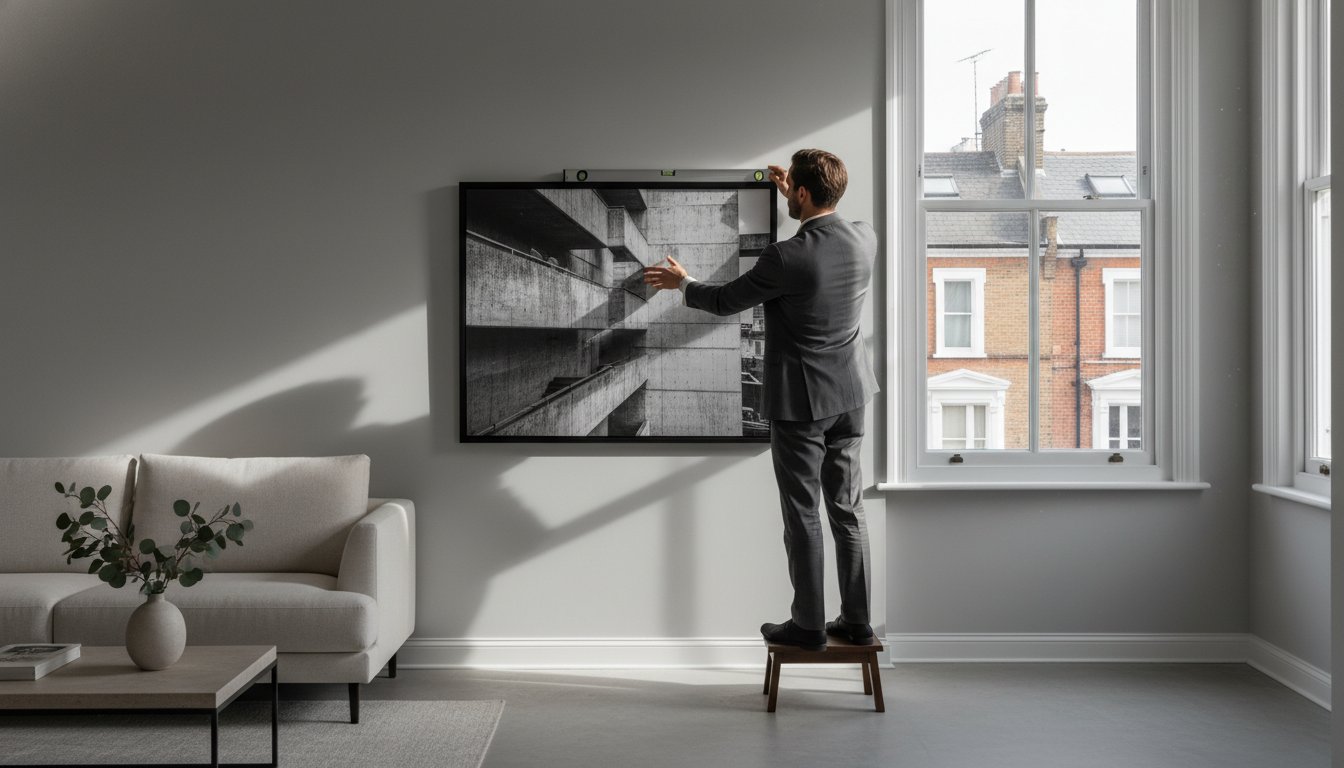
Physicality matters. Utilize the “Tape Method” by marking the exact dimensions of the intended print on your wall with low-tack masking tape. This simple act demystifies the scale, proving that a large-format work won’t overwhelm the space but will instead provide a necessary focal point. It’s also the perfect moment to discuss our Bespoke Framing Service, showing how a hand-finished wood or sleek aluminum frame can harmonize with your existing furniture, turning the art into a seamless extension of the room’s architecture.

The Power of the Mock-up

Digital visualization is perhaps the most persuasive method for convincing your partner on art purchase commitments. Most of the battle is won when art is seen in context. You can follow these simple steps to create a compelling presentation:

  • Take a clear, straight-on photograph of your empty wall in natural daylight.
  • Use a simple photo editing app to overlay the desired artwork, ensuring the proportions match your tape markings.
  • Adjust the brightness to mimic the room’s lighting, showing how the piece transforms the atmosphere from morning to evening.

This visual proof removes the guesswork, replacing hesitation with the excitement of a completed room. It allows your partner to see the art not as a detached expense, but as the final, missing piece of your home’s aesthetic puzzle.

Narrative Selling: The Story of the Artist

Beyond the visual impact, every iconic photograph carries a narrative that adds emotional weight to the acquisition. Research the specific moment the image was captured. Perhaps it’s a candid shot from our Music Archives taken during a legendary world tour, or a Terry O’Neill portrait that captured a rare moment of vulnerability in a global icon. Sharing these curatorial insights transforms the piece from an object into a story. Connect the art to a shared memory, such as a holiday destination you both loved or a film that defined your early years together. When a partner understands the artist’s triumph or the historical weight of the moment, the price tag becomes secondary to the cultural value. To begin building your shared vision, you can explore our curated collections and find the story that speaks to both of you.

Curating Your Legacy with Galerie Prints

The final stage of convincing your partner on art purchase often rests on the assurance of quality and the absence of logistical friction. It isn’t enough to agree on the image; you must also trust the vessel that carries it into your home. At Galerie Prints, we operate as more than a gallery. We are guardians of photographic heritage. Our commitment to museum-quality production and artisanal craftsmanship ensures that the piece you choose today becomes a permanent fixture of your family’s history. By handling the complexities of production and preservation with quiet authority, we allow you to focus on the joy of the collection itself.

Many potential collectors hesitate because of the perceived “hassle” of post-purchase logistics. Finding a framer, transporting a large-format print, and ensuring the mounting is archival can be daunting. Our bespoke framing service removes these obstacles entirely. We provide a seamless, end-to-end experience where the technical superiority of the production is matched by the elegance of the final presentation. With global shipping handled by specialists in fine art transport, the reassurance of professional handling is built into every acquisition.

The Galerie Prints Difference

We provide exclusive access to some of the world’s most prestigious photographic archives, including the definitive works of Slim Aarons and the legendary Terry O’Neill. This isn’t merely about decoration. It’s about possessing a piece of a bygone era. Our role is to act as a trusted guide, offering customization options that allow you to find the exact dimensions and frame styles to suit your shared environment. Whether you’re looking for a statement piece for a grand foyer or a subtle addition to a private study, our collections offer the flexibility needed to align two different aesthetic visions.

Final Steps to Your First Shared Purchase

To finalize the process of convincing your partner on art purchase, turn the selection into a shared ritual. Invite them to browse our “New Arrivals” together, allowing the imagery to spark conversation and nostalgia. This collaborative approach transforms the transaction into a shared memory. Our “Ready-to-Hang” promise ensures that when the crate arrives, the art is a finished masterpiece, ready to anchor your home’s soul immediately. There is no need for further appointments or additional costs; the journey from gallery to wall is direct and distinguished.

Explore our curated collections and find your shared masterpiece today.

The Beginning of Your Shared Collection

Transforming your residence into a sanctuary of photographic heritage requires more than just a keen eye; it demands a collaborative spirit. By identifying bridge pieces that resonate with both of your histories and reframing the acquisition as a multi-decade investment, the path to a shared vision becomes clear. The process of convincing your partner on art purchase decisions is ultimately about inviting them into a world of elegance and permanence. You aren’t merely buying a picture. You’re securing a legacy that anchors the home’s soul.

As an official partner of the Getty Images Gallery, we provide the security and prestige that serious collectors expect. Every selection includes our bespoke museum-quality framing, ensuring your new masterpiece arrives ready to define your space. With worldwide white-glove shipping, the logistics are as refined as the imagery itself. It’s time to move beyond the hesitation and embrace the beauty of a curated lifestyle.

Browse our iconic Slim Aarons and Terry O’Neill collections to find a piece you both love.

Your walls are waiting to tell a story that belongs to both of you. Take that first step toward a lasting legacy together.

Frequently Asked Questions

How do I handle it if my partner hates the art I love?

Respecting a partner’s visual veto is the first step toward a successful shared collection. If a specific piece causes genuine friction, it’s better to pivot toward a subject that evokes a shared memory or an aspirational lifestyle. Look for a bridge piece from our music archives or cinema lobby cards that connects your disparate tastes. This collaborative approach ensures that the art serves as a source of joy rather than a point of domestic tension.

Is fine art photography a good financial investment?

Fine art photography serves as a durable asset when it possesses verified provenance and archival integrity. Prints from prestigious collections, such as the Slim Aarons Collection, maintain their cultural relevance and prestige over decades. Unlike mass-produced decor, these works are historical documents produced with artisanal precision. Viewing the acquisition as a long-term investment helps in justifying the initial cost as a commitment to your home’s enduring heritage and soul.

What is the best way to choose an art frame that matches our home?

Selecting a frame should be an exercise in architectural harmony rather than just matching colors. Our Bespoke Framing Service offers hand-finished woods and museum-quality materials that bridge the gap between the artwork and your existing furniture. Neutral, high-quality finishes often provide the necessary stability to integrate a bold photograph into a refined living space. The goal is to make the art feel like a permanent, seamless extension of the room’s design.

How do I explain the price difference between a gallery print and a store-bought poster?

The price difference reflects the chasm between disposable posters and museum-grade heritage pieces. When convincing your partner on art purchase decisions, highlight the technical superiority of archival photo paper and artisanal production methods. A gallery print is designed to resist fading for generations, whereas store-bought alternatives degrade quickly. You’re investing in a lasting piece of history that won’t require replacement, ultimately offering superior value over a twenty-year horizon.

Should we buy one large piece or a gallery wall of smaller prints?

A single, large-format photograph often provides a more sophisticated focal point than a cluttered gallery wall. Large pieces have the power to define a room’s character and provide a sense of calm authority. While gallery walls allow for eclectic storytelling, they can sometimes feel visually fragmented in a shared space. Choosing one significant work from our Terry O’Neill photography collection creates a clear curatorial statement that anchors the entire environment with ease.

What if the art we like doesn’t match our current interior design style?

Art doesn’t always need to match your furniture; it should provide a soulful counterpoint to your environment. A vintage movie poster or a classic black and white portrait can add a layer of historical depth to a contemporary room. This aesthetic tension often creates a more curated and worldly atmosphere than a perfectly matched palette. Focus on the emotional resonance of the work rather than strict color coordination to find a piece that truly belongs.

Curating Authority: The Definitive Guide to Art for a Home Office Background

Your digital presence is no longer a temporary fix; it’s a permanent gallery where your professional authority is judged in high definition. Most professionals understand the frustration of a workspace that feels generic or, worse, cluttered and distracting on camera. Finding the right art for a home office background involves more than just filling a void. It’s about selecting a piece that reflects a sophisticated, worldly perspective while commanding respect during every video call. By investing in archival works with historical significance, you create a bridge to an era of elegance that modern alternatives simply cannot replicate.

You’re likely looking for a way to move beyond soulless corporate decor and into a realm of refined appreciation. This guide will show you how to transform your office into a statement of prestige using world-class fine art photography and iconic cinematic heritage. We’ll examine how to scale these masterpieces for the camera lens and curate a look that feels like a private gallery. You’ll gain the knowledge needed to ensure your backdrop is as impressive and authoritative as your own professional expertise.

Key Takeaways

  • Learn how to use fine art photography as a silent yet powerful communication tool that establishes immediate professional credibility in every digital interaction.
  • Discover how to select a compelling visual narrative by exploring the evocative archives of Slim Aarons or the storytelling heritage of rare cinema lobby cards.
  • Master the technical nuances of scale and composition to ensure your art for a home office background is perfectly positioned within the camera lens.
  • Understand why museum-quality materials and bespoke framing are vital for elevating a photographic print into a sophisticated investment piece.
  • Gain insight into how localized, artisanal craftsmanship and exclusive archive access can help you curate a workspace that feels like a private gallery.

The Psychology of the Professional Backdrop: Why Your Background Matters

Your workspace is no longer a private sanctuary; it is a broadcast studio where your professional identity is under constant scrutiny. In this digital era, the background behind your desk serves as a powerful tool for non-verbal communication. While many professionals view their walls as a technical hurdle to overcome, the most successful leaders recognize them as a prime branding opportunity. Choosing the right art for a home office background allows you to harness the “Curator Effect.” This is a phenomenon where the presence of high-caliber, historical imagery grants the owner immediate intellectual and professional prestige. It tells a story before you even speak.

This shift in perspective moves beyond the tired “bookshelf” cliché. A wall of books can feel performative or cluttered, but a single, large-scale piece of fine art photography suggests a different level of intentionality. It transforms a standard room into a gallery-inspired workspace that commands attention. This approach is deeply rooted in the psychology of interior design, which explores how our physical surroundings influence both our own behavior and the perceptions of those who observe us. When your backdrop features iconic cinematic heritage or archival photography, you are not just decorating; you are signaling a reverence for quality and stability.

The Visual CV: What Your Art Says About Your Career

Every piece of art you display acts as a line on a visual CV. Selecting iconic photography from the Slim Aarons or Terry O’Neill collections suggests a global, cultured perspective that transcends industry boundaries. There is a profound difference between generic “retail decor” found in big-box stores and curated archives that carry historical weight. By opting for minimalist or historically significant pieces, you establish a sense of quiet authority. This aesthetic tells your peers that you don’t need to shout to be heard; your taste and your history speak for themselves. It’s about projecting confidence through curated excellence.

Balancing Personality and Professionalism

The challenge lies in avoiding the “distraction trap.” You want your background to be a conversation starter, not a reason for your audience to lose focus on your message. Fine art photography provides the perfect balance. It offers a distinct visual identity without the chaotic energy of abstract patterns or personal clutter. You can use these pieces to signal specific professional values:

  • Innovation: Rare, limited-edition Star Wars prints or music archives can signal a creative, forward-thinking mind.
  • Heritage: Vintage movie posters and cinema lobby cards reflect an appreciation for storytelling and tradition.
  • Sophistication: Black-and-white portraiture from the Terry O’Neill collection conveys a polished, timeless professional image.

Ultimately, the art for a home office background that you choose influences your own daily focus as much as it does your audience. Surrounding yourself with aspirational imagery fosters a sense of personal ambition, and just as you curate your visual environment, you can learn more about Naturally Green for organic solutions to nurture the living elements in your workspace. It ensures that you show up to every call with the confidence of a seasoned expert, supported by a workspace that reflects your highest professional standards.

Selecting Your Narrative: Photography vs. Cinematic Heritage

Choosing the specific narrative for your workspace is an exercise in personal branding. While the previous section explored the psychological impact of your environment, the selection process requires a discerning eye for historical resonance. The most effective art for a home office background moves beyond mere aesthetics; it acts as a window into a world of achievement. Whether you lean toward the candid intimacy of the photographic archive or the structured storytelling of cinematic heritage, the goal is to create a backdrop that feels both intentional and timeless.

Recent research on virtual backgrounds suggests that the visual elements behind you significantly influence perceptions of competence and trustworthiness. Fine art photography, particularly works from masters like Terry O’Neill, offers a sense of stability. These images capture the essence of icons in their most authentic moments, providing a sophisticated anchor for your digital presence. Whether you choose a striking monochromatic portrait or a vibrant archival scene, the palette should complement your professional “uniform,” ensuring your background supports rather than competes with your presence.

The Slim Aarons Aesthetic: Success and Sophistication

For those seeking to project an image of effortless prestige, Slim Aarons photography remains the gold standard. His work, famously described as capturing “attractive people doing attractive things in attractive places,” serves as a powerful symbol of the aspirational lifestyle. When selecting a piece, consider the specific energy you wish to project. A vibrant “poolside” shot from the Hotel du Cap-Eden-Roc brings a sense of expansive, sunny optimism to a room. Conversely, a “society” portrait set in a grand library or a mid-century salon offers a more grounded, intellectual atmosphere. These works do more than decorate; they invite the viewer into a legacy of high-end aesthetics that aligns perfectly with a modern corporate context.

Cinematic Lobby Cards: The Intellectual Conversation Starter

If your professional journey is defined by storytelling or technical heritage, rare cinema lobby cards provide a unique alternative to traditional prints. These artifacts offer a layer of historical depth that larger posters often lack. A set of framed lobby cards creates a rhythmic, curated look that encourages closer inspection. They act as intellectual conversation starters, allowing you to subtly signal your personal philosophy or appreciation for cinematic history. Choosing films that resonate with your career path, perhaps a classic noir or a seminal piece of science fiction, adds a narrative texture to your office that is both rare and deeply personal.

You might find that exploring our exclusive cinema collections reveals a piece of heritage that perfectly mirrors your own professional trajectory. By investing in these rare collectibles, you ensure your workspace reflects a level of discernment that generic retail art simply cannot match.

Scale and Composition: Optimizing Art for Video Call Lenses

Mastering the technical placement of your collection is what separates a professional gallery from a standard room. While the narrative of your art is vital, its physical relationship to your webcam lens determines the final impact. Positioning your chosen art for a home office background requires an understanding of digital framing, specifically the Rule of Thirds. To avoid the common mistake of having a frame appear as if it’s growing out of your head, place your artwork slightly off-center. This creates a balanced, asymmetrical composition that feels more natural and less like a staged set. It allows the viewer to appreciate the piece without it competing for the same vertical space as your presence.

Calculating the ideal print size is equally critical. If your desk is positioned three to four feet from the wall, a medium-sized print can easily get lost in the frame or look like an afterthought. Conversely, an oversized piece might be cropped awkwardly by the edges of the camera. Many executives are finding the value of art in the workplace extends to how it fills the peripheral view of a wide-angle lens. For these broader perspectives, a Diptych or Triptych, defined as a series of two or three related frames, is often more effective than a single piece. It populates the background with a rhythmic, curated energy that suggests a larger, more expansive environment.

The Portrait vs. Landscape Debate

The orientation of your art can fundamentally alter the perceived dimensions of your office. A vertical portrait orientation is a sophisticated tool for adding height to smaller rooms, drawing the eye upward and creating a sense of loftiness. In contrast, landscape photography creates a panoramic sense of space on camera, making a narrow room feel significantly wider. If you prefer a more eclectic look, using multiple smaller frames to create a Gallery Wall can work well, provided the arrangement follows a strict grid or a cohesive theme. This approach signals a meticulous, detail-oriented personality that values variety and historical depth.

Lighting Your Art for the Webcam

Even the most stunning archival print can be ruined by poor lighting. Standard glass is the enemy of the digital professional; it acts as a mirror for your ring light or nearby windows, creating a distracting white glare. This makes the use of museum-grade, anti-reflective glass a technical necessity rather than a luxury. Beyond the glass, you must consider the paper itself. Matte archival paper is consistently superior for video call environments because it absorbs light rather than reflecting it. This ensures that the rich blacks of a Terry O’Neill portrait or the vibrant hues of a Slim Aarons scene remain clear and saturated, regardless of your lighting setup.

The Luxury of Detail: Archival Quality and Bespoke Framing

True authority is found in the details that aren’t immediately obvious but are deeply felt. When selecting art for a home office background, the physical quality of the print is as significant as the subject matter itself. High-end fine art photography demands museum-quality materials to ensure it retains its value and visual integrity over time. Unlike mass-produced retail prints, these works utilize Giclée printing on archival photo paper. This professional standard uses pigment-based inks that offer a depth of color and a level of detail that remains sharp even through a high-definition webcam. It’s the difference between a flat, two-dimensional image and a tactile piece of history that commands the room.

The role of bespoke framing is to elevate a print from a mere poster to a genuine investment piece. A custom frame provides more than just a border; it acts as a protective sanctuary for the artwork. The tactile difference of high-end materials is visible even through a digital lens. When a colleague sees the subtle grain of a hand-finished frame or the precise matting of a historical archive, they recognize a commitment to quality that mirrors your own professional standards. It signals that you value craftsmanship and permanence over temporary, disposable decor.

Choosing the Right Frame for a Professional Space

The frame is the bridge between your art and your office architecture. For a modern, minimalist workspace, a classic black frame provides a sharp, authoritative border that anchors the piece. If your office features warmer tones or mid-century furniture, a natural wood frame offers a softer, more integrated aesthetic. For those seeking a contemporary gallery feel, the “floating mount” is an exceptional choice. It creates the illusion that the print is hovering within the frame, adding a layer of sophisticated depth. Off-the-shelf frames often use inferior plastics or thin glass that can warp or yellow, which ultimately undermines the prestige of high-caliber photography.

Longevity and Investment Value

Investing in fine art is an act of preservation. To ensure your office art remains a permanent fixture of your legacy, UV-protective glass is essential. It shields the delicate pigments from sunlight, preserving the clarity of the image for decades. Equally important is the use of acid-free mounting materials. This prevents the chemical degradation that often plagues historical archives, ensuring the paper doesn’t become brittle or discolored. By prioritizing these artisanal standards, you position your workspace decor as a collectible rather than a consumable. It becomes a lasting piece of history that gains emotional and professional value as your career progresses.

You can ensure your collection is protected for a lifetime by utilizing our bespoke framing service, which combines traditional production methods with museum-grade materials.

Curating Your Legacy: Why Galerie Prints is the Discerning Choice

Choosing the right art for a home office background is an investment in your professional narrative. At Galerie Prints, we act as more than just a source for imagery; we are guardians of photographic heritage. Our direct access to world-renowned archives, including the prestigious Getty Images and the complete Slim Aarons Collection, ensures that every piece we offer carries the weight of historical authenticity. This exclusive access allows us to provide works that are not merely decorative but are significant markers of cultural and cinematic history. By selecting from our curated archives, you ensure your workspace reflects a level of discernment that is recognized by peers and clients alike.

Our commitment to excellence extends beyond the image to the physical object itself. We pride ourselves on a foundation of localized, artisanal craftsmanship. Every frame is hand-finished in our dedicated workshop, where we combine traditional production methods with modern technical precision. This meticulous attention to detail ensures that your artwork arrives ready to hang, providing a seamless upgrade to your office without the logistical headache of sourcing external framing services. We handle the complexities of production so you can focus on the impact your new environment will create.

From Archive to Office: The Journey of Your Print

The journey of a Galerie print begins at the very source of the image. We employ a meticulous process of printing from original negatives and high-resolution source materials, preserving the integrity of historical works for modern display. This reverence for the original medium ensures that the grain, contrast, and soul of the photographer’s vision are captured perfectly. Once printed on archival paper, the piece moves to our workshop for the artisanal framing process. Here, experts select the finest materials to complement the work, ensuring the final result is a museum-grade masterpiece. For those seeking this complete finish, our framed prints typically require approximately four working weeks for production, followed by a swift three-day delivery period.

Personalized Curation Services

Finding the piece that perfectly aligns with your professional journey can be a deeply personal endeavor. Our team is available to help you consult on the nuances of our collections, whether you are drawn to the candid elegance of Terry O’Neill or the aspirational sun-drenched scenes of Slim Aarons. We offer custom sizing and bespoke framing options to accommodate unique office layouts, ensuring that your art for a home office background is perfectly scaled to your specific environment. This personalized approach guarantees that your workspace is not just a room, but a curated legacy that inspires wonder and commands respect. It’s a commitment to permanence in a world of temporary digital interactions.

Explore our curated collections for the ultimate home office background and begin the transformation of your professional sanctuary today.

Elevating Your Professional Sanctuary

Transforming your workspace into a gallery of quiet authority is a deliberate act of professional branding. You’ve discovered how to move beyond the mundane by embracing the “Curator Effect,” leveraging historical archives to establish immediate credibility during every digital interaction. Whether you select the sun-drenched allure of a Slim Aarons poolside or the narrative depth of rare cinema lobby cards, the technical nuances of scale and archival quality ensure your presence is felt with absolute clarity. High-definition lenses demand the excellence that only museum-quality Giclée prints and bespoke, artisanal framing can provide.

Selecting the right art for a home office background is no longer a mere design choice; it’s a strategic investment in your personal legacy. As official partners of the Slim Aarons and Getty Images archives, we’re dedicated to helping you find a piece that resonates with your unique career path. We invite you to Browse Our Curated Home Office Collection and begin curating a backdrop that truly commands respect. Your walls are ready to tell a story of success that is as permanent as it is inspiring.

Frequently Asked Questions

What size art is best for a Zoom background?

Selecting a medium to large scale piece, typically ranging from 20×30 to 30×40 inches, ensures your collection is visible without feeling crowded. Smaller frames often appear as cluttered distractions on camera, while a single, architectural statement piece provides a confident anchor for your digital presence. It’s essential to consider the 16:9 aspect ratio of most webcams, choosing a size that fills the peripheral space without being awkwardly cropped during your meetings.

How high should I hang art behind my desk for video calls?

Position your artwork so the center sits slightly above your shoulder line when you’re seated. This typically means hanging the piece lower than the standard gallery height of 57 inches to ensure it remains within the camera’s frame. You want to avoid the “halo effect” where a frame appears to grow directly out of your head; instead, aim for a balanced composition that sits in the upper third of the viewer’s screen.

Is photography or abstract art better for a professional office?

Fine art photography, particularly archival works from the Terry O’Neill or Slim Aarons collections, offers a sense of “quiet authority” that abstract art often lacks. Photography provides a tangible narrative and a connection to cultural heritage, which acts as an immediate intellectual conversation starter. While abstract pieces can be subjective, iconic photography signals a worldly, discerning perspective that resonates deeply in high-stakes professional environments.

How do I prevent glare on my framed art during video meetings?

Managing light reflections is a technical necessity, and positioning your art for a home office background away from direct windows is the first step. To completely eliminate the distracting bounce from ring lights or overhead fixtures, you should invest in museum-grade, anti-reflective glass. Choosing a matte archival paper finish rather than a gloss surface also helps absorb light, ensuring the rich details of your print remain clear and saturated on screen.

Can I use a gallery wall as a home office background?

Utilizing a gallery wall as art for a home office background is a sophisticated choice if you maintain a strict, rhythmic grid. A set of related cinema lobby cards or a curated series of music archives can create a textured, intellectual backdrop that feels like a private library. To avoid a chaotic appearance on camera, ensure each frame shares a consistent style and that the overall arrangement follows a cohesive, professional narrative.

Why should I invest in archival prints for my office?

Archival prints represent a commitment to permanence and technical excellence that is visible even through a digital lens. Using Giclée printing on acid-free paper ensures that your investment won’t yellow or fade, preserving the historical integrity of the work for decades. This level of quality reflects your own professional standards, signaling to clients that you value craftsmanship and the preservation of heritage over disposable, mass-produced decor.

Which Slim Aarons prints are most popular for home offices?

Iconic works such as “Poolside Gossip” and “Kaufmann House” are enduring favorites for those seeking to project an aspirational lifestyle of success. For a more grounded, intellectual atmosphere, society portraits and expansive shots of the Hotel du Cap-Eden-Roc provide a refined, mid-century elegance. These pieces work exceptionally well because they offer a bright, expansive energy that makes even a small home office feel more prestigious and worldly.

How do I choose a frame that looks professional on camera?

Opt for deep-profile frames in classic black or natural wood to provide a strong, authoritative border for your art. A generous mount, or matting, is crucial as it adds a high-end gallery aesthetic that distinguishes your workspace from a casual home environment. Avoid thin, “off-the-shelf” plastic frames; their lack of depth and poor glass quality often appear “cheap” under the unforgiving clarity of modern high-definition webcams.

The Timeless Allure of Black and White Pictures: A Collector’s Guide

In an era where 3.2 billion digital images are uploaded to the internet daily, the quiet permanence of a silver gelatin print remains the ultimate mark of a discerning collector. Fine art black and white pictures don’t merely capture a fleeting moment; they distill it into its most essential form, stripped of the distractions of color to reveal raw emotion and architectural structure.

You likely recognize that a home should be a curated reflection of your heritage and taste, yet finding authentic pieces is difficult when the market is flooded with mass-produced reproductions that lack depth. This guide will empower you to identify true archival quality and understand the provenance of iconic works, ensuring your next acquisition is a legacy piece rather than a temporary decoration. We’ll explore the technical mastery behind hand-printed negatives from our London darkroom, the historical significance of 20th-century masters, and how to curate these works to create a sophisticated, gallery-inspired interior.

Key Takeaways

  • Understand why the monochrome aesthetic remains the pinnacle of fine art, transcending the mere absence of color to reveal the raw emotion and architectural form of a subject.
  • Uncover the technical heritage of the silver gelatin process and why its tactile, archival quality provides a depth that modern digital prints often struggle to emulate.
  • Learn to curate your own collection of black and white pictures by mastering the nuances of contrast ratios and selecting subject matter that resonates with your interior aesthetic.
  • Challenge the misconception that monochrome is purely vintage by exploring how modern masters use the medium to create striking, distraction-free contemporary statements.
  • Gain insight into the provenance of iconic archives and the enduring value of investing in artisanal, London-made photographic heritage.

Why Black and White Pictures Remain the Pinnacle of Fine Art

The allure of black and white pictures lies in their ability to strip away the distractions of the spectrum, focusing instead on the architectural integrity of a composition. When we remove color, we invite the viewer to engage with the raw interplay of light and shadow, a technique perfected throughout the history of monochrome photography that began in the 1820s. This aesthetic choice forces an immediate confrontation with form and texture. It turns a simple portrait into a profound study of character and a landscape into a dramatic narrative of topography. Monochrome isn’t merely the absence of color; it’s the presence of essence.

Unlike color film, which often dates a photograph to a specific era through shifting chemical palettes or saturation trends, the monochrome image remains immune to the passage of time. The silver gelatin prints of the 1950s golden age possess the same visceral power today as they did 70 years ago. By bypassing the fleeting trends of Technicolor or modern digital vibrancy, these images achieve a state of permanence. They exist as archival records of a moment, unburdened by the aesthetic markers of a particular decade. Our London darkroom continues this tradition, hand-printing works that retain their prestige for generations.

The Emotional Language of Monochrome

High contrast creates a visual tension that color cannot replicate. In the noir tradition, shadows become active participants in the story, concealing as much as they reveal to create a sense of mystery. Portraits captured as black and white pictures feel inherently more intimate. Without the distraction of varying skin tones or vivid clothing hues, the eye settles on the subject’s gaze and the subtle lines of experience. It’s a stripped-back honesty that defines the world’s finest photography.

Aesthetic Versatility in Modern Interiors

Monochrome art serves as a sophisticated anchor within contemporary design. Whether placed in a starkly minimalist loft or a lush, classic study, these prints provide a sense of visual silence that grounds a room. In a space filled with diverse textures, black and white acts as a neutral focal point. They harmonize with industrial steel, warm oak, or velvet upholstery with equal grace. This bespoke quality ensures the artwork feels like a curated piece of history rather than a mere decoration.

The Technical Soul: Silver Gelatin vs. Digital Prints

A digital file is essentially a collection of code, yet a silver gelatin print is a physical object born from a sophisticated dance of light and chemistry. This process, perfected in the 1870s, remains the gold standard for black and white pictures that demand depth and soul. While digital sensors capture light with clinical precision, film grain possesses a tactile, organic quality. It creates a three dimensional texture that digital pixels often fail to replicate; a microscopic landscape of silver halides that gives the image its unique “bite.”

The difference lies in the medium’s ability to render light. In a traditional darkroom, light passes through a negative to strike paper coated with silver salts. This creates a rich tonal range where the transition from absolute black to brilliant white feels fluid rather than stepped. Scholars and collectors often study the historical black and white photographs preserved by the Library of Congress to understand how these chemical processes capture the raw intensity of the human condition with a permanence that digital formats struggle to match.

The Darkroom Heritage

Authenticity in photography is found in the provenance of the work. At Galerie Prints, we believe the original negative is the true “DNA” of the image. Unlike mass produced posters that rely on ink sitting atop a surface, our prints are hand-crafted in our London darkroom. This artisanal approach ensures that every piece is a unique interpretation of the artist’s vision. A gallery-grade print isn’t just a copy; it’s a handcrafted artifact that carries the weight of photographic history within its fibers.

Archival Quality and Longevity

Museum-quality is a term we use with specific intent. It refers to materials that are chemically stable and designed to last for 100 years or more without yellowing or fading. Silver-based prints are remarkably resilient; they maintain deep, velvety blacks and crisp whites because the image is embedded within the gelatin layer of the paper itself. Protecting this investment requires more than just high-quality paper. Bespoke framing, utilizing acid-free mounts and UV-protective glass, acts as a sanctuary for the artwork, shielding it from environmental degradation. You can explore our curated collections to see how these technical standards elevate a simple image into a lasting piece of history.

Busting the Myth: Is Black and White Photography “Old Fashioned”?

To view monochrome as a relic of the pre-technicolor era is to fundamentally misunderstand the soul of the medium. Modern masters don’t select black and white pictures because they’re limited by technology; they choose them to strip away the chromatic noise of the 21st century. By removing the distraction of color, a photographer forces the eye to confront texture, form, and the delicate play of light. This is exactly why luxury houses like Chanel and Dior consistently favor monochrome for their global campaigns. It’s a deliberate aesthetic choice that signals prestige and a refusal to follow fleeting trends.

The enduring power of black and white photography lies in its ability to transcend time. Consider a 1960s Terry O’Neill print of a cinematic icon. When hung in a sleek, 2026-designed apartment, it doesn’t feel like a dusty museum artifact. Instead, the high-contrast silver gelatin print acts as a contemporary anchor. The sharp grain and deep shadows provide a tactile depth that modern digital color often flattens. It bridges the gap between the golden age of glamour and the cutting edge of modern interior aesthetics.

The Minimalism Movement

The “less is more” philosophy has redefined how we curate our living spaces. Black and white photography is the natural companion to this movement. In urban photography, removing color emphasizes the aggressive, sculptural lines of modern architecture. It transforms a skyscraper into a study of geometry. Abstract monochrome works have seen a 22% rise in auction demand since 2021, proving that collectors value the quiet authority of a silver-toned image over the loud saturation of contemporary digital art.

The Celebrity and Icon Factor

There’s a reason the most enduring images of Marilyn Monroe pictures or The Beatles are monochrome. It creates a “purity” of the icon, stripping away the mundane details of the era to reveal the legend beneath. This creates a legendary status that color simply can’t achieve. From an investment perspective, the market value for these iconic portraits remains exceptionally robust.

  • Archival prints from original negatives often appreciate by 7% annually.
  • Bespoke, hand-printed pieces from our London darkroom carry a provenance that digital files cannot match.
  • Monochrome portraits offer a sense of permanence in an increasingly disposable visual culture.

Investing in these works isn’t just about decoration; it’s about owning a piece of history that remains eternally modern.

A Collector’s Framework: How to Choose and Style B&W Art

Selecting black and white pictures for a private collection requires a discerning eye for tonal range. Our London darkroom artisans emphasize that the contrast ratio dictates the room’s energy. A print with high-impact blacks and crisp whites demands attention in minimalist spaces; it creates a graphic punch that defines an interior. Conversely, a print featuring a spectrum of soft, silvery greys offers a sophisticated, quiet presence. Choosing the subject matter is equally vital. A 1964 Terry O’Neill portrait of Brigitte Bardot captures a specific historical allure, while an expansive, textured landscape can ground a large living area with a sense of permanence.

Scaling is your primary tool for visual impact. A 1.5-meter oversized print acts as a definitive focal point, commanding the architecture of the room. Small-scale works require intimacy, drawing the viewer in to inspect the fine grain of the silver gelatin process. The frame choice finalizes the mood. A bespoke black frame adds architectural weight and modern definition. An oak frame softens the image, making it suitable for mid-century modern interiors where warmth is a priority. White frames provide a gallery-standard “floating” effect, allowing the photography to breathe against a neutral wall.

Creating a Stunning Gallery Wall

A successful gallery wall balances diverse textures and historical eras. You might pair a grit-filled 1970s street scene with a polished Slim Aarons poolside view from 1958. Maintain a professional aesthetic by keeping a consistent 50mm spacing between frames. This precision ensures the arrangement feels like a curated exhibition. Mixing vertical and horizontal orientations adds visual rhythm, but you should keep the monochromatic theme tight to ensure the collection remains cohesive rather than cluttered.

Lighting Your Photography

Light is the final element in displaying black and white pictures. High-contrast prints benefit from non-reflective, museum-grade glass. This prevents glare from obscuring deep shadow details in heavy blacks. Use dedicated LED spotlights with a 3000K color temperature to reveal the true depth of the print. It’s essential to avoid placing archival pieces in direct sunlight. Constant UV exposure can degrade 100% cotton rag paper over a 50-year period, even with protective coatings.

Explore our collection of hand-printed silver gelatin works to find your next investment piece.

Discover the World’s Finest Photography at Galerie Prints

Mastering the art of black and white pictures involves more than just technique; it requires surrounding yourself with the masters of the craft. At Galerie Prints, we provide access to the world’s finest photography, curated from legendary archives and esteemed collections. Our collection represents a bridge to the golden age of glamour, offering collectors a chance to own a piece of history that has been meticulously preserved through the decades.

Every print we produce is a testament to artisanal excellence. We don’t believe in mass production. Instead, our London-based team focuses on hand-printing techniques that honor the original negative’s integrity. Whether it’s a silver gelatin print or a modern archival pigment process, the result is a museum-grade masterpiece. This dedication to the darkroom ensures that your investment retains its clarity and depth for a lifetime.

To finish your piece, we offer bespoke framing services. Our craftsmen use sustainably sourced wood and anti-reflective glass to elevate the print. This isn’t just a frame; it’s a protective sanctuary for the art. You can begin your journey with our open-run classics or choose the exclusivity of a limited edition, with some runs restricted to as few as 50 prints worldwide.

The Slim Aarons B&W Collection

While famous for his vibrant poolside scenes, Aarons’ work with black and white pictures reveals a different layer of his genius. These rare monochrome shots capture the 1950s elite with a quiet intimacy that color sometimes masks. You’ll find the same high-society subjects but with a focus on texture and composition that defines the mid-century era. For collectors seeking to understand the full scope of this legendary photographer’s work, our comprehensive guide to Slim Aarons’ mastery of aspirational photography explores both his color and monochrome legacy. Explore the stories behind these frames in Slim Aarons: The Definitive Guide.

Terry O’Neill: The Man Who Shot the Sixties

Terry O’Neill’s lens defined a generation. His ability to capture candid moments of Hollywood royalty, from Audrey Hepburn to the legends of rock, relied on a technical brilliance that made the camera disappear. His B&W portraits aren’t just photos; they’re historical documents of cool. Browse our Terry O’Neill Collection to find iconic imagery that transformed the 1960s into a timeless aesthetic.

Collecting fine art is a journey of refinement. Whether you’re drawn to the cinematic quality of a 1920s street scene or the sharp contrast of a modern architectural study, our curators are here to guide you. We ensure that every piece leaving our London gallery meets the highest standards of the international art market.

Building Your Legacy with Timeless Imagery

Choosing a piece of fine art is an act of preservation. By prioritizing the chemical depth of silver gelatin prints over fleeting digital trends, you secure a work that maintains its luster for generations. Black and white pictures don’t just decorate a room; they anchor it with a sense of permanence and historical weight that color photography often lacks. Whether you’re drawn to the 1950s glamour of a Slim Aarons poolside scene or the grit of a mid-century street portrait, these images remain the definitive standard for sophisticated interiors.

At Galerie Prints, we act as the bridge between these historic moments and your private collection. As an official partner of the Getty Images archive, we utilize original negatives to produce works of unparalleled provenance. Each print is meticulously hand-printed in our London darkroom, ensuring the tactile quality that serious collectors demand. With our bespoke museum-quality framing services, your selected artwork arrives ready to transform your space into a curated gallery. It’s time to move beyond simple decoration and invest in a lasting piece of photographic heritage.

Explore the World’s Finest Black and White Photography

We invite you to discover a world where light and shadow tell a story that’s uniquely yours.

Frequently Asked Questions

What makes black and white photography “fine art” compared to color?

Black and white photography earns its fine art status by stripping away the distraction of color to focus on form, light, and texture. This medium allows the viewer to connect with the emotional core of the subject, a technique perfected by masters like Ansel Adams in his 1941 Yosemite series. By emphasizing the interplay of ten distinct zones of gray, these images transform a literal scene into a timeless, evocative composition that transcends mere documentation.

Are black and white prints more expensive than color prints?

Premium monochrome prints often command a 15% to 20% higher price point due to the specialized artisanal labor involved in their creation. At Galerie Prints, our darkroom specialists spend up to four hours hand-printing a single image from an original negative to ensure perfect tonal depth. While mass-produced digital prints are inexpensive, a bespoke silver gelatin print represents a significant investment in historical craftsmanship and archival quality.

How do I prevent my black and white pictures from fading over time?

You can prevent your black and white pictures from fading by using 99% UV-protective museum glass and acid-free mounting materials. According to the Wilhelm Imaging Research institute, prints kept in controlled environments with 40% humidity can last over 200 years without visible degradation. Don’t hang your artwork in direct sunlight or near heat sources like radiators to preserve the delicate silver crystals in the emulsion.

Does black and white photography work in a colorful room?

Monochrome photography acts as a sophisticated visual anchor in rooms featuring bold palettes like 2024’s popular Terracotta or Midnight Blue. The neutral tones of a curated print provide a resting point for the eye, preventing a vibrant space from feeling cluttered. A large-scale 40×60 inch print can unify disparate colors by introducing a timeless, architectural element that transcends fleeting interior design trends.

What is a silver gelatin print and why is it valuable?

A silver gelatin print is a traditional photographic process where light-sensitive silver salts are suspended in a gelatin layer on fiber-based paper. This method, which became the industry standard in 1885, is prized for its unrivaled deep blacks and luminous highlights. Collectors value these prints because they’re hand-processed in our London darkroom, ensuring each piece is a unique, physical connection to the world’s finest photography.

Can I mix black and white photos with color art on the same wall?

Mixing black and white pictures with color art creates a dynamic gallery wall that feels curated rather than staged. To achieve a cohesive look, maintain a consistent 2-inch spacing between frames and use a unifying element like matching black wood moldings. This approach, often seen in high-end London estates, allows the monochromatic pieces to highlight the vibrancy of the color works while adding historical weight to the collection.

How do I choose the right frame for a monochrome photograph?

The ideal frame for a monochrome print is typically a minimalist 20mm black or dark charcoal wood profile that doesn’t compete with the imagery. For a classic gallery aesthetic, include a 3-inch white acid-free mount to provide the artwork with breathing room and professional scale. This framing style focuses the viewer’s attention on the print’s provenance and technical excellence, ensuring it remains a centerpiece for decades.

What are the most iconic black and white pictures to collect in 2026?

Collectors in 2026 are focusing on the Slim Aarons archive and mid-century fashion photography from the 1950s. Works by Terry O’Neill, specifically his 1977 portrait of Faye Dunaway at the Beverly Hills Hotel, continue to see a 12% annual increase in valuation. Investing in prints with clear provenance and limited edition status remains the most reliable way to build a collection of the world’s finest photography.