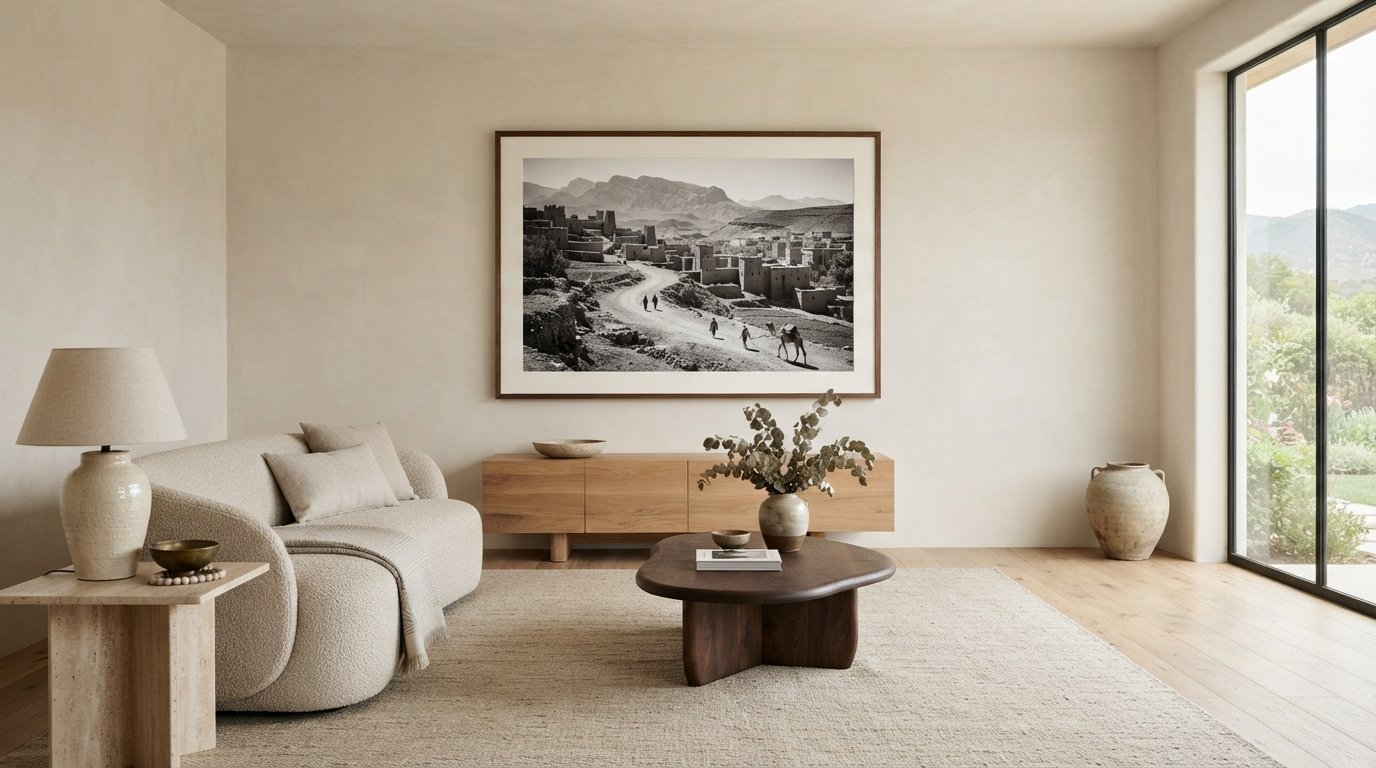
Tag: Archival Photography

Curating Art for a Minimalist Home: Intentional Walls

True minimalism is never achieved by leaving your walls entirely barren, as a sterile white expanse often reflects hesitation rather than quiet sophistication. When curating art for a minimalist home, the objective isn’t to fill negative space out of obligation; it’s to anchor an interior with a singular, evocative visual voice that honors the room’s architectural calm.

You’ve likely felt the delicate tension between protecting a serene sanctuary and dreading the soulless, impersonal nature of mass-produced wall art. Balancing a warm cultural narrative with crisp spatial discipline isn’t simple, particularly when an improper print proportion or chaotic arrangement risks cluttering the very peace you worked to design.

In this guide, you’ll discover how to select, scale, and frame archival photography to build striking, intentional minimalist interiors. We’ll explore exact architectural hanging ratios, the power of generous matting, and the bespoke framing standards needed to turn legendary photographic archives into lasting, heirloom anchors for your home.

Key Takeaways

  • Master the philosophy of visual restraint by treating negative space as an active architectural element rather than empty wall area.
  • Discover the definitive spatial proportions and golden ratio formulas that prevent undersized prints from cluttering clean interior lines.
  • Learn how curating art for a minimalist home relies on selecting singular, storied archives rather than impersonal, mass-market decor.
  • Explore how bespoke framing materials, from natural hardwood profiles to museum-grade glazing, bridge the artwork with your living environment.
  • Build an enduring, iterative art collection guided by authentic provenance and certified archival darkroom print quality.

The Philosophy of Minimalist Art: Choosing Impact Over Abundance

Minimalism is frequently misunderstood as an exercise in sheer erasure. In interior architecture, stripped-back rooms often fall into sterile emptiness when bare walls are treated as an aesthetic virtue rather than a missed opportunity. True intentionality operates on restraint, not deprivation. In the practice of curating art for a minimalist home, the objective isn’t to cover every surface, nor is it to leave walls hollow; it’s about choosing singular, narrative-rich works that command attention through quiet authority.

A solitary, museum-grade photographic print introduces emotional tranquility that scattered decor cannot replicate. By presenting an authentic narrative, whether captured in the sun-drenched leisure of Slim Aarons or the candid intimacy of legendary music archives, the wall transforms from an unoccupied barrier into an intentional architectural anchor.

Rethinking Negative Space on Modern Walls

Negative space isn’t blank void; it’s an active structural design element. Much like the pauses between musical notes, unadorned expanses of vertical plaster give an artwork room to breathe, elevating the piece from casual decoration to an intentional installation. In movements such as minimalist photography, sparse composition and expansive margins direct visual energy toward subtle variations in light and form.

To successfully integrate negative space into your environment, consider how surrounding physical elements interact:

  • Clear visual boundaries: Ensure at least two to three feet of uninterrupted wall surface surrounds the frame to prevent sightline friction.
  • Architectural alignment: Balance low-slung credenzas or linen sofas against open vertical planes to emphasize ceiling height.
  • Breathing room: Avoid competing sconces or adjacent shelving that dilute the impact of the primary print.

The Power of the Singular Focal Point

Eclectic gallery clusters often fracture a room’s composure. When you distribute attention across a dozen mismatched frames, visual clutter naturally follows. Curating art for a minimalist home requires replacing that chaotic visual noise with one decisive, large-format statement work that anchors the entire room’s layout.

A monumental, darkroom-grade print immediately establishes spatial hierarchy. Rather than allowing eyes to dart aimlessly across disparate frames, an oversized archival work pulls the gaze inward, setting the emotional temperature of the living space. By investing in museum-quality fine art photography, you introduce genuine cultural provenance and technical mastery, grounding modern architectural discipline with profound human history.

How to Select the Perfect Photographic Art for Minimalist Spaces

Minimalist interior design relies on raw, honest surfaces. Poured concrete, lime-washed plaster, honed limestone, and white oak create an architectural canvas that rejects decorative superficiality. When curating art for a minimalist home, the artwork shouldn’t sit as an alien layer atop these materials; it must harmonize with their inherent weight and grain. Medium-format and large-format photographic prints achieve this seamlessly because their physical medium possesses depth, texture, and technical provenance.

Silver halide prints on fiber-based archival paper respond dynamically to daylight, shifting their tonal presence as shadows cross the room. To ensure these tactile heirlooms endure, collectors adhere to strict preservation matting and framing standards, utilizing acid-free cotton rag boards that protect delicate emulsions while providing essential visual containment.

Tonal Restraint: The Case for Monochromatic Imagery

Monochrome imagery provides immediate architectural grounding. A deep black-and-white print establishes a strong graphic contrast against pale, neutral wall finishes, anchoring an open floor plan without introducing chromatic discord. The quiet depth found in historical black and white pictures, whether documenting brutalist facades or intimate portraits by masters like Terry O’Neill, brings human narrative into stark living spaces without competing against organic interior finishes.

Consider these key pairings when integrating black-and-white prints:

  • Charcoal and warm taupe: Softens the stark contrast against unsealed concrete and pale linen upholstery.
  • Deep pitch black: Aligns with blackened steel fixtures, minimal joinery, and architectural window mullions.
  • High-key silvers: Harmonizes with pale ash, light travertine, and brushed aluminum accents.

Aspirational Color: Curating Saturated Heritage Photography

Color in a minimalist residence must feel deliberate, never accidental. Instead of scattering decorative accents across cushions and accessories, introduce focused, saturated heritage works. The mid-century archives of Slim Aarons serve as an extraordinary tool for this approach. His depictions of poolside leisure and modernist architecture juxtapose azure waters and terracotta roofs directly against neutral interior textiles.

A single, expansive Aarons print breathes warm, golden-era vitality into disciplined rooms, delivering an effortless narrative bridge between modern restraint and storied European or desert modernism. To discover pieces that elevate your space through verifiable historical significance, explore the curated editions available at galerieprints.com.

Proportion, Scale, and Placement: The Architectural Formula

Minimalist architecture exposes spatial errors without mercy. While traditional interiors can disguise improper sizing amid layered furnishings, an uncluttered room highlights every proportional mismatch. An undersized frame adrift on a wide expanse of drywall doesn’t read as delicate; it appears hesitant, fracturing the room’s sightlines and generating visual clutter through awkward emptiness. Successful wall curation requires mathematical discipline to ensure the artwork functions as a natural structural extension of the space.

Mastering this balance is essential when curating art for a minimalist home. When an archival print commands the correct physical volume, the surrounding wall transitions from blank drywall into intentional, calming negative space.

Calculating the Two-Thirds Furniture Proportion Rule

Placing art above primary furniture anchors, such as low-profile credenzas, linen sofas, or platform headboards, requires strict adherence to spatial ratios. The total width of the framed artwork should span approximately 60% to 75% (roughly two-thirds to three-quarters) of the furniture piece beneath it. For an 84-inch sofa, the ideal frame width falls between 56 and 63 inches.

To preserve structural balance between the artwork and the furniture foundation, apply these clear guidelines:

  • The vertical gap: Hang the bottom edge of the frame 6 to 8 inches above the back of a sofa or the surface of a console to maintain a unified visual unit.
  • The Mantel clearance: Position the frame 4 to 8 inches above a fireplace mantel to prevent the art from floating away from the hearth.
  • Prevent visual tipping: Avoid frames narrower than 50% of the furniture width, which look stranded and disrupt horizontal balance.

Gallery Sightlines and Spatial Breathing Room

Residential art placement frequently suffers from being mounted too high. Gallery and museum standards dictate that the vertical center of an artwork should sit at eye level, precisely 57 to 60 inches from the finished floor. In rooms with standard eight-foot ceilings or seated gathering areas, 57 inches provides an intimate resting point. In hallways or open spaces featuring nine- to ten-foot ceilings, lifting the center line to 60 inches preserves vertical harmony.

When curating art for a minimalist home, calculate fastener placement using this museum formula: add half the total frame height to 57 inches, then subtract the distance from the top edge of the frame to the hanging hardware. This prevents measuring to the top rim and guarantees exact eye-level centering. Finally, preserve at least 12 to 18 inches of clearance between the outer frame and adjacent door casings, architectural corners, or light sconces, ensuring natural light washes across the glazing without visual interruption.

The Art of Bespoke Framing: Enhancing Without Overwhelming

A frame should never compete with the artwork it encloses, nor should it feel like an afterthought. In modern interiors, bespoke framing acts as a structural bridge, linking the artwork to the room’s materials, millwork, and light quality. When curating art for a minimalist home, the moulding profile, mat margin, and glazing specifications define the piece’s physical presence on the wall. Mass-market frames flex, cast distracting reflections, and rely on acidic backing boards that degrade paper over time. Artisanal framing, by contrast, transforms an archival print into an enduring architectural fixture.

Selecting Frame Profiles for Minimalist Architecture

Disciplined spaces demand restrained frame profiles that emphasize geometric precision. Deep-set box mouldings with ultra-narrow faces, measuring between one-quarter and one-half inch, create subtle shadow lines without cluttering clean wall planes.

  • Raw White Oak and Maple: Introduces organic grain and warmth, softening austere concrete, limestone, or Scandinavian palettes.
  • Satin Black and Powder-Coated Aluminium: Provides a razor-sharp graphic perimeter, perfect for delineating high-contrast black-and-white photography.
  • Deep-Set Spacers: Suspends the print away from the glazing, letting the paper’s natural texture and darkroom luster sit undisturbed.

Matting Margins and Glazing Precision

Matting establishes vital breathing room between the subject and its perimeter. Standard narrow mats often look cramped in minimalist rooms. Specifying generous mat borders, where the mat width is at least twice the moulding face (typically 3 to 4.5 inches of unblemished white space), amplifies negative space and intensifies visual focus. For full-bleed images, float mounting with internal spacers allows the entire physical sheet to sit celebrated as an authentic artifact.

Archival preservation is equally paramount. To safeguard rare photographic emulsions from irreversible light degradation, specify museum-grade glazing that blocks 99% of UV rays while suppressing surface reflection to under 1%. Combined with acid-free, 100% cotton rag mat boards that pass ISO 18916 Photographic Activity tests, your collection retains its darkroom clarity across generations. To ensure your artwork is tailored to your exact architectural dimensions, specify museum-grade finishes through the artisanal bespoke framing service at Galerie Prints.

Building a Cohesive Art Collection Over Time

Minimalist curation rejects the impulse to fill every room immediately. The most striking architectural homes embrace the slow art philosophy, where an intentional wall remains unadorned until an authentic, resonant work is acquired. When curating art for a minimalist home, acquiring pieces iteratively ensures your collection reflects genuine cultural stewardship rather than hasty interior decorating. A disciplined collection develops through patience, guided by a clear aesthetic thesis rather than fleeting design trends.

Developing a Personal Curatorial Narrative

A cohesive home doesn’t demand identical themes in every room. Instead, visual continuity emerges from subtle connective threads across adjacent living areas. You might link spaces through shared historical eras, photographic printing techniques, or disciplined tonal palettes. For instance, pairing high-contrast silver halide music archives in an entryway with dramatic Terry O’Neill portraits in a formal study establishes a sophisticated rhythm across rooms.

To build an enduring narrative across your interior, prioritize works with distinct historical authenticity:

  • Thematic resonance: Unify separate rooms through consistent subject matter, such as mid-century architecture, classic cinema, or candid performance imagery.
  • Documented provenance: Select prints sourced directly from authorized negative archives, accompanied by gallery certification.
  • Tonal continuity: Match black-and-white tonal depth across hallways to maintain unbroken sightlines between doorways.

Acquiring Masterworks for Your Home

Living with intention means allowing your collection to evolve without accumulating visual clutter. Rotating signature prints seasonally between rooms refreshes your living environment while honoring your home’s spatial restraint. A large-format Slim Aarons print that enlivens a bright summer living room can easily make way for a moody, contemplative darkroom study during winter months, altering the space’s energy without adding a single extra frame.

Mastering this approach is the cornerstone of curating art for a minimalist home. When every acquisition represents museum-grade darkroom craftsmanship and historic provenance, each piece commands permanent respect within your private sanctuary. To begin building an intentional collection of heirloom photography, explore ready-to-hang collections at Galerie Prints.

Transforming Minimalist Walls into Architectural Statements

Intentional interiors require a confident dialogue between architectural space and cultural narrative. When curating art for a minimalist home, true sophistication isn’t found in sterile emptiness or rushed decoration. It reveals itself when you honor negative space, observe precise spatial proportions, and anchor your environment with an authentic masterwork that speaks with quiet authority.

Selecting the right photographic print gives your walls permanent gravity. Whether you are drawn to the sun-soaked elegance of the Slim Aarons archive or dramatic monochrome portraiture from storied music archives, your private collection deserves museum-level preservation. Handcrafted bespoke framing, museum-grade glazing, and darkroom-grade silver halide papers ensure each ready-to-hang piece endures across generations without losing its visual luster.

Take your time building an intentional environment that allows your living space to breathe. Explore the curated archives at Galerie Prints to discover fine art photography that brings timeless elegance and cultural resonance to your home.

Frequently Asked Questions

Can you have vibrant, colorful art in a minimalist home?

Yes, vibrant artwork functions beautifully in minimalist spaces when it serves as the singular chromatic anchor. Rather than scattering competing accent colors across pillows and accessories, concentrate color within one commanding archival print. Works from the Slim Aarons Collection, with their vivid pool blues and sun-drenched architectural settings, inject warmth and narrative energy while preserving clean spatial serenity.

What size print should I choose for an expansive living room wall?

Choose a print that commands significant physical volume rather than defaulting to smaller, standard sizes. An ideal statement frame spans 60% to 75% of the width of adjacent furniture, such as a credenza or sofa. In large rooms without anchoring furniture, an oversized print measuring at least 40 by 60 inches preserves scale and prevents blank walls from feeling cavernous or abandoned.

Is black and white photography better suited for minimalism than color?

Monochrome photography isn’t inherently better, but it offers immediate architectural discipline. Black-and-white silver gelatin prints emphasize contrast, graphic structure, and texture without introducing chromatic tension. When curating art for a minimalist home, high-contrast monochrome portraits by photographers like Terry O’Neill provide dramatic human depth while seamlessly honoring neutral palettes of raw timber, stone, and plaster.

Should minimalist art always be framed with a wide white mat board?

Wide matting isn’t mandatory, but it significantly elevates focus and provides breathing room. A generous mat border, typically measuring three to four inches, creates intentional negative space within the frame itself. Alternatively, full-bleed float mounting inside a deep spacer box offers an equally refined look, letting the physical edges and natural paper texture of an archival print take center stage.

How do I choose art if my furniture features diverse natural materials?

Select art that complements the underlying tonal undertones and grain of your materials rather than trying to match them identically. If your interior combines travertine, blackened steel, and white oak, archival photography works exceptionally well because darkroom prints offer organic paper luster. A bespoke natural oak or slender black frame effortlessly ties these contrasting interior textures into a unified visual statement.

Can I curate a gallery wall while maintaining a minimalist aesthetic?

You can curate multi-print displays while preserving minimalism by replacing chaotic salon arrangements with strict geometric symmetry. Instead of varied frame profiles and eclectic layouts, choose a disciplined diptych or triptych of matching dimensions. Curating art for a minimalist home requires consistent spacing, identical bespoke mouldings, and a cohesive subject theme to maintain a calm architectural rhythm.

What makes archival fine art prints superior to standard poster prints?

Archival fine art prints are exposed onto darkroom-grade silver halide or cotton rag papers rather than mass-produced ink-jet paper. These museum-quality substrates resist yellowing and fading across decades, preserving deep tonal graduations and rich shadow details. When paired with conservation glazing and acid-free mounting, archival prints retain genuine physical value and historical authenticity that disposable commercial posters lack.

How to Build an Art Collection on a Budget: A Curator’s Guide to Accessible Elegance

The most evocative art collections aren’t defined by the staggering prices paid at auction; they’re defined by the cultural weight and historical narrative of the pieces within them. You might feel that the world of high-end galleries is an exclusive club reserved for the elite, yet understanding how to build an art collection on a budget is actually about strategic curation rather than compromise. It’s a common frustration to feel trapped between the intimidating “white cube” scene and the fear of buying “cheap” art that lacks soul or lasting value.

We’re here to bridge that gap by showing you how to secure accessible elegance through archival photography and limited editions. You’ll discover how to distinguish a high-quality fine art print from a mere poster, ensuring your home is filled with iconic imagery that sparks conversation and carries genuine prestige. By focusing on technical excellence and provenance, you can own a piece of photographic heritage that feels both timeless and deeply personal. We’ll guide you through selecting investment-worthy works, from the Slim Aarons collection to rare music archives, that offer a sophisticated aesthetic without the blue-chip price tag.

Key Takeaways

  • Embrace a curator’s mindset by prioritizing narrative and historical significance over simply filling empty wall space.
  • Master how to build an art collection on a budget by leveraging limited editions and archival photography to secure iconic imagery.
  • Uncover high-character entry points such as Cinema Lobby Cards and music archives that add a unique, soulful layer to your personal space.
  • Learn why bespoke framing is the essential final step to elevate a modest print into a gallery-worthy centerpiece.
  • Gain confidence in the technical quality and provenance of your acquisitions by sourcing from established guardians of photographic heritage.

The Philosophy of Budget Art Collecting: Curation Over Consumption

To the uninitiated, the term “budget” might suggest a sacrifice in quality or a settling for the mundane. In the context of a sophisticated interior, however, learning how to build an art collection on a budget is an exercise in intentionality. It’s the art of selecting works that possess enduring historical or aesthetic significance within a defined financial framework. This isn’t about filling empty wall space with transient trends. It’s about the deliberate acquisition of pieces that resonate with a specific narrative and carry the weight of a bygone era.

Adopting a “Curator’s Mindset” transforms a simple purchase into a meaningful investment. Instead of looking for something that merely matches the upholstery, a true collector searches for provenance and a story that transcends the frame. The Philosophy of Art Collecting teaches us that the value of a collection lies in its cohesion and the dialogue between individual pieces. By viewing your home as a private gallery, you shift from being a consumer of decor to a guardian of culture. You’re no longer just buying; you’re building a legacy.

There is a sharp distinction between disposable decor and collectable assets, even when the price point is accessible. A mass-produced print from a high-street retailer is a temporary solution; a limited edition archival photograph or an artist book from Gallery Har-El is a legacy. Focusing on technical excellence ensures your collection maintains its integrity over time. Building a thematic collection, perhaps centered around a specific era or a particular photographic style, provides a professional, unified feel that commands respect and sparks deeper conversation among guests.

Quality Over Quantity: The Collector’s Golden Rule

When you understand how to build an art collection on a budget, you realize that a single, high-quality archival print carries more weight than a dozen mass-produced posters. The psychological satisfaction of owning a work with a documented heritage is profound. It’s better to save for one exceptional piece than to clutter your environment with items that lack soul. Setting a realistic starting budget allows you to approach your first acquisition with confidence, knowing you’re investing in material quality that will last for generations without fading into obscurity.

Defining Your Personal Aesthetic Heritage

Finding your voice as a collector requires exploration. You might find yourself drawn to the aspirational luxury found in the Slim Aarons collection or perhaps the raw, intimate celebrity portraits captured in Terry O’Neill photography. Digital galleries and social media serve as a risk-free classroom, allowing you to refine your eye before committing. However, nothing replaces the tactile experience of visiting a fine art photography gallery in London or your local city. Seeing the depth of tone and the texture of the paper in person is essential for understanding the true value of fine art and the prestige of the artists involved.

Strategic Entry Points: Limited Editions and Archival Photography

Photography serves as the ultimate equalizer for those discovering how to build an art collection on a budget. While an original oil painting by a historical master remains locked behind the vault of a billionaire, a fine art photograph offers a direct, tangible connection to that same level of cultural prestige. It allows you to step away from the mass-produced and into the realm of the curated. By utilizing photographic archives, such as those maintained by Getty Images, professional galleries can provide access to iconic moments in history, printed from original negatives with a level of detail that a digital download simply cannot replicate.

Understanding the distinction between edition types is vital for your collection’s future. Limited editions are the cornerstone of the market; the scarcity created by a fixed number of prints inherently protects the value of your acquisition. However, you shouldn’t overlook “Open Editions” if they’re produced to the same exacting standards. When an open edition is sourced from a reputable archive and printed with artisanal care, it remains a high-caliber asset that tells a powerful story on your walls. It’s about the quality of the production rather than just the number on the corner.

The Allure of the Masters: Slim Aarons and Terry O’Neill

For many, the journey begins with Slim Aarons. His work, famously described as “attractive people doing attractive things in attractive places,” remains the ultimate entry point for the aspirational collector seeking a slice of mid-century elegance. Similarly, Terry O’Neill photography captures the 20th century’s most iconic faces, from Hollywood royalty to rock legends, offering an investment in cultural history that only grows more poignant with time. These archive-backed prints ensure you’re buying a piece of the original legacy, preserved with the same reverence as the day the shutter clicked. You might explore the Terry O’Neill collection to find a piece that resonates with your personal narrative.

Archival Standards: The Technical Side of Value

A collector must look beyond the image to the material itself. Traditional silver gelatin prints, known for their deep blacks and silvery highlights, offer a classic aesthetic, while modern C-types provide vibrant, lush color depth. The role of museum-quality paper is paramount in preventing the fading and degradation that plagues standard posters. Archival photo paper is a 100-year commitment to visual integrity. By choosing these materials, you ensure that your collection doesn’t just decorate a room but endures as a lasting piece of history. This technical superiority is what distinguishes a genuine collector’s piece from mere home decor.

Hidden Gems: Cinema Lobby Cards and Music Memorabilia

While large-scale archival prints offer a sweeping visual statement, the discerning collector knows that smaller, niche categories often provide the most intimate connection to cultural history. Developing a strategy for how to build an art collection on a budget often involves looking where others don’t, specifically toward the world of collectable ephemera. These pieces aren’t merely decorations. They’re artifacts that bridge the gap between fan appreciation and serious curatorial investment. By integrating cinema and music history into your home, you create a space that feels both intellectually stimulating and deeply personal.

The crossover appeal of these items lies in their dual nature as visual assets and historical documents. A vintage lobby card or a candid shot from a music archive carries a sense of “lived-in” history that a modern reproduction simply cannot mirror. Spotting rare collectables in these archives requires an eye for detail and an appreciation for the “unseen” moment. Whether it’s a behind-the-scenes glimpse of a legendary film set or a quiet moment before a sold-out concert, these pieces offer a unique perspective that adds significant weight to a growing collection.

Lobby Cards: Small Scale, Large Impact

Originally produced in sets of eight to entice theatergoers, lobby cards have transitioned from promotional tools to highly sought-after artifacts. Their smaller dimensions make them a high-character, low-cost entry point for those learning how to build an art collection on a budget. While a full-sized vintage movie poster might command a premium, a well-preserved lobby card offers the same cinematic prestige at a fraction of the cost. Framing these small-scale works with generous mounts can transform them into sophisticated centerpieces for a study or a curated gallery wall. Their rarity, compared to mass-market posters, ensures they remain a distinctive addition to any home.

Music Photography: Capturing Sound and Soul

Music photography represents a powerful intersection of sound and soul, allowing you to build a collection around the cultural icons who shaped your world. From the rebellious energy of the Beatles to the chameleonic presence of Bowie, these images capture the essence of an era. Professional music photography bridges the gap between fan memorabilia and fine art, elevating the subject matter through technical excellence and historical context. Look for “unseen” or candid moments within the Music Archives. These intimate perspectives provide a more nuanced narrative than standard publicity shots, ensuring your collection remains a true reflection of your personal aesthetic heritage.

Maximizing Value Through Preservation and Bespoke Framing

The most common error in learning how to build an art collection on a budget is treating the frame as an afterthought. You’ve spent time researching the Slim Aarons collection or Terry O’Neill photography, only to place that archival print in a generic, off-the-shelf frame. This is a critical mistake. A professional frame doesn’t just hold the art; it elevates a modest print into a gallery-worthy centerpiece. It provides the necessary gravitas and presence, ensuring the work commands the room’s attention while bridging the gap between a simple image and a curated asset.

Preservation is a meticulous science. Without UV-protective glass, the vibrant hues of a C-type print or the rich tonal range of a silver gelatin print will inevitably fade when exposed to natural light. Acid-free mounting is equally vital. Standard adhesives can leach chemicals into the paper, causing irreversible yellowing or brittle edges. By choosing museum-grade materials, you’re protecting the historical authenticity and material quality of your purchase. A bespoke frame acts as a tailored suit for your art, enhancing its aesthetic presence and ensuring it sits with quiet authority on your wall.

The Anatomy of a Professional Frame

Material choice is paramount for longevity. Natural wood offers a stability and timeless feel that synthetic alternatives simply cannot mirror. Beyond the exterior, a curator focuses on “breathing room.” Using high-quality mounts keeps the print’s surface from touching the glass, preventing moisture damage or “cockling” over time. A bespoke frame is an insurance policy for your art’s physical and financial value. Investing in professional craftsmanship ensures that the technical superiority of the print is matched by its presentation. To ensure your new acquisitions receive this level of care, consider utilizing a Bespoke Framing Service that understands the nuances of archival preservation.

Creating the Gallery Wall on a Budget

This is where the strategic nature of how to build an art collection on a budget truly shines. You don’t need a wall of massive, expensive prints to make an impact. Instead, use a “hero piece”—perhaps a larger iconic image from the music archives—to anchor the space. Surround it with smaller, more accessible works like cinema lobby cards or limited edition Star Wars prints. This mix of sizes and mediums creates visual interest and narrative depth. Remember, a collection is a marathon, not a sprint. A “rotation” strategy allows you to build your gallery over years, replacing entry-level pieces as your discerning eye matures and your collection grows in prestige.

Galerie Prints operates as a vital bridge to a bygone era, offering a sanctuary for those seeking to master how to build an art collection on a budget without sacrificing the prestige of historical authenticity. While digital marketplaces are often flooded with reproductions of dubious origin and inconsistent quality, our gallery functions as a trusted guardian of photographic heritage. We meticulously curate the world’s most iconic archives, ensuring that every piece within our collection meets the rigorous standards expected by serious collectors and connoisseurs alike. Buying from a specialist gallery offers a level of security and documented provenance that generic, high-volume retailers simply cannot match. It’s the difference between a fleeting purchase and a permanent investment in visual history.

From Archive to Your Wall

The journey of a single print is one of meticulous care and technical reverence. We source directly from the most prestigious repositories, including the expansive Getty Images archives and the intimate Terry O’Neill archives, to bring you imagery that has shaped the global cultural consciousness. Once an image is selected, it undergoes an artisanal production process that prioritizes material quality and historical accuracy above all else. By combining these archive-quality prints with our bespoke framing service, we offer a seamless “ready-to-hang” advantage. This ensures that the technical superiority of the print is immediately protected by gallery-standard presentation. Our curators are also available to provide personalized advice, helping you select your first piece with the confidence of a seasoned expert.

The Legacy of Your Collection

As you refine your approach to how to build an art collection on a budget, you’ll realize that each acquisition is far more than a decorative choice; it’s a lasting piece of history that will endure for generations. By choosing works that carry the profound weight of the past, you join an elite community of discerning collectors who value authenticity over the ephemeral nature of mass-market trends. Your home becomes a testament to your personal taste and a sophisticated spark for conversation, reflecting a world of elegance, stability, and heritage. This is the moment to transition from an admirer of beauty to a custodian of it. Explore our curated collections and start your journey today.

Cultivating Your Legacy of Elegance

True collection building is an intentional journey that transcends mere decoration. By shifting your focus from volume to value, you’ve learned that how to build an art collection on a budget is essentially a study in discerning curation. Whether you’re drawn to the cinematic charm of vintage lobby cards or the cultural resonance of the music archives, the key lies in selecting pieces with documented heritage and material integrity. As official partners of the Getty Images Gallery and the Terry O’Neill archives, we provide the security of provenance that every serious collector requires.

Your journey doesn’t end with the selection of an image; it’s solidified through our commitment to artisanal craftsmanship. Every ready-to-hang order includes bespoke, museum-grade framing, ensuring your durable, archival-quality prints are preserved for generations. This technical excellence transforms a simple photograph into a lasting piece of history. We invite you to begin your collection with our curated Slim Aarons archives and discover the profound satisfaction of owning a masterpiece. Your home is a canvas for your personal narrative, and the first iconic chapter is waiting to be told.

Frequently Asked Questions

Is photography considered “real” art for a collection?

Photography is absolutely recognized as a premier fine art medium, held in the permanent collections of prestigious institutions like the Victoria and Albert Museum and MoMA. For those learning how to build an art collection on a budget, it offers a sophisticated way to own iconic cultural moments. Unlike unique paintings, photography’s reproducibility through authorized archives allows for a more accessible entry into high-end collecting while maintaining technical and historical prestige.

What is the difference between an open edition and a limited edition print?

A limited edition print is produced in a strictly fixed quantity, which naturally creates scarcity and protects future value. Once the edition sells out, no further prints are ever made. In contrast, an open edition has no set limit on the number of prints produced. While limited editions are the gold standard for long-term investment, high-quality open editions from reputable archives still offer immense aesthetic and curatorial value for a growing collection.

How much should I expect to spend on my first collectable print?

Your initial investment depends on the rarity of the artist, the physical size of the work, and the edition type. Generally, entry-level archival prints or vintage ephemera allow you to start a meaningful collection without a massive financial hurdle. It’s best to prioritize a single piece of documented quality over several lower-grade items. This strategic approach ensures every acquisition contributes to the overall prestige of your home gallery.

Does framing really affect the value of my art collection?

Professional framing is essential for both the aesthetic impact and the long-term physical integrity of your art. Poor framing with acidic materials or standard glass can lead to irreversible fading and degradation, effectively devaluing your investment over time. A bespoke, museum-grade frame acts as a protective seal, ensuring the work remains in pristine condition while enhancing its presence as a centerpiece in your room.

Can I build an art collection entirely online?

You can certainly build a sophisticated art collection entirely through digital platforms, provided you source from established specialist galleries. Online access allows you to research archives and compare movements with ease. When buying online, look for detailed information regarding production methods, paper types, and provenance. This transparency is crucial for anyone discovering how to build an art collection on a budget while seeking the security of a professional gallery.

What are the best artists to look for when starting on a budget?

Focus on artists whose work is preserved in major archives, such as the legendary Slim Aarons or the iconic Terry O’Neill. These photographers captured a bygone era of elegance that remains timelessly aspirational. Additionally, exploring music archives for candid shots of cultural icons or Star Wars limited edition prints can provide high-character entry points. These names carry established market recognition, making them safer choices for new collectors.

How do I know if a print is “archival quality”?

Archival quality is defined by the use of acid-free, museum-grade papers and specialized printing processes like silver gelatin or high-end C-types. These materials are specifically designed to resist fading and degradation for over a century. You should look for galleries that explicitly state their production standards and use of original source materials. This technical excellence is what distinguishes a lasting collectable from a disposable commercial poster.

What is a lobby card and why is it collectable?

A lobby card is a small, photographic promotional piece originally displayed in cinema foyers to highlight scenes from a film. Because they were produced in limited sets and often feature iconic actors or pivotal moments, they’ve become highly sought-after historical artifacts. Their compact scale makes them an exquisite choice for creating detailed gallery walls or intimate displays, offering a slice of Hollywood heritage at an accessible price point.

Beyond the Generic: Sophisticated Alternatives to Mass Produced Wall Art

The most intimate spaces in your home deserve more than the hollow aesthetic of “fast decor.” While it’s tempting to fill a void with a generic canvas, your walls shouldn’t mirror the same predictable catalogs found in every big-box retailer. If you’ve ever felt that your living room looks a bit too cookie-cutter, you’re likely seeking alternatives to mass produced wall art that offer genuine soul and historical weight. Distinguishing between a temporary poster and a museum-grade print can feel daunting, especially when you want a home that reflects a curated, worldly perspective rather than a fleeting trend.

We believe that art should act as a portal to a specific historical moment or an aspirational lifestyle. In this article, you’ll discover how to transcend the generic by investing in archival photography and limited edition prints that carry a sense of permanence. We’ll explore the prestige of the Terry O’Neill and Slim Aarons collections, the nostalgia of cinema lobby cards, and the technical superiority of bespoke framing. By the end, you’ll understand how to select pieces with true provenance that ensure your collection remains as timeless as the stories they tell.

Key Takeaways

  • Identify why “fast decor” fails to provide the unique character your home deserves and how to transition toward a more intentional, curated aesthetic.
  • Explore sophisticated alternatives to mass produced wall art by accessing world-class archives, including the legendary works of Slim Aarons and Terry O’Neill.
  • Learn to distinguish quality through the technical superiority of Giclée printing and archival-grade materials that ensure your art remains a lasting legacy.
  • Discover how to move beyond matching furniture to telling a story by integrating rare pieces like cinema lobby cards and vintage movie posters into your decor.
  • Understand the role of bespoke framing and localized craftsmanship in transforming a high-caliber print into a finished gallery-quality masterpiece.

The ‘Fast Decor’ Dilemma: Why Mass-Produced Wall Art Fails the Modern Home

The rise of “fast decor” has mirrored the trajectory of fast fashion, flooding the market with disposable, trend-chasing pieces designed for immediate consumption rather than enduring appreciation. These mass-produced items, often found in the sprawling aisles of big-box retailers, are manufactured to satisfy a fleeting aesthetic impulse. They fill a void on a wall but offer little in the way of narrative or soul. For those who view their home as a sanctuary of personal history, these pieces fail because they lack the weight of intention. Discerning collectors are moving toward a philosophy of “slow decor,” where the focus shifts from filling space quickly to curating a collection that prioritizes quality, story, and longevity. Seeking alternatives to mass produced wall art is not merely a design choice; it’s an act of reclaiming the home’s unique character from the clutches of the generic.

Identifying the ‘Hotel Room’ Aesthetic

Mass-market art often carries distinct visual markers that betray its origins. You’ll notice thin, flimsy paper that ripples under humidity, plastic frames that mimic wood grain with startling inaccuracy, and over-saturated filters that attempt to mask a lack of true photographic depth. Standard offset lithography, the process used for most inexpensive posters, cannot replicate the rich tonality or tactile texture found in fine art processes. This creates a “hotel room” aesthetic, a sense of sterile anonymity that dilutes your personal narrative. While some avant-garde collectors might appreciate the conceptual nature of Found object art, most mass-produced decor lacks even that level of intellectual curiosity, offering instead a diluted version of beauty that feels hollow and repetitive.

The True Cost of Inexpensive Prints

The allure of a low price tag often hides the inevitable degradation of the product. Non-archival materials are prone to rapid decline. Standard inks lack UV resistance, meaning a print positioned in a sunlit room can begin to fade or shift in color within just a few years. It’s a frustrating cycle. You buy a piece to brighten a room, only to watch it lose its vitality. Beyond the physical decline, mass-produced frames often utilize acidic backing boards that can leach into the paper over time, causing yellowing and brittle fibers. When you consider the environmental impact of this disposable cycle, the “affordable” option becomes quite costly. Investing in alternatives to mass produced wall art ensures that your investment retains its visual and emotional value for decades, rather than just a single season.

The Archival Alternative: Fine Art Photography and the Power of the Archive

The distinction between a mere decoration and a piece of cultural history lies in its provenance. While big-box retailers rely on algorithms to predict trends, the true alternatives to mass produced wall art are found within the silent, temperature-controlled corridors of the world’s great archives. These repositories, which house the life’s work of legendary photographers, offer a depth of narrative that “fast decor” simply cannot mimic. By choosing an image with a documented history, you’re not just filling a space; you’re acting as a temporary guardian of a specific moment in time.

Photographic heritage represents a cornerstone of a truly sophisticated home. It bridges the gap between an unattainable museum original and a generic poster, providing a tangible connection to moments that shaped our collective consciousness. A curator’s role is essential in this process. They don’t just find an image. They select a narrative that has already stood the test of time, ensuring that the work remains relevant even as your personal style evolves. Selecting these alternatives to mass produced wall art is about more than aesthetics; it is about the quiet authority of authenticity.

The Allure of the Slim Aarons Collection

Slim Aarons famously documented “attractive people doing attractive things in attractive places,” creating a visual language of mid-century leisure that remains unparalleled. As the master of aspirational photography, Slim Aarons offers more than just a view of a pool; he offers a seat at the table of high society. It’s vital to distinguish between an authorized archival print, produced directly from the original transparency, and a diluted digital reproduction. The former preserves the vividness and specific grain that defines the artist’s legacy, while the latter is merely a hollow imitation.

Beyond Modernity: Tapping into Iconic Archives

Tapping into iconic archives allows a collector to move beyond modern trends and access the emotional resonance of the mid-century to the late 90s. These archives, much like the Library of Congress archives, preserve the exquisite detail and historical weight of the original negatives. Selecting fine art photography with “official” status ensures that you are investing in a piece with future collectability. These works carry a gravity that mass-produced decor can never replicate, acting as a permanent fixture of history on your wall. You might consider exploring our curated music archives to find a piece that resonates with your own history.

Materiality and Craft: The Technical Superiority of Bespoke Prints

The transition from a mere image to a physical masterpiece requires a profound understanding of materiality. While the digital age has made imagery ubiquitous, the physical print remains the final, definitive expression of a photographer’s vision. True alternatives to mass produced wall art rely on the Giclée revolution, a sophisticated printing process that utilizes high-definition, pigment-based inks. Unlike the dye-based inks found in standard commercial printers, which soak into the fibers and lose their vibrancy, pigment inks sit upon the surface of the medium. This creates a chromatic depth and tonal graduation that is unreachable by standard offset lithography, allowing the viewer to perceive the subtle textures of a mid-century poolside or the fine grain of a vintage film negative.

The tactile experience of art is often overlooked in the rush to fill a room. A high-end print possesses a physical weight and surface texture that commands attention. When you hold a bespoke print, you feel the difference of cotton rag or pH-neutral fibers, materials that provide a stable, luxurious base for the imagery. This focus on craft ensures that the viewing experience is not just visual, but sensory. By prioritizing these technical nuances, a collector ensures their home is anchored by pieces that possess a palpable sense of quality and permanence.

Understanding Archival Standards

In the world of fine art, “Museum Quality” is a specific technical benchmark, signifying that a piece is constructed to last for 100 years or more without significant fading or deterioration. This longevity is achieved through the use of pigment-based inks, which offer superior lightfastness compared to their dye-based counterparts. Archival photo paper serves as the essential, acid-free foundation that distinguishes a permanent artistic investment from a fleeting, mass-produced alternative. This commitment to chemical stability ensures that the history captured within the frame remains as vivid for the next generation as it is today.

The Art of Bespoke Framing

A bespoke framing service is a non-negotiable element for those seeking alternatives to mass produced wall art, acting as both a protective vessel and a stylistic finishing touch. Professional framing creates a controlled environment that shields the print from humidity, physical warping, and the slow damage of UV rays. Beyond protection, the frame must complement the era and soul of the work. For instance, the iconic works within our Slim Aarons collection are often best served by a slim white wood frame, a choice that mirrors the clean, modernist lines of the architecture he documented. Proper mounting and matting further elevate the piece, providing the “breathing room” necessary to create a commanding gallery-like presence within a residential setting.

Curation with a Narrative: Choosing Art with a Historical Pulse

Sophisticated interiors are rarely built on color coordination alone; they’re built on narrative. While mass-market retailers often encourage consumers to select art that simply matches a rug or a sofa, a truly curated home demands a deeper dialogue between the viewer and the wall. When seeking alternatives to mass produced wall art, the most discerning collectors look for a historical pulse. This shift from “matching” to “storytelling” transforms a room from a static showroom into a living gallery. It’s about finding pieces that possess a documented history, whether that’s a moment of high-society leisure or a candid glimpse into a legendary recording session.

The “Conversation Starter” test is a simple yet effective metric for any new acquisition. Ask yourself: does this piece have a provenance or a story to tell guests? If the answer is no, it likely lacks the staying power required for a lasting collection. Archival treasures represent the pinnacle of alternatives to mass produced wall art because they carry an inherent authority. They don’t just sit on the wall; they command the space, inviting questions about the photographer, the subject, and the specific era they represent. This intellectual weight ensures that your decor remains relevant long after fleeting interior trends have faded.

The Timelessness of Black and White

In an era of over-saturated digital filters, black and white pictures act as a sophisticated anchor for the modern home. By stripping away the distraction of color, monochrome art forces a focus on form, shadow, and raw emotion. These works serve as a timeless alternative to the loud, trend-driven palettes found in big-box stores. Integrating monochrome pieces into a contemporary room doesn’t mean sacrificing warmth. Instead, it provides a neutral yet powerful focal point that allows your furniture and architectural details to breathe, creating a sense of composed elegance that color photography sometimes struggles to achieve.

Music and Film: The Art of Cultural Memory

The transition from disposable “fan posters” to fine art photography marks the maturity of a collector’s journey. Instead of generic reprints, imagine owning a piece of the Terry O’Neill archive or rare cinema lobby cards. These cards are not merely advertisements; they are tangible pieces of cinematic heritage that once sat in the foyers of grand theaters. Whether it’s a Star Wars limited edition print or an iconic image from our music archives, these cultural icons provide an intellectual pulse to a home office or library. They act as a bridge to a bygone era of elegance and artistry. Browse our collection of authentic cinema lobby cards to find a piece of film history that resonates with your personal style.

Elevating Your Space with Galerie Prints: The Guardian of Photographic Heritage

At the intersection of historical preservation and contemporary interior design, Galerie Prints operates as a bridge between world-class archives and private collectors. Our mission is rooted in the belief that a home’s walls should serve as a testament to cultural significance rather than a reflection of mass-market trends. By positioning ourselves as guardians of photographic heritage, we provide access to imagery that was once reserved for museum galleries or elite private estates. Every piece we offer, from the sun-drenched poolside scenes of the Slim Aarons collection to the gritty intimacy of Terry O’Neill’s music archives, represents a deliberate choice for those who seek alternatives to mass produced wall art. We don’t just sell prints; we facilitate the acquisition of history.

Our commitment to localized, artisanal craftsmanship is what truly separates a Galerie Print from a standard commercial reproduction. We understand that the technical superiority of the Giclée process and the use of pH-neutral fibers only reach their full potential when handled by experts who respect the medium. Each frame is a product of our bespoke framing service, ensuring that your chosen piece is protected and presented with the dignity it deserves. This artisanal marker acts as a seal of quality, a promise that your investment will remain a stable, vibrant, and evocative part of your home for decades to come. By curating the world’s most iconic photographers, we ensure your walls never feel mass-produced.

A Curated Path to Ownership

Transitioning from an admirer of fine art to a serious collector should be a seamless, intellectually stimulating journey. Our online gallery is designed to provide the context and narrative depth necessary to make an informed decision, offering a steady and composed flow of information that mirrors the experience of a physical gallery. Whether you’re interested in Star Wars limited edition prints or rare cinema lobby cards, the process is one of discovery rather than a mere transaction. Our bespoke framing service completes the experience, providing ready-to-hang luxury delivered with precision. For those looking to build a cohesive gallery wall, we offer personalized advice to help you select pieces from our archives that speak to a singular, sophisticated aesthetic.

Your Home as a Private Gallery

Investing in authorized, high-fidelity archival prints is an investment in permanence. By choosing alternatives to mass produced wall art with a clear provenance, you join an elite community of collectors who value the stability of history over the frantic pace of modern trends. Your home becomes more than a residence; it becomes a private gallery, a sanctuary of beauty and history that reflects a worldly, discerning perspective. The prestige of owning a piece from the Terry O’Neill or Slim Aarons collection provides a sense of wonder and nostalgia that generic decor can never hope to achieve. Explore our curated collections and find your home’s signature piece to begin your journey into the world of high-caliber photographic art.

Curating Your Legacy of Visual Heritage

Transcending the cycle of disposable decor requires a commitment to authenticity and a reverence for the stories captured through a lens. By prioritizing archival quality over fleeting trends, you transform your home into a private gallery that reflects a discerning, worldly perspective. We’ve explored how the technical precision of Giclée printing and the historical weight of iconic archives provide the ultimate alternatives to mass produced wall art, ensuring that your collection remains as vivid and relevant decades from now as it is today.

As an authorized Getty Images Gallery partner, we’re dedicated to preserving the integrity of every image. Our bespoke framing is executed by master craftsmen to museum standards, and we provide worldwide delivery of our museum-quality prints to ensure your chosen piece arrives ready to command the room. Your walls are the canvas for your personal history; choose pieces that speak with quiet authority and enduring elegance.

Discover the world’s most iconic photographic archives at Galerie Prints and begin curating a home that is truly your own.

Frequently Asked Questions

What makes a print ‘fine art’ rather than just a poster?

A fine art print is defined by its archival quality and documented provenance, whereas a poster is a mass-produced item intended for temporary display. Fine art prints utilize pigment-based inks and museum-grade paper to capture the artist’s original vision with extreme fidelity. While posters often use thin, acidic paper that degrades quickly, a fine art print remains stable and vibrant for generations. This distinction ensures your home reflects a curated collection rather than a fleeting retail trend.

Why is archival paper so important for wall art longevity?

Archival paper is essential because it lacks the acidic compounds that cause standard paper to turn yellow and become brittle over time. These pH-neutral fibers, often made from 100% cotton rag, provide a chemically stable environment for the photographic image. By choosing archival materials, you’re ensuring your art can withstand a century of display without losing its structural integrity or visual clarity. It’s the foundation of any serious investment in photographic heritage.

Are limited edition photography prints a good investment?

Limited edition photography prints can be a sound investment because they possess inherent scarcity and documented authenticity. When a run is capped at a specific number, the supply is finite, which can lead to appreciation as the artist’s reputation grows. It’s vital to ensure the prints are authorized by the estate or archive to maintain their future collectability. These pieces offer a sense of exclusivity that mass-market reproductions simply cannot provide.

How do I know if a Slim Aarons print is authentic and authorized?

Authenticity for a Slim Aarons print is verified through authorized gallery partnerships and certificates of authenticity. Genuine prints are produced directly from the original negatives or transparencies held in the Getty Images Archive. You should look for official stamps or documentation that confirm the piece was created using museum-grade processes. Unauthorized digital copies lack the chromatic depth and specific grain that characterize Aarons’ masterworks, making them poor substitutes for the real thing.

What are the best alternatives to mass-produced art for a mid-range budget?

Cinema lobby cards and music archive prints represent some of the best alternatives to mass produced wall art for those with a mid-range budget. These pieces offer a tangible connection to cinematic or musical history without the premium price of oversized limited editions. They provide a unique, artisanal feel and a rich narrative that elevates your space. By selecting these curated items, you’re investing in authentic cultural artifacts that possess genuine soul and historical weight.

Can I frame a fine art print myself, or should I use a professional service?

You should always use a professional framing service to ensure the long-term protection and presentation of your fine art. DIY framing often involves acidic materials or non-UV glass that can cause irreversible damage to the print through chemical leaching or sun bleaching. A professional framer provides bespoke mounting and archival-grade barriers that shield the work from humidity and warping. This ensures your art remains a permanent fixture of your home’s aesthetic legacy.

How do I create a gallery wall that doesn’t look like a retail display?

Creating a sophisticated gallery wall involves moving beyond uniform grids to embrace a mix of scales, eras, and textures. You might anchor the arrangement with an iconic Terry O’Neill photograph and surround it with smaller cinema lobby cards or music archive pieces. This varied approach avoids the sterile feel of a retail display. By blending different historical pulses, you tell a personal story that reflects your own journey and appreciation for the arts.

What is the difference between giclée printing and standard digital printing?

The primary difference lies in the quality of the ink and the precision of the output. Giclée printing utilizes twelve or more pigment-based inks to achieve a depth of color and tonal graduation that standard four-color digital printers can’t replicate. These pigments are specifically designed for lightfastness and longevity. Standard digital printing often uses dye-based inks that are prone to fading and lack the professional resolution required for high-caliber photographic art.