

The most intimate spaces in your home deserve more than the hollow aesthetic of “fast decor.” While it’s tempting to fill a void with a generic canvas, your walls shouldn’t mirror the same predictable catalogs found in every big-box retailer. If you’ve ever felt that your living room looks a bit too cookie-cutter, you’re likely seeking alternatives to mass produced wall art that offer genuine soul and historical weight. Distinguishing between a temporary poster and a museum-grade print can feel daunting, especially when you want a home that reflects a curated, worldly perspective rather than a fleeting trend.
We believe that art should act as a portal to a specific historical moment or an aspirational lifestyle. In this article, you’ll discover how to transcend the generic by investing in archival photography and limited edition prints that carry a sense of permanence. We’ll explore the prestige of the Terry O’Neill and Slim Aarons collections, the nostalgia of cinema lobby cards, and the technical superiority of bespoke framing. By the end, you’ll understand how to select pieces with true provenance that ensure your collection remains as timeless as the stories they tell.
Key Takeaways
- Identify why “fast decor” fails to provide the unique character your home deserves and how to transition toward a more intentional, curated aesthetic.
- Explore sophisticated alternatives to mass produced wall art by accessing world-class archives, including the legendary works of Slim Aarons and Terry O’Neill.
- Learn to distinguish quality through the technical superiority of Giclée printing and archival-grade materials that ensure your art remains a lasting legacy.
- Discover how to move beyond matching furniture to telling a story by integrating rare pieces like cinema lobby cards and vintage movie posters into your decor.
- Understand the role of bespoke framing and localized craftsmanship in transforming a high-caliber print into a finished gallery-quality masterpiece.
The ‘Fast Decor’ Dilemma: Why Mass-Produced Wall Art Fails the Modern Home
The rise of “fast decor” has mirrored the trajectory of fast fashion, flooding the market with disposable, trend-chasing pieces designed for immediate consumption rather than enduring appreciation. These mass-produced items, often found in the sprawling aisles of big-box retailers, are manufactured to satisfy a fleeting aesthetic impulse. They fill a void on a wall but offer little in the way of narrative or soul. For those who view their home as a sanctuary of personal history, these pieces fail because they lack the weight of intention. Discerning collectors are moving toward a philosophy of “slow decor,” where the focus shifts from filling space quickly to curating a collection that prioritizes quality, story, and longevity. Seeking alternatives to mass produced wall art is not merely a design choice; it’s an act of reclaiming the home’s unique character from the clutches of the generic.
Identifying the ‘Hotel Room’ Aesthetic
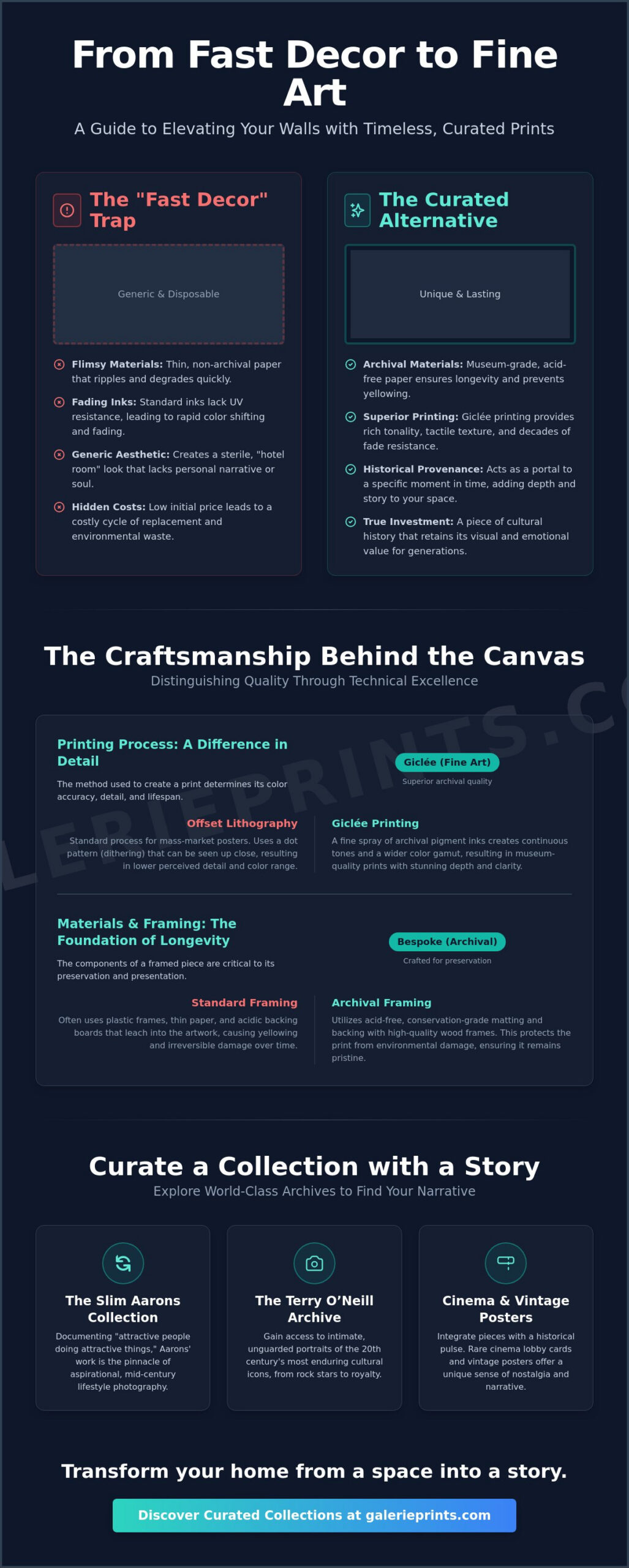
Mass-market art often carries distinct visual markers that betray its origins. You’ll notice thin, flimsy paper that ripples under humidity, plastic frames that mimic wood grain with startling inaccuracy, and over-saturated filters that attempt to mask a lack of true photographic depth. Standard offset lithography, the process used for most inexpensive posters, cannot replicate the rich tonality or tactile texture found in fine art processes. This creates a “hotel room” aesthetic, a sense of sterile anonymity that dilutes your personal narrative. While some avant-garde collectors might appreciate the conceptual nature of Found object art, most mass-produced decor lacks even that level of intellectual curiosity, offering instead a diluted version of beauty that feels hollow and repetitive.
The True Cost of Inexpensive Prints
The allure of a low price tag often hides the inevitable degradation of the product. Non-archival materials are prone to rapid decline. Standard inks lack UV resistance, meaning a print positioned in a sunlit room can begin to fade or shift in color within just a few years. It’s a frustrating cycle. You buy a piece to brighten a room, only to watch it lose its vitality. Beyond the physical decline, mass-produced frames often utilize acidic backing boards that can leach into the paper over time, causing yellowing and brittle fibers. When you consider the environmental impact of this disposable cycle, the “affordable” option becomes quite costly. Investing in alternatives to mass produced wall art ensures that your investment retains its visual and emotional value for decades, rather than just a single season.
The Archival Alternative: Fine Art Photography and the Power of the Archive
The distinction between a mere decoration and a piece of cultural history lies in its provenance. While big-box retailers rely on algorithms to predict trends, the true alternatives to mass produced wall art are found within the silent, temperature-controlled corridors of the world’s great archives. These repositories, which house the life’s work of legendary photographers, offer a depth of narrative that “fast decor” simply cannot mimic. By choosing an image with a documented history, you’re not just filling a space; you’re acting as a temporary guardian of a specific moment in time.
Photographic heritage represents a cornerstone of a truly sophisticated home. It bridges the gap between an unattainable museum original and a generic poster, providing a tangible connection to moments that shaped our collective consciousness. A curator’s role is essential in this process. They don’t just find an image. They select a narrative that has already stood the test of time, ensuring that the work remains relevant even as your personal style evolves. Selecting these alternatives to mass produced wall art is about more than aesthetics; it is about the quiet authority of authenticity.
The Allure of the Slim Aarons Collection
Slim Aarons famously documented “attractive people doing attractive things in attractive places,” creating a visual language of mid-century leisure that remains unparalleled. As the master of aspirational photography, Slim Aarons offers more than just a view of a pool; he offers a seat at the table of high society. It’s vital to distinguish between an authorized archival print, produced directly from the original transparency, and a diluted digital reproduction. The former preserves the vividness and specific grain that defines the artist’s legacy, while the latter is merely a hollow imitation.
Beyond Modernity: Tapping into Iconic Archives
Tapping into iconic archives allows a collector to move beyond modern trends and access the emotional resonance of the mid-century to the late 90s. These archives, much like the Library of Congress archives, preserve the exquisite detail and historical weight of the original negatives. Selecting fine art photography with “official” status ensures that you are investing in a piece with future collectability. These works carry a gravity that mass-produced decor can never replicate, acting as a permanent fixture of history on your wall. You might consider exploring our curated music archives to find a piece that resonates with your own history.
Materiality and Craft: The Technical Superiority of Bespoke Prints
The transition from a mere image to a physical masterpiece requires a profound understanding of materiality. While the digital age has made imagery ubiquitous, the physical print remains the final, definitive expression of a photographer’s vision. True alternatives to mass produced wall art rely on the Giclée revolution, a sophisticated printing process that utilizes high-definition, pigment-based inks. Unlike the dye-based inks found in standard commercial printers, which soak into the fibers and lose their vibrancy, pigment inks sit upon the surface of the medium. This creates a chromatic depth and tonal graduation that is unreachable by standard offset lithography, allowing the viewer to perceive the subtle textures of a mid-century poolside or the fine grain of a vintage film negative.
The tactile experience of art is often overlooked in the rush to fill a room. A high-end print possesses a physical weight and surface texture that commands attention. When you hold a bespoke print, you feel the difference of cotton rag or pH-neutral fibers, materials that provide a stable, luxurious base for the imagery. This focus on craft ensures that the viewing experience is not just visual, but sensory. By prioritizing these technical nuances, a collector ensures their home is anchored by pieces that possess a palpable sense of quality and permanence.
Understanding Archival Standards
In the world of fine art, “Museum Quality” is a specific technical benchmark, signifying that a piece is constructed to last for 100 years or more without significant fading or deterioration. This longevity is achieved through the use of pigment-based inks, which offer superior lightfastness compared to their dye-based counterparts. Archival photo paper serves as the essential, acid-free foundation that distinguishes a permanent artistic investment from a fleeting, mass-produced alternative. This commitment to chemical stability ensures that the history captured within the frame remains as vivid for the next generation as it is today.
The Art of Bespoke Framing
A bespoke framing service is a non-negotiable element for those seeking alternatives to mass produced wall art, acting as both a protective vessel and a stylistic finishing touch. Professional framing creates a controlled environment that shields the print from humidity, physical warping, and the slow damage of UV rays. Beyond protection, the frame must complement the era and soul of the work. For instance, the iconic works within our Slim Aarons collection are often best served by a slim white wood frame, a choice that mirrors the clean, modernist lines of the architecture he documented. Proper mounting and matting further elevate the piece, providing the “breathing room” necessary to create a commanding gallery-like presence within a residential setting.
Curation with a Narrative: Choosing Art with a Historical Pulse
Sophisticated interiors are rarely built on color coordination alone; they’re built on narrative. While mass-market retailers often encourage consumers to select art that simply matches a rug or a sofa, a truly curated home demands a deeper dialogue between the viewer and the wall. When seeking alternatives to mass produced wall art, the most discerning collectors look for a historical pulse. This shift from “matching” to “storytelling” transforms a room from a static showroom into a living gallery. It’s about finding pieces that possess a documented history, whether that’s a moment of high-society leisure or a candid glimpse into a legendary recording session.
The “Conversation Starter” test is a simple yet effective metric for any new acquisition. Ask yourself: does this piece have a provenance or a story to tell guests? If the answer is no, it likely lacks the staying power required for a lasting collection. Archival treasures represent the pinnacle of alternatives to mass produced wall art because they carry an inherent authority. They don’t just sit on the wall; they command the space, inviting questions about the photographer, the subject, and the specific era they represent. This intellectual weight ensures that your decor remains relevant long after fleeting interior trends have faded.
The Timelessness of Black and White
In an era of over-saturated digital filters, black and white pictures act as a sophisticated anchor for the modern home. By stripping away the distraction of color, monochrome art forces a focus on form, shadow, and raw emotion. These works serve as a timeless alternative to the loud, trend-driven palettes found in big-box stores. Integrating monochrome pieces into a contemporary room doesn’t mean sacrificing warmth. Instead, it provides a neutral yet powerful focal point that allows your furniture and architectural details to breathe, creating a sense of composed elegance that color photography sometimes struggles to achieve.
Music and Film: The Art of Cultural Memory
The transition from disposable “fan posters” to fine art photography marks the maturity of a collector’s journey. Instead of generic reprints, imagine owning a piece of the Terry O’Neill archive or rare cinema lobby cards. These cards are not merely advertisements; they are tangible pieces of cinematic heritage that once sat in the foyers of grand theaters. Whether it’s a Star Wars limited edition print or an iconic image from our music archives, these cultural icons provide an intellectual pulse to a home office or library. They act as a bridge to a bygone era of elegance and artistry. Browse our collection of authentic cinema lobby cards to find a piece of film history that resonates with your personal style.
Elevating Your Space with Galerie Prints: The Guardian of Photographic Heritage
At the intersection of historical preservation and contemporary interior design, Galerie Prints operates as a bridge between world-class archives and private collectors. Our mission is rooted in the belief that a home’s walls should serve as a testament to cultural significance rather than a reflection of mass-market trends. By positioning ourselves as guardians of photographic heritage, we provide access to imagery that was once reserved for museum galleries or elite private estates. Every piece we offer, from the sun-drenched poolside scenes of the Slim Aarons collection to the gritty intimacy of Terry O’Neill’s music archives, represents a deliberate choice for those who seek alternatives to mass produced wall art. We don’t just sell prints; we facilitate the acquisition of history.
Our commitment to localized, artisanal craftsmanship is what truly separates a Galerie Print from a standard commercial reproduction. We understand that the technical superiority of the Giclée process and the use of pH-neutral fibers only reach their full potential when handled by experts who respect the medium. Each frame is a product of our bespoke framing service, ensuring that your chosen piece is protected and presented with the dignity it deserves. This artisanal marker acts as a seal of quality, a promise that your investment will remain a stable, vibrant, and evocative part of your home for decades to come. By curating the world’s most iconic photographers, we ensure your walls never feel mass-produced.
A Curated Path to Ownership
Transitioning from an admirer of fine art to a serious collector should be a seamless, intellectually stimulating journey. Our online gallery is designed to provide the context and narrative depth necessary to make an informed decision, offering a steady and composed flow of information that mirrors the experience of a physical gallery. Whether you’re interested in Star Wars limited edition prints or rare cinema lobby cards, the process is one of discovery rather than a mere transaction. Our bespoke framing service completes the experience, providing ready-to-hang luxury delivered with precision. For those looking to build a cohesive gallery wall, we offer personalized advice to help you select pieces from our archives that speak to a singular, sophisticated aesthetic.
Your Home as a Private Gallery
Investing in authorized, high-fidelity archival prints is an investment in permanence. By choosing alternatives to mass produced wall art with a clear provenance, you join an elite community of collectors who value the stability of history over the frantic pace of modern trends. Your home becomes more than a residence; it becomes a private gallery, a sanctuary of beauty and history that reflects a worldly, discerning perspective. The prestige of owning a piece from the Terry O’Neill or Slim Aarons collection provides a sense of wonder and nostalgia that generic decor can never hope to achieve. Explore our curated collections and find your home’s signature piece to begin your journey into the world of high-caliber photographic art.
Curating Your Legacy of Visual Heritage
Transcending the cycle of disposable decor requires a commitment to authenticity and a reverence for the stories captured through a lens. By prioritizing archival quality over fleeting trends, you transform your home into a private gallery that reflects a discerning, worldly perspective. We’ve explored how the technical precision of Giclée printing and the historical weight of iconic archives provide the ultimate alternatives to mass produced wall art, ensuring that your collection remains as vivid and relevant decades from now as it is today.
As an authorized Getty Images Gallery partner, we’re dedicated to preserving the integrity of every image. Our bespoke framing is executed by master craftsmen to museum standards, and we provide worldwide delivery of our museum-quality prints to ensure your chosen piece arrives ready to command the room. Your walls are the canvas for your personal history; choose pieces that speak with quiet authority and enduring elegance.
Discover the world’s most iconic photographic archives at Galerie Prints and begin curating a home that is truly your own.
Frequently Asked Questions
What makes a print ‘fine art’ rather than just a poster?
A fine art print is defined by its archival quality and documented provenance, whereas a poster is a mass-produced item intended for temporary display. Fine art prints utilize pigment-based inks and museum-grade paper to capture the artist’s original vision with extreme fidelity. While posters often use thin, acidic paper that degrades quickly, a fine art print remains stable and vibrant for generations. This distinction ensures your home reflects a curated collection rather than a fleeting retail trend.
Why is archival paper so important for wall art longevity?
Archival paper is essential because it lacks the acidic compounds that cause standard paper to turn yellow and become brittle over time. These pH-neutral fibers, often made from 100% cotton rag, provide a chemically stable environment for the photographic image. By choosing archival materials, you’re ensuring your art can withstand a century of display without losing its structural integrity or visual clarity. It’s the foundation of any serious investment in photographic heritage.
Are limited edition photography prints a good investment?
Limited edition photography prints can be a sound investment because they possess inherent scarcity and documented authenticity. When a run is capped at a specific number, the supply is finite, which can lead to appreciation as the artist’s reputation grows. It’s vital to ensure the prints are authorized by the estate or archive to maintain their future collectability. These pieces offer a sense of exclusivity that mass-market reproductions simply cannot provide.
How do I know if a Slim Aarons print is authentic and authorized?
Authenticity for a Slim Aarons print is verified through authorized gallery partnerships and certificates of authenticity. Genuine prints are produced directly from the original negatives or transparencies held in the Getty Images Archive. You should look for official stamps or documentation that confirm the piece was created using museum-grade processes. Unauthorized digital copies lack the chromatic depth and specific grain that characterize Aarons’ masterworks, making them poor substitutes for the real thing.
What are the best alternatives to mass-produced art for a mid-range budget?
Cinema lobby cards and music archive prints represent some of the best alternatives to mass produced wall art for those with a mid-range budget. These pieces offer a tangible connection to cinematic or musical history without the premium price of oversized limited editions. They provide a unique, artisanal feel and a rich narrative that elevates your space. By selecting these curated items, you’re investing in authentic cultural artifacts that possess genuine soul and historical weight.
Can I frame a fine art print myself, or should I use a professional service?
You should always use a professional framing service to ensure the long-term protection and presentation of your fine art. DIY framing often involves acidic materials or non-UV glass that can cause irreversible damage to the print through chemical leaching or sun bleaching. A professional framer provides bespoke mounting and archival-grade barriers that shield the work from humidity and warping. This ensures your art remains a permanent fixture of your home’s aesthetic legacy.
How do I create a gallery wall that doesn’t look like a retail display?
Creating a sophisticated gallery wall involves moving beyond uniform grids to embrace a mix of scales, eras, and textures. You might anchor the arrangement with an iconic Terry O’Neill photograph and surround it with smaller cinema lobby cards or music archive pieces. This varied approach avoids the sterile feel of a retail display. By blending different historical pulses, you tell a personal story that reflects your own journey and appreciation for the arts.
What is the difference between giclée printing and standard digital printing?
The primary difference lies in the quality of the ink and the precision of the output. Giclée printing utilizes twelve or more pigment-based inks to achieve a depth of color and tonal graduation that standard four-color digital printers can’t replicate. These pigments are specifically designed for lightfastness and longevity. Standard digital printing often uses dye-based inks that are prone to fading and lack the professional resolution required for high-caliber photographic art.