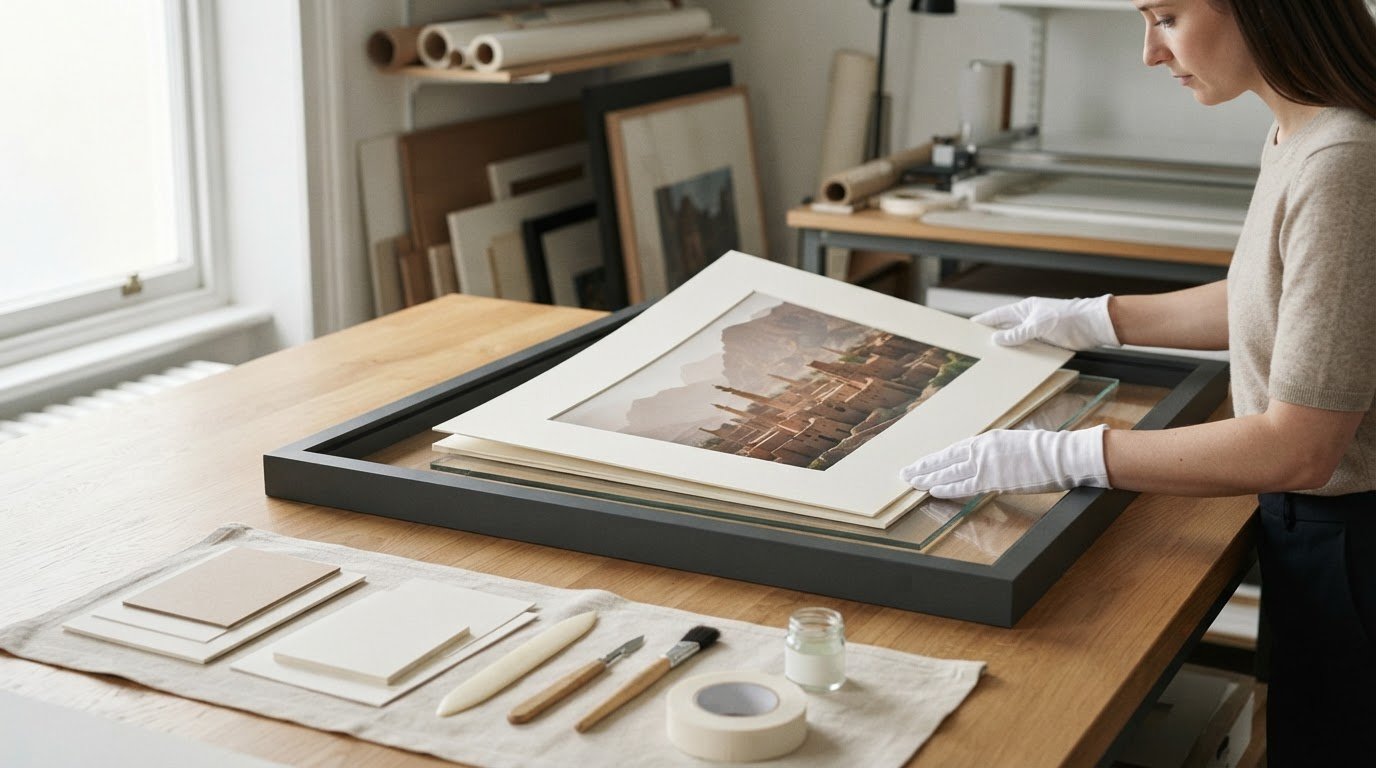
Tag: UV Glass

Conservation Framing for Photography: How to Protect and Display Prints

A beautifully framed photograph can still be vulnerable behind the glass. Conservation framing for photography is not about choosing a prestigious-sounding material. It means making considered choices that help reduce avoidable risks to the print.

If you’re unsure whether a mat is necessary, what “archival” really means, or whether framing might harm a photograph you value, those are sensible questions. Suitable materials and construction can help protect a print, but no frame can shield it from every threat, particularly unsuitable display conditions.

This guide explains what conservation framing can and can’t do, how glazing, mats, backing, and mounting methods affect a photograph, and what to ask before approving a frame. You’ll also learn why clear, verifiable material specifications matter more than vague marketing language, and how to display a print with care while preserving its visual presence. With a little knowledge, you can make the frame a considered part of the photograph’s presentation, not a source of uncertainty.

Key Takeaways

  • Conservation framing for photography can reduce avoidable risks to a print, but it can’t prevent every kind of deterioration.
  • Glazing, mats, spacers, mounting, and backing work together. The photograph’s process can affect which materials are suitable.
  • UV-filtering glazing helps, but it isn’t a substitute for physical separation, compatible materials, and thoughtful display conditions.
  • Before commissioning a frame, identify the print and its condition, explain where it will hang, and ask specific questions about materials and construction.
  • Careful placement and handling remain important after framing, especially away from direct sunlight, persistent heat, and damp.

What Is Conservation Framing for Photography, and What Can It Protect?

Conservation framing for photography means choosing materials and construction methods intended to reduce avoidable risks to a photographic print. A suitable frame can help limit contact with the print’s surface and reduce unnecessary handling, as well as moderate exposure to some environmental hazards. It can’t prevent every kind of deterioration. Light, fluctuating conditions, and the natural ageing of photographic materials may still affect an image over time.

Conservation framing helps reduce preventable risks to a photograph; it cannot promise that the print will remain unchanged forever. The frame itself can also age or be affected by its surroundings. For a broader perspective on why frames need care, see Conservation and restoration of painting frames, which discusses deterioration factors such as humidity, pests, and adhesives. Caring for the frame, however, is distinct from protecting the photograph inside it.

Framing is preventive, not restorative. If a print is already faded, stained, creased, or otherwise damaged, a new frame won’t reverse its condition. Treatment may require examination by a qualified photograph conservator, who can assess the image and recommend appropriate next steps. Don’t attempt repairs or remove adhered materials without expert guidance.

Which photographic prints may need extra care?

A contemporary print in good condition may call for different decisions from a historic, rare, irreplaceable, or visibly fragile photograph. With an older print, both its photographic process and its present condition can affect which materials are suitable. Yellowing, flaking, tears, or evidence of previous repairs are reasons to seek specialist advice before framing. If a photograph is valuable or historically significant, consult a photograph conservator or a framer experienced with photographs before making changes.

Does every photograph need conservation framing?

No single framing approach suits every print. The right choices depend on the photograph’s process and condition, its personal or financial importance, where it will be displayed, and the conditions around it. A print intended for a bright room may raise different concerns from one kept in a quieter, more stable setting. The aim is informed care, not alarm or unnecessary expense.

Think of framing as part of the photograph’s presentation. It can support the image visually while helping you make thoughtful decisions about its care. For ideas on bringing photographic art into a home, explore fine art photography collecting and decorating. Next, consider how each component of the frame interacts with the print.

How Conservation Framing Materials Interact with a Photographic Print

A framed photograph is a small, interconnected system. Glazing faces the image; a window mat or spacers create distance; the mount supports the print; backing sits behind it; and the frame holds the assembly together. Each part can affect the print through contact, pressure, or the environment inside the frame. Every layer that touches or encloses a print can affect how it’s cared for.

Choose materials for the photograph’s process, not just a label on the board. “Acid-free” describes a useful property, but on its own it doesn’t identify the material’s composition, test results, or suitability for a particular print. Ask what the mat, mount, and backing are made from, and whether their suitability for photographs can be documented. For prints within its scope, the Photographic Activity Test (PAT) is associated with ISO 18916; ISO 18902 sets requirements for materials used in framing and storing photographs. The Caring for Photographs guide from the American Institute for Conservation offers further guidance on handling and care.

Some photographic processes need particular consideration. Buffered boards, for example, aren’t suitable for every process; cyanotypes can be damaged by buffered materials. If the process is unknown, or the print is sensitive or historic, ask a qualified framer to assess which materials are appropriate. Don’t assume one board works for every photograph.

What should you ask about mats, mounts, and backing?

Start with the points of contact: what materials touch the print, and how is it held in place? Ask whether the mounting method is reversible, meaning the photograph can be removed later without damage. Non-adhesive supports may be appropriate, but the method should suit the print’s condition and format. A properly designed window mat or spacers can keep the image surface from resting directly against the glazing, helping reduce the risk of sticking or moisture-related contact.

Ask for specific material descriptions rather than relying on terms such as “museum quality.” For a delicate or historically important photograph, a qualified framer or photograph conservator can help assess the print and advise on the assembly.

What does UV-filtering glazing do, and not do?

UV-filtering glazing can reduce some ultraviolet exposure, but the degree of protection depends on the product and its stated specification. Ask which wavelengths it filters and request the manufacturer’s information. It won’t remove all fading risks: visible light, display conditions, and handling still matter. UV protection is one element of the framing system, not a substitute for suitable materials, separation from the glass, or thoughtful placement.

If you’re considering framing a purchased print, Galerie Prints offers a bespoke framing service. You can explore framing options and confirm the glazing, mounting, and backing specifications before choosing.

Conservation Framing Misconceptions: Is UV Glass Enough?

No. UV-filtering glazing can reduce some ultraviolet exposure, but it doesn’t make a photograph invulnerable. It can’t control every source of light or prevent heat and moisture from affecting the print. Nor can it compensate for unsuitable materials inside the frame. A more complete approach considers the whole assembly, the print’s condition, and where it will be displayed.

Think of each measure as addressing a different risk. The details below are a starting point, not a specification for every photograph. Confirm exact materials and performance claims with the framer or manufacturer, especially for a sensitive or historic print.

  • UV-filtering glazing: Reduces some ultraviolet exposure. Performance varies by product, and it doesn’t block all potentially damaging light.
  • A mat or spacers: Helps keep the print’s surface from touching the glazing. It doesn’t prevent fading or make unsuitable materials safe.
  • Compatible mount and backing: Helps avoid harmful contact and supports the print. Suitability depends on the photograph and its process.
  • Careful handling: Reduces risks from fingerprints, pressure, and accidental damage. It can’t reverse existing deterioration.
  • Thoughtful placement: Limits exposure to direct light, heat, moisture, and pollutants. Conditions can still change over time.

Can conservation framing prevent fading?

It may reduce some risks, but no framing choice can guarantee that a photographic print won’t change. Light exposure can affect colour stability, while the print’s materials and process also influence how it ages. Even glazing that filters ultraviolet light doesn’t eliminate exposure to visible light. Avoid direct sun and consider the room’s heat and moisture conditions. For advice tailored to a particular process, ask a photograph conservator rather than relying on a general lifespan estimate.

When is professional conservation advice worthwhile?

Routine framing of a replaceable contemporary print is different from making treatment decisions about a unique original. If a photograph is fragile, damaged, historically significant, or irreplaceable, seek specialist assessment before framing or attempting repairs. Ask a framer about their experience with photographic materials specifically; expertise with frames or other kinds of artwork doesn’t automatically mean familiarity with photographs. A conservator can assess the print and identify risks that may not be visible at a glance.

The aim of conservation framing for photography isn’t to promise permanence. It’s to make considered choices that reduce avoidable risks. A well-chosen frame is one part of that care, alongside appropriate handling and a suitable display location.

How to Commission Conservation Framing for a Photograph

A useful framing conversation begins with the photograph, not a frame sample. Share what you know about the print and where you plan to display it, then ask the framer to explain how the proposed construction addresses those circumstances. This checklist can help you compare options without relying on broad labels such as “archival” alone.

  1. Identify the print and its importance. Note its dimensions, any known photographic process or provenance, and visible concerns such as fading, tears, or surface damage. Explain whether it’s a replaceable print, a limited print, a historic photograph, or otherwise especially meaningful to you.
  2. Describe the intended location. Tell the framer which room you have in mind and whether the photograph may face direct sunlight or be near a heat source, damp area, or changing conditions. The display environment can help shape practical choices.
  3. Ask for the material details. What are the glazing, mat, mount, and backing made from? Which materials will touch the print, and how will the glazing be kept from contacting its surface? Ask for specific product or material information where available.
  4. Clarify how the print is held. Ask whether the attachment method is reversible and whether the photograph can be removed later without damage. If the process or condition is uncertain, ask what the framer can verify and what remains unknown.
  5. Record the agreed specifications. Keep a written note of the chosen materials, glazing description, mounting method, and any care advice. For a fragile, damaged, unique, or historically significant photograph, consult a qualified photograph conservator before proceeding.

What information should you bring to a framer?

Bring the print’s dimensions, known process or provenance, condition concerns, and intended display location. Share what you know about the photograph’s history, but don’t guess at details you can’t confirm. Tell the framer why the print matters to you, then ask for material choices to be explained in plain language. If a specification can’t be verified, ask that this uncertainty be made clear before you approve the design.

How should you assess the finished frame and its placement?

Before hanging the work, check the frame for signs of pressure, damage, or movement. Ask the framer to confirm that the print is securely supported and separated from the glazing. Choose a position away from direct sunlight and locations exposed to persistent heat or moisture changes. If you’re considering a monochrome work, black-and-white photography collecting offers further inspiration for displaying it thoughtfully.

Galerie Prints offers bespoke framing as an add-on for purchased prints. To explore the option, view the bespoke framing service, and confirm the materials and construction details that matter for your photograph.

Displaying and Caring for a Conserved Photograph Over Time

Conservation framing for photography works best alongside thoughtful display and careful handling. A well-considered frame can help reduce certain risks, but the photograph’s surroundings still matter. Choose a stable interior location away from direct sunlight, persistent heat, damp, and rapid changes in room conditions.

How can you reduce avoidable display risks?

Check the room throughout the day and across seasons. A wall that seems shaded in winter may receive strong sunlight later in the year. Bathrooms and kitchens can have fluctuating moisture, while radiators and fireplaces create heat. Keep framed photographs away from these conditions where possible, and avoid leaning objects against the glazing or stacking frames where pressure could affect the print.

For routine dusting, use a soft, dry cloth on the frame’s exterior. Don’t spray cleaner onto the glazing, where liquid could run into the edges, and don’t open the frame to clean or adjust the photograph. If the glazing needs more than light dusting, follow the framer’s care guidance for that specific frame and surface.

Once you’ve chosen a suitable place and established a gentle care routine, explore Galerie Prints bespoke framing as an option for a purchased print. Confirm the materials and construction details before selecting a framing option; conservation specifications shouldn’t be assumed.

When should a framed photograph be inspected?

Make occasional visual checks without taking the frame apart. Look for condensation, mould-like growth, new discolouration, loose hanging hardware, or signs that the print has shifted. Changes in a room’s light or moisture conditions may also make a previously suitable location less appropriate, so reassess placement if the environment changes.

If you notice an unusual change, don’t try to clean or repair the photograph yourself. Seek advice promptly from a qualified photograph conservator, particularly if the print is fragile, historic, or irreplaceable. A calm, regular check helps you notice concerns early while leaving the framed work undisturbed.

Choose a Frame That Lets the Photograph Endure

Good conservation framing for photography balances materials and construction suited to the print, protection that addresses real risks, and a display position that avoids unnecessary exposure. UV-filtering glazing can help, but it isn’t a guarantee against fading or change. The photograph’s process and condition matter, too, so seek a photograph conservator’s advice when a print is fragile, historic, or irreplaceable.

Ask clear questions about what touches the image, how it’s mounted, and which specifications can be verified. Keep the frame away from direct sunlight, persistent heat, and damp, then inspect it occasionally for changes. These practical steps make caring for a photograph less uncertain while allowing its image to remain at the heart of the room.

Galerie Prints offers bespoke framing as an add-on for purchased prints. Explore available framing and print options, and confirm current materials and specifications before deciding: Explore Galerie Prints bespoke framing. Choose a print and explore the framing options, then confirm the construction details that suit its display.

Frequently Asked Questions

Is conservation framing worth it for a photographic print?

Does UV-protective glass stop photographs from fading?

No. UV-filtering glazing can reduce some ultraviolet exposure, but it can’t guarantee that a photograph will never fade. Light, the print’s materials, and display conditions all influence how it changes over time. Ask the framer for the glazing specification and what exposure it addresses. Even with protective glazing, avoid direct sunlight. For a historic or irreplaceable photograph, seek advice from a qualified photograph conservator before choosing materials or a display location.

What materials should conservation framing use for photographs?

Suitable materials depend on the photograph’s process, condition, and intended display. Ask what the mat and backing are made from, which materials touch the print, how it’s mounted, and whether that method is reversible. “Acid-free” alone doesn’t explain every aspect of a material’s suitability. If the photograph is fragile, historic, or especially valuable, ask a qualified framer or photograph conservator to recommend materials for that specific print.

Can a photograph touch the glass in its frame?

It’s generally preferable to keep a photograph’s surface from touching the glazing. Changes in conditions can contribute to sticking or other damage, and direct contact may complicate future care. A properly designed mat or spacers can create separation, but the appropriate construction depends on the photograph and frame. Ask how the print is held, whether it contacts any framing materials, and whether the assembly can be accessed later without harming the image.

How should I display a framed photograph to protect it?

Choose a stable indoor location away from direct sunlight, persistent heat, damp, and marked environmental changes. Protective glazing doesn’t replace thoughtful placement. Check the frame occasionally for condensation, visible changes, or movement, and dust its surface gently without spraying liquid near the edges. Don’t open the frame to clean the print. If you notice damage or an unusual change, don’t attempt a repair; consult a qualified photograph conservator.

Should I use conservation framing for an old or valuable photograph?

Seek professional advice before framing a photograph that’s historic, fragile, damaged, unique, or especially valuable. Its process and present condition can affect which materials and mounting methods are suitable. A qualified photograph conservator can assess the print and advise on treatment needs, while a framer can explain construction options. Ask specifically about experience with photographic materials. Don’t assume standard framing or UV-filtering glazing alone is appropriate for an important original.

Is conservation framing the same as restoring a photograph?

No. Conservation framing concerns the materials and construction used to support and display a photograph while reducing avoidable risks. Restoration involves assessing or treating the photograph itself and should be undertaken by an appropriately qualified specialist. If a print is torn, stained, brittle, or otherwise damaged, seek conservation advice before framing it. This helps ensure framing decisions take the photograph’s condition into account rather than complicating its care.

Bespoke Framing Guide for Fine Art Photography

What if the most significant threat to your photographic collection isn’t time, but the very frame intended to protect it? It’s a common anxiety for collectors who’ve acquired a rare Slim Aarons or a limited edition Terry O’Neill print. You understand that these works aren’t merely decorations; they’re historical fragments that require a guardian’s touch. Choosing a professional bespoke framing service is the final act of curation, ensuring that your investment is shielded from the subtle degradations of acidity and light.

You likely recognize that a standard, store-bought frame often fails to respect the provenance of high-caliber art. This guide will show you how artisanal craftsmanship transforms a delicate print into a museum-quality masterpiece that’s ready to hang. We’ll clarify the confusing jargon around UV-filtering glass and 100% cotton rag mats, giving you the confidence that your art won’t yellow or fade over the coming decades. By the end, you’ll know exactly how to select a frame that complements the specific era of your photography while maintaining its pristine condition for a lifetime.

Key Takeaways

  • Discover how a professional bespoke framing service elevates a photographic print into a permanent architectural element that enhances both its market value and visual impact.
  • Master the technical anatomy of gallery-grade protection, including the necessity of UV-filtering glazing and acid-free materials to ensure your collection remains pristine for decades.
  • Learn to harmonize frame aesthetics with specific photographic eras, ensuring your choice complements the mid-century allure of Slim Aarons or the high contrast of monochrome archives.
  • Acquire expert techniques for spatial design, such as the “eye-level” rule and precise scaling, to create a sophisticated and balanced display within your home or office.
  • Understand the prestige of artisanal craftsmanship, where localized production and traditional mounting methods guarantee a ready-to-hang masterpiece of museum quality.

The Distinction of a Bespoke Framing Service for Fine Art

A bespoke framing service isn’t a mere retail transaction; it’s a meticulous architectural undertaking designed to house a piece of history. While a standard frame acts as a simple border, a bespoke solution serves as a tailored environment that respects the specific physical and aesthetic needs of a fine art photograph. This distinction is vital for collectors who view their acquisitions as lifelong investments. When you place a rare print within a professionally crafted frame, you’re signaling its importance to the viewer, creating a psychological focal point that commands attention and respect.

Ready-made frames often rely on standardized sizes and inferior materials that can’t provide the structural integrity required for large-scale or high-value works. In contrast, a bespoke approach ensures that every component is built to the exact millimetre of the print, eliminating the risk of movement or edge damage. Understanding the Picture frame history and materials reveals that the frame has always been a bridge between the artwork and its environment, evolving from ornate gilded wood to the sleek, archival solutions we employ today. This evolution allows us to bridge the gap between historical photography, like vintage music archives, and the clean lines of modern interior design.

Investment Protection vs. Basic Decoration

High-value prints require specific structural support to prevent the subtle but devastating effects of warping over time. Unlike basic decoration, a professional bespoke framing service focuses on the long-term preservation of the art’s market value. The cost-benefit analysis is clear: the initial investment in archival mounting and premium hardwoods prevents the need for expensive restoration later. By ensuring the frame is built with precision, we create a stable micro-environment that shields the paper from the physical stresses of hanging and temperature shifts. It’s the difference between a temporary display and a permanent legacy.

The Galerie Prints Curatorial Approach

We believe in moving beyond the “box” to create a holistic visual experience. Our deep expertise in the Slim Aarons collection informs every choice we make, from the depth of the rebate to the tone of the mount board. It’s about matching the frame’s visual weight to the density of the photograph. A sun-drenched poolside scene requires a different structural “gravity” than a dark, moody monochrome archive. This curatorial eye ensures that the frame doesn’t just hold the art; it completes it, acting as a silent guardian of the artist’s original vision.

The invisible enemies of art, namely UV light, humidity, and acid migration, operate on a timescale of decades. While a standard frame might look adequate on the day of purchase, a professional bespoke framing service acts as a biological shield for your collection. Without archival intervention, the very materials meant to display a print can become the catalysts for its destruction. Acidic wood pulps in cheap mats can “burn” the edges of the paper, while fluctuating humidity causes the fibers to expand and contract, leading to unsightly rippling or “cockling.”

Material integrity begins with the choice of timber. We prioritize premium hardwoods like oak, ash, and walnut because of their natural stability and density. Unlike composite materials or plastic “snap-on” frames, solid wood doesn’t off-gas harmful chemicals or warp under the weight of large-scale glass. Investing in a bespoke framing service ensures every component, right down to the Kraft paper dust cover and stainless steel hanging hardware, meets a gallery standard. This “ready-to-hang” promise isn’t just about convenience; it’s a guarantee that the internal environment of the frame is sealed against pollutants and insects.

Museum-Quality Glass and UV Protection

Standard window glass allows ultraviolet rays to penetrate, which slowly bleaches the vibrant pigments of your artwork. For high-caliber fine art photography, we utilize museum-grade glazing that filters out up to 99% of UV rays. This protection is paired with anti-reflective coatings that eliminate the “mirror effect,” ensuring the clarity of the image remains the focus. When dealing with oversized works, we often recommend high-grade archival acrylic. It’s lighter than glass and shatter-resistant, providing an extra layer of safety for both the art and your home environment. If you’re unsure which glazing suits your lighting, our curators can help you select the ideal finish for your collection.

Acid-Free Mounting and Matting

True archival framing requires 100% cotton rag matboards that are pH neutral and lignin-free. These mats provide essential “breathing room” between the print and the glass, preventing the emulsion from sticking to the glazing during humid spells. We strictly adhere to the principle of reversibility. This means using hinge mounting with Japanese paper and wheat starch paste rather than permanent adhesives or tapes. This method allows the print to be removed in the future without a trace of damage, preserving the provenance and value of your Star Wars limited editions or vintage posters for the next generation.

Aesthetic Curation: Matching Frame Styles to Iconic Collections

Selecting the right profile for a piece of history requires more than an eye for decor; it demands a curatorial understanding of the artist’s original intent. A professional bespoke framing service treats each collection as a unique narrative, ensuring the frame acts as an extension of the era it represents. The frame is the final brushstroke, the definitive border that transitions the artwork from the archive into the living space. It shouldn’t just contain the image; it should amplify the atmosphere the photographer captured.

For the sun-drenched, aspirational world of the Slim Aarons Collection, we often recommend natural wood finishes that mirror the mid-century modern architecture of the scenes themselves. A light oak or warm walnut frame provides a tactile connection to the poolside villas of Palm Springs, grounding the leisure of the imagery without competing with its vibrant palette. When handling black and white pictures, the goal shifts toward monochrome mastery. High-contrast framing, such as a deep black ash with a subtle grain, creates a definitive border that makes the silvery mid-tones of the print pop. Conversely, a Terry O’Neill celebrity portrait often benefits from a sleek, minimalist “Studio” look, using thin, dark mouldings that mimic the professional atmosphere of a high-fashion shoot.

Vintage movie posters and cinema lobby cards allow for more expressive choices. These pieces are artifacts of a bold, graphic era and can support more substantial mouldings that reflect the grandeur of the silver screen. In these cases, the frame serves as a bridge, anchoring the nostalgic energy of the poster within a contemporary interior.

Wood Finishes and Color Theory

The choice between natural oak and black ash sets the emotional temperature of your room. Natural oak exudes warmth and organic stability, while black ash offers a sharp, contemporary edge. The “White Box” gallery look remains a gold standard because it allows the frame to disappear into the wall, a technique that suits minimalist contemporary spaces. Our curators often look for a “hero” tone within the photograph, such as a specific blue in a pool or a gold in a sunset, and select a frame finish that subtly pulls that color forward.

The Impact of Frame Width and Depth

Physical dimensions dictate the presence of the artwork on your wall. A thin profile suggests modernity and agility, while a substantial moulding conveys a sense of classic permanence. For a three-dimensional “shadow box” effect, we use deeper frames that create a visible gap between the glass and the print, casting a soft shadow that adds architectural depth. When you utilize a bespoke framing service for smaller prints, choosing a disproportionately large mount can elevate a modest piece to a position of singular importance, giving it the visual “weight” it deserves.

Designing a space around fine art requires a transition from the artisanal workshop to the specific architecture of your home. When you commission a bespoke framing service, the measurement process must account for the frame’s outer dimensions, not just the print size. A substantial hardwood moulding can add significant width to the overall footprint, which is a critical consideration when planning placement above a mantel or between narrow architectural features. It’s the difference between a piece that feels cramped and one that possesses the necessary “air” to breathe within the room’s proportions.

For residential displays, we adhere to the gallery standard eye-level rule, where the center point of the artwork sits approximately 152 centimeters from the floor. This placement ensures that the viewer’s gaze lands naturally on the subject matter, allowing for an intimate connection with the archival details. Lighting also plays a pivotal role in this final stage. To avoid distracting glare, even with museum-grade glazing, we recommend angled LED spotlights that highlight the texture of the print while preserving the integrity of the colors. It’s this level of environmental planning that transforms a house into a curated gallery.

The Art of the Single Statement Piece

A large-format photograph from our Music Archives or a Star Wars Limited Edition Print demands a robust bespoke frame to provide the structural support necessary for its scale. These “hero” pieces anchor a room, acting as a definitive focal point that dictates the rest of the interior’s aesthetic. When centering a room around a single statement piece, it’s vital to balance the frame’s visual weight with your existing furniture. A thin, modern profile might get lost above a heavy mid-century sideboard, whereas a deeper shadow box frame provides the architectural presence required to hold its own against substantial decor.

Curating a Professional Gallery Wall

Creating a cohesive gallery wall is a sophisticated exercise in unifying disparate collections. You might choose to mix Cinema Lobby Cards with Terry O’Neill celebrity portraits, but the secret to a professional finish lies in a consistent framing language. By utilizing a professional bespoke framing service to apply identical wood finishes across different sizes, you create a visual thread that ties the collection together. Spacing is equally paramount; we suggest maintaining a precise gap of five to eight centimeters between frames to create “white space” that prevents the wall from feeling cluttered. This disciplined approach ensures that each piece remains distinct while contributing to a harmonious whole. If you’re ready to begin your curation, you can view our full collection of framed archives to find your next centerpiece.

The Galerie Prints Signature: Artisanal Craftsmanship for Collectors

Galerie Prints operates as a guardian of photographic heritage, and our commitment to localized, artisanal production methods ensures that every piece of art is treated with the reverence it deserves. Unlike mass-market retailers that favor factory-line speed, our bespoke framing service is an extension of the curatorial process itself. The journey of a print is a deliberate one; it begins in the archives, where we source high-caliber visual art from legends like Terry O’Neill or the Slim Aarons Collection. From there, the print moves directly to our workshop, where master framers align the archival paper with the perfect hardwood moulding. This integrated workflow allows for seamless quality control, as we monitor every detail from the initial ink drop to the final sealed backing.

International white-glove delivery is the final pillar of our signature approach. We understand the anxiety of shipping rare Star Wars Limited Edition Prints or pieces from our Music Archives across the globe. That’s why our logistics are handled with the same precision as our craftsmanship. Each framed piece is secured in specialized packaging designed to withstand the rigors of global transit, ensuring it arrives in pristine condition. Utilizing a professional bespoke framing service that manages the process from archive to wall ensures that your investment is protected by a single set of expert hands.

Ready-to-Hang Convenience

We believe the acquisition of art should be a source of pleasure, not a logistical burden. Our “ready-to-hang” promise means your piece arrives with heavy-duty hanging hardware and a professional protective backing already installed. This “unpack and display” experience removes the friction often associated with art collecting. Professional assembly is always superior to “DIY” framing kits, which frequently lack the structural integrity and archival seals necessary to protect a lifelong investment. When you receive a package from us, you aren’t just getting a frame; you’re getting a fully finished masterpiece that’s been prepared by experts to last for generations.

A Trusted Guide for Serious Investors

Investing in high-end photography requires more than just an appreciation for beauty; it requires a strategy for preservation. Our curatorial team is available to provide personalized framing advice, helping you bridge the gap between historical significance and your modern interior aesthetics. This partnership offers the peace of mind that comes with museum-grade preservation, ensuring your collection remains a stable piece of history. Whether you’re expanding a corporate gallery or curating your first private residence, we act as your trusted guide through the elite world of visual art. Explore our bespoke framing options and complete your collection today.

Elevate Your Collection for Generations to Come

Choosing a professional bespoke framing service is the final, essential step in honoring the heritage of a fine art photograph. Throughout this guide, we’ve explored how the intersection of artisanal craftsmanship and archival science transforms a simple print into a permanent architectural legacy. By prioritizing museum-grade materials like UV-filtering glazing and acid-free mounting, you’re doing more than just decorating a wall; you’re acting as a guardian for a piece of history. These technical choices ensure that the vibrant pigments of a Slim Aarons poolside or the silvery tones of a Terry O’Neill portrait remain as evocative as the day they were captured.

The right frame serves as a vital bridge between the artist’s original vision and your personal interior aesthetic. At Galerie Prints, we specialize in archival preservation, delivering artisanal handcrafted frames that arrive ready-to-hang via our global shipping network. It’s time to move beyond the temporary nature of retail solutions and invest in the permanent beauty your collection deserves. We invite you to Discover the Art of Bespoke Framing at Galerie Prints and complete your journey into the elite world of photographic art. Your investment is a piece of history; let us help you protect it with the prestige it commands.

Frequently Asked Questions

What is the difference between custom framing and a bespoke framing service?

A bespoke framing service is a holistic curatorial approach rather than a simple retail selection of a frame. While standard custom framing often focuses on basic dimensions, our bespoke service integrates the print’s historical context with museum-grade structural support. This ensures the frame acts as a permanent architectural extension of the artwork, tailored specifically to the paper’s weight and the specific era of the photographic collection.

Why should I choose archival mounting for my fine art photography?

Archival mounting is essential because it utilizes pH-neutral and lignin-free materials that prevent chemical degradation over time. Standard adhesives and acidic wood-pulp mats can cause “burn” marks and permanent yellowing of the paper. By using reversible techniques like Japanese paper hinges, we ensure your fine art remains in its original condition, preserving both its visual beauty and its long-term market value for future generations.

Does your bespoke framing service include UV-protective glass?

Yes, our bespoke framing service utilizes museum-quality glazing that filters out up to 99% of harmful ultraviolet rays. This is a critical barrier against the bleaching effect of sunlight, which can quickly fade the vibrant pigments in iconic collections. We also offer anti-reflective coatings to ensure the clarity of the image is never obscured by glare, maintaining a perfect view from every angle in your home.

Can I order a frame for a print I already own, or only for Galerie Prints items?

Our framing expertise is primarily designed as a seamless, integrated add-on for the world-renowned archives we represent, such as the Slim Aarons Collection or Terry O’Neill photography. This ensures the production process is handled entirely in-house, from the initial print to the final artisanal mounting. By managing the journey from the archive to the workshop, we maintain absolute quality control over the materials and the structural integrity.

How do I clean and maintain my bespoke framed art?

Maintaining your framed art requires a gentle, minimalist approach to avoid scratching the high-grade glazing. We recommend using a clean, dry microfiber cloth to remove dust from the frame and glass surface. Don’t spray liquid cleaners directly onto the piece, as moisture can seep behind the glass and damage the archival print. Ensure the artwork is displayed in a stable environment away from direct heat sources or high humidity.

What are the best frame styles for a Slim Aarons poolside print?

The sun-drenched, aspirational scenes of Slim Aarons are best complemented by natural wood finishes that reflect mid-century modern aesthetics. Light oak or warm walnut frames provide a tactile connection to the architecture found within the photographs. These organic tones ground the imagery’s vibrant colors without competing for attention, creating a sophisticated harmony that suits both contemporary and period-accurate interior designs perfectly.

How long does the bespoke framing process take before shipping?

The bespoke framing process is a measured, artisanal journey that prioritizes precision over speed. Once your print is sourced from the archive, it undergoes a meticulous mounting and assembly stage in our workshop. This localized production ensures every detail meets our gallery standards. While the exact timeline varies based on the complexity of the piece, we focus on delivering a masterpiece that’s built to last a lifetime rather than rushing the production.

Is it safe to ship large, framed art internationally?

Shipping large-scale framed art globally is a core part of our service, handled with specialized white-glove logistics and custom packaging. We utilize heavy-duty, reinforced crates that protect the frame and glazing from the stresses of transit. Every piece is insured and tracked, arriving at your door in pristine, ready-to-hang condition. This professional approach removes the friction from art collecting, allowing you to invest in heritage regardless of your location.