
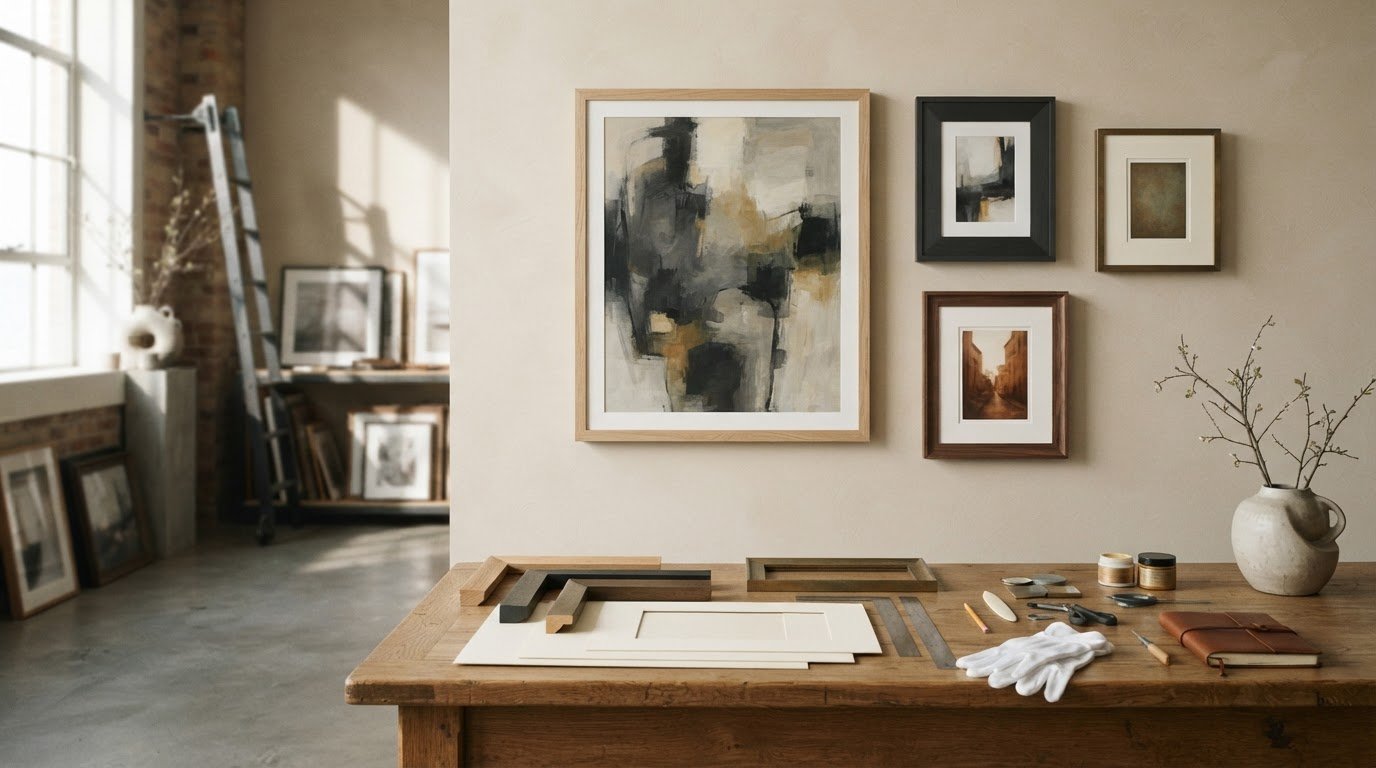
What if the best frame is the one you notice only after the artwork has drawn you in? Hand finished picture frames can bring depth, texture and character to a print, but the finish should support the image rather than compete with it. Choosing well involves more than matching colours: the frame’s scale, the space around the image and the room where it will hang all shape the result.
This guide explains what a hand-finished surface can contribute and how to compare frame proportions, materials and mounting choices. Use the practical checks to assess a frame in relation to the artwork and its setting, then make a choice that feels considered rather than based on a finish label alone.
Keep one principle in view: the frame serves the artwork first, then helps bring its materials and surroundings into harmony. Galerie Prints brings print selection and bespoke professional framing together. You can choose print dimensions, premium paper types and framing options, with framed prints delivered ready to hang.
Key Takeaways
- Understand what hand finished picture frames means, and why the phrase describes the finish rather than every stage of making a frame.
- Compare restrained and expressive finishes by considering the artwork’s character and the room where it will hang.
- See how the frame, mount, glazing and artwork support each play distinct roles in the final presentation.
- Use a practical checklist to move from identifying your artwork and measuring it to considering viewing distance, wall space and décor.
- Discover how Galerie Prints’ bespoke framing brings print dimensions, premium paper and framing choices together in a finished print ready to hang.
What Does Hand Finished Picture Frames Mean for Your Artwork?
A hand-finished frame has finishing work applied or refined by hand. The phrase describes the frame’s surface treatment, not necessarily every stage of its design or construction. The surface might show subtle texture, gentle variation in tone or carefully worked decorative details. Since the term can describe different treatments, assess the frame’s actual appearance rather than relying on the label alone.
Hand-finished framing describes a frame whose visible finish has been applied or refined by hand; it doesn’t, by itself, tell you how every part was made. Nor does the label mean every frame is entirely handmade or one of a kind. Look at the surface, noting its sheen, colour and level of detail, then consider how those features will read beside the artwork. For broader context on frame forms and decorative elements, see Picture Frame Wikipedia.
How a hand-finished frame differs from a standard finish
A standard finish may look more even and consistent, while hand-applied or refined finishing can sometimes introduce delicate tonal variation or a more tactile surface. Neither is automatically superior. A softly varied surface may lend a crafted quality; a uniform finish can create a quieter outline. Compare the frame itself with the artwork, and don’t assume that “hand-finished” means the entire frame was made by hand.
Why finish matters for photographs and fine-art prints
A frame’s surface helps set the image’s visual register. A restrained finish can let a photograph’s composition, tonal range or subject hold attention. A more decorative finish may add presence and suit an image with a strong sense of period or drama, provided it doesn’t overwhelm the picture. Choose according to the artwork, the intended display and the atmosphere you want to create, rather than following a universal rule about which finish is best.
Keep the frame’s decorative role distinct from the functions of mounting and glazing. A mount sits between the image and frame, creating visual breathing room and changing the artwork’s proportions within the overall presentation. Glazing covers the image. These choices affect the finished display, but they aren’t the frame finish itself.
Choosing a frame is part of deciding how an image will live in a room. For a wider perspective on selecting and displaying photographic work, explore fine art photography collecting and decorating.
How Frame Finish, Colour and Proportion Shape the Final Look
A frame changes how an image meets the wall. Its colour can echo a tone in the photograph, its finish can introduce contrast, and its width can give the image more or less visual presence. Rather than seeking an exact match, consider how the artwork, frame and room relate as a whole. The comparison below offers starting points, not rules about which choice is best.
| Approach | Visual effect | Artwork character | Room context |
|---|---|---|---|
| Restrained finish | Creates a quieter outline, keeping attention close to the image. | Can suit photographs with delicate tonal shifts or a calm composition. | May feel harmonious in a pared-back setting or among other framed works. |
| Expressive finish | Adds visual emphasis and gives the frame a stronger presence. | Can complement images with bold contrast, period character or dramatic subject matter. | May provide a deliberate focal point in a room with more decorative elements. |
Colour relationships needn’t be literal. A frame might pick up a subtle tone in the image, contrast with its darkest areas or connect with colours already present in the room. Consider the wall and nearby furnishings too, but don’t feel obliged to match them exactly. Whether arranging a print above refined furniture from Benjamin & Maxwell or on a minimalist feature wall, a little contrast can help the artwork stand apart, while a closer tonal relationship makes the overall display feel more composed.
Which frame finish suits a photographic print?
Let the photograph’s mood and tonal range guide your first thoughts. For black-and-white work, a restrained treatment may preserve a quiet, reflective quality, while a more expressive choice can heighten a dramatic or archival feel. Either approach can also work with colour images. Explore the enduring appeal of black and white pictures for more on the varied character of these prints.
How to judge frame width and visual balance
Width affects how much visual weight the frame carries around the image. A narrow profile can keep the boundary discreet; a broader one can make the finished piece feel more substantial on a large wall. Fine surface details may be visible up close but disappear when viewed across a room, so think about the distance from which the print will usually be seen. Step back and ask whether the frame gives the artwork presence without pulling attention away from it.
The frame should support, rather than distract from, the image. If you’re choosing a photograph for a particular space, browse the fine-art photography prints at Galerie Prints with the wall, viewing distance and desired atmosphere in mind.
Hand Finished Frames Compared: Finish, Mounting and Glazing
A framed print brings together several separate elements. The frame finish is the visible treatment of the frame itself; the mount, glazing and artwork support each have a different role. Keeping these choices distinct makes it easier to judge the complete presentation, rather than expecting one component to do everything.
When choosing hand finished picture frames, start by assessing the frame’s surface in relation to the image. Then consider how a mount might shape the space around it, how glazing will look in the intended setting, and how the print is held within the frame. No single combination suits every artwork or display environment.
What a mount adds to a framed picture
A mount creates a visible border between the image and frame, giving the photograph room to breathe and helping define its place within the overall composition. Its width changes the balance: a generous border can make the image feel more contemplative, while a narrower one keeps the presentation visually close to the picture. Colour matters too. A quiet tone may preserve a subtle mood; a contrasting one can make the image feel more distinct. A mount is a separate design choice, not part of the frame’s finish.
Distinguish the mount from the artwork support, which sits behind or holds the print within the framing. These components contribute to the construction of the finished piece, while the mount is visible around the image. Considering each separately helps you make more deliberate choices about appearance and presentation.
What glazing contributes to the finished presentation
Glazing is the transparent layer over the image. Its purpose and appearance are separate from the frame’s decorative finish, even though the two are seen together. Glazing choices can affect how the image is viewed, so consider reflections and the light in the room. A print displayed opposite a window, for example, may be seen under different conditions from one on a wall with less direct light.
Think about the usual viewing position, the room’s lighting and how clearly you want the image to read from different angles. Glazing options vary, so choose in relation to the print and its setting rather than assuming one type is right for every display. The artwork, its surroundings and the look you want all matter.
Finally, consider the frame, mount, glazing and support as a coordinated whole without confusing their functions. The mount can create breathing room; glazing places a transparent layer over the image; support holds the artwork within the frame. Together, these decisions complete the presentation, while the finish remains the frame’s own visible surface.
How to Choose Hand Finished Picture Frames: A Practical Checklist
A considered frame choice begins with the print, not a finish sample. Work through the decisions in sequence: identify what the artwork needs, record its dimensions, decide how you want it to feel on the wall, then review the complete framing choices in the room where it will hang. This keeps the frame in service of the image, even when you’re drawn to a distinctive finish.
- Identify the artwork. Notice its subject, palette, contrast and mood. Decide whether your priority is an understated presentation, a stronger decorative accent or giving image preservation careful consideration.
- Note the print’s dimensions. Start with the actual image size, then consider how the frame and any mount will shape the finished piece.
- Set the visual direction. Choose whether the frame should recede, echo a tone in the image or add a deliberate point of contrast.
- Review the display setting. Take account of viewing distance, available wall space, room light and surrounding décor.
- Assess the whole presentation. Consider the finish, frame width, mount and glazing together before settling on the framing arrangement.
Checklist summary: Identify the print, measure it, choose the intended visual mood, consider the room, then review the complete framed composition.
Start with the print, its dimensions and its intended setting
Use the print’s dimensions as your starting point, rather than estimating from the wall or choosing a frame in isolation. Then picture its intended setting: will it have space to stand alone, or will it join a larger arrangement? A print displayed among other works may need to feel cohesive with its neighbours, while a single piece can take a more individual direction. For an example of a distinctive photographic sensibility, explore Slim Aarons’ photographic world.
Review the complete framed result before deciding
Imagine the frame, mount and glazing around the image as one composition, then consider how that arrangement will read from the usual viewing distance. A detail that feels subtle up close may become less apparent across the room; strong contrast may have greater presence on a quiet wall. Room light can also affect the viewing experience, so factor in where the piece will hang. The strongest choice is the one that feels coherent with both the artwork and its setting.
Galerie Prints brings print selection and bespoke professional framing together, with framed prints delivered ready to hang. Explore bespoke framing at Galerie Prints as you consider the finished presentation for your print.
Bespoke Framing at Galerie Prints: Complete Your Fine-Art Print
A photograph’s presentation begins with the image, then takes shape through the choices made around it. Galerie Prints offers bespoke professional framing as an add-on for purchased prints. Choose print dimensions, premium paper types and framing options to create a considered presentation around the photograph you’ve selected.
A considered frame for a curated photographic print
Galerie Prints’ collection brings together photography from established archives and photographers. Whether you’re drawn to an evocative portrait, a cinematic scene or a photograph that recalls a particular era, framing can help complete how that image lives in your space. Consider the artwork’s mood and visual character first, then decide whether you want a quietly complementary presentation or a more pronounced one.
As this guide has explored, hand finished picture frames describes a type of surface treatment, not a complete framing specification. When choosing framing for a print, focus on the visible finish and how it relates to the image, alongside the other available framing choices. The frame should contribute to the presentation without eclipsing the photograph.
From print selection to ready-to-hang artwork
Choosing a print and its framing options within one purchase journey brings the artwork and its presentation together. Professional framing and mounting options are available for purchased prints, so you can consider these elements alongside your chosen dimensions and paper type rather than treating framing as an entirely separate decision. The framed print is delivered ready to hang.
This gives your choices a clear order: begin with the photograph that speaks to you, select its dimensions and paper, then complete its presentation with framing. It keeps the artwork at the centre while making it easier to picture the finished piece in your home. When styling walls alongside modern interior accents, exploring curated home accessories at Artistry Deco Shop can help balance your artwork with the wider room. The aim isn’t to follow a formula, but to choose a presentation that feels coherent with both the image and its intended setting.
For a curated photographic print with framing considered as part of its presentation, explore fine-art prints and bespoke framing.
Choose a Frame That Lets the Artwork Belong
Considered framing begins with the artwork: its dimensions, character and intended place on the wall. A finish can add texture or emphasis, while frame width and colour shape the image’s presence. Mounting and glazing each contribute in a different way, so assess the complete presentation rather than treating “hand finished” as a guarantee of a particular technique or result.
Let the photograph lead, then weigh your priorities: a quieter presentation, a stronger decorative accent or thoughtful attention to how the print is displayed. Galerie Prints offers bespoke professional framing for purchased prints. Select print dimensions, premium paper types and framing options, then receive your framed print ready to hang.
Give a photograph a presentation that feels at home in your space. Explore fine-art prints and bespoke framing, and choose the image that speaks to you with greater confidence.
Frequently Asked Questions
What does hand finished mean on a picture frame?
On a picture frame, “hand finished” means finishing work has been applied or refined by hand. The phrase describes the surface treatment, not necessarily every stage of making the frame. Techniques and visible results can vary, so treat the description as a starting point rather than proof that the whole frame is handmade. Judge the finish itself, including its texture and sheen, and consider how it complements the artwork.
Are hand finished picture frames worth choosing?
Hand finished picture frames are worth considering if their appearance suits the artwork and the room. The label alone doesn’t determine value or quality. A carefully chosen finish can add character and give a print a considered presence, while a simpler frame may be preferable when you want the image to remain the focus. Compare the complete framed composition, including its proportions and any mount, rather than judging the frame surface in isolation.
How do I choose a frame finish for a photograph?
Start with the photograph’s palette, contrast and mood, then consider the room where it will hang and how prominently you want the frame to read. A restrained finish can keep attention on a subtle image; a more expressive one may add emphasis to a dramatic photograph. These are possible directions, not fixed rules. Assess the frame alongside any mount and glazing, since both influence the finished presentation.
Can I have a print framed when I buy it?
Yes. Galerie Prints offers bespoke professional framing as an add-on for purchased prints. You can select print dimensions, premium paper types and framing options as part of bringing the artwork and its presentation together. Framed prints are delivered ready to hang. This lets you consider the image, its scale and the overall framing choices within one purchase journey, without treating framing as a separate step after selecting your print.
What is the difference between a picture frame and a mount?
A picture frame is the outer structure around the artwork; a mount is a separate border between the image and the frame. A mount can create visual separation and change the proportions of the overall presentation, giving the image more space around it. The frame establishes the outer boundary, finish and presence. A mount is a design choice, not a requirement for every framed picture.
Does a hand finished picture frame protect a photograph?
Not necessarily. “Hand finished” describes finishing work or the frame’s appearance, not its protective qualities. A framed presentation can include several separate components, such as the frame, mount, glazing and artwork support, and protection depends on their specifications. Don’t assume a particular level of conservation, UV protection or archival performance from the finish label alone. Consider the components and their stated properties separately.
How do I choose the right frame size for my picture?
Start with the artwork’s actual dimensions, then decide whether a mount will form part of the composition. Consider the available wall space and how far away the print will usually be viewed. A broader frame can carry more visual weight, while a narrower one may feel quieter. Judge the finished proportions around the image as a whole, rather than relying on a universal sizing formula.