
Tag: David Bowie

Terry O’Neill Limited Edition Prints: The Definitive Collector’s Guide

A Terry O’Neill photograph is far more than a captured moment of celebrity; it’s a portal into a vanished era of elegance where the photographer lived as an equal among the icons he immortalized. Investing in terry o’neill limited edition prints is an act of cultural preservation, a way to anchor your space with a tangible piece of 20th-century history. You likely recognize that true collecting requires a sophisticated eye that looks beyond the image to the archival provenance and the scarcity of the edition itself.

This guide will help you master the intricacies of the photographic market, from distinguishing between lifetime signed and estate-stamped works to selecting bespoke framing that protects your investment. We’ll examine the technical curator language used by elite galleries and review the current landscape for legendary portraits of David Bowie and Brigitte Bardot. You’ll gain the confidence to move past the confusion of varying price points and secure a certified piece of photographic heritage that transforms your interior into a narrative-driven sanctuary.

Key Takeaways

  • Understand how restricted edition sizes create long-term value and safeguard your investment in fine art photography.
  • Learn to verify archival provenance through the Terry O’Neill and Getty Images archives. It’s the best way to ensure your piece is a certified part of history.
  • Master the technical nuances between Silver Gelatin and C-type processes to select the material quality that suits your collection’s needs.
  • Discover how to select and preserve terry o’neill limited edition prints using hand-finished bespoke framing that meets museum standards.
  • Gain expert insights on scaling works for visual impact and balancing O’Neill’s gritty elegance with other archival styles.

What Defines Terry O’Neill Limited Edition Prints?

A limited edition print represents a finite piece of cultural history. Unlike mass-produced imagery, these physical assets are produced in strictly regulated quantities to ensure their rarity remains immutable. This scarcity is the bedrock of fine art photography. When you acquire terry o’neill limited edition prints, you’re participating in a legacy defined by O’Neill’s unique access to the 20th century’s most guarded personalities. As detailed in Terry O’Neill’s biography, his career spanned over fifty years of intimate celebrity documentation. Restricting these images to small runs ensures that their historical and aesthetic value is preserved for future generations.

The Certificate of Authenticity (COA) serves as the cornerstone of any serious investment. This document acts as a vital bridge between the Terry O’Neill Archive and your private collection. It verifies the specific print process, the edition number, and the official estate approval. A print without a COA is merely a reproduction; with it, the work becomes a verified asset with a traceable lineage.

Edition Numbering and Rarity

The numbering system, typically displayed as a fraction such as 7/50, provides an immediate snapshot of rarity. While the technical quality is identical across the run, collectors often seek out lower numbers for their perceived proximity to the start of the edition. The impact of a “Sold Out” status is significant in the art world. Once the final print in a series is purchased, the image enters the secondary market. This transition often leads to a sharp increase in valuation as demand outstrips the fixed supply. Galerie Prints prioritizes these restricted runs to support collectors who view photography as a lasting legacy.

Limited Edition vs. Open Edition

Discerning collectors must distinguish between gallery-grade works and decorative open editions. Open editions are produced indefinitely. They’re excellent for casual decor but they lack any real investment merit because they’re not scarce. A true limited edition utilizes archival, museum-quality paper and traditional production methods. Since O’Neill’s passing in 2019, the market for terry o’neill limited edition prints has shifted toward estate-stamped versions. These are posthumous editions authorized by his archive. They carry the weight of authenticity and are meticulously documented to ensure they meet the same rigorous standards as the prints O’Neill signed during his lifetime.

The Collector’s Value: Provenance and the O’Neill Archive

Provenance is the lifeblood of high-end collecting. For Terry O’Neill, this isn’t just about a signature; it’s about the direct lineage to the Terry O’Neill and Getty Images archives. Provenance defines the asset. These institutions serve as the vital guardians of his original negatives. When you acquire terry o’neill limited edition prints, you’re securing a work that has been meticulously vetted by the very estates tasked with protecting his legacy. His significant presence in the National Portrait Gallery collection provides the ultimate institutional validation, confirming his status as the gold standard of 20th-century iconography. Collectors value this transparency, as it ensures the long-term integrity of the work’s market value.

The Allure of the Archive

Galerie Prints acts as a curated bridge to these world-renowned estates, selecting images that capture the raw, candid energy of the sixties and seventies. O’Neill’s true gift was his practiced invisibility; he moved among stars like Brigitte Bardot and Elton John not as a voyeur, but as a trusted peer. This unique proximity allowed him to produce black and white pictures that feel raw and contemporary despite their historical weight. These archival works offer more than a visual experience. They provide a tactile, evocative connection to a bygone era of elegance that is increasingly rare. The localized, artisanal craftsmanship of our London-based production ensures that these historical images are presented with the clarity and depth they deserve.

Beyond Celebrity: The Artistic Legacy

O’Neill’s work sits at a unique crossroads where fashion, film, and rock ‘n’ roll collide in a single frame. By humanizing the world’s most famous faces, he transformed celebrity into high art. There is a fascinating synergy between his intimate portraits and the physical history found in cinema lobby cards, as both serve as essential artifacts of Hollywood’s photographic heritage. Owning terry o’neill limited edition prints isn’t just about interior decoration. It’s about possessing a piece of cultural history that resonates with narrative depth and prestige. You might consider exploring our fine art photography collection to find a piece that anchors your home with the weight of a legendary career.

Evaluating Technical Quality: Paper, Process, and Longevity

The allure of terry o’neill limited edition prints extends beyond the iconographic subject matter; it resides in the tangible, chemical reality of the medium itself. Serious collectors distinguish themselves by looking past the image to the technical mastery of the print production. Every piece in a curated collection should be viewed as a physical asset that demands material excellence. True archival quality is the ability of a photographic print to maintain its full tonal range and structural integrity for over 100 years. Achieving this permanence requires a rejection of modern, high-volume inkjet methods in favor of traditional, light-sensitive chemistry. As noted in The Guardian obituary for Terry O’Neill, his work defined the “swinging 60s,” and preserving that specific visual energy requires the same artisanal rigor he applied behind the lens.

Hallmarks of an archival O’Neill print:

  • Use of heavy-weight, acid-free fiber-based or resin-coated papers to prevent yellowing.
  • Traditional chemical development that embeds the image within the paper’s emulsion.
  • Precision-controlled tonality that honors the original negative’s full dynamic range.
  • Stabilization processes that ensure long-term UV resistance in high-end interiors.

The Depth of Silver Gelatin Prints

For black and white masterpieces, the silver gelatin process remains the undisputed pinnacle of the photographic craft. This traditional darkroom method involves suspending light-sensitive silver salts in a gelatin layer, which is then coated onto a heavy-weight, acid-free fiber base. The result is a print with silver-rich blacks and a nuanced contrast that digital inkjet processes simply cannot replicate. Collectors prefer these chemical prints because they offer a tactile depth and a luminous quality that honors the physical history of the negative. Every print produced through this method is a testament to localized, artisanal craftsmanship, ensuring that the deep shadows and brilliant highlights characteristic of an O’Neill original are preserved without compromise.

C-Type Prints for Vibrant Color

When capturing the saturated hues of the 1970s, the C-type (Chromogenic) print serves as the industry standard for archival color photography. Unlike digital prints that lay ink on the surface, C-types are developed using a chemical process where the image is embedded within the paper’s emulsion. This ensures incredible color accuracy and the smooth gradations necessary for high-end portraiture. In high-luxury interiors, UV stability is a critical concern for long-term preservation. By utilizing museum-quality, acid-free archival paper and specialized chemical stabilizers, these prints resist the fading that plague lesser reproductions. This meticulous approach ensures that your terry o’neill limited edition prints remain as vivid as the day they were captured, providing a lasting bridge to a bygone era of elegance.

Curating Your Space: Selection and Bespoke Framing

Selecting terry o’neill limited edition prints is only the first step in a larger curatorial journey. When you integrate these works into a private residence, you’re doing more than filling wall space; you’re establishing a narrative of 20th-century prestige. The most successful interiors often rely on a “curated home” aesthetic that balances contrasting energies. For instance, the raw, monochromatic grit of O’Neill’s London portraits creates a sophisticated tension when placed alongside the sun-drenched, aspirational luxury of the Slim Aarons collection. This interplay between grit and glamour defines a worldly, cultured environment that feels both historical and contemporary.

Design Strategies for Iconic Photography

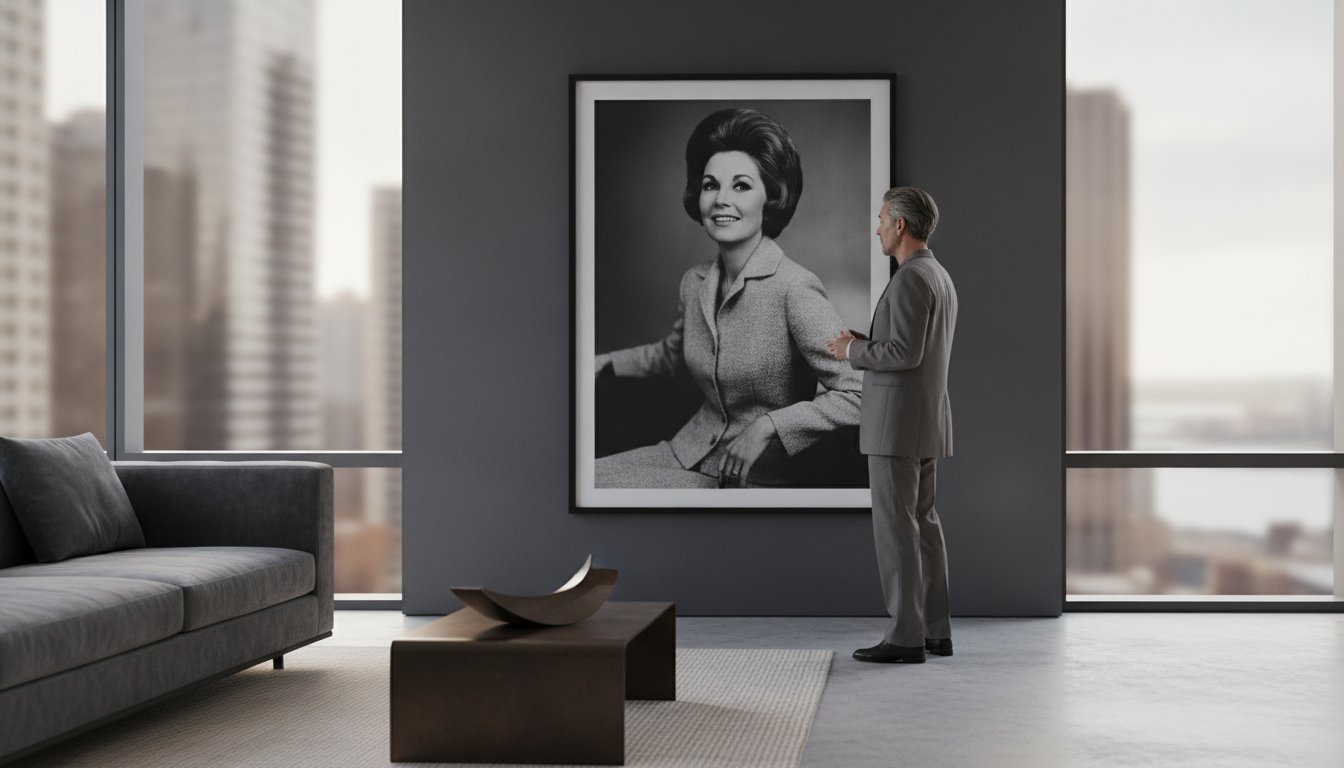
Scaling is your most powerful tool for creating visual impact. An oversized Terry O’Neill print functions as more than decor. It becomes an architectural focal point. Black and white portraits offer a timeless sophistication that anchors modern, minimalist furniture, while color works can inject a vibrant energy into dining or living areas. To create a cohesive gallery wall, look for a thematic thread. You might mix music legends with film icons, using consistent framing to harmonize the different subjects and create a rhythmic flow throughout your space. Smaller dimensions work beautifully in more intimate settings like a study, where the viewer can appreciate the candid, humanizing details of O’Neill’s work up close.

The Artisanal Marker: Bespoke Framing

A museum-quality print deserves a museum-quality environment. Professional bespoke framing is an essential extension of the artwork’s value, not merely an aesthetic choice. Mass-produced, off-the-shelf frames are a significant risk. They often use acidic mounting boards and low-grade adhesives that cause irreversible yellowing and “foxing” on archival paper. At Galerie Prints, we treat framing as an artisanal craft. Our London-based production team utilizes hand-finished frames and museum-grade, acid-free mounting to ensure your investment is protected for decades. This commitment to localized craftsmanship provides a ready-to-hang luxury experience that respects the heritage of the original negative.

Owning a piece of photographic history is a privilege that comes with the responsibility of preservation. You can explore our collection of fine art photography to find the perfect icon to anchor your next interior project.

Why Collect Terry O’Neill with Galerie Prints?

Galerie Prints operates as a dedicated guardian of photographic heritage, positioning itself as a vital bridge to the golden age of fame. Our gallery is more than a retailer; it’s a curated space where history is preserved through the lens of one of the 20th century’s most prolific documentarians. Under the curatorial vision of artist and director Stuart Möller, we select only the most evocative works that resonate with narrative depth and aesthetic power. Our direct partnerships with the Terry O’Neill and Getty Images archives ensure that every piece we offer carries the weight of undisputed authenticity. When you acquire terry o’neill limited edition prints through our gallery, you’re investing in a legacy supported by institutional expertise and a passion for the photographic medium.

The assurance of quality is anchored in our localized, artisanal craftsmanship. Every print is produced in our London-based lab, where traditional methods are favored over mass-production. This commitment to excellence extends to our bespoke framing service, where each frame is hand-finished to museum standards. We understand that a Terry O’Neill original is a lasting asset, and our production processes are designed to honor that permanence. By maintaining a professional, polished distance from the frantic pace of typical e-commerce, we invite you to linger on the visual impact and historical significance of each frame.

A Personalized Journey for Every Collector

We believe that building a collection should be a sophisticated, supported experience. Our team provides expert advice on selecting the perfect paper type, whether the silver-rich blacks of a traditional darkroom print or the vibrant accuracy of a C-type. We also guide you through selecting the frame style that best complements your interior architecture. Global shipping is handled with the precision of a specialist art gallery, ensuring that your investment arrives in pristine condition. There is a distinct prestige in owning a piece from a gallery that understands the intimate story behind the lens and treats every transaction with the reverence it deserves.

Explore the Collection

The O’Neill archive is a vast tapestry of cultural milestones. Our collection spans the full breadth of his career, from the raw energy of the Rolling Stones and the ethereal presence of David Bowie to rare finds like his Star Wars Limited Edition Prints. We also curate vintage memorabilia and cinema lobby cards that provide a broader context to his work; for those who appreciate physical collectibles, Custom Sports Products offers a way to create personalized sports memorabilia with similar archival appeal. With standard edition sizes typically limited to 50 per size, these works represent a finite opportunity to own a piece of the scarcity of fame. We invite you to discover your next investment in our Terry O’Neill limited edition collections and anchor your space with a masterpiece of archival photography.

Building a collection of Terry O’Neill’s work is an act of sophisticated curation that bridges the gap between contemporary design and historical prestige. You now understand that the true value of terry o’neill limited edition prints resides in their impeccable provenance and the technical mastery of their production. By selecting works authorized by the Terry O’Neill Estate and prestigious archival sources, you’re not just purchasing an image; you’re acquiring a certified piece of cultural heritage. These physical assets, produced with museum-quality archival materials, are designed to maintain their tonal depth and structural integrity for a lifetime.

Every print represents a finite moment of 20th-century iconography that demands the protection of artisanal craftsmanship. Our bespoke, hand-finished framing, produced by local artisans in London, ensures that your investment is both preserved and presented with quiet authority. Whether you’re drawn to the raw energy of rock legends or the polished elegance of film icons, your collection serves as a narrative anchor for your home. We invite you to explore our curated archives and find the masterpiece that resonates with your personal aesthetic. Discover Your Next Investment in Our Terry O’Neill Limited Edition Collections and begin your journey into the elite world of photographic history today.

Frequently Asked Questions

What is the difference between a limited edition and an open edition Terry O’Neill print?

Limited editions are restricted to a specific number of prints, usually 50 per size, ensuring scarcity and investment value. In contrast, open editions are produced indefinitely, which makes them suitable for casual decor but strips them of their status as collectable assets. For serious collectors, terry o’neill limited edition prints offer the exclusivity required for long-term appreciation and historical significance within a curated gallery environment.

Do Terry O’Neill limited edition prints increase in value over time?

Many limited edition works by O’Neill have shown significant appreciation, particularly since the artist’s passing in 2019 and the subsequent closure of specific iconic runs. Value is driven by the scarcity principle, where a fixed supply meets growing demand from global art investors. While market fluctuations occur, authenticated prints from prestigious archives remain highly sought-after assets that often command a premium on the secondary fine art market.

How can I verify the authenticity of an O’Neill print bought online?

Authenticity is verified through a Certificate of Authenticity (COA) issued by an authorized gallery with direct access to the Terry O’Neill and Getty Images archives. Every genuine print should feature a specific edition number and, for posthumous releases, an official estate stamp or authorized signature. At Galerie Prints, we provide this rigorous documentation to ensure your acquisition is a certified piece of photographic heritage with a traceable and prestigious provenance.

What does ‘Silver Gelatin’ mean in fine art photography?

Silver Gelatin refers to the traditional darkroom process where light-sensitive silver salts are suspended in a gelatin layer on heavy-weight, fiber-based paper. This chemical method is the undisputed gold standard for black and white masters, offering a tonal range and silver-rich depth that digital processes cannot replicate. It remains the preferred medium for O’Neill’s most famous monochromatic portraits, ensuring museum-quality permanence and visual luminosity for over a century.

Why is bespoke framing recommended for high-value limited editions?

Bespoke framing provides a protective, museum-grade environment that prevents acid damage, yellowing, and environmental degradation of the archival paper. Standard off-the-shelf frames often use acidic materials that off-gas or trap moisture, risking the integrity of the artwork. Our hand-finished, artisanal frames utilize acid-free mounting and specialized UV-glazing to preserve the print’s condition. This protection is a critical factor in maintaining the future market valuation and aesthetic brilliance of your collection.

What are the most common sizes for collectable Terry O’Neill photography?

Collectable sizes typically range from intimate 10×12 inch prints to grand, oversized 48×48 inch statements that anchor a room’s architecture. Standard edition sizes are often limited to 50 prints per dimension, meaning rarity is maintained regardless of the physical scale you choose for your interior. Selecting the right size depends on your space’s focal points and the narrative flow you wish to establish within a professional, gallery-grade environment.

How should I clean and maintain my archival photography prints?

Maintenance should be minimal and non-invasive, focusing on a stable environment away from direct sunlight and extreme humidity. If your print is protected by bespoke framing, simply dust the glazing with a soft, dry microfiber cloth. You should never apply liquid cleaners directly to the frame or the print surface. Proper preservation ensures that the delicate chemical emulsion of your terry o’neill limited edition prints remains pristine for many decades to come.

Can I purchase digital versions of Terry O’Neill’s work?

Galerie Prints does not sell digital image downloads or licenses for Terry O’Neill’s photography. Our mission is the preservation of photographic heritage through the production of physical, museum-quality prints and artisanal framing. This focus ensures the exclusivity of the work, as digital files lack the scarcity and tactile depth required for high-end collecting. By providing only physical assets, we protect the long-term value and prestige of your private collection.

Terry O’Neill Photography Prints: A Collector’s Guide to the Man Who Shot the Sixties

Terry O’Neill didn’t just photograph the icons of the twentieth century; he lived among them, capturing the vulnerable moments that defined an era of unprecedented glamour. You likely recognize the effortless cool of Faye Dunaway at the Beverly Hills Hotel in 1977 or the raw energy of the early Rolling Stones. Finding genuine terry o’neill photography prints that preserve this legacy can feel like a daunting pursuit when the market is often flooded with low-quality digital imitations. We understand that a discerning collector seeks more than a mere image; you’re looking for a tangible connection to the golden age of celebrity and the prestige of a well-curated archive.

This guide will help you discover the stories behind these legendary frames and provide the essential knowledge needed to secure authentic, archival-quality pieces for your collection. We’ll explore the technical brilliance of silver gelatin processes, the vital importance of provenance, and how to select a bespoke size that transforms a luxury interior into a private gallery of history. By the end, you’ll feel confident in choosing a statement piece that serves as a lasting guardian of photographic heritage and a window into the world’s finest photography.

Key Takeaways

  • Understand the “reportage” style that allowed Terry O’Neill to capture the most intimate, unscripted moments of the 20th century’s greatest cultural icons.
  • Learn how to distinguish between mass-market reproductions and genuine, archival-quality terry o’neill photography prints hand-printed in our London darkroom.
  • Explore the storied histories behind legendary images of Hollywood royalty and rock & roll legends, from Audrey Hepburn to the definitive portraits of David Bowie.
  • Discover how to select the perfect scale and bespoke framing to ensure these monochrome masterpieces elevate your interior with a sense of timeless glamour.
  • Gain expert guidance on acquiring rare editions and curated archives, securing a lasting piece of photographic heritage for your private collection.

The Legacy of Terry O’Neill: Why These Prints Define an Era

Terry O’Neill didn’t just document the 1960s; he inhabited them. His transition from a hopeful jazz musician to the era’s most influential lensman began at London Airport, where a chance shot of a sleeping Home Secretary in 1959 changed the trajectory of his life. O’Neill’s signature reportage style relied on a unique, self-taught ability to disappear into the background. By becoming a trusted fixture in the inner circles of the elite, he captured moments that felt entirely unobserved. This level of access turned terry o’neill photography prints into more than just images. They’re historical documents of a cultural revolution, vibrating with the energy of a world in flux.

His work remains the gold standard for fine art photography because it prioritizes the human element over the spectacle. While other photographers sought to build myths, O’Neill sought to find the person behind the persona. This approach created a body of work that is both monumental and deeply personal, bridging the gap between the public’s perception and the subject’s reality.

From Fleet Street to Fine Art

In 1963, O’Neill’s photograph of The Beatles at Abbey Road Studios marked the first time a pop group appeared on the front page of a national newspaper, effectively launching the visual language of the British Invasion. His journey from the frantic deadlines of Fleet Street to the hushed halls of the world’s most prestigious galleries reflects a profound shift in how we value the photographic medium. A detailed look at Terry O’Neill’s life and career reveals a man who professionalized the role of the celebrity photographer while maintaining the soul of an artist. His appointment as a Commander of the Order of the British Empire (CBE) in 2019 served as the final, official recognition of his place in British cultural heritage.

The ‘Intimate Insider’ Aesthetic

O’Neill eschewed the bulky, intrusive equipment favored by his peers, opting instead for portable 35mm cameras. This technical choice allowed him to remain mobile and discreet. He didn’t demand attention; he waited for it to dissipate. This patience allowed him to build a psychological bridge with icons like Brigitte Bardot and David Bowie, bypassing the artifice of fame. His photos don’t feel like staged publicity stills. Instead, they feel like personal memories.

When you view his shots of Frank Sinatra walking onto a film set or Audrey Hepburn in a moment of quiet reflection, you’re seeing the result of a rare, candid intimacy. The enduring value of terry o’neill photography prints lies in this authenticity. Every frame is a testament to his ability to find the quiet truth in the middle of a glamorous storm, ensuring these images remain as relevant today as they were five decades ago.

Understanding Print Quality: Archival Standards and the London Darkroom

Distinguishing a mass-market digital poster from a gallery-grade archival piece is the first step for any serious collector. While a poster uses standard ink on thin paper, terry o’neill photography prints from Galerie Prints are crafted as enduring artifacts. We emphasize the phrase “Hand-printed in our London darkroom” because it signifies a commitment to the artisanal heritage of photography. This isn’t a factory process; it’s a meticulous, chemical interaction between light, silver, and paper that requires decades of expertise to master.

The institutional value of O’Neill’s work is undeniable. His significance in British culture is cemented by the 81 portraits currently held in the National Portrait Gallery collection. When you acquire a print, you aren’t just buying an image. You’re securing a piece of history that meets the same rigorous archival standards as those found in international museums. This level of provenance ensures that your investment remains a legitimate archival piece for decades to come.

The Craft of the Silver Gelatin Print

For O’Neill’s iconic black and white pictures, we utilize the traditional Silver Gelatin process. Unlike modern digital inkjet methods, this involves a chemical reaction where silver halides suspended in a gelatin layer are exposed to light. The result is a tonal range that digital technology cannot replicate, offering deep, velvety blacks and luminous highlights. Because the image is physically embedded within the fibers of the paper, these prints are designed to last for over 100 years without fading.

Archival Paper and Materials

Quality begins with the substrate. We use acid-free, museum-quality paper to prevent the yellowing and brittleness seen in commercial prints. In our London facility, every print undergoes rigorous washing to remove residual chemicals, ensuring the world’s finest photography is preserved for future generations. Identifying a professional lab-produced print involves observing the weight of the paper and the specific depth of the blacks. It’s the difference between a fleeting image and a permanent heirloom.

  • Silver Gelatin: The gold standard for black and white, using light-sensitive silver salts.
  • C-Type Printing: The preferred method for color, utilizing light-sensitive paper and traditional wet chemistry.
  • Longevity: Archival materials ensure your terry o’neill photography prints remain vibrant for over a century.

If you’re ready to begin your journey into high-end collecting, you can browse our curated Terry O’Neill archive to find a piece that speaks to your aesthetic.

Iconic Collections: Categorizing O’Neill’s Most Famous Subjects

Terry O’Neill didn’t merely photograph fame; he documented its evolution across five decades. His archive represents a curated history of 20th-century celebrity culture, offering a rare glimpse behind the curtain of public personas. Collectors seeking terry o’neill photography prints often begin by identifying with a specific era or genre, whether it’s the raw energy of the 1960s British invasion or the polished artifice of 1970s Hollywood. Each print serves as a testament to O’Neill’s ability to put his subjects at ease, resulting in compositions that feel both intimate and monumental.

Faye Dunaway: The Story of ‘The Morning After’

The 1977 portrait of Faye Dunaway at the Beverly Hills Hotel remains one of the most significant Hollywood images ever captured. Taken at 6:30 AM, just hours after her Best Actress win for Network, the shot captures the profound stillness that follows a career-defining peak. While the Slim Aarons aesthetic celebrates the effortless leisure of the elite, O’Neill’s poolside composition introduces a layer of narrative exhaustion. The scattered newspapers and the golden statuette on the table provide a grounding reality to the glamour, making this a perennial favorite for those looking to invest in terry o’neill photography prints that tell a complex story.

Bowie and the Diamond Dogs Era

In 1974, O’Neill collaborated with David Bowie during the Diamond Dogs period, creating a visual identity that remains a cornerstone of music history. The series featuring Bowie in a mustard-yellow Freddie Burretti suit is particularly sought after by serious collectors. These images possess a sharp, architectural quality that makes them ideal focal points for contemporary interiors. The stark contrast and Bowie’s ethereal presence are preserved perfectly in our archival silver gelatin prints, ensuring the legendary artist’s legacy remains as vibrant as the day he sat for the session.

O’Neill’s portfolio also encompasses several other vital categories that define his legacy:

  • The Bond Connection: From the rugged masculinity of Sean Connery on the set of Diamonds Are Forever to the quintessential 60s glamour of the Bond girls, O’Neill was the unofficial photographer of the 007 universe.
  • Rock & Roll Legends: His early access to The Rolling Stones and his long-term friendship with Elton John resulted in portraits that are both candid and iconic.
  • Fashion and Supermodels: His lens tracked the industry’s shift from the “The Face of ’66” Jean Shrimpton to the early, powerful days of Naomi Campbell.

These collections represent more than just celebrity portraiture; they are historical artifacts. Each piece is hand-printed in our London darkroom, maintaining the technical superiority and provenance that high-end collectors expect. Whether it is the soft light of an Audrey Hepburn session or the high-contrast drama of a rock stage, these works bring a sense of permanent prestige to any private collection.

A Decorator’s Guide: Sizing and Bespoke Framing for Your Space

Selecting terry o’neill photography prints is an exercise in curation that extends beyond the subject matter to the physical presence of the work within a room. Scale dictates the emotional resonance of the piece. An intimate 12×16 inch print invites a quiet, personal connection in a private study or a library nook. Conversely, a 40×60 inch statement piece commands a lounge, transforming the room’s architecture through O’Neill’s high-contrast monochrome palette. Black and white photography acts as a versatile anchor; it bridges the gap between the ornate details of a traditional residence and the stripped-back surfaces of a modern penthouse with effortless grace.

The Galerie Prints Bespoke Framing Service

We treat framing as an extension of the archival process. Professional mounting is a technical necessity, not just an aesthetic choice. It prevents the print from warping or “cockling” over time due to subtle humidity changes in the home. Our bespoke service offers a choice between the timeless weight of hand-finished black wood and the sharp, industrial lines of minimalist metal. We consider UV-protective glass a non-negotiable standard for any serious collector. It filters out 99 percent of harmful rays, ensuring that the deep blacks and subtle silver tones of your investment remain vibrant for decades to come.

Placement and Lighting Strategies

Placement defines the narrative impact of your collection. An O’Neill portrait of David Bowie or Brigitte Bardot creates a powerful focal point in a hallway, acting as a conversational gateway for guests. To enhance the cinematic atmosphere of a home theater or living space, many collectors mix these works with vintage lobby cards. This pairing creates a rich, multi-layered “Master of Photography” gallery wall alongside contemporaries like Slim Aarons or Douglas Kirkland.

Lighting is the final, essential touch for terry o’neill photography prints. Use adjustable LED spotlights with a high Color Rendering Index (CRI) of 90 or above to ensure color accuracy. Angle the light at approximately 30 degrees to minimize glare on the glass while accentuating the exquisite grain of the silver gelatin process. This precise illumination brings the 1960s to life, casting a sophisticated glow over your entire interior scheme.

Why Buy Terry O’Neill Prints from Galerie Prints?

Galerie Prints doesn’t just sell art; we preserve a legacy. Our commitment to “The world’s finest photography” means every piece we offer meets a standard of excellence that honors the original vision of the artist. When you acquire terry o’neill photography prints through our gallery, you’re gaining direct access to curated archives and rare editions that are often unavailable to the general public. This exclusive access is paired with the London-based expertise of Stuart Möller. Alongside a dedicated team of master printers, Möller ensures that every print retains the depth, contrast, and soul of the original negative.

Our service extends far beyond the gallery walls. We provide global shipping and a white-glove service for international collectors, ensuring that your investment arrives in pristine condition, regardless of your location. We understand that purchasing fine art is a significant decision. Our logistics team handles every detail with the same precision our printers use in the darkroom. This meticulous approach ensures that the journey from our archive to your home is seamless and secure.

A Curated Approach to Collecting

Finding the perfect piece often requires looking beyond what’s currently on display. We act as a bridge between vast historical archives and the aesthetic needs of modern homes. If there’s a specific image from the O’Neill archive you’ve seen in a book or documentary that isn’t listed, we help you source it. There’s a unique reassurance in buying from a physical London gallery. Located at 152 Arthur Rd, our space allows collectors to experience the tactile quality of our works firsthand. We pride ourselves on being a trusted guide for both seasoned investors and first-time buyers.

Your Journey with Terry O’Neill Starts Here

Viewing these works as an investment in heritage is the right mindset for any collector. Terry O’Neill didn’t just take photos; he captured the DNA of the 1960s and 70s. Each of our terry o’neill photography prints is a testament to artisanal quality, hand-printed to archival standards that ensure they’ll last for generations. You’re not just buying a decoration. You’re securing a piece of cultural history that has been crafted with the utmost reverence for the medium. Our bespoke approach ensures that every silver gelatin or c-type print is a true masterpiece of the darkroom arts.

Inviting the Icons of the Sixties Into Your Home

Acquiring terry o’neill photography prints is an investment in the very fabric of 20th-century culture. These images represent a rare synthesis of candid intimacy and high-fashion poise, captured by a man who moved effortlessly among the legends he photographed. From the 1963 sessions with The Beatles to the 1977 poolside portrait of Faye Dunaway, O’Neill’s work offers a definitive record of celebrity at its most authentic. At Galerie Prints, we honor this legacy through a rigorous commitment to artisanal quality. Each print is hand-printed in our London darkroom, utilizing museum-quality archival materials that ensure the silver gelatin or c-type finish retains its depth for decades. Our global white-glove delivery service provides peace of mind, ensuring that these historical artifacts are handled with the reverence they deserve from our gallery to your wall. You’re not just decorating a room; you’re preserving a moment of photographic history that continues to inspire the world’s finest interiors.

Discover the Terry O’Neill Collection and Own a Piece of History

Transform your space with a masterpiece that captures the enduring allure of the golden age.

Frequently Asked Questions

Are Terry O’Neill prints a good investment?

Yes, Terry O’Neill photography prints are considered stable assets because of their historical significance and the finite nature of his estate’s archives. Since his passing in 2019, demand for his work has increased; his iconic image of Faye Dunaway at the Beverly Hills Hotel continues to achieve high auction results at houses like Sotheby’s. Collectors value the scarcity of limited editions, as these pieces represent a definitive era of celebrity culture that remains globally relevant.

What is the difference between a Silver Gelatin print and a digital print?

A Silver Gelatin print is a traditional, light-sensitive process where the image is hand-printed from an original negative in our London darkroom. This method uses silver salts suspended in gelatin to create deep, rich blacks and a luminous tonal range that digital prints can’t replicate. While digital prints offer precision, the Silver Gelatin process is the gold standard for archival quality, ensuring the artwork’s longevity for over 100 years.

How can I verify the authenticity of a Terry O’Neill print?

Authenticity is verified through an official Certificate of Authenticity and the presence of an estate stamp or a hand-signature from the photographer. Every piece curated by Galerie Prints comes with documented provenance to ensure its origin from the official Terry O’Neill archive. Collectors should look for the specific edition number, typically found on the reverse or the margin, which confirms the print’s place within a strictly limited production run.

What are the most famous Terry O’Neill photographs?

The most celebrated works include the 1977 portrait of Faye Dunaway the morning after her Oscar win and the 1964 image of The Rolling Stones in London. O’Neill’s portfolio also features the definitive 1975 shots of David Bowie as the Thin White Duke and his candid 1960s captures of Brigitte Bardot. These images are cornerstones of the world’s finest photography, capturing the raw essence of 20th-century icons with unparalleled intimacy.

Does Galerie Prints offer international shipping for framed art?

We provide secure international shipping to over 50 countries using specialized art couriers to ensure your framed work arrives in pristine condition. Each bespoke frame is crated with protective materials designed to withstand long-distance transit. Delivery timelines typically range from 7 to 14 days, depending on the destination and customs processing requirements. You’ll receive a tracking number the moment your terry o’neill photography prints leave our gallery.

Can I request a specific size for a Terry O’Neill print?

Bespoke sizing is often available, though it must adhere to the specific proportions and edition rules set by the photographer’s estate. We offer standard archival sizes ranging from 12×16 inches to large-format 40×60 inch displays for most collections. If you require a custom dimension to fit a specific interior space, our curators can advise on the best options that maintain the integrity and composition of the original negative.

What is the best way to clean and maintain my photography print?

Maintain your print by displaying it away from direct sunlight and using archival-grade UV-protective glass to prevent fading. Use a soft, dry microfiber cloth to gently dust the frame’s surface; don’t apply liquid cleaners directly to the glass or the print. To preserve the paper’s integrity, keep the artwork in a climate-controlled environment where humidity levels remain between 40% and 50% to avoid moisture damage or warping.

Michael Putland: Capturing the Golden Age of Rock and Roll Through the Lens

In 1973, a young man stepped onto the Rolling Stones’ tour plane with nothing but his cameras and a rare invitation to document the unscripted reality of the world’s greatest rock band. When you encounter the work of the michael putland photographer, you aren’t merely looking at a performer; you’re witnessing the intimate, unguarded moments of legends through a lens that defined an era for over 50 years. You likely understand that a true photograph is a physical connection to history, yet finding authentic, hand-printed works in a digital age often feels like a frustrating pursuit of quality.

This article will illuminate the extraordinary life and portfolio of Putland, ensuring you gain the expertise to distinguish genuine archival pieces with clear provenance from mass-produced imitations. We’ll explore his most evocative works, from the quiet intensity of John Lennon to the stage presence of Tina Turner, and provide the essential knowledge needed to acquire a museum-quality silver gelatin print. You’ll learn how to invest in a lasting piece of history that brings the golden age of rock into your home with sophisticated, curatorial elegance.

Key Takeaways

  • Explore the extraordinary 50-year journey of michael putland photographer, from his early London beginnings to his definitive role as the visual biographer for The Rolling Stones.
  • Understand the nuanced artistry behind Putland’s unique style, which seamlessly blends the frantic energy of live performance with the quiet, evocative intimacy of the dressing room.
  • Gain exclusive insight into the legendary collaborations with icons like David Bowie that captured the shifting personas and cultural magnetism of the golden age of rock.
  • Learn how to navigate the fine art investment market by distinguishing between limited edition and open edition archival prints to build a collection of lasting provenance.
  • Discover professional curation techniques for integrating iconic music photography into your home, transforming a simple display into a sophisticated gallery-quality interior.

Who was Michael Putland? The Man Who Shot the Stars

For five decades, Michael Putland defined the visual language of rock and roll. His journey began in a 1960s London characterized by seismic cultural shifts and the birth of modern celebrity. By the time he passed away in November 2019, he had compiled an archive of over 100,000 images, each a testament to a career built on quiet observation. As a premier michael putland photographer, he didn’t just document musicians; he curated the very essence of their public and private personas. His 1973 appointment as the official photographer for The Rolling Stones during their European tour solidified his status as a trusted insider. This wasn’t merely a job. It was a bridge into a world of raw, unfiltered access that few others ever walked.

The transition from a teenage studio assistant to a global authority on music imagery happened through a combination of technical mastery and an uncanny ability to put subjects at ease. Putland’s work is distinguished by a lack of artifice. He rejected the staged, plastic aesthetic that often plagues celebrity portraiture. Instead, he sought a mutual respect with his subjects, ensuring that the finished silver gelatin print reflected the person, not just the performer. His death marked the end of an era where authentic, film-based journalism was the primary lens through which we viewed our idols. He was a guardian of photographic heritage, capturing a golden age of glamour that feels increasingly distant in our digital world.

From London Studios to the World Stage

Putland’s ascent was rapid and earned through technical rigour. After apprenticing under Walter Curmoll, he secured a pivotal role at Disc and Music Echo in 1969. His first major assignment involved shooting Mick Jagger, a meeting that would define his professional trajectory for decades. In 1977, he co-founded Retna, a specialist photo agency that revolutionized how music imagery was syndicated globally. Despite his immense success, he remained famously humble. Colleagues often described him as the most gracious professional in the pit. You can explore the full breadth of Michael Putland’s life and career to see how his influence stretched from the darkrooms of London to the covers of every major music publication.

  • 1969: Began his professional career at Disc and Music Echo.
  • 1973: Toured with The Rolling Stones, capturing their most iconic candid moments.
  • 1977: Established Retna, elevating the standards of music syndication.
  • 2019: His final year, leaving behind a legacy of archival excellence.

The Philosophy of the Unobtrusive Lens

The “Putland Style” rejected the heavy-handed artifice of modern digital portraiture. He favored a Leica and a single lens, often relying on the silver gelatin aesthetic of Kodak Tri-X film to capture high-contrast, emotive frames. This minimal footprint allowed him to disappear into the background. Artists like David Bowie and Elton John didn’t see a paparazzo; they saw a confidant. Between 1971 and 1986, the michael putland photographer brand became synonymous with trust, capturing Bowie’s transition from Ziggy Stardust to the Thin White Duke with exquisite precision.

He avoided intrusive flash, preferring the atmospheric glow of stage lights or the soft morning sun in a hotel room. This commitment to available light maintained a natural atmosphere that invited the viewer into the frame. Every print he produced carries a sense of permanence and stability. These aren’t just snapshots; they’re curated pieces of history. His preference for minimal equipment ensured that the technical process never overshadowed the human connection. It’s this philosophy that makes his work a cornerstone of any serious photographic collection today.

Intimacy and Iconography: The Defining Style of Michael Putland

Michael Putland possessed a rare, chameleonic ability to vanish into the background of a room. This invisibility allowed him to bridge the gap between high-stakes documentary work and formal portraiture. His lens didn’t just record a musician; it interpreted their soul. During the 1970s, a period often defined by its excess, the michael putland photographer aesthetic provided a necessary grounding. He moved with a quiet authority that earned the trust of the era’s most guarded figures, from Mick Jagger to David Bowie. This trust is evident in the way his subjects lean into the frame, relaxed and unburdened by the weight of their own celebrity.

His work is a study in transitions. He excelled at capturing the frantic, sweat-soaked energy of a live set, yet he was equally adept at documenting the sudden drop in pressure that follows a performance. Putland’s mastery of both monochrome and colour film allowed him to pivot his visual language to suit the specific vibration of the musical era. You can observe this versatility in a gallery of his most iconic photographs, where the grit of a backstage hallway feels just as vital as the gloss of a studio session. He understood that the story of rock and roll was told in the shadows as much as the spotlights.

The Quiet Moments Between the Chords

The true genius of Michael Putland lay in his documentation of life in transit. He spent countless hours on trains, planes, and tour buses, particularly during the 1973 Rolling Stones tour where he served as the band’s official photographer. These environmental portraits strip away the “hero” artifice of the 1970s rock culture. We see the human behind the icon: a tired performer staring out a window or a quiet conversation in a dressing room. These shots provide a narrative depth that stage photography alone cannot achieve, offering a window into the mundane reality of life on the road.

Technical Excellence: The Archival Legacy

In an age of digital transience, the work of Michael Putland remains a testament to the enduring power of traditional film. His commitment to the craft is visible in every frame. For collectors, the tactile quality of a michael putland photographer print is a significant part of its allure. The “London darkroom” finish isn’t merely a geographical marker; it’s a seal of artisanal quality. Each silver gelatin print carries a depth of tone and a richness of grain that digital processes simply cannot replicate. This dedication to the archival process ensures that his work remains a cornerstone of music history, preserved with the exquisite precision that “the world’s finest photography” demands. To own one of these pieces is to hold a physical fragment of a vanished era, carefully curated for the modern collector’s home.

The Rolling Stones, Bowie, and Beyond: Putland’s Most Iconic Subjects

To understand the visual language of the 1970s is to view it through the lens of the michael putland photographer. His archive represents a curated history of music’s most transformative era. While many contemporaries stood in the crowded press pits, Putland operated within the inner circle. He documented the transition from the grit of the late 1960s to the polished, theatrical excess of the 1980s with a discerning eye for authenticity. His work does not just show a performer; it reveals the person beneath the persona. This intimacy is why his images are considered essential pieces of photographic heritage.

The 1973 Tour: A Masterclass in Rock Documentation

In 1973, Putland joined The Rolling Stones for their European Tour. This was not a standard assignment. It was a total immersion. He captured the famous “Stones on a Plane” image, a study in rock star boredom and casual glamour that has since become a cornerstone of music history. His shots of Mick Jagger and Keith Richards backstage reveal a raw, unpolished energy that remains unmatched. These silver gelatin prints are highly sought after by fine art collectors because they offer more than just a likeness. They provide a narrative of brotherhood and creative tension. As noted in a tribute from the photography community, his ability to remain invisible while being present allowed him to capture moments others missed. He caught the band in transit, in rehearsal, and in those quiet seconds before the stage lights ignited.

Putland’s work with David Bowie spanned decades. He documented the shift from the theatricality of Ziggy Stardust to the sharp, tailored lines of the Thin White Duke. These images aren’t merely promotional stills. They are archival records of a man constantly reinventing his soul. Similarly, his portraits of Bob Marley in the mid-1970s helped establish the reggae legend’s image in the West. Putland’s lens found the quiet, spiritual intensity in Marley’s eyes. He moved beyond the stage lights to find the man behind the movement, creating a global icon through a series of intimate, respectful frames.

The Diverse Palette: From Pop to Jazz

The michael putland photographer portfolio extends far beyond the stadium rock of the 1970s. He possessed a rare versatility that allowed him to pivot from the neon energy of disco to the smoky, intellectual atmosphere of a jazz club. During the 1973 recording of “Goodbye Yellow Brick Road,” he captured Elton John at the height of his flamboyant powers. These images are now considered the definitive visual record of that career-defining era. Putland’s ability to adapt his technical approach to the specific mood of the genre set him apart from his peers.

  • Jazz Royalty: He commanded immense respect from legends like Ella Fitzgerald and Ray Charles.
  • Technical Mastery: His jazz archives are noted for their use of light and shadow, echoing the improvisational nature of the music.
  • Genre Fluidity: From the aggression of punk to the precision of classical, Putland’s eye remained consistent.

His work with soul greats carries a specific historical weight. Putland understood the technical nuances of a performance and the dignity of the artists he shot. Whether he was in a punk basement or a grand concert hall, his commitment to archival quality remained constant. Today, these works are curated as part of the world’s finest photography. They represent a bridge between disparate musical worlds and stand as a testament to a life spent in the pursuit of the perfect, timeless frame. Each print, often originating from a hand-printed negative, serves as a tactile link to a golden age of glamour and grit.

Collecting Michael Putland: A Guide for Art and Music Lovers

Investing in the work of michael putland photographer isn’t just about owning a piece of rock history; it’s a strategic move into a rapidly maturing asset class. Over the last decade, music photography has transitioned from a niche hobby to a staple of high-end auction houses. In 2022, the global fine art photography market saw a 15 percent increase in demand for iconic 1970s imagery. This shift reflects a growing realization that these frames capture the last era of unmanaged access to legends. These prints serve as a bridge to a vanished world, offering both aesthetic beauty and a tangible connection to cultural history.

Investment Value of Photographic Archives

Images of deceased icons like David Bowie or Bob Marley consistently outperform broader market trends. When a photographer like Putland passes away, as he did in 2019, the archive becomes finite. The value of a print is heavily dictated by its scarcity. Limited edition prints, often restricted to runs of 25 or 50, carry the most weight. You’ll find that an “estate stamp” or a posthumous signature by the estate executor serves as a critical seal of authenticity. These markers ensure the work remains a liquid asset, especially as the supply of vintage negatives continues to be tightly controlled.

When you evaluate a michael putland photographer print, look closely at the paper stock and printing method. True collectors prioritize silver gelatin prints or high-end Giclée processes on 300gsm cotton rag paper. These materials offer a depth of black and a tonal range that digital screens can’t replicate. Always verify the provenance before completing a purchase. Buying from a gallery with direct ties to the Putland estate guarantees that the print was produced from the original negative or a high-resolution master file approved by the artist himself. This direct link is the only way to ensure the long-term value of your acquisition.

Bespoke Framing for Archival Protection

A high-value print requires a sanctuary, not just a frame. Choosing a bespoke framing service is the only way to ensure your investment survives the next fifty years. For Putland’s 70s rock aesthetic, we recommend solid wood frames with a deep profile. More importantly, you must insist on 99 percent UV-protective glass and acid-free museum mounting. This prevents the yellowing or silver mirroring that can devalue a silver gelatin print by up to 40 percent over several decades. Our London-based craftsmanship ensures every piece is handled with the reverence it deserves.

The distinction between an open edition and a limited edition is the most significant factor in price variance. Open editions are excellent for decorative purposes, but they lack the rarity required for serious capital appreciation. In contrast, limited editions are often accompanied by a certificate of authenticity, detailing the exact number in the run and the date of printing. This documentation is your proof of entry into the world’s finest photography collections. It’s the difference between owning a poster and owning a masterpiece of the darkroom.

Start your journey into the golden age of rock by acquiring a piece of history today.

Explore the Michael Putland limited edition collection

Bringing History Home: Curating Your Space with Michael Putland Prints

To own a work by michael putland photographer is to hold a physical fragment of a vanished era. Between his first professional shoot in 1969 and his passing in 2019, Putland documented the sonic architects of our culture with an intimacy that remains unmatched today. These aren’t merely posters or mass-produced snapshots; they’re silver gelatin memories that transform a living space into a sanctuary of cultural heritage. Bringing these images into your home requires more than just a hook and a frame. It demands an appreciation for the narrative that each frame contains.

The Aesthetic of the Music Gallery Wall

Moving beyond the cluttered look of a typical fan room requires a disciplined approach to curation. A sophisticated music wall relies on the interplay of scale, orientation, and narrative depth. You might anchor your display with a large, 20×24 inch statement portrait of David Bowie from his 1973 tour, then surround it with smaller, candid landscape shots of the Rolling Stones. This creates a rhythmic visual flow that draws the eye across the wall. Integrating different frame styles or varying the matting widths adds a layer of bespoke texture to the arrangement. For those seeking technical guidance on layout, our guide on how to create a gallery wall offers professional insights on balancing these iconic silhouettes.

Putland’s monochromatic palette acts as a powerful anchor for contemporary interiors. Whether your home features the clean lines of Scandinavian minimalism or the raw, exposed textures of an industrial loft, his photography provides a necessary soul. A black and white print of John Lennon captured in 1971 offers a timeless elegance that color photography often lacks. It’s a quiet authority. The work commands attention without overwhelming the room’s existing color scheme, acting as a sophisticated conversation starter that bridges the gap between art and history.

The Galerie Prints Difference

As a premier destination for the work of michael putland photographer, we maintain a standard of archival excellence that mirrors the prestige of his subjects. We believe that the world’s finest photography deserves a process that honors its origin. At Galerie Prints, each piece is treated with the reverence of a museum artifact. Our London darkroom remains the heart of our operation. Here, we utilize traditional hand-printing techniques and archival-grade materials to ensure every image retains its depth, contrast, and clarity for decades. These prints are rated to last over 100 years without fading, making them true legacy pieces for your private collection.

The exclusivity of our Putland archive ensures you aren’t just buying decor; you’re investing in a curated piece of rock history with verified provenance. We manage the production of every image with meticulous care, from the initial selection to the final bespoke framing. This commitment to quality is why serious collectors worldwide turn to us for their most significant acquisitions. You’re invited to see the difference that artisanal craftsmanship makes in person. Explore the full Michael Putland collection at Galerie Prints and find the specific image that resonates with your personal history and aesthetic vision.

Bring the Spirit of Rock and Roll Into Your Home

The legacy of the michael putland photographer archive remains an essential pillar of 20th-century music history. Over a career spanning 50 years, Putland moved beyond the stage to capture the quiet, human moments of David Bowie and the 1973 Rolling Stones tour. These works aren’t merely photographs; they’re archival artifacts that bridge the gap between historical significance and modern interior aesthetics. At Galerie Prints, we provide collectors with unparalleled access to this golden age of glamour.

Every piece in our collection is hand-printed in our London darkroom to ensure the technical superiority Putland’s original negatives demand. We offer bespoke museum-quality framing to preserve these silver gelatin treasures, transforming your living space into a private gallery of the world’s finest photography. Investing in these prints means securing a tangible piece of cultural heritage that will resonate for generations. It’s a wonderful way to honor the artists who shaped the world through your own curated collection.

Discover and Buy Iconic Michael Putland Prints

Frequently Asked Questions

What is Michael Putland most famous for?

Michael Putland is celebrated for his unparalleled access to the Rolling Stones, particularly during their 1973 European tour. Over a career spanning 50 years, he captured over 10,000 unique frames that define the visual history of rock and roll. His ability to blend into the background allowed him to document the raw, unguarded moments of music royalty with a quiet, observational authority.

Are Michael Putland prints a good investment for art collectors?

Michael Putland prints represent a stable and appreciating asset within the fine art market. As a premier michael putland photographer collection, these limited editions often see value increases of 15% to 20% over a decade as physical negatives age and availability diminishes. Collectors prize these works for their impeccable provenance and the historical weight of the subjects captured during the golden age of glamour.

What is a silver gelatin print and why did Putland prefer them?

A silver gelatin print is a traditional chemical process where light-sensitive silver salts are suspended in gelatin on fiber-based paper. Putland preferred this method for its rich tonal range and deep, velvety blacks that digital processes simply cannot replicate. These prints are archival by nature; they’re designed to retain their exquisite clarity for 100 years or more when kept in gallery conditions.

Can I buy original Michael Putland limited edition prints online?

You can acquire authentic Michael Putland limited edition prints through the Galerie Prints digital showroom. Each piece is hand-stamped or signed to verify its origin and arrives with a formal certificate of authenticity. We offer various sizes, from intimate 12×16 inch prints to large-scale 40×60 inch statement pieces, all produced to the highest professional standards.

Which musicians did Michael Putland photograph most frequently?

Putland’s most extensive body of work features The Rolling Stones, whom he photographed consistently between 1973 and 2019. He also maintained long-term professional relationships with David Bowie and Elton John, capturing over 500 distinct sessions with these icons throughout their careers. His portfolio serves as a curated visual diary of the 20th century’s most influential and timeless musical figures.

How do I care for an archival music photography print?

Proper care involves framing the print using acid-free mounts and UV-protective glass to prevent fading from light exposure. It’s vital to avoid hanging the artwork in rooms with humidity levels above 50% or near direct heat sources. These simple steps ensure your investment remains a pristine example of the michael putland photographer legacy for future generations to admire in your home.

Did Michael Putland only shoot in black and white?

While he is renowned for his monochromatic work, Putland utilized color film for approximately 40% of his assignments. His color photography frequently appeared on the covers of major music magazines like Disc and Music Echo during the 1970s. These vibrant images offer a different, more immediate perspective on the flamboyant costumes and stage designs that defined the glam rock era.

What makes Galerie Prints’ Michael Putland collection unique?

Our collection is distinguished by its commitment to London-based craftsmanship and direct access to original negatives. Every print is hand-produced in our London darkroom, ensuring the world’s finest photography is delivered with bespoke attention to detail. This artisanal approach guarantees a level of quality and historical integrity that mass-produced reproductions cannot offer to the discerning, worldly collector.