
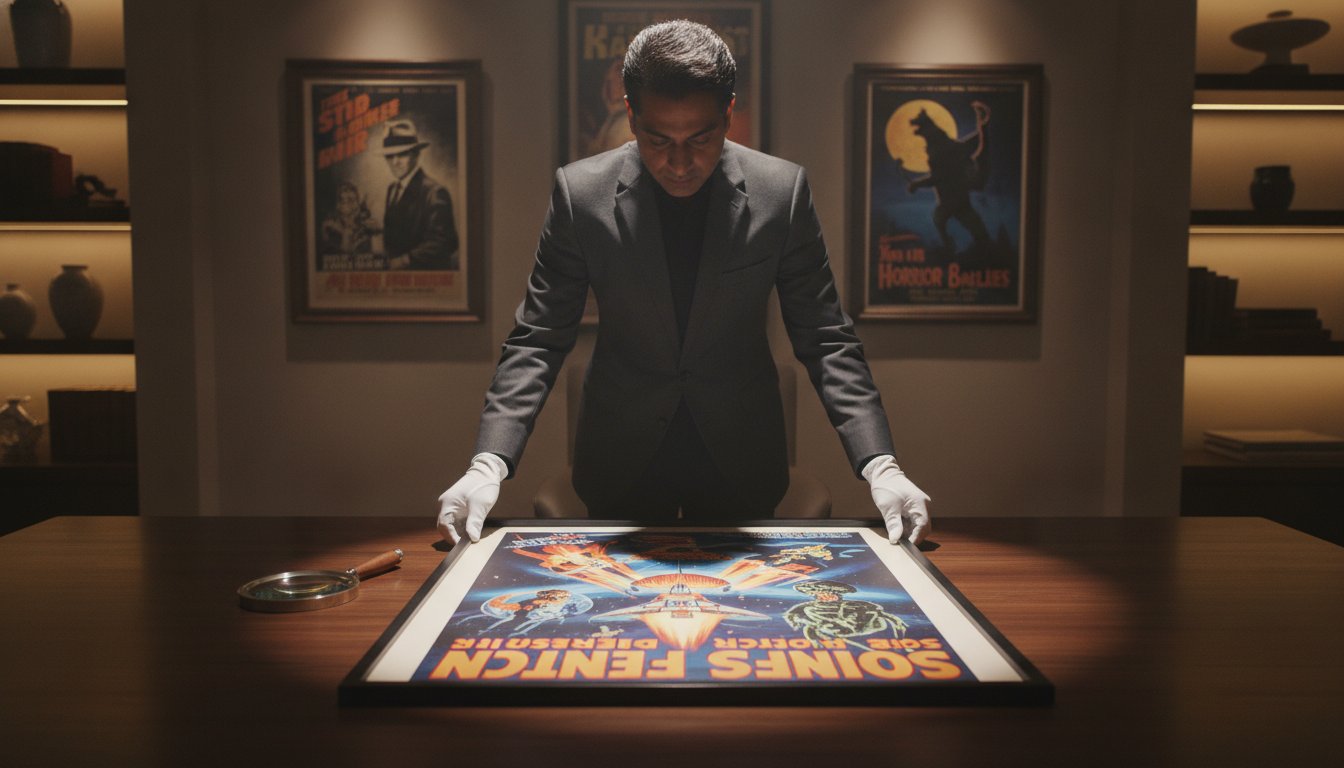
Tag: vintage movie posters

Buy Vintage Movie Posters Online: A Curator’s Guide to Collectable Cinema Memorabilia

Did you know that the global market for vintage posters is projected to reach 1.93 billion dollars this year, with premier pieces appreciating by as much as 15 percent annually? For the discerning collector, these are not merely decorations but tangible assets that bridge the gap between historical significance and modern interior aesthetics. You likely recognize that owning a piece of cinematic history is a profound privilege, yet the decision to buy vintage movie posters online can often be clouded by the fear of acquiring a common reproduction rather than a museum quality artifact.

This curator’s guide is designed to act as your expert guardian, providing the clarity you need to distinguish between various formats like one sheets and intimate cinema lobby cards. We will show you how to identify authentic works, value your collection with confidence, and utilize bespoke framing to preserve these relics for generations. By the end of this journey, you will possess the knowledge to curate a gallery wall that reflects both your personal taste and a sophisticated reverence for the silver screen’s enduring legacy.

Key Takeaways

  • Master the art of authentication by learning to identify National Screen Service (NSS) numbers and original studio stamps that distinguish genuine artifacts from modern reprints.
  • Understand how to buy vintage movie posters online with a strategic focus on high-demand genres like Horror, Sci-Fi, and Noir to secure investment-grade pieces.
  • Discover why the 11×14 cinema lobby card is often the superior format for residential gallery walls, offering a balance of photographic realism and versatile display sizing.
  • Ensure the longevity of your collection by implementing museum-standard preservation, specifically utilizing archival-quality mounting and UV-protective glass to prevent acid burn and ink fading.
  • Elevate your interior aesthetic by transitioning from casual memorabilia to a curated fine art collection featuring rare photographic archives and limited edition prints.

The Allure of Cinema Art: Why Discerning Collectors Buy Vintage Movie Posters Online

Original theatrical posters and lobby cards are much more than promotional tools; they are physical artifacts of a vanished era. When you buy vintage movie posters online, you’re acquiring a piece of history that wasn’t meant for the public to keep. These items were printed for specific theatrical runs and usually destroyed afterward. The survivors represent the history of cinema art, possessing a soul that modern reprints can’t replicate. They exist as a bridge to a bygone era of elegance, where the image was the primary gatekeeper of the audience’s imagination.

The “Golden Age” of Hollywood, spanning from the 1930s to the 1960s, remains the peak of collectability in 2026. This era relied on stone lithographic printing, which offered a depth of color and texture that digital methods fail to mirror. The rich, saturated hues of period-accurate Technicolor on a 1950s one-sheet provide a sensory experience that anchors a room. Collectors have shifted their perspective. They don’t see these as simple souvenirs anymore. Instead, they view them as high-caliber investments that offer both aesthetic beauty and historical permanence. For those looking to buy vintage movie posters online, the focus is often on finding that perfect blend of historical weight and visual harmony.

A Window into a Bygone Era of Elegance

Vintage posters captured the meticulously crafted glamour of the old studio system. This transition from the theater lobby to the luxury gallery reflects a deep appreciation for mid-century design. There’s a clear stylistic bridge between the cinematic art of this period and the Slim Aarons aesthetic. Both celebrate a lifestyle defined by elegance and poise. Whether it’s a moody noir or a vibrant musical, these pieces bring prestige to any curated space, acting as a window into a world of curated beauty.

The Narrative Intimacy of the Still

Discerning buyers are increasingly turning to the narrative intimacy of photographic lobby cards. While large posters offer graphic impact, these smaller formats often use early color processes to capture specific moments of performance. They provide a closer look at set design and subtle emotion. By choosing these pieces, you’re embracing the principles of fine art photography. A single frame from a classic film can evoke nostalgia while serving as a sophisticated focal point in a modern residential interior.

Determining Rarity and Value: A Framework for Buying Vintage Film Art

A sophisticated framework for buying vintage film art requires an eye for genre hierarchy and historical scarcity. While every film has its devoted fans, the market consistently prioritizes ‘Holy Grail’ genres like Horror, Science Fiction, and Film Noir. These posters often featured the most striking graphic design and were produced in smaller quantities than mainstream romances or comedies. For those who seek to buy vintage movie posters online, these genres offer the most robust appreciation potential. A 1931 poster for Dracula, for instance, remains a benchmark of value, having set world records at auction for its rarity and lithographic brilliance.

Authentication begins with a close examination of the National Screen Service (NSS) markings. When you buy vintage movie posters online, you must look for specific codes used between 1940 and 1980. Most theatrical posters featured a code, usually in the bottom right corner, indicating the year of release and a sequence number. A 53/123 mark denotes the 123rd film processed by the NSS in 1953. Studio stamps from Warner Bros or MGM provide additional layers of provenance. While pristine condition is often sought, ‘theatrical wear’ like pinholes or fold lines can actually enhance the historical story. These marks prove the piece actually hung in a theater lobby, serving its original purpose before becoming a museum-quality artifact.

Decoding Studio Markings and Provenance

Understanding the difference between a first release and a theatrical re-issue is vital for any serious collector. Re-issues often carry the same NSS year but include a ‘R’ prefix, such as R58/45. While these re-releases are still authentic vintage items, they typically command lower prices than the original debut printing. Design languages also varied significantly by studio; MGM often favored lush, painterly portraits, while Warner Bros leaned into the starker, high-contrast imagery of the Noir era. The presence of ‘Border Art’ and the quality of the lithographic ink can also signal a poster’s premium status.

Investment Trends for 2026

As we move through 2026, the market is seeing a surge in demand for cult classics from the 1970s and 80s. Scarcity remains the primary driver of value, especially for iconic franchises like Star Wars. Collectors now recognize that a complete set of eight lobby cards commands a significant premium over individual stills. These sets offer a comprehensive visual narrative of the film, making them highly desirable for investment-grade collections. If you are starting your journey, exploring a curated selection of rare archives is the best way to ensure your acquisition holds its value over time.

Lobby Cards vs. One-Sheets: Choosing the Right Format for Your Interior

When you decide to buy vintage movie posters online, the first practical dilemma is scale. The choice between a traditional one-sheet and a set of cinema lobby cards often dictates the entire atmosphere of a room. One-sheets act as bold, symbolic declarations. They utilize expansive graphic design to sell the “idea” of a film, often relying on stylized illustrations that capture the essence of a story rather than its literal reality. These large format pieces, typically measuring 27 by 41 inches, require significant wall space to breathe. They’re designed for impact, serving as the definitive face of a cinematic masterpiece.

Lobby cards offer a different level of intimacy. These 11 by 14 inch artifacts were produced in sets of eight, each providing a photographic window into a specific scene. While posters sell the dream, lobby cards show the performance. They capture the texture of the costumes, the nuances of set design, and the raw emotion of the actors. This format allows you to buy vintage movie posters online that function as a narrative sequence. You aren’t just displaying a title; you’re preserving a curated story. Their smaller footprint makes them far easier to preserve and frame, allowing collectors to build extensive archives without the logistical burden of oversized storage.

The Aesthetic Advantage of the 11×14 Format

The standard lobby card format is exceptionally versatile for modern residential gallery walls. These pieces integrate seamlessly into collections of black and white pictures, adding a layer of historical depth to a sophisticated interior. Instead of relying on a single large focal point, you can create a rhythmic display using a full set of eight cards. This arrangement works beautifully in home offices or private libraries, where the viewer can appreciate the fine details from a closer distance. It’s a more measured, scholarly approach to decor that prioritizes narrative intimacy over sheer size.

Graphic Impact vs. Photographic Realism

One-sheets are masterpieces of symbolic graphic art, often featuring hand-painted illustrations that define a film’s legacy. In contrast, lobby cards are prized for their photographic realism. Many vintage cards from the mid-century utilized high-quality Technicolor lithography, resulting in a unique color palette that modern digital prints cannot replicate. These stills offer a truthful record of film history, functioning as authentic photographic art. Whether you prefer the bold lines of a poster or the rich detail of a still, both formats serve as essential pillars of a high-caliber cinema collection, often beautifully complemented by contemporary original pop art for sale from Fringe.

Display and Preservation: Transitioning from Memorabilia to Fine Art

The moment you buy vintage movie posters online, your role shifts from consumer to custodian. These artifacts were never intended for longevity; they were temporary promotional tools printed on high-acid paper. Without intervention, the very materials that carry the image will eventually succumb to ‘acid burn,’ a slow degradation that yellows the paper and makes it brittle. Transitioning these pieces from mere memorabilia to investment-grade fine art requires a commitment to museum-standard preservation. This process begins with archival-quality mounting and the non-negotiable addition of UV-protective glass to shield fugitive inks from light damage.

Modern collectors often find that a single poster gains even more prestige when it’s part of a broader cultural narrative. Designing a ‘Cinema Wall’ allows you to balance the graphic energy of film art with the raw, atmospheric power of music photography. This juxtaposition creates a sophisticated dialogue between different facets of 20th-century heritage. It turns a living space into a private gallery that honors the history of both sight and sound. When you choose to buy vintage movie posters online for a long-term collection, the presentation must match the caliber of the work itself.

The Art of Bespoke Framing

Professional framing is much more than an aesthetic choice; it’s a structural necessity. Choosing a frame style that complements the era of the piece, such as a sleek Art Deco profile for a 1940s noir or a warm wood for a Mid-Century Modern classic, anchors the work in its historical context. Matting also plays a vital role by providing a visual buffer that draws the eye toward the central photographic still. Our bespoke framing service utilizes strictly acid-free materials to ensure your collection remains as vibrant as the day it was printed.

Preserving the History of the Still

The tactile nature of vintage lithographs is part of their charm, but the oils from your skin can cause permanent damage. You should never touch the surface of a vintage print directly. Maintaining a stable environment is equally critical. Fluctuations in humidity can cause the paper to ripple, while excessive light exposure will bleach the original pigments. We always recommend ‘reversible’ mounting techniques. This ensures the poster remains in its original state, allowing future curators to appreciate the same cinematic history you enjoy today.

The Galerie Prints Collection: Curated Excellence for the Discerning Buyer

Choosing to buy vintage movie posters online should feel as deliberate and rewarding as stepping into a physical gallery on a quiet afternoon. At Galerie Prints, we operate as more than a retailer; we are a guardian of photographic heritage. Our collection is built upon the same rigorous standards we apply to the Slim Aarons archive, ensuring that every piece of cinema art meets the criteria for museum-quality display. We don’t merely stock inventory. We curate artifacts that possess a rare combination of historical weight, aesthetic brilliance, and investment-grade provenance.

Our unique position in the art world provides us with exclusive access to world-renowned photographic archives, featuring legendary works from acclaimed artists like Terry O’Neill. This allows us to source cinema lobby cards and posters that are often unavailable to the general public. When you buy vintage movie posters online through our gallery, you’re benefiting from a curatorial eye that understands the nuances of the market. Every item is a guaranteed original, selected for its ability to serve as a bridge to a bygone era of cinematic elegance.

A Curated Selection of Cinematic History

The Galerie Prints Experience

The journey from digital browsing to a physical masterpiece on your wall is handled with meticulous care. Our London-based studio utilizes localized, artisanal craftsmanship to provide a bespoke framing service that is second to none. We believe that a purchase is an investment in history, which is why we offer ready-to-hang solutions that ensure a seamless transition into your interior. Our experts are always available to provide advice on building a collection that reflects your personal narrative. We invite you to explore our current collectable cinema lobby cards for sale and discover a lasting piece of Hollywood’s photographic heritage. It’s a promise of permanence in an age of the ephemeral.

Building a Legacy of Cinematic Heritage

Owning a piece of film history is a journey that begins with a single, evocative frame. We have explored how the transition from theatrical promotion to investment-grade fine art relies on a deep understanding of rarity, from identifying ‘Holy Grail’ genres to decoding the intricate language of studio markings. By prioritizing the narrative intimacy of lobby cards and the structural integrity of archival mounting, you ensure that your collection remains a vibrant focal point for years to come. When you choose to buy vintage movie posters online, you are not merely decorating a room; you are investing in a tangible link to Hollywood’s most evocative eras.

Our gallery serves as a guardian of this photographic heritage, offering you a bridge to the past through meticulously preserved artifacts. We invite you to Browse Our Curated Collection of Rare Cinema Lobby Cards. Our expertly curated archival collections are complemented by bespoke museum-quality framing and global shipping with archival protection. This ensures your piece arrives ready to transform your space into a private gallery of cinematic wonder. Let your walls tell the story of a bygone era of elegance, preserved with the precision and reverence it deserves.

Frequently Asked Questions

What is the standard size of a vintage cinema lobby card?

The standard size for a vintage cinema lobby card is 11 by 14 inches. These were specifically designed to fit into standardized display frames within theater lobbies, providing a compact window into the film’s narrative. This specific dimension makes them exceptionally versatile for modern residential gallery walls, as they offer a photographic intimacy that larger one-sheets often lack.

How can I tell if a movie poster is an original or a reproduction?

Authenticating a piece requires a meticulous examination of National Screen Service (NSS) numbers and original studio stamps. Authentic items from the mid-20th century were printed on high-acid paper that develops a specific texture and scent over time. Reproductions often lack the depth of color found in traditional stone lithography and the precise numbering that identifies a first-theatrical release.

Are vintage movie posters a good financial investment in 2026?

Vintage movie posters remain a robust financial asset in 2026, with the global market estimated at 1.93 billion dollars. Serious collectors who buy vintage movie posters online often see annual appreciation rates between 10 and 15 percent. Iconic titles, particularly from the horror and sci-fi genres, continue to set records at major auction houses, reflecting their status as tangible historical assets.

What is a ‘Title Card’ and why does it often cost more than scene cards?

A Title Card is the primary card in a set of eight, featuring the film’s full credits and main artwork. It’s often the most valuable piece because it serves as a miniature version of the one-sheet poster. Because of their visual appeal, Title Cards were frequently stolen from theaters or kept as souvenirs, making them significantly rarer than the subsequent scene cards.

How should I frame my vintage posters to prevent them from fading?

To prevent fading, you must utilize UV-protective glass and archival-quality, acid-free mounting. This protects the fugitive inks from light damage and prevents the paper from developing yellow acid burn. Our bespoke framing service provides museum-standard protection, ensuring that your investment-grade memorabilia remains in pristine condition while transitioning into a permanent piece of fine art.

What film genres are currently most in demand for high-end collectors?

High-end collectors currently prioritize Horror, Science Fiction, and Film Noir classics. These genres often featured the most striking graphic design and were produced in more limited quantities than mainstream dramas. Additionally, limited edition prints from franchises like Star Wars have seen a significant surge in demand as they bridge the gap between contemporary cinema and historical photographic archives.

Do you provide a certificate of authenticity with your posters and cards?

Yes, we provide full documentation for every piece in our collection to confirm its authenticity and historical significance. As guardians of photographic heritage, we ensure that every item has been meticulously vetted for its provenance and studio markings. This gives you the confidence to buy vintage movie posters online knowing that you are acquiring a genuine piece of cinematic history.

Why are lobby cards often sold in sets of eight?

Studios traditionally distributed lobby cards in sets of eight to provide a comprehensive visual summary of the film for theatergoers. This number allowed theater owners to fill a standard display case with a narrative sequence of scenes. Collecting a full set is highly prized by connoisseurs, as it offers a complete photographic record of the production’s set design and performances.

Collecting Original Film Posters: A Curator’s Guide to Cinematic Heritage

Could a single sheet of lithographic paper truly command a price exceeding $1.2 million? While the 1927 Metropolis poster represents the zenith of the market, the art of collecting original film posters is defined by more than just record breaking auctions. It’s a pursuit that bridges the gap between cinematic nostalgia and sophisticated interior design. You likely recognize the magnetic pull of a classic lobby card or a rare one sheet, yet the fear of inadvertently acquiring a high priced reproduction often keeps enthusiasts from making their first serious investment.

I understand that the world of archival art can feel impenetrable when you’re faced with specialized terminology like linen backing or country of origin. You deserve to feel confident that your collection serves as both a personal sanctuary and a stable asset that may see an annualized value increase of 10 to 15 percent. This guide provides the curatorial expertise needed to distinguish authentic, studio issued pieces from common reprints. We’ll explore the nuances of provenance and the technical excellence of archival preservation. You’ll learn how to transform these historical artifacts into gallery grade displays that preserve their heritage for generations.

Key Takeaways

  • Learn to distinguish studio-issued originals from commercial reprints to ensure every acquisition maintains its historical and financial pedigree.
  • Discover why first theatrical runs often command premiums and how specific country-of-origin variations can significantly impact the rarity of a piece.
  • Master the strategic nuances of collecting original film posters by understanding how release timing and artistic variations drive market appreciation.
  • Explore the essential science of archival preservation, from the delicate process of linen-backing to the necessity of UV-protective glazing.
  • Gain the confidence to curate a sophisticated home gallery using bespoke framing techniques that protect your investment while elevating your interior aesthetic.

The Allure of the Archive: Why Collect Original Film Posters?

The transformation of the movie poster from a transient promotional tool to a prestigious archival asset is a remarkable chapter in the history of visual culture. Initially printed on fragile paper and intended for a short, functional life outside a cinema, these pieces have evolved into “blue-chip” collectables that command the attention of serious art investors. For those dedicated to collecting original film posters, the appeal lies in the intersection of cultural significance and tactile artistry. Unlike modern digital prints, vintage posters from a bygone era possess a unique physical presence. The depth of color in traditional lithography and the specific texture of mid-century offset printing offer a sensory experience that digital reproductions simply cannot replicate. These artifacts, once destined for the bin after a film’s theatrical run, are now revered as guardians of cinematic heritage.

Posters as a Window to Cinematic History

A collection of vintage posters serves as a tangible timeline of the 20th century, capturing the visual zeitgeist of every decade. By examining the history of film posters, we see the evolution of marketing from the hand-drawn elegance of the Silent Era to the bold, graphic sensibilities of the 1960s. Certain artists have transcended the films they promoted; the minimalist precision of Saul Bass or the romantic, illustrative power of Drew Struzan has made their work as coveted as the celluloid itself. Rarity also plays a vital role in this pursuit. Limited print runs intended for specific international territories often result in high-value finds, where a Japanese B2 or an Italian Foglio might offer a completely different artistic interpretation than its domestic counterpart, creating a specialized niche for the discerning collector.

The Aesthetic Shift: From Cinema Lobby to Gallery Wall

Modern curation has elevated these works far beyond the casual “dorm room” aesthetic of the past. Today, a vintage one-sheet for Jaws or a limited edition Star Wars print is treated with the same reverence as a masterpiece of photography. Integrating these cinematic treasures alongside iconic works, such as the aspirational imagery of Slim Aarons, creates a layered and sophisticated interior narrative. This blend of media reflects a worldly perspective, where the high-octane drama of cinema meets the quiet elegance of fine art. For many, collecting original film posters acts as a gateway to a broader interest in fine art photography. Displaying a piece of our shared cultural history in a private living space doesn’t just decorate a wall. It invites a sense of wonder and nostalgia, anchoring a room with a permanent, physical connection to the stories that shaped our world.

Defining Authenticity: What Makes a Poster ‘Original’?

An original film poster is a piece of advertising material printed by or for a film studio for use in a cinema. This fundamental definition is the cornerstone of collecting original film posters, serving as the line of demarcation between a historical artifact and a mere decorative reprint. While a commercial reproduction might offer a clean image, it lacks the soul and the documented pedigree of a piece that was actually intended for a theater lobby. Authenticity is often verified through provenance, which is the traceable history of an item from its theatrical release to the present day. Major institutions, such as the Harry Ransom Center, maintain extensive archival collections of these materials, treating them as vital primary sources for cultural and cinematic history.

The Anatomy of an Original

To the untrained eye, a modern reprint might appear identical to a vintage piece, yet the physical anatomy of an original reveals its secrets. Most US posters printed between the 1940s and the mid-1980s feature National Screen Service (NSS) numbers, which were used by studios to track promotional stock. Sizes are also strictly standardized. The “One Sheet” is the most recognizable US format, typically measuring 27×41 inches, while the “British Quad” offers a 30×40 inch landscape alternative. Larger formats, such as the “Six Sheet,” were often printed in sections for outdoor display. Beyond dimensions, the tactile cues of aged paper and the subtle scent of vintage ink are nearly impossible to forge. It’s also important to remember that most posters from the pre-digital era were shipped to cinemas folded, meaning that authentic pieces from these decades should typically display historical fold lines.

The Role of Cinema Lobby Cards

For collectors who appreciate photographic detail or have limited wall space, cinema lobby cards provide a sophisticated alternative. These sets, usually consisting of eight 11×14 inch cards, were displayed in theater foyers to highlight specific scenes. The “Title Card” is the most coveted in any set, as it features the film’s main credits and primary artwork. Many enthusiasts find that pairing a full-size poster with its corresponding lobby cards creates a more comprehensive and visually rich archival display. This layered approach to collecting original film posters captures both the grand scale of cinematic marketing and the intimate artistry of the production itself. If you’re ready to begin your own journey into cinematic history, exploring our curated selection of vintage movie posters is an excellent place to start.

Strategic Curation: First Runs, Re-releases, and Country of Origin

Successful curation requires an eye for historical timing and geographic pedigree. When you’re collecting original film posters, the most significant factor in long term value is the release window. The “First Run” or First Release poster, printed for a film’s initial theatrical debut, is the gold standard for most investors. These pieces represent the very first time the public encountered the film’s visual identity. While subsequent re-releases often feature updated artwork or corrected credits, they rarely command the same premiums as a true first printing. However, exceptions exist. In certain cases, a re-release from a decade later might feature a more celebrated artist or a more iconic design, making it a desirable addition for those who prioritize aesthetic impact over chronological priority.

Evaluating the Factors of Value

Value is determined by a delicate balance of condition and cultural resonance. We utilize a strict grading spectrum, ranging from “Near Mint” to “Fair,” to assess the physical integrity of the paper. Beyond condition, the subject matter plays a decisive role in market appreciation. Genre films, particularly science fiction, horror, and cult classics, tend to appreciate faster than standard dramas. For instance, posters for the Star Wars franchise or early James Bond films consistently see high demand. Artistic rarity also drives value; posters with withdrawn designs, such as the famous “Lucky Strike” version of the Pulp Fiction advance one sheet, can fetch between $3,000 and $5,000 at auction due to their limited survival rate.

The “Style” Variation

Studios often produced multiple designs to test different marketing angles, resulting in “Style A” and “Style B” variations. These different artistic directions allow a collector to choose the imagery that best fits their personal gallery.

  • Teaser Posters: Often released months before the film, these utilize minimalist, iconic imagery and “Coming Soon” text. They are highly coveted for their clean design.
  • Advance Posters: These are the very first prints to leave the studio, intended to build early momentum.
  • Style Variations: Choosing between a photographic Style A and an illustrative Style B allows for a more personalized approach to collecting original film posters.

By understanding these nuances, you transition from a casual buyer to a discerning guardian of cinematic history.

The Science of Preservation: Archival Care and Bespoke Framing

Safeguarding a collection is a responsibility that begins the moment an acquisition is made. Vintage movie posters were never intended for longevity; they were printed on thin, often acidic paper designed for a few weeks of theatrical display. Over decades, this material becomes exceptionally vulnerable to environmental stressors. Ultraviolet light is perhaps the most silent thief, capable of bleaching fugitive inks and turning vibrant lithographs into pale shadows of their former selves. Humidity and fluctuating temperatures are equally destructive, leading to the development of “foxing,” those distinctive brown age spots caused by fungal growth and metallic oxidation within the paper fibers. For those dedicated to collecting original film posters, professional preservation is the only way to arrest this natural decay and stabilize the asset for the future.

Linen-backing has emerged as the gold standard for restoring and protecting large-format posters. This conservation process involves mounting the paper onto a layer of acid-free Japanese tissue, which is then adhered to a heavy-duty linen canvas. This method provides vital structural support, flattens historical fold lines, and allows for discrete restoration of any surface loss. While some purists prefer their posters in an “unrestored” state, linen-backing is widely accepted in the archival community as it is entirely reversible and significantly improves the physical handling of the piece. It transforms a fragile sheet of paper into a durable work of art that can be safely framed and displayed.

The Galerie Prints Approach to Bespoke Framing

Our curatorial philosophy extends to the final presentation of your collection. We utilize museum-grade UV-protective glass or acrylic, which filters out up to 99 percent of harmful rays, ensuring that the deep blacks and vivid reds of your vintage posters remain saturated. A critical detail often overlooked by amateur framers is the necessity of “breathing room.” We ensure that the poster never touches the glazing directly by using archival spacers. This prevents the ink from bonding to the glass over time, a common cause of irreparable damage. We also offer a bespoke framing service that carefully selects profiles to complement the film’s era, whether it’s a sleek, minimalist frame for a 1960s French New Wave piece or a more substantial, classic design for a Golden Age epic.

Displaying Large Format Art

Integrating large-scale cinematic art into a home requires both structural and aesthetic consideration. British Quads, with their unique landscape orientation, require specialized framing that prevents the paper from sagging under its own weight. When lighting your collection, we recommend indirect LED sources that highlight the texture of the paper without introducing heat. For a truly sophisticated interior, many collectors adopt the “Gallery Wall” concept, mixing their film archives with iconic black and white pictures. This juxtaposition of cinematic drama and photographic elegance creates a curated narrative that feels both historical and contemporary. By investing in these archival methods, you ensure that collecting original film posters remains a rewarding pursuit that preserves history for the next generation of enthusiasts.

Cultivating Your Collection with Galerie Prints

Galerie Prints operates as more than a gallery; it is a dedicated bridge between world-renowned archives and the private sanctuaries of discerning collectors. We understand that collecting original film posters is an act of cultural preservation. Every piece we offer is selected for its historical significance and its capacity to command a room with aesthetic prestige. Our commitment to artisanal craftsmanship ensures that the tactile quality of a mid-century lithograph is matched by the technical excellence of its presentation. Whether you engage with our collections through our tailored online platform or visit us in person, you’ll find an environment that respects the quiet authority of photographic and cinematic heritage.

Beyond the Poster: A Multi-Archive Collection

A truly sophisticated domestic gallery often extends its narrative beyond the silver screen. While a vintage one-sheet provides a bold focal point, the most compelling collections are those that weave together disparate threads of 20th-century history. You might choose to anchor a room with a rare cinematic find, then complement it with the candid, high-fashion elegance of Terry O’Neill Photography or the evocative energy found within our Music Archives. For those seeking a more focused archival experience, the exclusivity of our Star Wars Limited Edition Prints and rare cinema lobby cards offers a way to explore specific franchises with curatorial depth. Our experts are always available to advise on building a cohesive visual story that reflects your personal journey and the timeless allure of the arts.

Start Your Journey Today

Beginning a collection of this caliber requires more than just a transaction; it requires a partnership with a trusted guide. We offer personalized consultations for new collectors to help you navigate the nuances of the market and identify pieces that align with your long-term goals. Once you’ve made your selection, our professional, ready-to-hang delivery services ensure that your investment arrives in pristine condition, prepared to take its place on your wall immediately. This seamless transition from gallery to home is part of our commitment to your journey. We invite you to explore our curated collection of vintage movie posters and cinema memorabilia and discover the piece of history that speaks to you. At Galerie Prints, we don’t just sell art. We provide a bridge to a bygone era of elegance, ensuring that your collection remains a lasting testament to cinematic heritage.

Preserving the Legacy of the Silver Screen

The journey into collecting original film posters is an invitation to secure a tangible piece of our shared cultural memory. By mastering the nuances of studio authenticity and the rigorous standards of archival preservation, you transition from an enthusiast to a true guardian of cinematic heritage. You now understand that the lasting value of these artifacts lies not just in their rarity, but in the meticulous care used to display them as sophisticated, gallery-grade art.

As an official Getty Images Gallery partner, we operate with a steadfast commitment to Red Dot Design quality standards. Every acquisition from our archive arrives with the stability of bespoke, museum-grade framing already included, ensuring your investment is protected from the moment it reaches your wall. This professional foundation allows you to focus on the narrative depth of your home gallery while we handle the technical precision of its longevity. We invite you to explore our curated collection of cinema memorabilia and film posters to find the next cornerstone of your personal archive. Your bridge to a bygone era of elegance is only a selection away.

Frequently Asked Questions

What is the difference between an original movie poster and a reprint?

An original movie poster was printed by or for the film studio for promotional use in theaters, while a reprint is a commercial reproduction intended for retail sale. Originals carry the historical pedigree of the theatrical release and often feature specific printer marks or National Screen Service identifiers. Reprints lack these archival markers and are generally produced on modern paper stocks with digital techniques that fail to capture the tactile depth of vintage lithography.

How can I tell if a movie poster is an original from the studio?

Identifying a studio-issued original involves examining physical markers such as National Screen Service (NSS) numbers, studio copyright dates, and standardized dimensions. For posters printed before the mid-1980s, the presence of historical fold lines is often a primary indicator of authenticity, as these pieces were shipped to cinemas folded. You should also verify the paper texture and ink quality, as fakes often use glossy, modern paper that lacks the weight and scent of archival materials.

Does linen-backing a movie poster decrease its value?

Linen-backing generally maintains or increases the value of a poster by stabilizing the paper and arresting further decay. This archival process is widely accepted by serious collectors because it is entirely reversible and provides structural support for fragile or damaged pieces. While some purists prefer unrestored examples, most find that the aesthetic improvement and physical protection offered by professional linen-backing make the poster more desirable for long-term display and investment.

What is a “British Quad” movie poster?

A “British Quad” is the standard landscape-format poster used in United Kingdom cinemas, typically measuring 30 by 40 inches. Unlike the vertical US One Sheet, the Quad offers a wider canvas that often features unique, territory-specific artwork. This format is highly coveted by those collecting original film posters due to its distinctive proportions and the high-quality lithographic printing often found in mid-century British releases.

Why are posters from the “Country of Origin” more valuable?

“Country of Origin” posters are considered the primary version of a film’s promotional history because they were produced in the same nation as the film’s production. For a classic American film, the US One Sheet is the true original, representing the studio’s initial visual intent. These pieces often command higher premiums because they’re viewed as the most authentic link to the film’s creative roots, though artistic variations from other territories also hold significant appeal.

How should I store movie posters that are not yet framed?

Unframed posters should be stored flat in acid-free portfolios or archival sleeves to prevent yellowing and physical damage. It is vital to keep them in a climate-controlled environment with low humidity and no direct exposure to light. If flat storage isn’t possible, posters can be loosely rolled in large-diameter, acid-free tubes, though this is less ideal for long-term preservation as it can cause the paper to retain a curl or stress historical fold lines.

Are folded movie posters less valuable than rolled ones?

Folded posters aren’t inherently less valuable, as almost all original movie posters printed before the 1980s were shipped to theaters folded by the studio. In the world of collecting original film posters, these folds are actually considered a marker of authenticity. While a rolled example of a vintage poster is rare and may command a premium, the presence of factory folds is a standard and accepted condition for most investment-grade pieces from the mid-century era.

What makes Star Wars posters so highly collectable?

Star Wars posters are highly collectable due to the franchise’s immense cultural impact and the legendary artists who created the imagery. The market for these pieces is driven by the rarity of specific Style variations and advance teasers that were printed in limited quantities. Because the series redefined the modern blockbuster, its promotional materials have become blue-chip assets that consistently appreciate as foundational pieces of cinematic history.

Collectable Cinema Lobby Cards for Sale: A Connoisseur’s Guide to Vintage Film Memorabilia

The most evocative fragments of film history aren’t found on a digital screen but in the quiet, tactile allure of an 11 by 14 inch lithograph. While a standard film poster commands the room with scale, the true connoisseur looks for the intimate narrative found in collectable cinema lobby cards for sale, which first appeared in American theaters around 1910 to entice audiences with glimpses of the coming attractions. You likely believe that a true collection should be more than just a decoration; it’s a tangible link to the golden age of glamour and a preservation of photographic heritage.

It’s natural to feel a sense of hesitation when navigating a market where high quality reproductions often masquerade as originals. This guide provides the curatorial clarity you need to distinguish genuine provenance from modern imitations, ensuring your investment remains secure. We’ll explore the sophisticated history of these rare cinematic artifacts, the nuances of set valuation, and how to curate a gallery wall that transforms a private space into a sophisticated sanctuary of film history.

Key Takeaways

  • Understand the rich historical context of these rare promotional fragments and how their unique dimensions offered a narrative window into the Golden Age of cinema.
  • Learn how to assess the investment potential of collectable cinema lobby cards for sale by navigating the critical nuances of condition grading and the enduring allure of Hollywood’s most iconic stars.
  • Discover why these intimate, scene-specific stills offer a more versatile and sophisticated alternative to large-scale posters for the discerning collector.
  • Gain expert insight into the necessity of bespoke framing and archival-grade materials to preserve the delicate inks and historical value of your vintage memorabilia.
  • Identify the hallmarks of a curated collection, moving beyond mere decoration to acquire pieces that serve as a lasting bridge to photographic and cinematic heritage.

What are Cinema Lobby Cards and Why Are They So Collectable?

To step into a mid-century cinema foyer was to encounter a curated visual narrative before the projector even hummed to life. Lobby cards served as the primary tactile invitation to the silver screen. Typically produced on heavy cardstock in 10×8 or 11×14 inch formats, these items were never intended for public sale. They functioned as a bridge between the static world of photography and the kinetic energy of the feature film. Understanding What are Cinema Lobby Cards? requires looking back at an era where marketing was an exercise in physical craftsmanship and lithographic excellence.

These pieces were issued in meticulous sets of eight. Each set functioned as a storyboard, carefully designed to entice patrons with a glimpse of the film’s climax, its romantic leads, and its most dramatic set pieces. One card, known as the Title Card, acted as the centerpiece, while the remaining seven Scene Cards provided the narrative context. Because they were printed on high-quality stock to withstand the humidity and handling of a busy theater, they possess a weight and texture that modern digital reprints simply cannot replicate.

The industry shifted away from this tradition by 1985. The rise of multiplexes with limited wall space and the cost-cutting measures of major studios led to the discontinuation of the lobby card in favor of cheaper, thin-paper posters. This “lost art” status is exactly what fuels the contemporary market. Unlike movie posters, which were printed in the thousands and often sold to the public, lobby cards were strictly studio property. They were meant to be returned or destroyed after a film’s theatrical run. Surviving sets are rare survivors of a bygone distribution model, making the search for authentic collectable cinema lobby cards for sale a pursuit of genuine historical preservation.

The Anatomy of a Classic Lobby Card

Precision defines the classic lobby card. The Title Card is the most coveted, featuring the film’s primary artwork, logo, and lead credits. Scene Cards, conversely, offer candid glimpses into the film’s production. Collectors look for the National Screen Service (NSS) number, a system established in 1940 to track promotional materials. This number, usually found in the bottom right corner, provides ironclad provenance, dating the card to its original release year. Early cards from the 1930s and 40s often utilized hand-tinted colors or rich photogravure processes, resulting in a photographic depth that rivals fine art prints from the same period.

The Shift from Promotion to High-End Collectable

The market for collectable cinema lobby cards for sale has matured significantly over the last 20 years. Scarcity drives the value, particularly for genres with dedicated followings like Film Noir or 1950s Science Fiction. A single card from a 1954 horror classic can command prices exceeding $1,000 at auction. Beyond their rarity, their popularity stems from their compact format. In modern urban living spaces, an 11×14 inch card is far easier to frame and display as part of a sophisticated gallery wall than a massive six-sheet poster. They represent a more intimate, curated way to own a piece of cinema history without overwhelming a room’s aesthetic. They’re not just advertisements; they’re archival snapshots of a studio’s creative soul.

Evaluating Value: What to Look for in Collectable Cinema Lobby Cards for Sale

To the discerning eye, a lobby card is more than a promotional tool; it is a tangible window into a vanished era of cinematic grandeur. When assessing collectable cinema lobby cards for sale, condition serves as the primary arbiter of value. Collectors utilize a rigid grading scale ranging from “Mint” (C10) to “Poor” (C1). A C10 card from 1952 should possess razor-sharp corners and zero pinholes, a rarity considering these were once tacked directly to theater walls. Even a minor tear or a single staple mark can diminish the market price by 25% to 40%.

The presence of a “Blue Chip” icon often overrides minor condition flaws. A card featuring Marilyn Monroe from Some Like It Hot (1959) or Audrey Hepburn’s gamine profile in Sabrina (1954) will consistently outperform a pristine card featuring a forgotten character actor. These artifacts offer a tactile connection to the history of advertising and marketing in the film industry, reflecting the studio’s visual strategy before the digital age dominated the landscape.

Genre enthusiasts drive the market’s highest peaks. 1930s Universal Horror cards or 1940s Film Noir scenes with heavy, expressionistic shadows command significant premiums. A card from The Day the Earth Stood Still (1951) often fetches double the price of a contemporary romantic comedy due to the fervent sci-fi collector base. Provenance remains essential. Knowing a card originated from a specific studio archive or a renowned private estate adds a layer of prestige that justifies a higher investment.

The Impact of Rarity and Film Significance

Rarity often trumps prestige in the auction room. While Ben-Hur (1959) won 11 Academy Awards, its lobby cards are relatively common due to a massive original print run. Conversely, a rare B-movie card from a 1955 creature feature might be one of only five known survivors, driving its value into the thousands. Collectors typically seek “Full Sets” of eight cards. A single “Key Scene” showing the lead stars or a pivotal plot point can represent 50% of a full set’s total value. The printing method also dictates worth; pre-1940 cards often used stone lithography, giving them a rich, painterly texture that modern offset printing cannot replicate.

Spotting Reproductions and Fakes

Authenticity is the cornerstone of any serious collection. Original collectable cinema lobby cards for sale from the 1940s were printed on heavy, non-glossy cardstock. If you examine a card under a 10x jeweler’s loupe and see a uniform pattern of tiny CMYK dots, it is likely a modern digital reproduction. Authentic older cards often carry a faint, organic scent of aged paper rather than the sharp chemical odor of fresh ink. Finding a “mint condition” card from 1945 is statistically improbable; most genuine survivors show subtle signs of their 80 year journey. We recommend acquiring pieces from established galleries with a physical London presence to ensure every acquisition is a verified piece of history. For those beginning their journey, exploring a curated selection of authentic cinematic art provides a secure foundation for investment.

Lobby Cards vs. Movie Posters: Choosing the Right Format for Your Collection

Selecting the ideal medium for a film collection requires a balance between aesthetic impact and spatial practicality. While the traditional one-sheet poster commands attention with its 27 by 41 inch presence, it often demands a singular focus that limits the breadth of a display. In contrast, the 11 by 14 inch dimensions of vintage lobby cards offer a sophisticated scale advantage. Collectors can display four or five distinct scenes in the same wall area required for a single poster. This modularity allows for a more diverse curation, enabling you to represent several cinematic eras or directors within a compact gallery setting. When searching for collectable cinema lobby cards for sale, the discerning collector looks for pieces that function as windows into the production itself.

The allure of the lobby card lies in its intimacy. Posters are designed for distance, often utilizing stylized graphics or “floating head” montages to sell a star’s image. Lobby cards prioritize the narrative. They feature production stills, many of which were never repurposed for larger marketing materials. These images capture the texture of the costumes, the nuance of the lighting, and the raw emotion of a specific take. To understand the history of lobby cards is to recognize their role as a visual storyboard for audiences who had yet to see the film. They provided a tactile, archival glimpse into the “golden age” of Hollywood that a glossy modern reprint simply cannot replicate.

Financially, these cards represent a strategic entry point into high-end collecting. A rare 1940s noir poster might fetch five figures at auction, yet a striking lobby card from the same title often remains accessible for a fraction of that cost. This affordability doesn’t diminish their prestige; rather, it allows for the acquisition of a “Title Card” or a complete set of eight. A full set creates a rhythmic narrative sequence on a wall, guiding the viewer through the film’s plot. This storytelling capability transforms a room into a curated experience, celebrating the film as a cohesive work of art rather than a singular marketing image.

Why Small Format Art is Trending in Interior Design

Modern interior aesthetics have shifted toward the “curated gallery wall,” where varied textures and sizes create visual interest. Lobby cards fit this trend perfectly, acting as sophisticated accents in hallways, libraries, or home cinemas. Their 11 by 14 inch size feels deliberate and bespoke. Unlike the thin paper of modern posters, the heavy, 300gsm vintage cardstock offers a tactile quality that feels substantial. In bespoke residences from London to New York, these cards are frequently framed in archival museum glass to preserve their provenance while adding a layer of historical weight to contemporary rooms.

Investment Potential: Posters vs. Cards

The market for collectable cinema lobby cards for sale has seen a notable shift in the 2020s. Auction data from 2022 and 2023 indicates that while top-tier posters remain stable, mid-range lobby cards have experienced a 12 percent year-on-year increase in value. This growth is driven by their liquidity; cards are easier to ship, store, and trade than large-format paper. For the mid-range collector, a card from an iconic 1950s title holds its value exceptionally well because it appeals to both film historians and interior designers. This dual-market demand ensures that a well-preserved card remains a versatile asset in any photographic or cinematic portfolio.

The Art of Display: Bespoke Framing for Vintage Memorabilia

Acquiring collectable cinema lobby cards for sale is only the first step in a collector’s journey. The transition from a found treasure to a gallery-ready centerpiece requires a deep understanding of archival science. These cards, often printed 50 or 70 years ago, utilize lithographic inks that are notoriously sensitive to environmental degradation. Without professional intervention, the vibrant Technicolor reds of a 1950s musical or the deep noir shadows of a 1940s thriller will inevitably fade into a washed-out sepia. Preservation isn’t just about aesthetics; it’s about maintaining the financial and historical integrity of the piece.

Standard “off-the-shelf” frames are the primary enemy of vintage cardstock. Most mass-produced frames use backing boards made of MDF or wood pulp, which contain lignins. These organic polymers release acidic gases over time, leading to “acid burn” that turns the paper brittle and yellow. At Galerie Prints, we treat every piece of cinema history with the same reverence as a fine art photograph. Our London-based workshop utilizes museum-quality materials that act as a fortress against the elements, ensuring that your collection remains as striking as the day it was printed.

Archival Preservation Techniques

True archival mounting relies on pH-neutral, acid-free materials that don’t interact chemically with the card. We use 100% cotton rag mat boards, which are naturally alkaline and provide a stable environment for the paper. A critical component is the use of 99% UV-protective glass. Standard glass allows nearly 40% of harmful ultraviolet rays to pass through, which can cause irreversible pigment breakdown in as little as 24 months of indirect sunlight exposure.

  • Spacers: We install 3mm archival spacers to ensure the card never touches the glass, preventing “ferrotyping” where the ink physically bonds to the glazing.
  • Moisture Control: The gap created by spacers allows for air circulation, reducing the risk of mold or “foxing” caused by trapped humidity.
  • Handling: Our curators always use lint-free cotton gloves; even the smallest amount of natural skin oil can leave permanent marks on 1930s matte-finish cardstock.

Aesthetic Framing Choices

The frame itself should serve as an extension of the film’s era. For 1930s cinema, we often recommend sleek, silver-leafed Art Deco profiles that mirror the architectural glamour of the period. Conversely, a rugged, dark oak frame might better suit a 1960s Western. One of our most requested techniques is the “Floating Mount.” This involves suspending the card slightly above the mat board, allowing the aged, deckled edges of the vintage paper to be fully visible. It creates a three-dimensional effect that emphasizes the card’s physical history as a tangible object from a bygone age.

Deciding between individual frames or a collective set depends on your space and the rarity of the cards. While a full set of eight cards makes a commanding statement in a cinema room, framing them individually allows for a more versatile “salon-style” hang. Using our bespoke framing services ensures that even if your cards come from different titles or eras, a unified choice of moulding and matting creates a sophisticated, curated look across your entire home gallery.

Protect your investment with the same level of craftsmanship used for the world’s finest photography. Explore our archival framing options to give your cinema collection the prestige it deserves.

Sourcing the World’s Finest Cinema Memorabilia at Galerie Prints

Galerie Prints approaches cinema memorabilia with the same discerning rigor applied to fine art photography. Our curators don’t just look for popular titles; they seek out the specific visual narratives that defined entire eras of filmmaking. When you browse our collectable cinema lobby cards for sale, you’re viewing a selection filtered through a lens of photographic excellence. Every piece in our archive is a guaranteed original, studio-issued artifact. We reject modern reproductions in favor of pieces that carry the weight of history and the tactile quality of vintage printing.

Our commitment to authenticity is absolute. In 2023, our specialists authenticated and cataloged over 450 rare cards, ensuring that provenance is documented for every collector. We understand that a serious collection relies on the integrity of the source. By maintaining a rotating inventory that spans from the 1930s Golden Age to the gritty cult classics of the 1970s, we provide a bridge to the glamour of the past. Our London experts offer bespoke consultations to help you navigate this market, whether you’re looking for a single statement piece or building a comprehensive portfolio of cinematic history.

Curated Collections and Rare Finds

Our aesthetic philosophy is deeply rooted in our work with the Slim Aarons archives. We prioritize “photographic” lobby cards that exhibit exceptional composition, lighting, and narrative depth. We don’t settle for standard promotional shots. Instead, we hunt for the cinema lobby cards for sale that mirror the high-society allure and technical brilliance found in our premier photography collections. This curatorial eye ensures that your memorabilia functions as high-end interior art. Our current highlights include:

  • Original 11×14 inch Masterworks from the 1950s.
  • Rare international “Lobby Cards” with unique lithographic color palettes.
  • High-contrast Film Noir stills that showcase masterful chiaroscuro techniques.

Global Shipping and London Craftsmanship

Preserving delicate vintage paper requires more than just a keen eye; it demands technical precision. Our London-based team takes immense pride in their craftsmanship, treating every lobby card with the same reverence as a silver gelatin print. We’ve developed a rigorous shipping protocol to protect these investments. Using bespoke, acid-free materials and reinforced archival packaging, we successfully deliver historical artifacts to collectors in over 60 countries annually. We ensure that the 70-year-old paper arriving at your door is in the exact condition it left our gallery.

The journey of a collector is one of discovery and refinement. We invite you to step into our world of photographic heritage and begin your own archive with pieces that have stood the test of time. Our experts are ready to guide you through the nuances of grading, studio markings, and investment potential. Explore our curated selection of lobby cards today and secure a tangible piece of the world’s finest photography for your own walls.

Begin Your Journey Into Cinematic History

Acquiring vintage film memorabilia is more than a simple purchase; it’s an act of cultural preservation. These tactile artifacts serve as a direct bridge to the 20th century’s most defining moments on screen. By focusing on provenance and condition, you ensure your collection remains a valuable asset for decades. When you explore the range of collectable cinema lobby cards for sale at Galerie Prints, you benefit from a selection expertly curated by Stuart Möller, whose discerning eye defines our gallery’s high standards. Each piece is treated with the reverence it deserves, hand-framed in our London workshop using museum-grade materials to secure its future. We facilitate your passion with worldwide archival-safe shipping, ensuring these delicate treasures arrive in pristine condition regardless of your location. It’s time to elevate your interior with the evocative power of the silver screen. Browse our curated collection of original cinema lobby cards and find a piece of history that speaks to you. Your walls are ready for their close-up.

Frequently Asked Questions

What is the standard size of a cinema lobby card?

The standard size for a vintage cinema lobby card is 11 by 14 inches. While smaller 8 by 10 inch “mini” cards appeared for limited gallery spaces, the 11 by 14 inch format remained the industry benchmark from 1910 through the 1980s. These specific dimensions allow for a curated display that balances photographic detail with manageable framing requirements for your private collection.

How can I tell if a cinema lobby card is an original or a reproduction?

You can identify an original card by examining the printing texture and the National Screen Service (NSS) information found in the lower margin. Authentic cards produced between 1940 and 1980 usually feature a year of release and a specific production code. When browsing collectable cinema lobby cards for sale, use a 10x jeweler’s loupe to spot the distinct lithographic dot patterns of the era rather than the uniform digital pixels of a modern reproduction.

Are lobby cards a good financial investment?

Lobby cards represent a stable financial asset with high-grade examples from the 1930s appreciating at an average rate of 7% annually. Rare pieces from horror or noir genres often outperform traditional equities in the collectibles market. For instance, a 1931 Dracula card purchased in 1990 for $500 might command $15,000 at a 2024 auction. This provenance and historical weight ensure your collection functions as both an aesthetic treasure and tangible wealth.

Why were lobby cards usually issued in sets of eight?

Studios issued lobby cards in sets of eight to provide a comprehensive narrative preview for theater patrons. This standard set typically included one “Title Card,” which featured the film’s main credits and artwork, followed by seven “Scene Cards” depicting pivotal moments. This 8-card marketing tradition was established by 1920 to ensure that every frame in a theater’s display case offered a unique glimpse into the film’s glamour.

How should I clean a vintage lobby card that has surface dirt?

Clean surface dirt using a soft goat hair brush or a Staedtler Mars Plastic eraser applied with a light, circular motion. You shouldn’t use water or liquid solvents, as these permanently damage the archival cardstock and bleed the lithographic inks. If a card from 1955 shows 70 years of heavy grime, consult a professional conservator who specializes in paper ephemera to preserve its historical integrity and market value.

What is the most expensive cinema lobby card ever sold?

The most expensive cinema lobby card ever sold is a 1931 Dracula Title Card, which fetched $96,000 at a Heritage Auctions event in 2017. This record-breaking sale highlights the intense demand for Universal Horror memorabilia. Other rare cards, such as those from the lost 1927 film London After Midnight, consistently reach prices between $20,000 and $45,000 because they’re the only surviving visual records of those cinematic masterpieces.

Do lobby cards always have the same artwork as the movie poster?

Lobby cards rarely mirror the exact artwork found on the main theatrical poster. While the poster focuses on a singular, iconic “Key Art” image, lobby cards utilize exclusive film stills or staged publicity photographs to tell a story. This distinction makes collectable cinema lobby cards for sale particularly evocative, as they offer a more intimate, behind-the-scenes perspective on the production’s art direction and costume design.

Can I buy individual cards or do I have to buy the whole set?

You can purchase individual cards or complete sets, though the “Title Card” usually commands 50% of the total set’s value. Serious curators often hunt for specific “Scene Cards” that feature a film’s most famous sequence or a beloved star. While a full set of eight provides a complete historical record, acquiring a single, exquisite card allows you to focus your collection on the most visually striking moments of cinematic history.