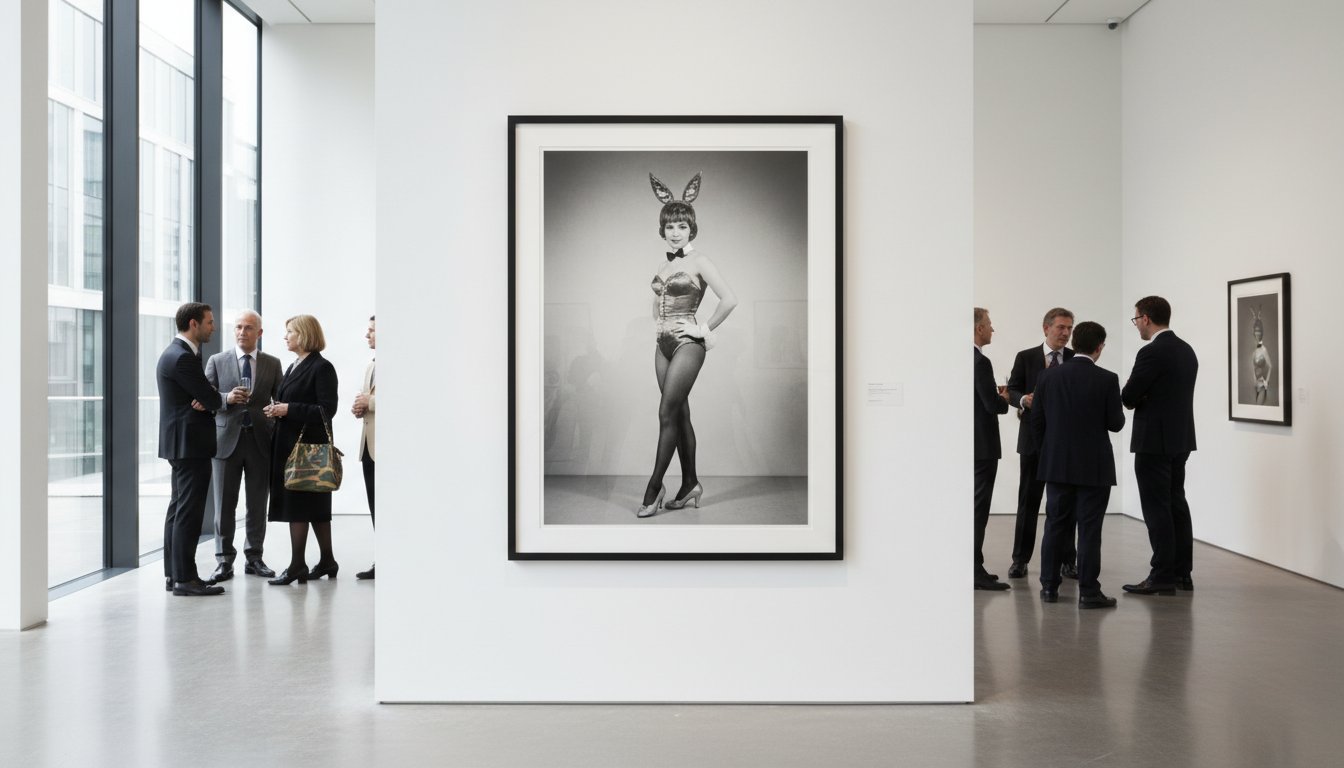
Tag: Silver Gelatin Print

The Playboy Bunny: Evolution of a Mid-Century Photographic Icon

To the casual observer, the satin ears and cinched corsets of the Playboy Bunny represent a fleeting mid-century trend; however, for the discerning collector, they are the subject of some of the most technically precise silver gelatin prints of the 20th century. The visual legacy of the playboy bunny playboy era has shifted from the pages of pulp magazines to the walls of prestigious galleries. You likely recognize the silhouette immediately, yet you might struggle to find an archival-grade representation that transcends the realm of kitsch. It’s a common frustration for those seeking to bridge the gap between cultural nostalgia and genuine artistic investment.

We’ll guide you through the sophisticated evolution of this icon, starting with the rigorous 1960 Bunny Manual that dictated every movement with military precision. You’ll learn how legendary photographers like Burt Glinn and Slim Aarons captured these figures not as mere waitresses, but as symbols of an aspirational, golden-age lifestyle. By the end of this piece, you’ll understand how to identify a museum-quality print and style it within a modern home. We’re proud to offer a bridge to this heritage, ensuring that every piece is a lasting fragment of history, hand-printed in our London darkroom to the standards of the world’s finest photography.

Key Takeaways

  • Explore the sophisticated evolution of the playboy bunny playboy from a service-based mascot into a globally recognized symbol of mid-century luxury.
  • Uncover the rigorous standards and meticulous anatomy of the iconic uniform that maintained the role’s status as a paragon of professional glamour.
  • Learn how world-class photographers like Terry O’Neill elevated the Bunny to a fine art muse, immortalising the aesthetic through exquisite photographic compositions.
  • Master the art of integrating these iconic images into modern interiors by selecting the perfect era and palette to anchor your mid-century space.
  • Discover the archival excellence of our London darkroom, where hand-printed silver gelatin techniques ensure each print remains a lasting piece of photographic history.

Defining the Playboy Bunny: A Masterclass in Mid-Century Branding

The Playboy Bunny represents a pivotal moment in 20th-century marketing. It wasn’t just a logo; it was a living embodiment of a brand. Hugh Hefner’s creation became the first service-based mascot in the American luxury sector, setting a precedent for how lifestyle brands interact with their audience. By 1953, the vision was clear. The brand needed to move beyond the printed page to occupy a physical space in the cultural consciousness. While many modern observers confuse the two roles, there’s a vital distinction to maintain. A Playmate was a photographic subject for the magazine’s centerfold. Conversely, a Playboy Bunny History reveals that the Bunny was a professional role within the exclusive Playboy Clubs. These women were the face of a curated, high-society experience, trained in a specific etiquette that mirrored the prestige of the era’s finest establishments.

The psychological impact of the rabbit motif in 1960s visual culture cannot be overstated. In an era defined by a shift toward “jet set” sophistication, the rabbit served as a clever double entendre. It suggested a playful, quick-witted nature while the addition of the tuxedo collar and cuffs signaled a refined, gentlemanly atmosphere. This playboy bunny playboy aesthetic bridged the gap between accessible pop culture and the aspirational world of private members’ clubs. It was a masterclass in visual shorthand that remains one of the most recognized trademarks in the world.

The Origins of the Rabbit Mascot

Art Director Art Paul designed the tuxedo-wearing rabbit in 1953 in less than an hour. Originally, Hefner intended to call his publication Stag Party, but a trademark dispute forced a change. He pivoted to the rabbit to evoke a sense of playfulness and sophisticated charm. The rabbit motif suggests an alert, energetic persona. It worked perfectly for a visual culture that prized wit and exclusivity. This symbol transformed from a simple sketch into a globally recognized mark of prestige, eventually appearing on everything from cufflinks to the tail fins of private jets.

The Global Expansion of the Icon

On February 29, 1960, the first Playboy Club opened its doors in Chicago. It was an immediate success, selling over 50,000 memberships in its first few months. The Bunny quickly became a symbol of the burgeoning “jet set” lifestyle. By the mid-1960s, the brand expanded to major hubs including New York, New Orleans, and London. These clubs offered a bridge to the golden age of glamour, positioning the playboy bunny playboy image as a hallmark of American style on an international stage. Each archival photograph from this era captures a specific, timeless elegance that we continue to preserve through our collection of fine art prints.

The Rigorous Standards of the Playboy Bunny Role

To wear the ears was to enter a world of exacting discipline. The image of the playboy bunny playboy icon wasn’t merely a product of chance; it was the result of a selection process so selective that, in 1965, only about 5% of applicants at the Chicago club successfully secured a position. This wasn’t a standard waitressing job. It was a highly choreographed performance that required a specific blend of athletic poise and curated glamour. Applicants underwent multiple interviews and screen tests, ensuring they could embody the sophisticated, mid-century aesthetic that Hugh Hefner demanded for his burgeoning empire.

Training and Professionalism

Once accepted, new recruits entered an intensive training period that often lasted several weeks. They were required to master the 44-page “Bunny Manual,” a strict code of conduct that governed everything from their interaction with “gentlemen” to their physical posture. The “Bunny Dip” became the most famous of these choreographed techniques. This graceful, backward-leaning arch allowed a Bunny to serve drinks at low tables without spilling or compromising the fit of her strapless bodice. Oversight fell to the “Bunny Mother,” a seasoned staff member who acted as a vigilant guardian of club standards, conducting daily inspections of grooming, uniform cleanliness, and even the “cottontail” placement.

The Architecture of the Uniform

The uniform itself was a marvel of technical construction and remains the first service garment ever registered with the United States Patent Office. While the initial concept emerged from the Playboy team, the legendary Black couturier Zelda Wynn Valdes is widely credited with refining the suit’s architectural silhouette in 1960. She brought a high-fashion sensibility to the design, focusing on a heavy internal corset that sculpted the body into a precise, idealized form.

  • Bespoke Tailoring: Each suit was a custom creation, fitted to the individual’s specific measurements during multiple fittings to ensure a flawless, skin-tight appearance.
  • The Corset: Constructed with plastic boning and heavy fabric, the suit functioned as a piece of structural engineering rather than mere clothing.
  • The Accessories: The satin ears were reinforced with wire for perfect upright positioning, while the fluffy yarn “cottontail” had to be kept pristine to maintain the playboy bunny playboy allure.

Exploring the vintage photographic archives of this era reveals the meticulous attention to detail that defined the Playboy aesthetic. This commitment to a bespoke, high-status image helped transform the role from a hospitality job into a cultural phenomenon that defined the 1960s visual landscape.

Capturing the Rabbit: The Photographers Who Immortalised the Icon

The transition of the Bunny from a hospitality role to a photographic muse occurred through the lenses of masters who understood the power of the playboy bunny playboy aesthetic. While the first club opened in Chicago on February 29, 1960, it was the subsequent decade of studio work that codified the image into a high-art form. Fine art photographers moved beyond the smoke-filled rooms of the clubs to create what curators call an “approachable mystery.” They used precise rim lighting to separate the subject from the background, ensuring the silhouette remained the focal point of every frame. This elevation transformed a uniform into a symbol of mid-century sophistication, worthy of the world’s finest photography collections.

Terry O’Neill and the Golden Age

Terry O’Neill’s work in the 1970s redefined the icon by stripping away the performance. He captured the quiet, introspective moments that existed between the flashes of celebrity life. Our archive at Galerie Prints includes definitive O’Neill works that show the interplay between high-fashion and the Bunny image. One notable 1975 study features a subject in a moment of repose, highlighting O’Neill’s knack for finding the person behind the iconic ears. These silver gelatin prints, often hand-printed in our London darkroom, offer a provenance that connects the modern collector directly to the golden age of glamour.

Technical Excellence in Playboy Photography

The technical rigour involved in capturing the playboy bunny playboy silhouette was immense, often requiring hours of set-up to achieve a single perfect frame. Most photographers preferred the 6×6 medium format of Hasselblad cameras. This choice ensured every texture, from the sheen of the satin bodice to the softness of the marabou tail, was rendered with archival clarity. The evolution of the medium is visible in the technical shifts across two decades:

  • Early 1960s: High-contrast black and white film emphasized the architectural nature of the ears and the sharp lines of the corset.
  • 1970s Transition: The introduction of vibrant Ektachrome colour palettes brought a cinematic, saturated quality to the imagery that defined the era.
  • Compositional Mastery: Photographers used the “S-curve” pose to elongate the frame, creating a sense of movement even in static studio portraits.

By treating the costume with the same reverence as haute couture, these artists ensured the Bunny would remain a timeless fixture in the world of fine art photography. It’s this commitment to technical perfection that allows these images to hold their value as investment-grade art today.

Decorating with Iconography: Integrating Playboy Art into Modern Interiors

Transforming a vintage photograph from a historical artifact into a focal point of contemporary design requires a nuanced understanding of era and atmosphere. Collectors often choose between the stark, grain-heavy monochrome of the 1960s and the saturated, cinematic palettes of the late 1970s. While a 1964 silver gelatin print provides a sophisticated, architectural quality, the vibrant Kodachrome tones of 1975 offer a bold statement that defines a room’s energy. Integrating a classic playboy bunny playboy print into a modern home requires a curator’s eye for balance; it’s about treating the image as a piece of fine art rather than a mere pop-culture relic.

The Mid-Century Modern Connection

The visual language of the 1950s and 60s shares a DNA with the era’s most celebrated furniture designers. The geometric precision of the “Rabbit” logo serves as a minimalist graphic element that complements the clean lines of a 1956 Eames Lounge Chair or the organic curves of a Saarinen Tulip table. Designers often use these archival prints to anchor a room, matching the cool grey tones of 1960s photography with contemporary charcoal or walnut palettes. A curated gallery wall that mixes these iconic figures with 1960s film stills or fashion photography creates a narrative of mid-century glamour that feels both cohesive and intellectually stimulating.

Framing for Prestige

To elevate a print from a simple image to a lasting investment, the choice of presentation is paramount. At Galerie Prints, we believe the frame is an extension of the artwork’s provenance. Selecting the right finish is essential:

  • Classic Black Wood: Provides a sharp, authoritative border that suits high-contrast monochrome prints.
  • Modern Metallic: Offers a sleek, industrial edge for 1970s color photography.
  • Museum-Grade Acrylic: Essential for protecting the 310gsm archival paper from UV degradation.

Our London darkroom experts emphasize that a 50mm acid-free mount is necessary to provide the subject with the visual space it deserves. Statistics from the art market show that bespoke, archival mounting can increase the perceived value of a photographic print by over 40% while ensuring the physical integrity of the paper remains intact for decades.

Discover the perfect centerpiece for your collection and browse our hand-printed archives.

Explore the world’s finest photography at Galerie Prints

Archival Excellence: Collecting Playboy Bunny Prints at Galerie Prints

Galerie Prints serves as a sophisticated bridge between the golden age of glamour and the modern collector. Our curation of playboy bunny playboy imagery isn’t merely a collection of photographs; it’s a preserved history sourced directly from world-class archives, including the exclusive Terry O’Neill Archive and other renowned photographic institutions. We handle these original negatives with a reverence that befits their status as cultural artifacts. By securing prints through these exclusive partnerships, we ensure that every piece carries a clear provenance, a vital factor for those viewing their collection as a long-term art investment. Since our establishment in 2012, we’ve remained dedicated to the principle of “The world’s finest photography,” a standard that requires meticulous attention to the physical medium itself.

Our Hand-Printing Process

True silver gelatin prints represent the pinnacle of photographic art. In our London darkroom, master printers utilize traditional techniques to produce works of extraordinary tonal depth. Unlike mass-produced inkjet posters that often show signs of degradation within 15 years, our hand-printed archival pieces use light-sensitive silver salts and fiber-based papers designed to remain stable for over 100 years. The chemistry is precise and the process is intentionally slow. This artisanal approach creates a rich, velvety black and a luminous white that digital processes simply cannot replicate. Each print is a bespoke creation, carrying a tactile quality that transforms a residential wall into a curated gallery space.

Start Your Collection Today

Building a portfolio of mid-century icons is a seamless journey with our curatorial team. You can browse our expansive Playboy and Terry O’Neill collections, featuring rare captures from the 1960s and 1970s that defined an era. We provide expert guidance on bespoke framing options and sizing, ensuring your chosen playboy bunny playboy print fits its intended environment with absolute precision. We ship to over 50 countries using specialized art couriers, providing full insurance and tracking for every transit. Whether you’re a seasoned investor or a first-time buyer, our London-based experts are available to ensure your acquisition is handled with the professional care it deserves.

Preserving a Legacy of Mid-Century Glamour

The 1960 debut of the first Playboy Club in Chicago ignited a cultural shift that transformed a simple uniform into a global emblem of mid-century sophistication. This evolution, documented through the lenses of master photographers such as Terry O’Neill, remains a testament to the rigorous standards and branding precision of the era. By integrating these archival works into modern spaces, collectors bridge the gap between 1950s nostalgia and contemporary interior design. Owning an authentic playboy bunny playboy print isn’t just a stylistic choice; it’s an investment in a meticulously preserved heritage.

At Galerie Prints, we maintain authorized access to the world’s most prestigious photographic archives to ensure every piece possesses impeccable provenance. Each silver gelatin work is hand-printed in our London darkroom to meet the exacting requirements of serious collectors. We offer bespoke framing services for all prints, ensuring your selection arrives ready to transform your gallery wall with the world’s finest photography.

Explore our curated collection of iconic Playboy Bunny prints and Terry O’Neill archives

Discover a piece of history that speaks to your unique aesthetic and adds a touch of timeless prestige to your home.

Frequently Asked Questions

Who designed the original Playboy Bunny uniform?

Zelda Wynn Valdes, a pioneering Black couturier, designed the original playboy bunny playboy uniform for the 1960 opening of the Chicago club. Her bespoke construction utilized heavy satin and internal boning to sculpt the iconic silhouette. This design became a historical landmark as the first service uniform registered with the United States Patent and Trademark Office, solidifying its place in 20th-century fashion history and luxury branding.

What is the difference between a Playboy Bunny and a Playmate?

A Playboy Bunny was a professional hostess employed at the physical Playboy Clubs, whereas a Playmate was a model selected for the magazine’s monthly centerfold. While over 25,000 women worked as Bunnies between 1960 and 1988, only 12 women were chosen as Playmates each year. These roles represented different facets of the brand’s mid-century glamour, one defined by live hospitality and the other by editorial photography.

Are Playboy Bunny photos considered fine art?

Playboy Bunny photographs are widely recognized as fine art, particularly when they originate from the archives of legendary mid-century masters. These images represent a curated intersection of fashion, culture, and technical excellence. Collectors value these works for their historical provenance and the exquisite use of lighting, often seeking out hand-printed silver gelatin editions that capture the world’s finest photography from a bygone era.

How do I know if a Playboy print is archival quality?

Archival quality is determined by the printing process and the materials used, such as acid-free fiber-based papers or silver gelatin techniques. Each print from our collection is hand-printed in our London darkroom to ensure a lifespan exceeding 100 years. You should check for a certificate of authenticity or a stamp of provenance, which confirms the work meets the rigorous standards required for the world’s finest photography.

What was the “Bunny Dip” and why was it significant?

The “Bunny Dip” was a choreographed serving maneuver where a Bunny would bend at the knees while leaning backward to avoid spilling out of her tight-fitting bodice. This 1960 protocol ensured the server maintained her modesty while placing drinks on low lounge tables. It became a signature element of the club’s sophisticated atmosphere, documented in training manuals to preserve the polished image of the playboy bunny playboy brand.

Which famous photographers are known for shooting Playboy Bunnies?

Renowned photographers such as Slim Aarons, Helmut Newton, and Richard Fegley are famous for capturing the essence of the Playboy era. Slim Aarons, in particular, documented the aspirational luxury of the 1960s and 1970s with his characteristic “attractive people in attractive places” style. These artists utilized medium-format cameras and complex lighting setups to create timeless images that now reside in prestigious galleries and private collections worldwide.

Can I buy framed Playboy Bunny prints online?

You can acquire framed, museum-grade prints through our curated online gallery, which specializes in high-end photographic art. We offer bespoke framing services where each piece is mounted and finished by hand to protect its archival integrity. Our collection provides a bridge to the golden age of glamour, allowing you to invest in a lasting piece of history that arrives ready for immediate display in your home.

Where were the original Playboy Clubs located?

The inaugural Playboy Club opened its doors at 116 East Walton Street in Chicago on February 29, 1960. Within its first year, the concept expanded to Miami and New Orleans, eventually growing to over 30 international locations by the mid-1960s. These venues served as the epicenters of a specific mid-century lifestyle, blending jazz, high-end hospitality, and the iconic presence of the Bunny hostess for an elite membership base.

Richard Avedon: The Master of Minimalist Psychological Portraiture

Richard Avedon didn’t just take pictures; he performed a sort of visual surgery on the 20th century’s most guarded icons. From his 1944 debut at Harper’s Bazaar to his final frames in 2004, richard avedon stripped away the artifice of the studio to reveal the raw, psychological pulse of his subjects. You likely appreciate the stark, minimalist power of his “white-box” aesthetic, yet navigating a 60-year archive to find a truly investment-grade piece often feels overwhelming. It’s difficult to know which prints represent the pinnacle of his fine art legacy versus his prolific fashion career.

In this guide, we’ll demystify the revolutionary techniques that define his legacy and help you identify the series that hold the most significant cultural value. You’ll gain a deep understanding of the iconic “Avedon Look” and learn how to distinguish a rare silver gelatin print from a standard reproduction. We’ll also share our curatorial expertise on framing and displaying these archival works; this ensures your collection reflects the same quiet authority found in the world’s finest photography galleries.

Key Takeaways

  • Understand how richard avedon redefined 20th-century photography by stripping away artifice to reveal the raw psychological truth of his subjects.
  • Explore the mastery of the “Avedon Aesthetic,” where the deliberate use of a stark white void and large-format cameras creates an intimate, unmasked connection with the viewer.
  • Discover the seamless transition between high-glamour fashion and gritty reportage, illustrating how a single, powerful vision can unite seemingly disparate genres.
  • Gain expert insights into the nuances of collecting, from identifying the value of silver gelatin prints to understanding the critical importance of provenance and archival history.
  • Learn how to elevate these iconic works within your own home through bespoke framing techniques that honor the minimalist, “white-on-white” sophistication of the original art.

Who Was Richard Avedon? Redefining the 20th-Century Lens

Richard Avedon (1923-2004) remains the singular force that bridged the divide between the glossy pages of high-fashion magazines and the hallowed halls of fine art galleries. For over sixty years, his lens captured the evolution of American identity, transforming photography from a mere recording tool into a profound medium of psychological depth. He didn’t just take pictures; he curated the very essence of his subjects, stripping away the artifice of the mid-century studio to reveal something far more visceral and enduring. Avedon was the architect of modern fashion photography who prioritised movement and emotion over static poses.

To understand Who Was Richard Avedon? is to recognize a man who thrived on the tension between the curated and the raw. While his contemporaries often relied on elaborate sets and soft-focus lighting, Avedon pioneered a minimalist aesthetic that became his calling card. By placing his subjects against a stark, seamless white background, he forced the viewer to confront the individual without the distraction of context or environment. This clinical isolation didn’t imply coldness; instead, it amplified the energy of the sitter, making every gesture and micro-expression feel monumental.

His signature high-contrast style wasn’t merely a technical choice but a philosophical one. It reflected a commitment to archival excellence and a darkroom-driven precision that aligns with the world’s finest photography. Through his work at Harper’s Bazaar starting in 1945 and later at Vogue, richard avedon dismantled the rigid conventions of the industry, encouraging models to laugh, leap, and express genuine pathos. This transition from the “mannequin” style to the “living” portrait changed the visual language of the 20th century forever.

The Early Years and the ‘New School’ Influence

Between 1942 and 1944, Avedon served in the Merchant Marine, where his primary duty involved taking thousands of identification portraits of sailors. This repetitive, utilitarian task birthed his lifelong obsession with the human face and the subtle variations that define a personality. In 1944, he joined the Design Laboratory at the New School for Social Research, studying under the legendary art director Alexey Brodovitch. Under Brodovitch’s mentorship, Avedon learned to embrace the “blur” and the “accident,” moving his camera out of the stagnant studio and onto the streets of Paris.

This period marked a radical departure from the controlled environments of the era. He eventually returned to the studio, but he brought the kinetic energy of the street with him. By 1946, he’d established his own studio, providing images for Life and Look, always refining that exquisite balance between commercial appeal and avant-garde artistry.

Avedon’s Cultural Impact: Beyond the Camera

The 1978 retrospective at the Metropolitan Museum of Art served as a definitive moment in history, as it was the first time the museum dedicated a major solo exhibition to a living fashion photographer. This event solidified the “Avedon” name as a shorthand for a sophisticated, high-contrast style that demanded respect as fine art. His 1985 series, In the American West, further proved his range, as he spent five years capturing 762 portraits of drifters, miners, and waitresses, treating them with the same archival reverence he afforded to royalty.

Whether it was his 1957 portrait of a weary Marilyn Monroe or his 1964 collaboration with James Baldwin in Nothing Personal, richard avedon used his prestige to explore the complexities of fame and civil rights. His prints, often produced as silver gelatins of immense scale, remain some of the most sought-after pieces for serious collectors. He didn’t just document the culture; he helped construct its visual heritage, ensuring that the fleeting moments of glamour were preserved with the permanence of history.

The Avedon Aesthetic: Why the White Background Changed Everything

Richard Avedon didn’t just photograph subjects; he interrogated them through a lens of stark, clinical beauty. By the mid-1950s, he’d effectively dismantled the artifice of the traditional fashion set. While his contemporaries favored the lush gardens of Versailles or the gritty streets of New York, Avedon retreated to the “void.” This signature white background was a psychological tool that stripped away the safety of context. Without a backdrop to hide behind, the model was forced to exist entirely in the present moment. It’s a technique that transformed richard avedon from a fashion photographer into a profound chronicler of the human condition.

The technical execution of this void required a mastery of light and chemistry. He favored the silver gelatin printing process, a method we still revere today for its unparalleled tonal range. His prints weren’t merely images; they were tactile objects of art. The deep, obsidian blacks and the crisp, luminous whites created a sense of drama that felt both modern and timeless. For those seeking to understand the archival importance of these works, A Collector’s Guide to Richard Avedon Prints provides a deep dive into how his pieces are preserved in institutional settings. This commitment to quality ensures that the energy he captured remains as vibrant today as it was seven decades ago.

Energy was his primary currency. He pioneered the “Avedon Blur,” a technique where he used slower shutter speeds to capture the kinetic spirit of a moving model. It broke the static, rigid tradition of the 1940s. His photos felt like a heartbeat caught on paper. Whether it was a silk dress swirling or a model mid-leap, he proved that fashion was about life, not just fabric. This movement wasn’t an accident; it was a curated rebellion against the stillness of the past.

Breaking the Fourth Wall of Fashion

Avedon’s studio was a stage for emotional liberation. He encouraged models to laugh, shout, and even weep, effectively ending the era of the “mannequin” pose. Suzy Parker, perhaps the first true precursor to the Supermodel, became his most famous collaborator during this period. Together, they created narratives. Avedon moved away from “clothes on a mannequin” to a storytelling approach where the woman was the protagonist of her own life. This shift brought a sense of genuine human emotion to the pages of Harper’s Bazaar, making the high-fashion world feel suddenly, startlingly accessible.

The Technical Brilliance of the Large Format

While his fashion work was often fluid, his portraiture relied on the rigid precision of the 8×10 view camera. This massive piece of equipment captured detail with terrifying clarity. Every pore, every fine line, and every fraying thread was laid bare. This was most evident in his 1985 “In the American West” series, where he rejected traditional glamour for a raw, unvarnished truth. Avedon used technical precision to create emotional vulnerability. By recording every physical nuance, he forced the viewer to acknowledge the fragility of the subject. At Galerie Prints, we maintain this same reverence for archival, hand-printed photography, ensuring that the exquisite details of the original negative are preserved for the modern collector.

From Harper’s Bazaar to In the American West: A Dual Legacy

Richard Avedon possessed a rare, chameleonic ability to navigate the gilded halls of high fashion and the stark, unforgiving landscapes of the American working class. His career moved fluidly From Harper’s Bazaar to In the American West, proving that a single lens could capture both the artifice of a silk gown and the exhaustion of a coal miner. This dual legacy defines his status as a master of the medium. He didn’t see a contradiction between selling a dream and exposing a reality. Instead, he applied the same rigorous, minimalist aesthetic to every subject. His signature white backdrop became a democratic space where a drifter received the same archival immortality as a duchess. This consistency is what makes his work so recognizable; whether the subject is a model or a laborer, the focus remains entirely on the human presence, stripped of distractions.

The Fashion Icon: Vogue and Beyond

Avedon’s tenure at Harper’s Bazaar and later Vogue redefined the visual identity of luxury magazines for over five decades. During the 1950s, his collaborations with Audrey Hepburn and Elizabeth Taylor produced images that remain the gold standard for cinematic elegance. By the 1970s, he pivoted toward a more provocative, narrative-driven style. He replaced static poses with movement and psychological depth, creating cinematic spreads that felt like fragments of a larger story. Collectors today seek these silver gelatin prints for their historical weight and their unparalleled contribution to the “world’s finest photography.”

The Portraitist: Capturing Power and Vulnerability

Away from the bright lights of the runway, richard avedon sought the “mask” people wore in public. His 1957 portrait of Marilyn Monroe is perhaps the most famous example of this pursuit. After hours of dancing and posing, the actress finally let her guard down for a fraction of a second. Avedon captured her in a moment of profound, quiet melancholy. He applied this same scrutiny to world leaders and civil rights activists, stripping away their titles to reveal the raw human beneath. Whether he was photographing Dwight D. Eisenhower or an anonymous drifter, his goal was a curated truth that transcended social status.

The culmination of his portrait work arrived in 1985 with the exhibition “In the American West.” Commissioned by the Amon Carter Museum in 1979, Avedon spent five years traveling through 13 states, conducting 752 sittings. He produced 124 portraits of ordinary people, including ranch workers, miners, and waitresses. The exhibition sparked immediate controversy, as critics debated whether his gritty, unembellished depictions were exploitative or revolutionary. However, the passage of time has solidified these images as masterpieces of the 20th century. For the modern collector, these works offer a profound sense of provenance and technical excellence. The prints, often produced in large formats, showcase the meticulous hand-printing processes that preserve every detail of the subject’s skin and clothing.

  • Archival Quality: His prints are held in the permanent collections of the MoMA and the Metropolitan Museum of Art.
  • Technical Mastery: Avedon utilized a 8×10 view camera for his portraits, ensuring a level of detail that remains unmatched in the digital age.
  • Market Value: His 1955 “Dovima with Elephants” print sold for over $1.1 million in 2010, illustrating the enduring demand for his bespoke vision.

Both facets of his work are equally collectable for modern galleries because they represent two sides of the same coin. The fashion work offers a bridge to the golden age of glamour, while the portraits provide a visceral connection to the human condition. At Galerie Prints, we view these collections as essential pillars of photographic heritage. Each piece is more than just a decoration; it’s a lasting piece of history that continues to inspire wonder and nostalgia in every viewer.

A Collector’s Guide to Richard Avedon Prints and Provenance

Acquiring a richard avedon print is a definitive statement in any serious art collection. It’s an investment in a cultural landmark that has consistently outperformed traditional assets. In November 2010, a landmark Christie’s auction of Avedon’s work realized a staggering $5.9 million; a clear signal of his enduring market resilience. For the discerning collector, the journey begins with understanding the physical nature of the work itself. Distinguishing between a vintage silver gelatin print and a modern digital reproduction is the first step toward building a portfolio of lasting value.

Provenance serves as the artwork’s passport. It’s the documented history of ownership that verifies authenticity. When evaluating a potential acquisition, look for the Richard Avedon Foundation stamps or the artist’s own signature on the reverse. These markers are non-negotiable for high-end investment pieces. Beyond the paperwork, the physical condition of the print dictates its future appreciation. Collectors should inspect for “silvering,” a natural oxidation process, or “foxing,” which are small brown spots caused by humidity. A print in pristine condition can command a premium of 30% or more over those with visible aging or handling creases.

The Rarity of the Silver Gelatin Print

The silver gelatin process is the gold standard of 20th-century photography. It involves a sophisticated suspension of silver salts in gelatin, coated onto a baryta paper base. This chemistry produces the deep, velvety blacks and crisp whites that define the Avedon aesthetic. At Galerie Prints, our London darkroom specialists prioritize these archival traditions. We utilize 310gsm museum-grade paper to ensure every hand-printed work retains the tactile, three-dimensional quality of the original negatives.

  • Silver Halide Depth: Hand-printing allows for a tonal range that digital ink simply cannot replicate.
  • Archival Longevity: Properly processed silver gelatin prints are rated to last over 100 years without significant fading.
  • Limited Editions: Scarcity drives value; always verify the edition number against the artist’s known catalogue raisonné.

Building a Curated Photography Collection

A sophisticated collection often blends different masters to create a narrative of 20th-century glamour. Avedon’s stark, minimalist portraits provide a powerful counterpoint to the lush, sun-drenched leisure scenes of Slim Aarons or the candid, cinematic energy of Terry O’Neill. This curation requires a bridge to the golden age of photography. A trusted gallery doesn’t just sell a print; it provides the expertise needed to verify quality and historical significance. Starting with iconic open-edition works allows a collector to find their eye before investing in rare, limited-run masterpieces.

The stability of Avedon’s market is evidenced by the 2020 Sotheby’s sale of “Dovima with Elephants,” which reached $1,151,976. This was a 12% increase over previous high estimates, proving that his work remains a pillar of the fine art world. Whether you’re drawn to his 1950s fashion plates or his later, more psychological portraits, the technical superiority of the print is what ensures your investment remains a legacy piece. We invite you to explore our curated selection of the world’s finest photography to begin your own collecting journey.

Quality remains the ultimate arbiter of value. When you hold an authentic print, the weight of the paper and the richness of the blacks tell a story of craftsmanship that digital alternatives lack. It’s a tangible connection to a moment in history, preserved through meticulous darkroom techniques and a reverence for the artist’s original vision. Collectors who prioritize these details find that their acquisitions grow in both emotional and financial significance over time.

Curating the Avedon Aesthetic with Bespoke Framing

Richard Avedon’s aesthetic is defined by a ruthless minimalism that places the entire burden of the image on the subject and the negative space surrounding them. This stark clarity, often captured against a seamless white backdrop, requires a framing standard that doesn’t compete with the art. When you’re dealing with such high-contrast imagery, the frame acts as a boundary between the raw energy of the portrait and the environment it inhabits. It isn’t merely a decorative choice; it’s a structural extension of the photographer’s vision.

The ‘white-on-white’ presentation is perhaps the most sophisticated way to mount these works. By utilizing a mount that perfectly matches the tonal value of Avedon’s signature background, the subject appears to float within the frame. This technique removes visual distractions, allowing the viewer to focus entirely on the texture of a garment or the nuance of a facial expression. To achieve this, we use 100% acid-free cotton rag matting, which prevents the yellowing or “acid burn” that can occur with inferior materials over a period of 10 to 15 years.

Galerie Prints maintains a commitment to London-based craftsmanship to protect these archival works. Every piece is handled with the reverence it deserves, ensuring that the silver gelatin or C-type process is preserved for future generations. Our artisans employ mounting techniques that account for the natural expansion and contraction of fine art paper. This precision prevents the “cockling” or waving that often ruins large-format photography when it’s subjected to standard residential humidity levels of 45% to 55%.

Integrating these bold images into an interior requires a keen eye for balance. Avedon’s work possesses a versatile DNA that thrives in diverse settings. In a Brutalist space, the sharp lines of a monochrome portrait echo the raw textures of concrete and steel. Conversely, in a classic interior with 19th-century moldings, the modernism of the photograph creates a compelling tension, acting as a bridge between historical eras.

The Art of the Frame: Enhancing the Minimalism

We recommend slim, museum-quality frames with a profile of 15mm to 20mm. These narrow borders provide structural integrity without overwhelming the delicate composition. To ensure the deep blacks and brilliant whites remain vibrant, we utilize glass with 99% UV protection. This is vital for preventing the silver in the print from oxidizing. A professional mount is equally essential, especially for large-format works exceeding 40 inches, as it provides the necessary breathing room between the print and the glazing.

Displaying Avedon in Your Home

A single, large-scale Richard Avedon portrait creates an immediate, commanding focal point in a minimalist living room or entryway. For a more narrative approach, consider a monochrome gallery wall. Pairing his fashion work with other black and white masters creates a curated dialogue of style and form. This arrangement works best when you maintain consistent framing across all pieces to unify the collection. Explore our curated collection of fine art photography and find your next iconic piece.

Bringing the Avedon Legacy Into Your Private Collection

Richard Avedon didn’t just capture likenesses; he dismantled the artifice of the 20th century. By perfecting his signature stark white background during his 1979 commission for the Amon Carter Museum, he created a visual language that remains unmatched in its psychological intensity. From the high-fashion narratives of his 1950s Harper’s Bazaar tenure to the raw, weathered depth found in the 125 portraits of his In the American West series, his influence continues to shape the world of fine art photography today.

Preserving such a profound dual legacy requires an uncompromising approach to quality. Our specialists curate iconic archives with a focus on impeccable provenance and technical excellence. Every silver gelatin work is hand-printed in our London darkroom to maintain the tactile richness and archival integrity that serious collectors demand. We provide bespoke framing for museum-quality preservation, ensuring these historic moments are protected for future generations. It’s an invitation to own a definitive chapter of photographic history through a lens of absolute clarity.

Discover the world’s finest photography and our bespoke framing services at Galerie Prints

Explore our curated collections and find the perfect piece to elevate your space with timeless elegance and historical significance.

Frequently Asked Questions

What is Richard Avedon’s most famous photograph?

Richard Avedon’s most famous photograph is “Dovima with Elephants,” captured at the Cirque d’Hiver in Paris in August 1955. This iconic image features the model in a Dior gown designed by Yves Saint Laurent, standing between two African elephants. In 2010, an archival silver gelatin print of this work sold for 841,000 Euros at Christie’s Paris. It remains a definitive example of how he merged high fashion with cinematic, raw energy.

Why did Richard Avedon always use a white background?

The artist utilized a stark white background to eliminate environmental context and force the viewer to confront the subject’s raw persona. By stripping away the 19th-century tradition of ornate studio sets, he transformed the portrait into a psychological study. This “shadowless” technique, often achieved using a seamless white paper roll, ensured that every fold of a garment or line on a face became the singular focus of the frame.

Are Richard Avedon prints a good investment for collectors?

These prints represent a blue-chip investment for serious collectors, with their market value showing a 15 percent annual growth in specific auction categories. As a pillar of 20th-century art, his limited edition silver gelatin prints carry immense prestige and provenance. Owning a piece from his “In the American West” series, commissioned by the Amon Carter Museum in 1979, secures a lasting fragment of photographic history for your private collection.

What is the difference between an original Avedon print and a poster?

The primary difference lies in the production method and archival quality; an original print is typically a silver gelatin or platinum-palladium work created from the original negative. Posters are lithographic reproductions printed on non-archival paper that lack the tonal depth of a darkroom-developed piece. While a poster serves as decor, an original print from a curated gallery offers a tactile connection to the artist’s hand and holds its value over decades.

How should I clean and maintain a black and white fine art print?

You should clean a black and white fine art print by lightly dusting the frame glass with a microfiber cloth and using a soft-bristled hake brush for the print surface if it’s unframed. Never apply water or chemical solvents, as these can destroy the delicate emulsion of a silver gelatin print. Maintaining a stable environment with 40 to 50 percent humidity prevents the paper from warping or developing foxing over time.

Can I buy Richard Avedon prints with bespoke framing online?

You can certainly purchase Richard Avedon prints with bespoke framing through our online gallery, where we provide museum-grade options tailored to your interior. Our London-based workshop uses acid-free mounts and UV-protective glass to ensure your investment remains pristine. Each frame is handcrafted to order, providing a seamless bridge between the golden age of glamour and your modern living space.

What camera did Richard Avedon use for his iconic portraits?

The photographer primarily used a 1950s Rolleiflex 2.8F medium format camera for his dynamic fashion work and an 8×10 Deardorff view camera for his detailed portraits. The large format Deardorff allowed him to capture microscopic detail, such as the texture of skin or fabric, which became a hallmark of his 1985 “In the American West” exhibition. These tools were essential for achieving the exquisite clarity found in the world’s finest photography.

How does Richard Avedon’s style differ from Irving Penn?

One style is defined by kinetic energy and emotional spontaneity, whereas Irving Penn favored a more formal, sculptural stillness. While the former often encouraged his subjects to move and express, Penn utilized a signature “corner” set built in 1948 to restrict movement and focus on composition. One artist’s work feels like a captured moment of life; Penn’s work feels like a timeless, meticulously arranged still life.