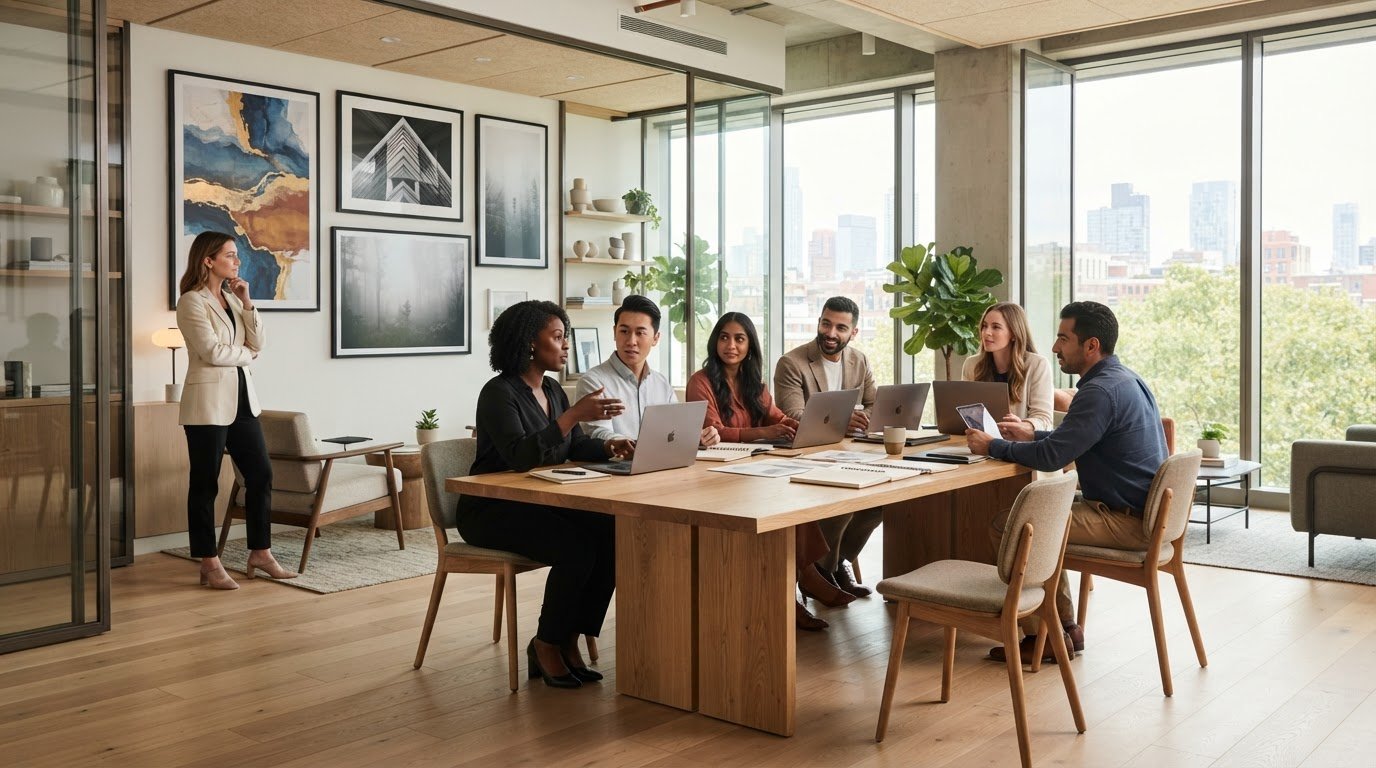
Tag: Office Art

Art That Inspires Creativity in an Office: Ideas for a More Imaginative Workspace

What if the art on your office walls could do more than fill empty space? Art that inspires creativity in an office gives people something to pause over, notice and interpret in their own way. A well-chosen image can lend a workspace a distinct character without overwhelming it.

If your office feels generic, choosing artwork can seem surprisingly difficult. A striking image that suits a reception area may feel distracting beside a desk, while a thoughtful subject can lose its presence if the scale or placement is wrong. The answer isn’t simply to add more, but to choose with intention.

This guide explores how imagery, subject matter and position can shape different workspaces, from shared meeting rooms to quieter individual offices. You’ll find practical ways to compare art directions, assess scale and placement, and create visual interest without clutter. Photographic prints, vintage cinema imagery and considered framing can each bring a distinctive point of view, helping your office feel personal, composed and suited to the way people use it.

Key Takeaways

  • Choose imagery for its visual character, from fine-art photography and abstract compositions to nature-inspired scenes and cinematic subjects.
  • Match the artwork’s mood and format to the room, considering how people use the space and what they’ll see from their usual positions.
  • Use a simple selection process to define the room’s needs, shortlist images, assess scale and refine the presentation.
  • Thoughtfully selected art that inspires creativity in an office can invite fresh perspectives while giving the workspace a more personal feel.
  • Explore exhibition-quality photographic prints, with bespoke framing and options for custom sizing and cropping to suit your chosen image and wall.

Why Art That Inspires Creativity in an Office Is More Than Decoration

An office can be carefully equipped and still feel impersonal: desks, screens and blank walls arranged for function, with little to suggest the character of the people who work there. Art changes how a room feels by giving the eye something worth returning to. Art that inspires creativity in an office is chosen to invite attention, interpretation and fresh associations, rather than simply match a passing trend or complete a colour scheme.

Creativity is not one fixed quality or process. The broad discussion of the concept of creativity reflects how varied its meanings can be. In a workspace, that variety is a useful starting point: choose imagery that leaves room for curiosity, rather than expecting one picture to prompt the same thought in everyone.

What makes an image feel creatively engaging?

Subject and composition shape how an image holds attention. A photograph of a familiar city from an unusual vantage point might draw attention to its geometry; a cropped portrait might bring gesture, expression or negative space to the fore. An image with a clear subject can be compelling, while a more ambiguous composition may invite several readings.

Those responses are personal, not universal. One person may find a cinematic scene evocative because it recalls a favourite film; another may respond to its lighting or arrangement of figures. A photograph connected to a team’s interests, history or sense of place can carry more meaning than an image chosen only because it matches the current palette. Consider what the work might mean to the people who will encounter it, as well as how it looks on the wall.

That doesn’t mean every surface needs artwork. One striking piece in a meeting room or a small group of images united by subject, tone or framing can be enough. Leaving some walls clear gives the selected work space to be seen. Aim for visual interest with intention, not decoration for decoration’s sake.

Start with the character of the office

Before choosing an image, decide what atmosphere each room should communicate. A shared brainstorming area might suit imagery with movement, contrast or details that invite conversation. A quiet focus room may call for a more restrained composition that feels absorbing without dominating the space. In reception, artwork can offer a first impression of the organisation’s sensibility, whether contemporary, warm, playful or shaped by cultural references.

Think about the room’s purpose, sightlines and existing character. What will people see as they enter, sit down or move through the space? A large, vivid work might anchor a generous wall, while a more intimate image could reward closer viewing in a smaller room. Art should complement the way a space is used, not dictate it. Once you’ve settled on the atmosphere, it becomes easier to compare subjects and formats and choose work that feels at home.

Four Art Directions That Can Bring Fresh Perspectives to an Office

Different visual languages create different kinds of presence. Fine-art photography offers observed detail, abstract imagery foregrounds form and colour, nature-inspired scenes bring the natural world into view, and cinematic subjects suggest a story. None is inherently more creative than another; the right choice depends on the space and the people who encounter it.

These approaches can sit alongside each other, provided the selection feels deliberate. Decide whether you want an image to reward a close look, establish a particular mood or introduce a cultural reference. The arts’ relationship with fresh thinking is explored in the arts and innovation, a useful perspective when considering how visual culture can have a place in working life.

  • Fine-art photography: Photography can offer immediate impact as well as intricate detail. A landscape might draw attention to changing light across a ridge; an architectural image can turn a familiar façade into a study of line, pattern and perspective. Photographs of people may invite reflection on gesture or connection. Galerie Prints’ curated photographic collections offer a range of images to consider, including the Slim Aarons Collection and Terry O’Neill Photography.
  • Abstract imagery: Rather than depicting a recognisable subject, abstract work emphasises shapes, texture, colour and rhythm. A composition of overlapping forms might feel measured to one viewer and spontaneous to another. This openness leaves room for individual interpretation, making abstract imagery a way to introduce visual contrast without requiring a literal narrative.
  • Nature-inspired scenes: Images of forests, coastlines, gardens or open skies bring natural forms and environments into a room. A misty shoreline has a different quality from a densely detailed woodland or a crisp botanical study. Choose by considering the scene’s palette, sense of space and level of detail, rather than assuming every nature image creates the same atmosphere.
  • Cinematic subjects: Film-related imagery can introduce period detail, recognisable visual language and the feeling of a story about to unfold. A vintage lobby card or movie poster may evoke a particular era or style of filmmaking, while its composition can also stand on its own as an image. One thoughtfully placed piece can serve as a cultural reference within a broader office interior.

A useful question is what kind of visual encounter you want: close observation, open interpretation, connection to the natural world or a hint of narrative. The answer can help narrow the field without turning these directions into a ranking. For photographic imagery with lasting presence, explore Galerie Prints’ fine-art photography as you consider the visual language that best suits your workspace.

How to Compare Office Art Ideas by Mood, Format and Workspace

Compare an artwork by more than its subject. Consider the visual tone it brings to a room, the space it occupies and the distance from which people will view it. This makes it easier to choose art that inspires creativity in an office without treating one style as a universal solution. The table offers a starting point; the room’s purpose and existing character should guide the final choice.

Art direction Visual mood Suitable setting Selection consideration
Photographic Observant, detailed or atmospheric Meeting rooms, corridors or reception Choose a subject and composition that hold interest at the expected viewing distance.
Abstract Expressive, rhythmic or open-ended Shared spaces or contemporary interiors Consider how its shapes and colours relate to the room’s palette.
Nature-inspired Expansive, organic or contemplative Focus rooms, breakout areas or transitions Look at the scene’s detail, tonal range and sense of space.
Cinematic Narrative, nostalgic or culturally referential Reception areas or communal rooms Decide whether the image’s era and references suit the office’s character.

Match visual intensity to the room’s purpose

For a room intended for concentration, quieter imagery with restrained contrast may feel more in keeping than a highly saturated, densely composed work. A communal area can accommodate a bolder focal image or a more varied visual language, particularly where people gather and talk. These are design considerations, not guarantees about how anyone will think or behave. Look for harmony between the artwork’s tone, the room’s function and its furnishings, finishes and light.

Choose a format and scale that feel considered

Scale depends on both the wall and the viewer. A work that seems substantial up close may feel undersized across a long reception wall; intricate details may be better appreciated where people can approach them. Consider the furniture below the artwork, nearby doorways and the usual standing or seated viewpoint. A paper plan or removable wall templates can help you judge proportions before settling on a layout.

Galerie Prints’ Bespoke Services include custom sizing and cropping, which can help a chosen image suit a particular wall or format. Cropping can alter the balance of a composition, so consider which details should remain visible. For more ideas on presenting photographic art, explore the gallery’s guides to displaying photography and fine-art photography.

A Practical Method for Choosing Art That Inspires Creativity in Your Office

A thoughtful selection begins with the room, not the frame. This process turns a broad search for art that inspires creativity in an office into clear decisions about atmosphere, subject, scale and presentation, whether you’re furnishing one compact room or a larger shared workplace.

Build a short visual brief before choosing a print

Before browsing, write down the room’s purpose, the atmosphere you want it to have and the subjects that feel meaningful to its users. For a shared space, invite the people who use it to discuss visual preferences; a few reference images can make differing tastes easier to compare. Look for a coherent thread, such as tone or subject, while allowing each chosen image to keep its own character.

  1. Identify the room. Note who uses it, what happens there and where people spend time. A meeting room, quiet office and reception area each call for different considerations. Include the main wall and the direction from which it’s usually viewed.
  2. Choose a mood. Describe the atmosphere in a few words, such as calm, curious, sociable or reflective. Use these as a guide, not a rigid rule. In shared spaces, discuss the words as a group and agree on a tone that feels welcoming without needing to suit every individual taste.
  3. Shortlist imagery. Gather a focused range of possible works that fit the brief. Compare their composition, subject and visual intensity, then ask what draws your attention and whether that interest is likely to endure. A clear shortlist makes it easier to compare images on their merits.
  4. Assess the scale. Measure the available wall area and consider viewing distance, furniture and surrounding finishes. A work should feel in proportion from the places people will actually see it. For a group of images, sketch the arrangement to judge its overall footprint, spacing and balance.
  5. Refine the presentation. Consider how the format and framing relate to the artwork and the room. Check that the arrangement feels deliberate beside nearby furnishings and other visual elements. If several people use the space, share a layout or physical mock-up before settling on the placement.

Refine the image for the wall and viewing distance

Wall dimensions are only part of the calculation. A detailed photograph may reward closer viewing, while a composition with broad shapes can read clearly across a room. Think about whether people will pass the artwork, sit opposite it or encounter it as they enter. Galerie Prints’ Bespoke Services include custom sizing and cropping, which can help adapt a chosen image to the wall while keeping its composition in view. Cropping changes what the viewer sees, so consider which details should remain in frame.

Once the visual brief and layout feel resolved, explore photographic prints for your office and choose a work that suits the character of the space.

Bring Exhibition-Quality Photographic Art into Your Office with Galerie Prints

Once you’ve settled on the atmosphere, subject and placement that suit your workspace, look for an image whose visual character you’ll want to live with. Galerie Prints offers curated photographic prints across a range of subjects, including the Slim Aarons Collection, Terry O’Neill Photography, music archives and cinema imagery. A carefully chosen work can give a shared room a point of interest or bring a more personal note to an individual office, without needing to define the entire interior.

Galerie Prints describes its prints as exhibition quality and its printing and framing process as second to none. The gallery is passionate about art and offers bespoke framing for purchased prints. Whether you’re drawn to a richly detailed photograph, a distinctive portrait or an image with a sense of narrative, choose a work that feels connected to the room and the way your team wants to use it.

Select a photographic print that suits the space

Let the room’s purpose guide your selection. A reception area might suit an image that offers an immediate point of visual interest, while a meeting space could benefit from a composition that rewards a closer look. For an office used by a particular team, consider subjects that reflect shared interests or references without relying on an overly literal statement. Galerie Prints’ collections offer a range of visual directions to explore, from fine-art photography to cinematic and music-related imagery.

If you’d like to consider the medium in more depth, the guide to fine-art photography offers another perspective on how photographic images can be appreciated and selected. As you browse, return to the practical questions you’ve already considered: how the work will read from the doorway, what details will hold attention at closer range, and whether its tone sits comfortably with the room.

Make the finished presentation feel intentional

Scale, crop and framing all contribute to how an image meets the wall. Galerie Prints’ Bespoke Services include custom sizing and cropping, helping a chosen photograph suit its intended space while keeping its composition in view. Bespoke framing is also available for purchased prints. For a different presentation, Bespoke Services include printing on any substrate, including aluminium, wood and glass. The options also include large-scale murals and wallpapers.

These choices let the presentation respond to the office rather than forcing the room around the artwork. Consider how the frame relates to nearby materials and how the image’s proportions sit within the available wall area. A considered finish can help the work feel at home, whether it stands alone or forms part of a wider visual arrangement.

Explore Galerie Prints’ exhibition-quality photographic prints and find art that inspires creativity in an office while reflecting the character of your workspace.

Let the Workspace Reflect What Comes Next

A considered office can develop alongside the people who use it. As teams change, projects evolve and rooms take on new purposes, artwork can remain a steady point of reference or offer a fresh perspective. Choosing art that inspires creativity in an office is less about finding a single perfect image than making space for curiosity, personal connection and visual character.

Begin with one wall or one room. Notice what feels missing, what already belongs and which image you’d be glad to encounter each day. Let that response guide your choice, rather than trying to fill every blank surface at once. A thoughtful piece can make a room feel more distinctly yours while leaving room for new ideas.

Galerie Prints offers exhibition-quality prints, with Bespoke Services that include custom sizing, cropping and printing on any substrate. When you’re ready to choose a photographic work for your space, explore Galerie Prints’ exhibition-quality photographic prints.

Frequently Asked Questions

Can photographic prints inspire creativity in an office?

Yes, photographic prints can invite people to pause, notice details and interpret an image in their own way. Individual responses vary, so no photograph can guarantee a particular creative result. For art that inspires creativity in an office, consider whether the subject and visual mood feel right for the room and its users. A cityscape, for example, might appeal to a team interested in architecture, while a portrait may feel more personal.

What type of art is best for a creative office?

There’s no single best choice. Photography can draw attention to observed detail; abstract imagery offers shapes and colours open to interpretation; nature-inspired scenes depict organic forms and landscapes; cinematic imagery brings cultural references and a sense of narrative. Think about the room’s purpose, the people who use it and the atmosphere you’d like to create. A preference shared by the team may matter more than choosing a style simply because it’s fashionable.

How do I choose art for an office wall?

Start by identifying the room’s purpose, then decide on a mood that suits how people use it. Shortlist images that reflect that intention, and assess the wall area, viewing distance and nearby furnishings before settling on a composition. Consider how the work will appear from the entrance as well as from a desk or meeting table. Galerie Prints offers bespoke custom sizing and cropping to help adapt a chosen print’s presentation to the space.

Can office art be made to fit a particular wall?

Galerie Prints’ Bespoke Services include custom sizing and cropping, which can help tailor a selected image’s presentation to a particular wall. Consider the wall’s proportions and the distance from which the print will usually be viewed, then think about how cropping may affect the composition. The right presentation depends on the image and the space; custom sizing doesn’t mean every photograph will suit every wall or arrangement.

Does Galerie Prints offer framed photographic prints for an office?

Yes, Galerie Prints offers a bespoke framing service as an add-on for purchased prints. Framing can form part of the overall presentation, helping the selected work feel considered within an office interior. The gallery describes its printing and framing process as second to none. Consider how the frame will relate to the artwork, the available wall space and surrounding furnishings.

What materials can Galerie Prints print on for bespoke office art?

Galerie Prints’ Bespoke Services include printing on any substrate. Examples include aluminium, wood and glass. The choice of substrate can be considered alongside the image and the character of the office, as part of planning the artwork’s presentation. Think about how the chosen surface will sit visually with nearby materials and finishes, without assuming a particular technical property or result.

Fine Art for Corporate Interiors: Curating Prestige and Narrative in the Modern Workspace

Did you know that 78% of employees believe art in the workspace significantly reduces stress, while 64% report a direct boost in creativity and innovation? Despite these compelling figures from Exeter University, many executive suites remain trapped in the cold embrace of sterile, uninspired walls. Choosing the right fine art for corporate interiors often feels like an impossible choice between the generic and the inaccessible. You want a workspace that reflects the quiet authority of your brand, yet the logistics of procurement and framing frequently overshadow the artistic vision. It’s a common frustration to seek prestige but find only catalog placeholders.

We believe your office should act as a bridge to an era of elegance, functioning as a curated gallery that inspires both your team and your clientele. This article will show you how to transform your environment into a sophisticated brand narrative using world-renowned fine art photography and archival prints. You’ll discover how iconic collections from masters like Slim Aarons and Terry O’Neill serve as lasting heritage assets. We will also detail how a bespoke framing service simplifies the procurement process, ensuring your transition to a high-end, narrative-driven workspace is entirely hassle-free.

Key Takeaways

  • Learn why selecting fine art for corporate interiors requires moving beyond generic abstracts toward photography that serves as a profound “realism anchor” for your brand identity.
  • Understand the “Slim Aarons Effect” and how his philosophy of documenting high-society leisure creates an unmatched aspirational backdrop for modern business environments.
  • Discover the scalability of photographic archives, allowing you to maintain a unified, prestigious aesthetic across multiple floors or international office locations.
  • Master the implementation phase through a strategic space audit, identifying high-impact zones like boardrooms and lobbies to maximize your collection’s narrative weight.
  • Explore how a bespoke framing service and access to exclusive archives, such as Terry O’Neill and the music archives, can streamline your procurement into a seamless, gallery-grade experience.

The Strategic ROI of Fine Art for Corporate Interiors

In the modern corporate environment, the walls often speak before the executives do. While many firms settle for generic, mass-produced abstracts, the most discerning organizations understand that fine art for corporate interiors serves as a vital strategic asset. It’s not just about filling empty space; it’s about intentional storytelling. By choosing archival photography over forgettable prints, a brand can signal its stability and global perspective. This visual narrative transforms a sterile office into a curated experience, reflecting a company’s reverence for heritage and its ambition for the future.

High-caliber art acts as a silent recruiter. Top-tier talent increasingly seeks workspaces that reflect a sophisticated company culture and a genuine investment in the employee experience. A workspace filled with world-renowned photography doesn’t just look better; it feels different. It suggests a brand that values excellence and historical context. This signaling extends to clients and partners, where the presence of museum-grade prints communicates a level of permanence and success that digital screens or generic canvases simply cannot replicate.

Beyond internal culture, the choice of art serves as a sophisticated form of brand signaling. In a world of transient digital trends, physical archives represent a commitment to quality and longevity. Integrating pieces from the Music Archives or Star Wars Limited Edition Prints into specific breakout zones can highlight a company’s creative edge or its connection to cultural milestones. These choices are deliberate, showing that the firm doesn’t just exist in the present but respects the icons and movements that shaped the world.

Visual Identity as a Competitive Advantage

Art functions as a non-verbal mission statement for stakeholders. When a client enters a boardroom adorned with a Terry O’Neill masterpiece, the atmosphere shifts toward “Quiet Luxury.” This sophistication is something generic office art cannot achieve. Consider the historical weight of The Fleming Collection, which shows how a corporate entity becomes a guardian of cultural heritage. Curated archives offer a narrative depth that establishes permanence in a fleeting market.

Measuring the Intangible: Productivity and Well-being

The impact of high-caliber art reaches deep into the workforce. Research from Exeter University shows that 78% of employees feel art reduces stress, and 64% say it sparks creativity. Aspirational imagery provides a mental reprieve that generic decor lacks. It’s a space where talent feels truly valued, fostering pride in the physical environment. Corporate Art ROI is the measurable synthesis of enhanced brand equity and the optimization of human capital.

Photography vs. Traditional Media: Why Photography Wins in the Office

While traditional media like sculpture or canvas certainly have their place—and those looking for intricate, hand-carved statement pieces can discover Zane Wylie Skulls—photography offers a unique “realism anchor” that is particularly effective in professional environments. When selecting fine art for corporate interiors, the goal is often to ground the workspace in a sense of shared history and human experience. A photograph captures a specific moment in time, providing a tangible connection to the world that abstract media often lacks. This clarity ensures that the brand’s message isn’t lost in translation or subject to the varying interpretations of every visitor, making it a more stable choice for the boardroom.

Scalability and consistency are also paramount in modern office design. For organizations operating across multiple floors or global regions, achieving a unified aesthetic is significantly easier with high-end photographic prints. Unlike original paintings, which are impossible to duplicate, a curated photographic series can be sized and framed to fit diverse spaces while maintaining a consistent narrative thread. This allows a firm to project a cohesive identity from its London headquarters to its New York satellite office without sacrificing the prestige of the work.

The durability of museum-grade photographic prints ensures long-term value. Printed on archival papers with pigments designed to resist fading, these works stand up to the high-traffic conditions of corporate life. They don’t require the complex climate controls or insurance premiums often associated with more fragile media, offering a sophisticated solution that is as practical as it is evocative.

The Power of the Curated Archive

Photography serves as a window into a “Golden Era,” leveraging nostalgia to build modern prestige. Whether it’s the effortless cool of Terry O’Neill or the sun-drenched leisure of the Slim Aarons Collection, these images invite the viewer into a world of elegance. In high-end minimalist interiors, the versatility of black and white photography provides a striking contrast that feels both timeless and contemporary. Our guide on fine art photography explores these nuances in greater detail, highlighting how archival selections can elevate a space beyond mere decoration.

Comparative Analysis: Photography vs. Abstract Paintings

Clarity of message is the primary reason photography often triumphs in the office. Abstract works can sometimes feel exclusionary or difficult to parse, whereas a historic photograph tells an immediate, compelling story. When considering how to build a corporate art collection, the efficiency of photographic procurement becomes a deciding factor. Lead times for high-end prints are predictable, allowing for precise project management that commissioned original works cannot match.

Feature Fine Art Photography Abstract Paintings
Clarity of Message High; provides a direct narrative anchor. Subjective; prone to misinterpretation.
Lead Times Short; precise and predictable. Long; depends on artist availability.
Scalability Excellent; consistent across global sites. Low; every piece is unique and disparate.
Brand Alignment High; leverages historical prestige. Variable; depends on individual taste.

If you’re looking to redefine your workspace with a sense of permanence and style, you might begin your journey by browsing the archival collections at Galerie Prints.

Case Study in Aspiration: The Slim Aarons Effect

Slim Aarons captured a world that many strive to inhabit. His mantra, “attractive people doing attractive things in attractive places,” has become a foundational element for fine art for corporate interiors in the 21st century. By placing these icons in a high-stakes environment, a firm does more than decorate; it aligns itself with a legacy of international prestige and effortless success. This isn’t merely window dressing. It’s a psychological anchor that suggests your brand is already a part of the elite world Aarons documented so meticulously.

The choice of imagery carries significant weight in how a firm is perceived by both clients and talent. As highlighted in the discussion on The Strategic ROI of Fine Art, the physical environment is a direct reflection of corporate values. In private equity boardrooms or the lobbies of international law firms, an Aarons print serves as a visual shorthand for the “good life.” It grounds the intense, often frantic energy of modern business in a sense of established wealth and permanence. This creates an atmosphere where high-stakes decisions feel like a natural extension of a successful, well-ordered world.

Balancing leisure with legacy is a delicate art. While a poolside scene might seem too relaxed for a financial hub, the inherent exclusivity of the subject matter ensures the tone remains elevated. These images function as windows, bringing a sense of outdoor vitality and light into indoor spaces that might otherwise feel sterile. It’s a way to foster a relaxed yet elite atmosphere, where the visual promise of success motivates the work happening within the walls.

Curating the Aspirational Workspace

Selecting specific works from the Slim Aarons collection requires a nuanced understanding of your company’s “zonal” needs. Lobbies benefit from vibrant, wide-angle social scenes that immediately signal an open, worldly perspective. In contrast, executive suites might favor more intimate portraits that speak to individual legacy. Understanding how Aaron Slims became the definitive shorthand for 20th-century elegance allows a curator to use his work as a tool for modern brand building.

Beyond Aarons: Terry O’Neill and Music Archives

Creative agencies often require a different kind of pulse, one that favors energy and iconoclasm over quiet leisure. In these spaces, music photography from the great archives can inject raw cultural relevance and a sense of “now.” Terry O’Neill’s legendary portraits of stars and leaders offer a bridge between celebrity culture and executive authority, communicating a brand that is both daring and established. For media and entertainment firms, archival cinema prints provide a narrative depth that ensures the workspace feels like a living extension of their industry. Integrating these diverse archives is a sophisticated way to utilize fine art for corporate interiors to tell a multifaceted brand story.

Implementation: From Archival Selection to Bespoke Framing

Transitioning from a vision of prestige to a physical reality requires a meticulous, multi-staged approach. When executing a strategy for fine art for corporate interiors, the process begins with a comprehensive space audit. This involves identifying high-impact zones, such as the primary lobby, the executive boardroom, and communal breakout areas, where imagery can exert the most influence. Each zone demands a specific narrative weight; a lobby might require an expansive, welcoming vista, while a boardroom necessitates a piece that commands focus and signals institutional stability.

Once the zones are established, theme selection aligns the photographic archive with the brand’s specific industry and historical trajectory. An established financial firm might lean into the timeless elegance of the Slim Aarons Collection, while a modern tech hub could find synergy with the iconoclastic energy of Terry O’Neill’s portraits. Sizing and scale are equally critical. In vast corporate environments, oversized prints often provide the monumental impact needed to anchor a room. Small pieces can feel lost on expansive walls, whereas a large-scale archival print creates an immediate, undeniable presence. Strategic lighting and professional installation represent the final physical steps. Proper illumination, whether through dedicated art spots or diffused ambient light, ensures the textures and tones of the photographic print are fully realized, maximizing the visual impact of the company’s investment.

The Technical Standard: Archival Quality

In a high-traffic professional setting, the material integrity of the art is as important as the image itself. Museum-grade, acid-free paper is a non-negotiable standard for corporate assets, ensuring that colors remain vibrant and the paper doesn’t degrade over time. Modern offices are often glass-heavy, exposing art to significant natural light. UV-protective glazing is essential here, acting as a shield against the fading effects of sunlight and preserving the long-term value of the investment. Investing in high-margin archival production ensures that these pieces remain permanent fixtures of the company’s heritage rather than temporary decor.

The Art of Professional Framing

The choice of frame serves as the bridge between the artwork and the surrounding architecture. Minimalist, thin-profile frames often complement contemporary, glass-and-steel structures, while classic, hand-finished wood frames may suit more traditional, wood-paneled executive suites. To reduce procurement friction, a “ready-to-hang” delivery model is vital, allowing for immediate installation without the logistical burden of coordinating with secondary contractors. Bespoke framing is the final 10% of corporate art success, as it provides the essential polish and protection that elevates a mere print into a museum-quality installation.

If you’re ready to begin curating a workspace that truly reflects your brand’s narrative, you can explore our comprehensive Bespoke Framing Service to ensure every piece is presented with the excellence it deserves.

Galerie Prints: Your Partner in Corporate Curation

Galerie Prints operates as a bridge to a bygone era of elegance, functioning with the quiet authority of a seasoned curator rather than a mere retailer. We act as a guardian of photographic heritage, providing our clients with exclusive access to world-renowned archives, including the legendary works of Terry O’Neill, the iconic Slim Aarons Collection, and the vast historical depth of Getty Images. For those seeking fine art for corporate interiors, this partnership offers a rare opportunity to ground a workspace in historical significance and prestige. Our role is to guide you through these vast archives, ensuring every selection resonates with your brand’s unique narrative and modern passion for aesthetics.

Our personalized curation services are designed to support both interior designers and corporate leadership in their pursuit of excellence. We understand that a high-end office is more than just a place of work; it’s a statement of permanence and stability. By blending a reverence for the past with a sophisticated understanding of contemporary design, we help you select imagery that inspires wonder and nostalgia while maintaining a professional distance. Every piece we produce carries the “London Gallery” seal of quality, a testament to our localized, artisanal craftsmanship. While our production is deeply rooted in traditional methods, our logistics are handled with a precise, global reach, ensuring your collection arrives in pristine condition, regardless of your location.

Bespoke Solutions for Large-Scale Projects

Managing the aesthetic requirements of multi-site corporate rollouts requires a delicate balance of artistic vision and logistical precision. We provide comprehensive project management and volume discounts for large-scale installations, ensuring a unified brand story across global offices. Our bespoke services include:

  • Custom sizing and framing tailored to specific architectural dimensions.
  • Archival selection of Music Archives and Star Wars Limited Edition Prints for creative zones.
  • Bespoke framing using museum-quality materials to protect your investment.

In a recent high-profile corporate transformation, we successfully transitioned a multi-floor financial headquarters into a narrative-driven environment. By utilizing oversized archival prints and coordinated themes, the workspace was elevated from a standard office into a prestigious gallery that reflects the firm’s global perspective.

The Galerie Prints Difference

We provide direct-to-consumer prices for museum-quality archival work, ensuring that the highest standards of fine art for corporate interiors remain accessible to discerning firms. Led by the expertise of Stuart Möller and our dedicated curatorial team, we offer a level of knowledge that spans from technical production nuances to the historical significance of artistic movements. This expertise ensures you feel both intellectually stimulated by the art and practically supported in your procurement journey. We invite you to invest in a lasting piece of history that will inspire your team and impress your clients for decades to come.

Contact our curatorial team at Galerie Prints today to begin your corporate interior transformation.

Redefining the Corporate Horizon with Archival Heritage

Transforming a professional environment into a curated narrative requires more than just decoration; it demands a commitment to historical authenticity and technical excellence. We’ve explored how fine art for corporate interiors serves as a vital strategic asset, leveraging the “realism anchor” of photography to foster a culture of creativity and quiet authority. By integrating iconic archival selections with museum-quality production, your workspace becomes a bridge to an era of timeless elegance and stability.

Galerie Prints provides direct access to the prestigious Getty Images Gallery archives, ensuring your collection remains exclusive and evocative. Our bespoke framing service, executed by artisanal craftsmen, provides the essential final polish for any high-end installation. With global shipping capabilities tailored for international corporate offices, the journey from archival selection to final installation is handled with reassuring precision. It’s time to move beyond the generic and invest in a visual legacy that resonates with ambition and prestige.

Elevate your workspace with the Slim Aarons Collection and begin your journey toward a more sophisticated interior today.

Frequently Asked Questions

What are the best types of fine art for corporate interiors?

Curated photographic archives and limited edition prints are the premier choices for fine art for corporate interiors due to their narrative clarity and historical weight. Unlike abstract works, photography provides a realism anchor that immediately connects with viewers. Collections like Terry O’Neill or Cinema Lobby Cards offer a sophisticated aesthetic that suggests a company is both culturally literate and grounded in excellence.

How do I choose art that reflects my company’s brand values?

Selecting art requires aligning the historical context and emotional tone of the imagery with your brand’s mission. A financial firm might choose the Slim Aarons Collection to signal international prestige and success, while a tech startup might prefer the iconoclastic energy found in our Music Archives. It’s essential to treat each piece as a non-verbal mission statement that reflects your company’s stability and perspective.

Is fine art photography a good investment for a business?

Fine art photography serves as a durable heritage asset that builds long-term brand equity while improving the daily human experience within the office. Beyond its value as a physical asset, high-caliber art is a proven tool for reducing workplace stress and fostering creativity. Investing in museum-grade prints ensures that your collection remains a permanent, valuable part of your corporate identity rather than a temporary expense.

What is the best way to frame art for a high-traffic office area?

High-traffic environments demand bespoke framing that utilizes UV-protective glazing and museum-quality materials to prevent fading and structural damage. It’s essential to choose frames that complement the building’s architecture while providing long-term protection. Our Bespoke Framing Service ensures that every piece is delivered ready-to-hang, providing a seamless transition from the gallery to your boardroom or lobby.

Can I buy large-scale Slim Aarons prints for a corporate lobby?

Large-scale prints from the Slim Aarons Collection are specifically recommended for high-impact zones like corporate lobbies to create a sense of monumental prestige. These oversized works act as windows into an aspirational world, bringing vitality and light into expansive architectural spaces. We specialize in custom sizing to ensure these iconic images fit the exact scale of your interior, providing an immediate and undeniable presence.

Does corporate art have tax benefits for my company?

Tax regulations regarding the acquisition of fine art for corporate interiors vary significantly depending on your specific jurisdiction and the nature of the artwork. Some regions offer capital allowances or deductions for art displayed in public-facing areas, but these rules are subject to frequent change. You should consult with a qualified tax advisor or financial professional to understand the current benefits available for your business in 2026.

How often should a company update its interior art collection?

A well-curated collection of archival photography should be viewed as a permanent heritage asset rather than a seasonal decoration. While the core narrative of your collection remains stable, you might choose to rotate specific pieces or expand into new zones as your firm grows. This approach maintains a sense of freshness and evolution without sacrificing the established prestige and history that your brand has already built.

What is the difference between museum-quality prints and standard office posters?

The primary difference lies in the material integrity and the preservation of original source materials used in the production process. Museum-quality prints utilize acid-free, archival papers and lightfast pigments designed to last for decades without fading or yellowing. Standard office posters lack this technical superiority and historical authenticity, often resulting in a degraded visual experience that fails to communicate the high-end nature of a professional brand.