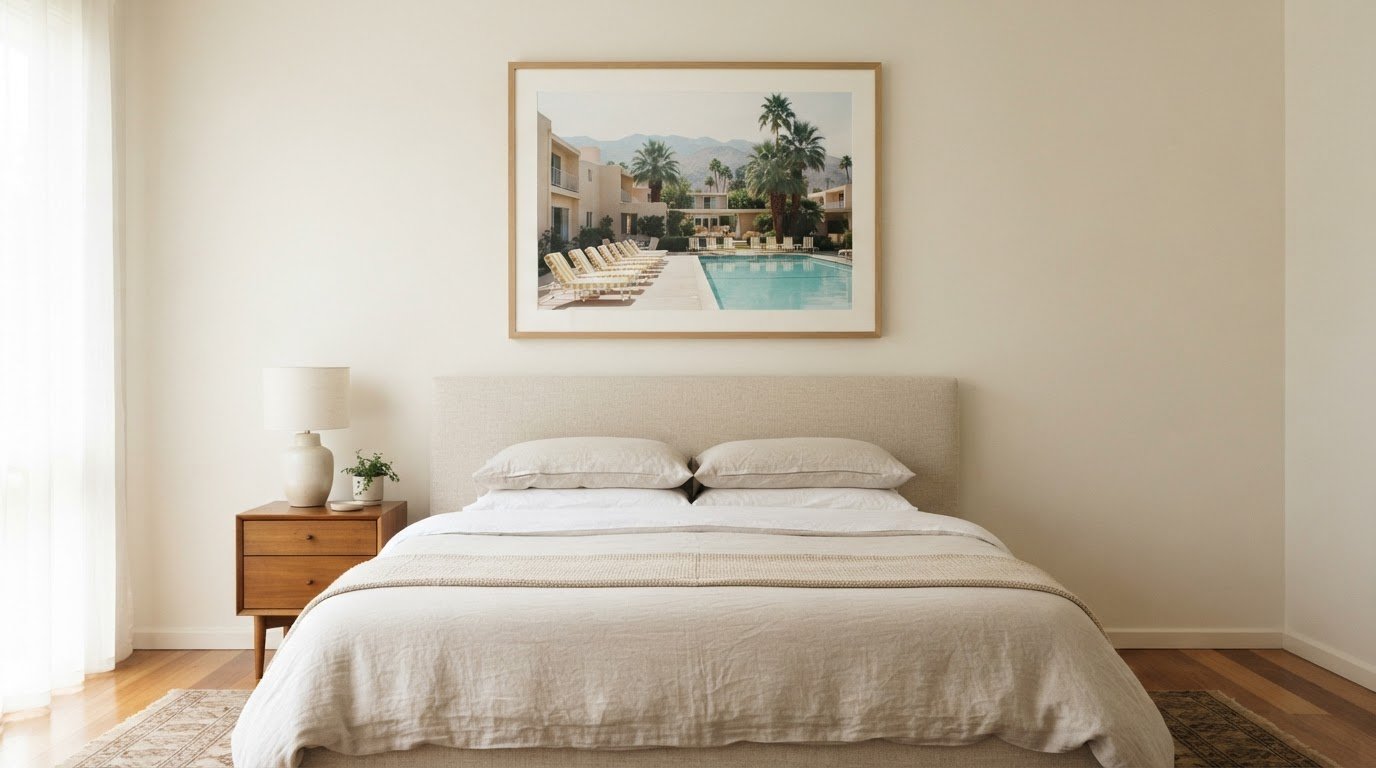
A restful arrangement begins with proportion, not a dramatic image. To learn how to choose art for above the bed, start with a piece about two-thirds to three-quarters of the bed’s width, then hang its bottom edge 6–8 inches above the headboard. These simple measurements create a considered connection between the artwork and the bed without letting either overwhelm the room.
The image matters as much as its scale. A bedroom is a place to unwind, so artwork with a quieter mood, harmonious colours and gentle visual movement may feel more at home than a composition that demands constant attention. The right choice can bring character and history to the room while preserving its calm.
This guide explains how to balance artwork with your bed and headboard, adapt its size and hanging height to the ceiling, and choose imagery that supports a restful atmosphere. You’ll also find practical guidance on single pieces and multi-work arrangements, so the wall above the bed feels composed rather than crowded.
Key Takeaways
- Let the headboard’s height and shape guide how closely the artwork sits above it.
- Use the bed, windows and surrounding colours to help the artwork feel composed within the room.
- Choose imagery with a calm visual character to give the bedroom a more restful atmosphere.
- Decide whether a single image or a considered grouping best suits the wall and the story you want it to tell.
1. Adjusting artwork to ceiling height and headboard style
Begin with the bed’s width, then consider the headboard and ceiling. Artwork often looks balanced at about two-thirds to three-quarters of the bed’s width. For a 60-inch queen bed, a piece measuring 40–50 inches wide offers a useful reference. A 76-inch king bed generally suits artwork 50–60 inches wide, while a 54-inch full bed suits 36–45 inches.
Headboard proportions refine that choice: artwork can span 50–75% of its width. A 60-inch headboard, for example, pairs with art 30–45 inches wide. Avoid a piece that disappears against a broad headboard or dominates a narrow one. In a bedroom with standard 8-foot ceilings, artwork 20–30 inches tall usually fits comfortably, leaving breathing room above the bed.
Set the bottom edge about 6–12 inches above the headboard with a standard 8-foot ceiling. A tall or upholstered headboard can feel better with a closer 4–6-inch gap. With a low-profile or absent headboard, artwork may hang up to 30 cm above it. Keep the composition visually connected to the bed rather than drifting toward the ceiling.
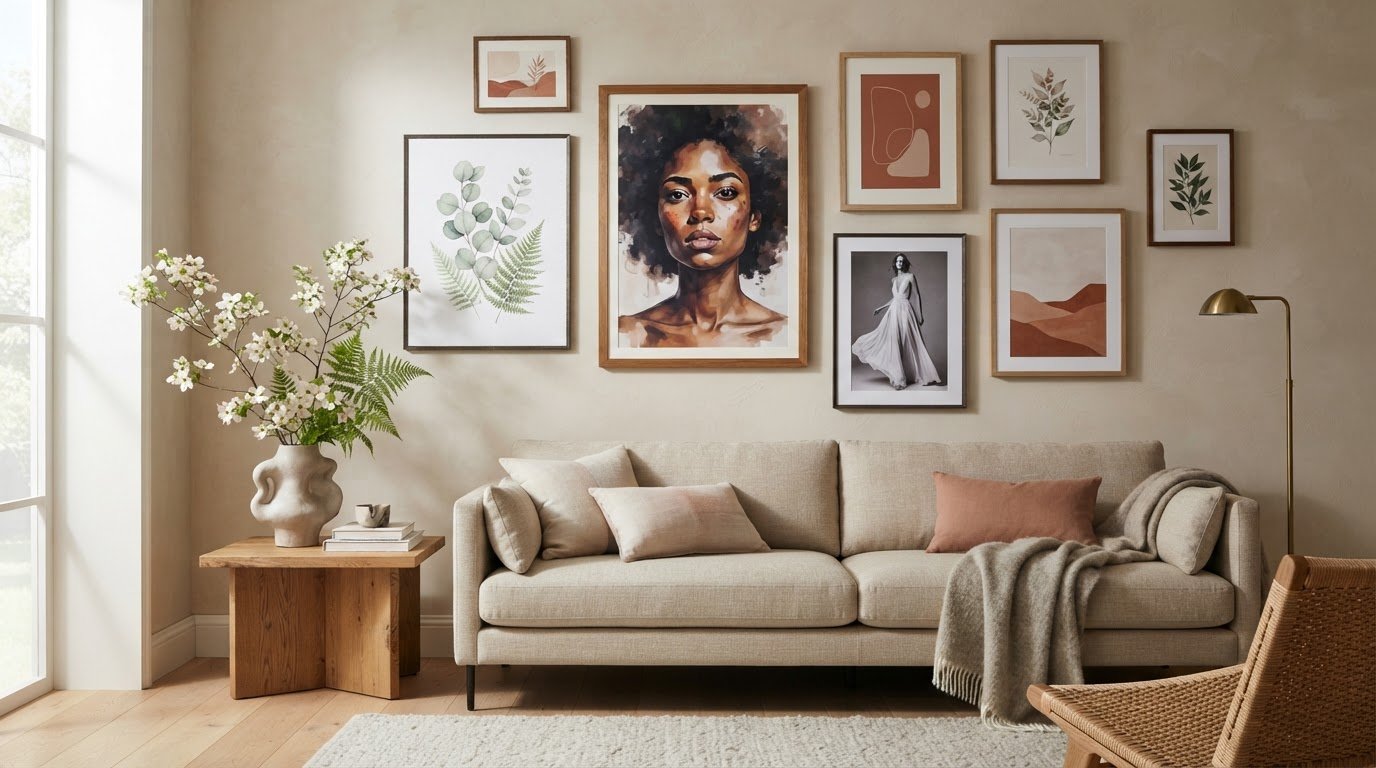
One large piece creates a calm focal point; a gallery wall adds rhythm and can accommodate several images. Above a king bed, try two 24-inch pieces or three 16-inch pieces. A queen bed can suit two 20-inch pieces or a diptych. Keep the arrangement visually unified and within the bed’s overall width.
In a small bedroom, light-coloured artwork can make the wall feel more open, especially when its palette echoes the bedding. Choose a subject and style that suit the room: serene landscapes complement a quiet, traditional scheme, while graphic imagery can sharpen a modern interior. Photographic art has a different character from a painter’s brushwork, so let the room’s existing textures guide your selection.
There’s no single typical cost for art above a bed; the artist, format, dimensions and framing all affect the price. Use appropriate hanging hardware for the artwork’s weight, and choose hardware designed for heavier pieces, such as mirrors, when extra support is needed.
2. How high should wall art hang above the bed?
Hang framed art with its bottom edge about 6–8 inches above the headboard. That gap keeps the work visually connected to the bed without crowding the headboard. In a bedroom with a wide headboard, center the artwork over the bed, not automatically across the entire wall.
Read the room’s layout before settling on placement. If the bed sits between two windows, center a single work or triptych in that space. Its top edge doesn’t need to align with the window frames. In a room with two beds, place one work above each bed or center a single composition over a shared table.
A calming scheme comes from thoughtful editing, not matching every detail. Choose one or two colours already present in the bedding, curtains or rug, then let the artwork add a measured accent. A pale landscape, for example, can complement neutral linen, while a dark image can make a deliberate statement against a light wall. Keep bedside décor simple so the art remains the focal point.
Frames shape the artwork’s presence. A slim frame can suit a smaller bedroom, where a heavy border might feel imposing; a substantial frame can echo substantial furniture. Match the frame’s finish to an existing detail, such as a bedside table or lamp, rather than repeating every finish in the room. For a gallery wall, consistent framing helps unify the pieces.
Alternatives to framed art include a textile wall hanging or decorative wall panel. Choose a calm surface and restrained colours, then position it above the bed as the room’s central artwork.
Let personal style set the mood: a quiet composition can support a restful bedroom, while a vivid image brings more personality. The choice needn’t be literal; select a meaningful subject that suits the room’s palette. Before hanging it, step back from the bed and check that the artwork feels balanced with the headboard and surrounding walls.
3. Hanging height above headboards and pillows
Without a headboard, use the pillows as your reference point. Arrange them as you normally would, then measure from their upper edge to the artwork’s bottom edge. An 8–10-inch gap gives the composition breathing room while keeping it visually connected to the bed. This makes pillow placement part of the hanging decision, not an afterthought.
If your bed has a headboard, treat its top edge as the artwork’s visual anchor. The frame should feel connected to the headboard rather than floating midway up the wall. Compare the gap with the spacing around nearby furniture, such as bedside tables and lamps. If everything is too tightly clustered, the whole bed wall can feel compressed, even when each object suits the room.
Check the position from the places where you’ll actually see the work. Stand at the bedroom entrance, then sit on the bed and look toward the wall. An abstract composition may read clearly across the room but feel too dominant from the pillows. Adjust its placement until the artwork complements the bed from both viewpoints.
Before hanging, mark the proposed frame outline with removable paper. This lets you assess its position above the bed in relation to the headboard, pillows and surrounding furniture before making holes. For a multi-piece arrangement, mark every outline and preserve consistent spacing between pieces. A balanced overall shape matters more than aligning each frame individually with the bed’s centre.
Consider the wall’s vertical proportions, too. On a low-ceilinged wall, artwork placed too close to the ceiling can feel crowded; on a tall wall, a small piece may look adrift. Use the bed and headboard as the composition’s centre of gravity, then judge whether the artwork has enough space above and around it. The final hanging height should feel intentional from the doorway and restful from the bed.
4. Choosing restful imagery and textures
A restful image gives the eye somewhere gentle to settle. Consider a quiet coastline, soft botanical forms or a still life in muted colours. These subjects create visual interest without sharp contrast or dramatic movement that could overwhelm a sleeping space. When deciding how to choose art for above the bed, consider whether its mood feels composed from the pillows, not only from the doorway.
Texture influences a room’s atmosphere as strongly as subject matter. A photograph with fine tonal gradations feels different beside crisp cotton than a heavily textured canvas beside woven bedding. Let one surface lead: pair a richly detailed image with simpler linens, or let a restrained image complement tactile cushions and a wool throw. This balance keeps the wall from competing with the bed.
For a cohesive selection, notice the colours already present in the room. A muted green in the artwork can echo a plant or bedcover; warm ochre can connect with wood furniture. Choose a dominant tone and one supporting accent rather than repeating every colour in the palette. The result feels intentional without making the bedroom look staged.
Feng shui interpretations vary, so treat them as a personal design lens rather than a fixed formula. Choose imagery that suggests the feeling you want in the room, such as peaceful water or a balanced landscape, and avoid scenes that feel tense or unsettling to you. A symmetrical composition can also give the bed wall a sense of visual order.
Think about placement as part of the image’s effect. A busy composition can feel intense directly above the pillows, while a quieter scene may create a softer focal point. Before hanging the work, view it in daylight and lamplight; changing light can alter its colour and contrast. If the image still commands attention after the room lights dim, consider gentler imagery or simpler surroundings.
The question of how to choose art for above the bed becomes easier when you judge subject, palette and surface together. Let the final choice express your taste while preserving the bedroom’s calm. Explore photographic artwork for a restful bedroom to consider images with distinctive atmosphere and character.
Galerie Prints
Galerie Prints brings together photographic and cultural imagery for anyone seeking a distinctive focal point above the bed. Explore The Slim Aarons Collection, Terry O’Neill Photography, Cinema Lobby Cards and Star Wars Limited Edition Prints to find a subject whose mood and visual character suit your bedroom. Galerie Prints also offers a Bespoke Framing Service, helping you create a considered presentation for your artwork and interior.
Once you’ve settled on scale and placement, explore Galerie Prints’ collections for a work that adds personality without disturbing the room’s calm. To discuss artwork for above your bed, contact Galerie Prints.
Let the final choice feel like yours
Art above the bed deserves a place that feels considered, not simply filled. Let the image’s atmosphere become part of the room’s quiet rhythm, bringing a personal association that still feels restorative at the close of the day.
As you live with your selection, notice how it meets changing light, familiar objects and the room’s evolving character. A piece can hold meaning without becoming the loudest presence; that balance is what makes it feel truly at home.
Ultimately, how to choose art for above the bed comes down to creating a relationship between the image, the interior and the feeling you want to return to. Trust the subject that continues to resonate rather than chasing a passing fashion.
Galerie Prints offers a thoughtful point of departure for finding artwork with lasting character. When you’re ready to consider what belongs in your bedroom, contact Galerie Prints for art advice.
Frequently Asked Questions
How high should wall art hang above the bed?
With a headboard, place the artwork’s bottom edge about 6–8 inches above its top. That measurement leaves a visible gap while keeping the work connected to the bed. If the headboard is tall or upholstered, a narrower 4–6-inch gap may suit the proportions better. For a bed without a headboard, measure from the pillows instead and leave about 8–10 inches.
How do you choose the right art for above the bed?
Choose artwork that suits the room’s mood, available wall space and existing colours. A quiet landscape, for example, can complement neutral bedding, while a vivid photograph can provide a deliberate focal point in a restrained room. Consider how the image feels from the bed, not just how it looks from the doorway. Choose a subject you’ll enjoy seeing as the room’s atmosphere changes through the day.
What Size Wall Art Works Best?
Artwork around two-thirds to three-quarters of the bed’s width is a useful starting point. The right height depends on the open wall above the headboard and the ceiling, so consider the whole composition rather than width alone. A wide, low-format image, for instance, can suit a broad bed, while a taller piece may work better where the wall has more vertical space.
How wide should art above a bed be compared with the headboard?
Aim for artwork spanning about 50–75% of the headboard’s width. For a 60-inch-wide queen headboard, that corresponds to artwork around 30–45 inches wide. Measure the headboard itself, especially if it extends beyond the mattress, then centre the artwork over the bed. This keeps the piece proportionate without making the headboard appear visually narrow or crowded.
How high should artwork hang above a bed?
For a bed without a headboard, position the bottom edge of the artwork about 8–10 inches above the pillows. Arrange the pillows as they’re usually used before measuring, since stacked or decorative pillows change the visible gap. If the bed has a headboard, use its top edge as the reference instead. In either case, view the placement from the bed before final hanging.
What size art works above a king, queen, or full bed?
For a king bed, consider artwork 50–60 inches wide; for a queen, 40–50 inches; and for a full bed, 36–45 inches. These ranges provide a starting point, not a fixed prescription. If choosing several works, judge their combined width, including the gaps between frames. A balanced grouping should read as one arrangement above the bed, rather than scattered pieces.