
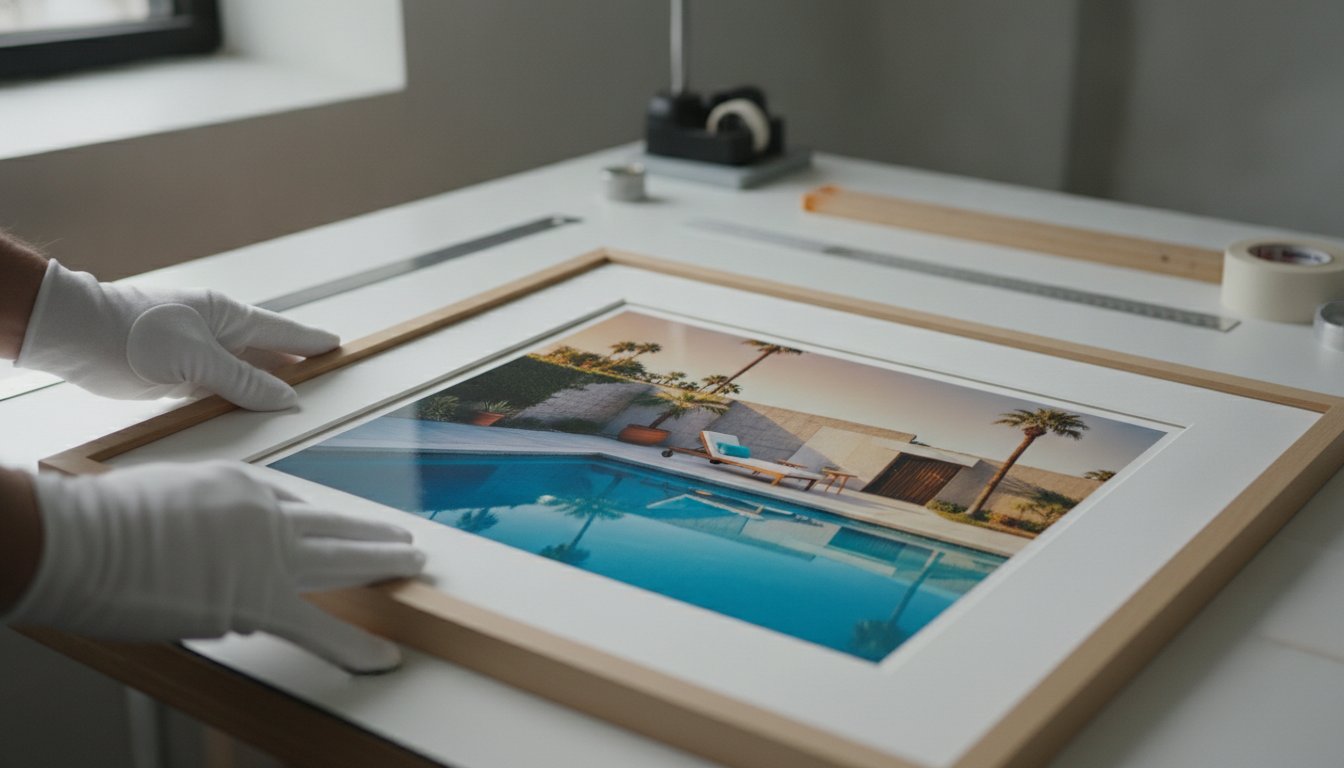
Did you know that nearly 40% of the irreversible fading found in fine art photography is caused by invisible UV radiation alone? For a collector, witnessing the slow, ghostly dissipation of a vibrant Slim Aarons poolside scene or the yellowing of a rare cinema lobby card is a quiet tragedy. It’s natural to feel a sense of trepidation when handling a significant investment. You likely find yourself lost in the labyrinth of archival terminology, wondering if acid-free is truly enough or if your chosen frame is a sanctuary or a slow-acting catalyst for decay. Understanding how to preserve art prints is not merely a matter of maintenance; it’s an act of curatorship that secures the historical narrative of the work for future generations.
In this guide, you’ll discover the professional curatorial techniques required to protect your fine art photography and posters from fading, foxing, and environmental decay. We’ll demystify the essential science of museum-grade materials, explain why bespoke framing is your primary safeguard, and provide a clear routine for displaying art with confidence. From the chemical stability of 100% cotton rag mats to the latest ISO 9706:2025 standards for paper permanence, we offer the knowledge you need to transform your home into a lasting gallery of photographic heritage.
Key Takeaways
- Identify the environmental variables—UV light, humidity, and temperature—that form the “unholy trinity” of chemical decay in fine art photography.
- Adopt professional handling protocols, including the use of lint-free cotton gloves, to prevent acidic skin oils from causing permanent damage to your collection.
- Learn how to preserve art prints using bespoke framing as a sealed micro-environment, prioritizing reversible mounting techniques over permanent adhesives.
- Determine the “safe zones” for displaying prestigious works like the Slim Aarons Collection by avoiding external walls, bathrooms, and heat sources.
- Establish a biannual maintenance routine to inspect your archive and safely clean glazing without risking liquid seepage into the archival mount.
The Science of Decay: Why Art Prints Need Preservation
Preservation is the meticulous management of environmental variables to halt the chemical breakdown of paper and pigment. To master how to preserve art prints, a collector must confront the unholy trinity of art destruction: ultraviolet light, fluctuating humidity, and erratic temperatures. These forces work in tandem to degrade the physical integrity of a work, transforming a vibrant masterpiece into a shadow of its former self. Archival integrity is the specific state where materials remain chemically stable over decades, resisting the natural tendency of organic fibers to deteriorate.
While decay manifests in various forms, collectors must distinguish between fading and foxing to apply the correct remedies. Fading is the gradual loss of pigment density, a visual erasure caused by light exposure. Foxing, however, appears as reddish-brown spots or fungal blooms. This phenomenon is often triggered by metallic impurities in the paper or high acidity levels, both of which are exacerbated by damp environments. Learning how to preserve art prints requires a keen eye for these early warning signs of atmospheric distress.
The Impact of UV Light and Photoxidation
Ultraviolet rays act as a silent, aggressive catalyst for a process known as photoxidation. This chemical reaction breaks the molecular bonds within ink and paper fibers, leading to a brittle, washed-out appearance that robs a photograph of its depth. Research indicates that UV radiation is responsible for approximately 40% of the fading in art prints. Because this damage is cumulative, it cannot be reversed; every hour of exposure adds to the total degradation of the piece. The sun-drenched, saturated palettes found in the Slim Aarons collection are particularly vulnerable to this energy. Without a protective barrier, those iconic Mediterranean blues and crisp poolside whites will eventually lose their evocative power, sacrificing the historical narrative they were meant to carry.
Humidity and Temperature: The Invisible Threats
Atmospheric stability is the curator’s greatest ally. The internationally recognized museum standard for storage and display typically hovers around 20°C with a relative humidity of 50%. When these levels are allowed to fluctuate, paper fibers respond by expanding and contracting. This physical stress results in cockling, a distinctive rippling effect that compromises the flat, pristine surface of the print. Excessive dampness presents an even more dire threat, as high humidity encourages the growth of mould and permanent staining. By maintaining a steady, controlled atmosphere, you protect the structural foundation of your archive and ensure the aesthetic longevity of your most cherished works.
Professional Handling and Storage Protocols
The first commandment of fine art stewardship is the absolute “No-Touch” rule. Human skin naturally produces oils, salts, and perspiration that are mildly acidic; these substances leave permanent, invisible fingerprints that may only manifest as dark, indelible spots years later. To master how to preserve art prints, you must view your hands as potential contaminants. A curator’s toolkit is modest but essential, consisting of lint-free white cotton gloves to prevent oil transfer and bone folders for gentle paper manipulation. Before unboxing a new acquisition, establish a dedicated “clean zone.” This should be a flat, non-porous surface, meticulously cleared of dust, food, or liquids, ensuring the artwork’s first encounter with your home is one of clinical purity.
When moving a print from a shipping tube to a flat-file, the process must be deliberate. First, remove both end caps to allow air to circulate. Carefully slide the print out—never pull it by the edges—and place it onto your clean zone. Allow the paper to breathe and relax naturally for several hours before attempting any manipulation. If the paper remains resistant, you can gently encourage it to lay flat by placing acid-free tissue over the surface and anchoring the corners with smooth, archival weights.
The Flat vs. Rolled Debate
While heavy-weight papers are often shipped in tubes for safety, they shouldn’t remain there indefinitely. Long-term tube storage leads to a “permanent set,” a persistent curling of the paper fibers that makes future framing difficult and increases the risk of creasing during handling. Ideally, a print shouldn’t remain rolled for more than two weeks. For those not yet ready for display, properly storing art prints involves transitioning them to a flat-file or a rigid portfolio where the fibers can remain in a neutral, tension-free state.
Archival Storage Materials
It’s vital to distinguish between “acid-free” and “archival” materials. Many commercial products labeled acid-free are simply wood-pulp papers treated with a base to neutralize acidity, a fix that can fail over time. True archival materials are lignin-free. Lignin is the organic polymer that causes paper to yellow and become brittle with age. For high-value collections, such as rare cinema lobby cards, the use of Mylar sleeves or pH-neutral glassine paper is essential to prevent ink transfer. These items should be housed in archival solander boxes, which provide a sturdy, light-fast environment. While these storage methods offer temporary security, the ultimate protection is found in a bespoke framing service that utilizes museum-grade glazing and mounting.
Bespoke Framing: The Ultimate Preservation Shield
A professional frame is far more than an aesthetic boundary; it’s a meticulously engineered micro-environment designed to isolate the artwork from the volatility of the outside world. When considering how to preserve art prints, the frame acts as the final guardian, providing a sealed sanctuary against dust, pollutants, and physical trauma. At Galerie Prints, we believe that preservation should never compromise elegance. Our bespoke framing service operates on a philosophy that merges artisanal craftsmanship with museum-grade technical rigor, ensuring that your investment remains as pristine as the day it left the darkroom.
The hallmark of professional framing is reversibility. Any mounting method applied to a print must be entirely removable without leaving a trace or altering the original fibers. We strictly avoid permanent adhesives, pressure-sensitive tapes, or spray mounts, which eventually leach chemicals into the paper. Instead, we utilize traditional hinge mounting with Japanese tissue and wheat starch paste. This allows the print to hang naturally within the frame, accommodating the subtle expansion and contraction of the paper while ensuring it can be safely removed for future conservation or re-framing.
Glazing Options: Glass vs. Acrylic
Glazing is your primary defense against the 40% of art damage caused by UV radiation. While standard “float glass” is common in retail frames, it offers negligible protection and should be avoided for any investment-grade work. For the discerning collector, we recommend Museum Glass, which provides 99% UV protection and an anti-reflective coating that makes the barrier virtually invisible. For large-scale fine art photography, high-grade acrylic is often the superior choice. It’s shatterproof and significantly lighter than glass, making it ideal for substantial pieces that require safe transport or hanging in high-traffic areas.
Mounting and Matting
The matboard serves a vital functional role by creating an air gap between the print and the glazing. This gap prevents moisture traps that can lead to mould growth or the print “sticking” to the glass. It’s essential to use 100% cotton rag matboards rather than cheaper wood-pulp alternatives. Wood-pulp boards contain lignin, which creates an acidic environment that causes “mat burn,” a permanent yellowing of the print’s edges. This is particularly critical for sensitive C-type or silver gelatin prints, which are highly reactive to the off-gassing of inferior materials. By insisting on pH-neutral, lignin-free mounts, you ensure the chemical stability of the work for decades to come.
Strategic Display and Lighting Guidance
The transition from storage to display represents the most rewarding moment for any collector. It’s the point where a piece of history becomes a living part of your interior narrative. However, the aesthetic desire to place a work in a specific spot must be balanced against the technical requirements of longevity. When determining how to preserve art prints in a residential setting, you must identify “safe zones” that remain insulated from the home’s most volatile micro-climates. This means resisting the temptation to hang a rare Slim Aarons above a roaring fireplace or within the humid confines of a bathroom, where heat and moisture can breach even the most secure seals.
For highly sensitive works, such as silver gelatin black and white pictures, we recommend a rotation schedule. By resting your most precious acquisitions in dark storage for several months a year, you significantly extend their lifespan. This curatorial discipline ensures that the visual impact of your collection remains undiminished by constant exposure. There’s a profound psychological benefit to a well-lit, protected gallery wall; it transforms a room into a sanctuary of culture and memory, provided the environment is managed with a curator’s precision.
Lighting for Longevity
Lighting is the primary catalyst for pigment degradation, yet it’s essential for appreciation. LED technology has emerged as the gold standard for art illumination because it emits negligible heat and zero UV radiation. To minimize glare and heat buildup on the glazing, follow the “angle of incidence” rule; position your light source at a 30-degree angle from the wall. Sophisticated collectors now use smart home sensors to monitor cumulative light exposure in “lux hours,” allowing for precise control over the environment. This data-driven approach removes the guesswork from display, providing peace of mind that your gallery wall is as protected as it is beautiful.
Placement Pitfalls
One of the most common errors is the “External Wall” trap. During colder months, the temperature difference between the interior and exterior can cause condensation to form on the inside of a frame hung against an uninsulated outer wall. This moisture leads to cockling and mould growth. Similarly, kitchens are hostile environments where airborne grease and steam can settle on frames, eventually penetrating the backing. Ensure all heavy, framed photography is secured at a safe height using professional-grade hanging hardware. If you’re unsure about the optimal placement for a significant piece, our experts can guide you through the process of selecting a bespoke framing solution that accounts for your specific room conditions.
Long-Term Maintenance and Collection Management
Stewardship of a prestigious collection is a rhythmic commitment that extends far beyond the initial acquisition. To truly master how to preserve art prints, you must establish a biannual inspection routine. This scheduled review allows you to detect subtle changes that might otherwise go unnoticed; look for the early signs of foxing or a slight shift in the mount’s alignment. During these sessions, examine the frame’s backing for signs of moisture and ensure the hanging hardware remains tensioned and secure. It’s also the ideal time to update your Art Archive. A meticulous record of provenance, original receipts, and condition reports is as vital to a piece’s heritage as its physical preservation.
While routine dusting is a task you can handle with care, knowing when to call a professional conservator is a hallmark of a discerning collector. If you notice structural issues like paper tears, significant discolouration, or mould growth, don’t attempt a DIY fix. Professional restoration is a specialized field that requires specific chemical knowledge and technical precision. Maintaining the Fair Market Value of your collection depends heavily on these professional interventions, ensuring that your investment retains its prestige for future generations.
Cleaning and Dusting Protocols
The golden rule of cleaning is to prioritize the dry over the damp. Use only high-quality microfiber cloths to gently lift dust from the frame and glazing. Never spray liquid cleaners directly onto the frame; even a fine mist can seep under the lip of the frame and saturate the mount, causing irreversible damage. If the glazing requires a deeper clean, apply a small amount of pH-neutral cleaner to the cloth first. Be particularly cautious with acrylic glazing, as ammonia-based cleaners can cause permanent clouding or crazing. Keep a keen eye out for thunderflies or tiny insects that can occasionally breach the frame’s seal. If found, they must be removed by a professional to avoid permanent staining on the print surface.
Valuation and Insurance
Preservation is the cornerstone of valuation. A well-maintained collection isn’t just an aesthetic triumph; it’s a stable asset. By documenting your efforts on how to preserve art prints, you provide the tangible evidence required by insurers to justify premium coverage. You should discuss specialized art riders with your insurance provider, as standard homeowners policies often fall short for high-value items like the Slim Aarons Collection. Look into Title Insurance and riders that cover Fair Market Value rather than just replacement cost. This financial layer of protection, combined with museum-grade stewardship, ensures your legacy remains intact. Explore our bespoke framing services to secure your collection today and give your archive the protection it deserves.
Securing Your Photographic Legacy for Generations
Mastering how to preserve art prints is a journey of transition from mere ownership to active stewardship. By understanding the chemical volatility of light and humidity, and by implementing the rigorous handling and display protocols discussed, you ensure that the historical narrative of your collection remains vibrant. Whether you are protecting a rare black and white archive or a sun-drenched poolside scene, the key lies in the meticulous management of every environmental variable and the commitment to archival integrity.
The ultimate safeguard for any prestigious work is a bespoke environment built on technical excellence. As trusted curators of the Slim Aarons and Getty archives, we bring this same level of expertise to every piece we handle. Each frame is hand-crafted in our specialized London studio, utilizing museum-grade UV protection as standard to isolate your art from the forces of decay. To give your collection the permanence it deserves, Secure your investment with Galerie Prints Bespoke Framing. Your archive isn’t just a display of beauty; it’s a lasting piece of history that, with the right care, will inspire wonder for decades to come.
Frequently Asked Questions
Can I use regular tape to fix a print in a frame?
Never use standard household tape, as the adhesives are highly acidic and will cause permanent staining and fiber breakdown over time. Professional conservation requires reversible mounting techniques, such as Japanese paper hinges and wheat starch paste. These materials allow for the natural movement of the paper and can be removed without leaving residue. For those learning how to preserve art prints, avoiding pressure-sensitive tapes is the first step in maintaining the work’s integrity.
How often should I rotate my art prints to prevent fading?
We recommend rotating highly sensitive prints every three to four months, or roughly with the changing seasons. This practice limits cumulative light exposure, which is responsible for approximately 40% of fading in fine art photography. By resting your acquisitions in dark, archival storage, you effectively pause the photoxidation process. This curatorial discipline is particularly essential for vibrant colour photography or rare music archives that are susceptible to pigment dissipation over long periods.
Is it safe to store art prints in a basement or attic?
Storing art in a basement or attic is never advisable due to the extreme fluctuations in temperature and humidity found in these spaces. Basements are prone to dampness, which encourages fungal growth and foxing, while attics subject paper to high heat that accelerates chemical decay. Ideally, you should store your collection in a climate-controlled environment that maintains a steady 20°C and 50% relative humidity to ensure long-term stability.
Should I wear gloves every time I touch my art prints?
You should wear lint-free cotton or powder-free nitrile gloves every time you handle an unframed print. Human skin naturally carries oils and salts that are mildly acidic; these leave invisible marks that eventually darken into permanent stains. This “No-Touch” rule is a core tenet of professional curatorship. Using gloves ensures that the tactile connection between the collector and the work doesn’t inadvertently compromise the pristine surface of the photographic paper.
What is the difference between acid-free and museum-grade paper?
The term “acid-free” often refers to wood-pulp paper that’s been chemically treated to neutralize its natural acidity, a process that can fail over time. In contrast, museum-grade materials, such as 100% cotton rag, are naturally pH-neutral and lignin-free. These archival substrates provide superior chemical stability, ensuring the paper doesn’t yellow or become brittle. When considering how to preserve art prints, always prioritize museum-grade matboards and papers for true longevity and historical permanence.
Can a faded art print be restored to its original colour?
Once a print has faded due to UV exposure, it generally cannot be restored to its original colour. Fading is the result of broken molecular bonds within the pigment, a process that’s chemically irreversible. While a professional conservator can sometimes treat surface staining or foxing, they cannot “re-ink” a faded photograph without destroying its archival value. This highlights why preventative care, such as using UV-protective glazing, is the only way to maintain visual depth.
Is acrylic glazing better than glass for protecting art?
Both materials offer high-end protection, but the choice depends on the scale and location of the work. Acrylic is nearly 50% lighter than glass and shatter-resistant, making it the superior choice for large-scale fine art photography or pieces that require shipping. However, standard acrylic can be prone to static and scratching. Glass, specifically anti-reflective Museum Glass, is often preferred for smaller works due to its scratch resistance and ease of cleaning in high-traffic areas.
How long do fine art prints typically last if preserved correctly?
If preserved according to museum standards, a fine art print can easily last for over 100 years without significant degradation. This longevity depends on the use of archival materials, stable environmental conditions, and protection from UV light. By following a professional maintenance routine, you ensure that your collection remains a stable asset and a lasting piece of history, surviving well beyond a single lifetime to inspire wonder in future generations of collectors.