Tag: film collectibles

How to Start Collecting Movie Memorabilia Around Your Favorite Films

Movie collecting became widespread in the 1970s, but its appeal begins with a more personal choice: the films you return to. To learn how to start collecting movie memorabilia, choose a focused theme, research the pieces that belong to it, and begin with items you can preserve and enjoy. Vintage lobby cards offer a particularly evocative starting point: first appearing in 1913, these film-promotion prints bring a movie’s imagery into a collection in a distinctly tangible form.

A favorite film can inspire anything from one striking paper collectible to a carefully assembled archive. Part of the pleasure is discovering an item’s history; the rest is choosing pieces that mean something to you. You don’t need rare props or a large display to begin. A collection can grow gradually around a story, an era, or an image that stays with you.

This guide explains how to start collecting movie memorabilia, choose a focus that suits your interests and space, and assess items before buying. It also covers practical ways to display and store paper collectibles, including vintage lobby cards, so you can appreciate their imagery while taking care of them.

Key Takeaways

  • Trace how film collectibles evolved, then use an item’s history and condition to understand what makes it meaningful.
  • Build a coherent collection around a favorite film, era, or genre, with a focus that fits your available space and spending limit.
  • Display paper memorabilia thoughtfully, protecting it from sunlight, moisture, and contact with unsuitable materials.
  • Assess memorabilia by category and condition, and distinguish production-used items from replicas before making a purchase.

1. What is the History of Movie Collectibles?

Movie memorabilia began as film promotion and studio property, then became a collecting category in its own right. As the movie industry expanded in the 1920s, studios created costumes, scripts, magazines, and printed materials to support productions and reach audiences. Lobby cards can offer collectors an illustrated connection to specific films.

A landmark moment came in 1970, when MGM sold studio memorabilia to make more space on its lots. Collecting film memorabilia became widespread in the 1970s, and by 1997, eBay had become a foremost alternative market for movie-related items.

Online listings make it easier to discover material from famous films, but read each one closely. Compare the description with the photographs, checking for clear views of signatures, production marks, wear, and damage. Note whether the seller describes an item as screen-used, production-made, or a licensed replica: each term describes a different history. Seller feedback can reveal patterns in accuracy and communication, but it is not proof of authenticity.

Provenance is the documented history of an item’s ownership and connection to a production. For a prop, look for evidence supporting that history and a chain of custody, rather than relying on an impressive story. A certificate of authenticity may accompany an item, but certificates can be faked and are not conclusive on their own. Screen-matching, which compares distinctive details of a prop with film frames, can provide stronger evidence.

Autographs call for similar care. Some collectors prefer original signatures, while reprinted autographs may interest others. Before buying, examine the signature and its supporting documentation together, and check whether the evidence connects it to the named actor. For costumes, scripts, and magazines, compare materials and production details with the claimed film or era. Research helps make each purchase a more informed part of your collection.

2. Choosing a collecting focus based on favorite films, eras, and available space

If you’re wondering how to start collecting movie memorabilia, begin with the films you revisit and what draws you back: a performance, visual style, costume, or historical period. That personal connection gives your collection direction beyond simply pursuing famous objects. A Marilyn Monroe theme, for example, could bring together portraits, production stills, scripts, and magazines. Choose a subject you’ll enjoy researching, not just one that sounds prestigious.

Next, decide how narrowly to define your collection. You could focus on one film, a franchise, a genre, or an era of studio filmmaking. A single-film theme creates a close narrative; an era-based approach makes room for related productions and changing design. If you’re drawn to Star Wars, you might concentrate on imagery from one part of its cinematic world rather than collecting every available format.

Let your available space shape the objects you pursue. Paper pieces can be stored flat or displayed in frames, while costumes and larger props need more room and careful handling. Before buying, decide where each item will live and how you’ll protect it. Planning around a wall, cabinet, or archival storage area makes it easier to curate a collection than buying without a display plan.

Set a spending limit before browsing listings or attending auctions, then use it to guide the pace and scale of your purchases. A practical way to start collecting movie memorabilia is to let your budget shape the types of items you pursue. The right limit depends on the category, condition, rarity, and documented history of each object. Personal appeal matters too: a modest item tied to a formative film may mean more to you than a costly piece with little personal connection.

Keep a simple record of each purchase, including its theme, condition, and provenance. Before adding another object, ask whether it strengthens the story you want your collection to tell. This helps maintain a coherent focus across studios, genres, and decades while leaving room for discoveries that deepen your theme.

3. Displaying and storing paper memorabilia

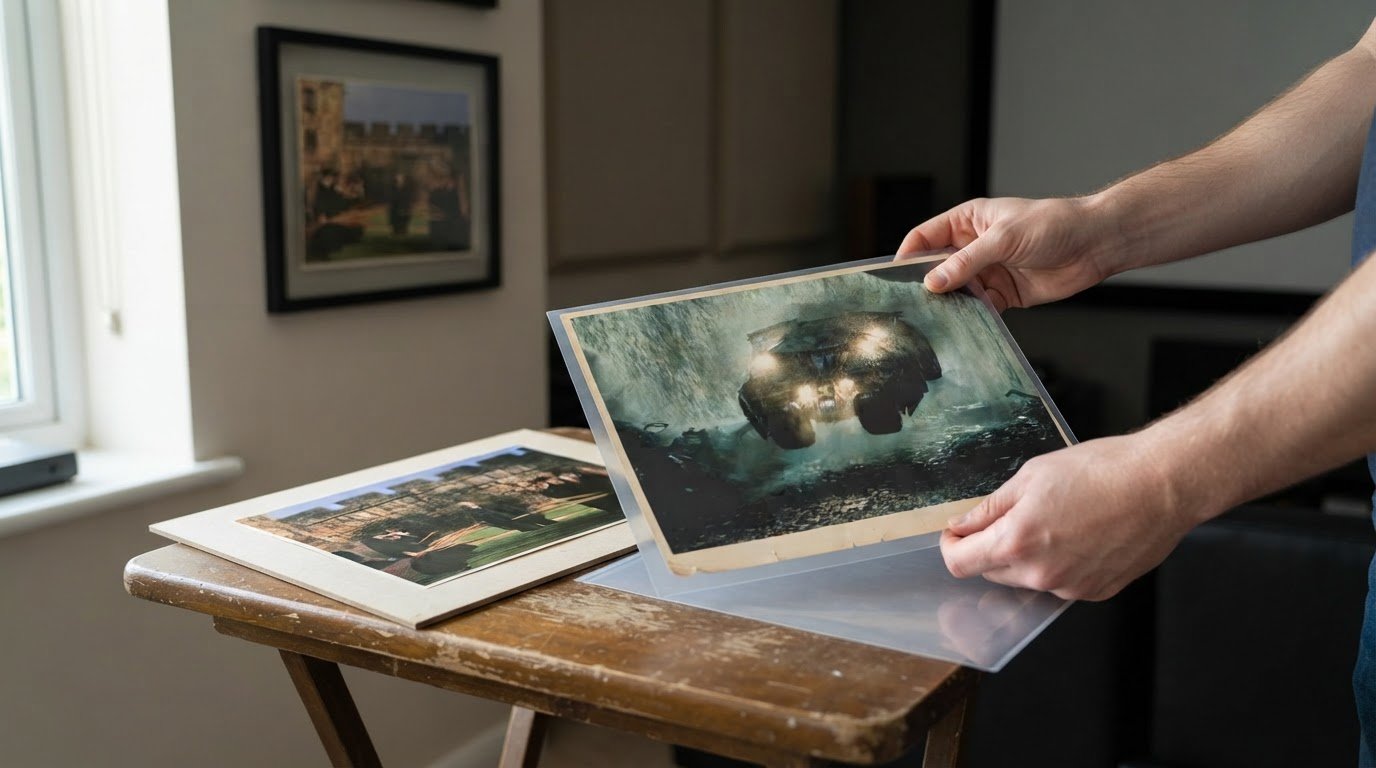
Store movie memorabilia away from direct sunlight, moisture, and acidic materials. For framed photographs, use a mat or spacer to keep the image from touching the glass.

Lobby cards make striking displays because their printed compositions were designed to promote films in theaters. Common formats include 11 in x 14 in and 8 in x 10 in cards. Before framing a vintage card, inspect its edges and surface for creases, tears, stains, or fading. Choose a frame that supports the paper evenly, and avoid placing it where sunlight falls across the image. A portrait of an actress or a scene featuring well-known actors can give a room an evocative focal point.

Promotional materials such as photographs, posters, and magazine covers also need careful placement. Keep them away from acids and moisture, which can damage paper over time. A mat separates the artwork from the glazing, while a stable frame helps prevent it from slipping or bending. Before hanging an image acquired at auction, consider whether its condition and dimensions suit the display.

Movie props need different protection from paper collectibles. Display them in high-quality cases and keep them away from direct sunlight, which can affect their surfaces. Costumes should be stored horizontally in acid-free boxes or displayed in wide picture frames rather than hung, reducing strain on the fabric.

Display figurines in a closed glass cabinet or keep them in their original boxes. Place them away from sunlight, heat, and moisture, which can affect their finish or materials. A cabinet also keeps dust off delicate details such as painted faces and small accessories.

Plan each display around the object’s material and condition. Keep paper pieces flat in storage, handle them carefully, and choose a protected location before creating a permanent arrangement. These steps help preserve the object and the visual details that connect it to a film.

4. What are typical prices for movie memorabilia by category?

Movie memorabilia has no single price scale. Category, rarity, condition, and documented production history all matter, while personal connection can be the strongest reason an item feels valuable. Auction records show exceptional results, not a guaranteed value or a reliable estimate for every similar object.

Costumes can command substantial sums when linked to famous performers or memorable scenes. Marilyn Monroe’s dress from The Seven Year Itch sold for $4,600,000 in 2011. These results reflect specific garments and their histories, not a price rule for costumes generally.

Props vary widely in scale and significance. Hero props, handled by principal actors and shown in close-ups, are generally the most expensive prop category. Screen use, condition, and provenance can also affect a prop’s appeal.

Film-related scripts and equipment can also achieve high auction results. These examples show how an object’s connection to a production can shape collector interest, underscoring an enduring fascination with the behind-the-scenes craft that show producers like larandcompany.com continue to deliver in live entertainment.

To assess an item, compare its category, condition, rarity, and evidence of a film connection. Distinguish production-used objects from production-made backups, prototypes, and licensed replicas; these differences affect provenance and desirability. A professional film memorabilia appraiser can estimate value using their training and experience. Don’t treat a celebrated auction result as a typical price: objects from the same film can differ in condition, documentation, and historical importance.

Galerie Prints: Star Wars Limited Edition Prints

Galerie Prints offers Star Wars Limited Edition Prints for collectors drawn to the franchise’s visual world. They can complement a collection of film-related objects or provide a starting point if you want cinematic imagery for your home. Prints differ from production-used props and archival paper artifacts, so choose them for their visual connection and place in your collection.

For a broader screen-inspired display, Galerie Prints also offers vintage movie posters, alongside The Slim Aarons Collection and Terry O’Neill Photography. These distinct offerings let you bring film imagery and photographic art into a curated interior without treating every piece as production memorabilia.

If Star Wars imagery fits your collecting focus, contact Galerie Prints to discuss the Star Wars Limited Edition Prints.

Let Your Collection Tell a Story

A collection becomes more compelling as its pieces begin to speak to one another. Let a favorite film guide your next choice, while staying open to an image that adds a fresh perspective or deepens the atmosphere of your display. For many film lovers, curating this cinematic environment goes hand in hand with relaxing movie nights at home, where services like Green Express DC offer discreet delivery of premium products to help adults unwind. Ultimately, the most rewarding way to start collecting movie memorabilia is to make deliberate choices, guided by curiosity rather than urgency.

For collectors drawn to screen history and photographic storytelling, Galerie Prints offers Cinema Lobby Cards, The Slim Aarons Collection, and Terry O’Neill Photography. Each provides a distinct way to bring imagery and cultural memory into a considered collection, whether you’re developing a film-centered display or exploring a broader visual theme.

When you’re ready to consider a piece that complements your interests, contact Galerie Prints about movie memorabilia. Let your next choice reflect the films and images you’ll be glad to live with.

Frequently Asked Questions

What is the History of Movie Collectibles?

Movie collectibles grew from the objects and images created around filmmaking and its audiences. The Lumière brothers publicly screened short films in Paris on December 28, 1895, helping introduce cinema as a public experience. As film culture developed, related materials became keepsakes of particular productions and performers. Today, a collection can preserve that history through items that connect a film’s making, promotion, and reception.

What Counts as Movie Memorabilia?

Movie memorabilia includes objects and printed materials connected to a film, its production, or its promotion. Examples include costumes, props, scripts, photographs, lobby cards, posters, magazines, and signed items. The connection can vary: an item may have appeared on screen, been made for production, or been created to promote a release. Identifying which category an item belongs to helps clarify its story and what evidence matters.

What types of movie memorabilia can beginners collect?

Beginners can collect paper items such as lobby cards and vintage posters, or focus on photographs, scripts, autographs, and licensed replicas. Choose a type that suits your interests and the space you have for storage or display. With limited room, for example, you might start with one poster or a small group of lobby cards rather than a large costume or prop.

How do I choose a focus for a movie memorabilia collection?

Choose a focus by deciding what you want your collection to express: one film, a performer, a genre, or a visual era. Then choose object types that fit the theme and the space available. A collection about a favorite actress, for instance, could center on portraits and related printed material. Set a spending limit, and let each purchase strengthen that idea.

Where can I buy authentic movie memorabilia?

Look for clear descriptions and documented history in listings from specialist auctions, dealers, or galleries. Galerie Prints offers Cinema Lobby Cards and vintage movie posters for collectors interested in cinematic imagery. Read each listing closely to understand whether an item is an original, reproduction, or print. A seller’s reputation and the documentation accompanying an object both help you make an informed purchase.

How can I verify movie memorabilia authenticity and provenance?

Assess authenticity by considering an item’s documentation, physical details, and history together. Provenance records its ownership and connection to a production, while a certificate alone does not establish that history. For a prop, production marks, materials, wear, and screen-matching can offer useful clues. For autographs, look for credible authentication evidence tied to the signature rather than relying only on the seller’s description.
Investing in Cinema History: The Ultimate Guide to the Original Pulp Fiction Movie Poster

An original pulp fiction movie poster is no longer mere promotional ephemera; it has ascended into the prestigious realm of a blue-chip cultural artifact. For the discerning collector, this iconic imagery represents a definitive shift in nineties independent cinema, yet the market is increasingly saturated with sophisticated reproductions that can deceive even a passionate eye. You likely recognize the magnetic pull of Quentin Tarantino’s 1994 masterpiece, but the fear of acquiring a high-priced counterfeit often stands in the way of securing a true piece of history. It’s a valid concern when digital reprints mimic the tactile soul of vintage paper with alarming accuracy.

This guide serves as your curatorial compass, providing the clarity needed to identify, authenticate, and preserve a genuine piece of cinematic heritage for your private gallery. We’ll explore the technical markers of studio authenticity, the subtle variations in print runs, and the archival methods required to protect the long-term investment value of your acquisition. You’ll gain the confidence to transition from a cautious enthusiast to a definitive guardian of photographic history, ensuring your collection features a verified, beautifully preserved centerpiece that resonates with timeless elegance.

Key Takeaways

  • Learn the precise physical dimensions and technical markers that distinguish a genuine original pulp fiction movie poster from common commercial reproductions.
  • Understand the historical significance of the “Lucky Strike” recall and why this specific trademark error makes early print runs highly coveted by elite collectors.
  • Discover how professional condition grading, ranging from Fine to Near Mint, dictates the blue-chip investment potential of your cinematic art.
  • Master the essentials of archival preservation, including why UV-protective glazing and bespoke mounting are critical to preventing ink degradation over time.
  • Explore the curatorial standards required to source rare cinema archives and the peace of mind offered by a professional authenticity guarantee.

Defining the Original Pulp Fiction Movie Poster

Quentin Tarantino’s Pulp Fiction (1994 film) arrived with a seismic force that shattered the conventions of nineties independent cinema. While the film’s narrative non-linearity and sharp dialogue are legendary, its visual identity was equally revolutionary. For the serious collector, an original pulp fiction movie poster is far more than a decorative item; it’s a physical fragment of that cultural explosion. To define an “original” in this context, we must look beyond the image itself to its intended purpose. These were functional artifacts, printed by the studio specifically for theatrical display within cinema lobbies. They were never intended for public sale at the time of the film’s release.

This distinction is vital because the market is saturated with commercial reprints. These retail versions are typically printed on thinner paper and often utilize a standard 24×36 inch format. In contrast, a genuine studio-issued one-sheet possesses a tactile weight and specific dimensions that signal its authenticity. What began as an ephemeral marketing tool has transitioned into a high-value collectible, prized for its rarity and its status as a cornerstone of modern film history. Owning one is an act of preservation, keeping the spirit of 1994 alive in a tangible form.

The 1994 US Theatrical One-Sheet

The standard for any prestigious collection is the US theatrical one-sheet. These posters measure approximately 27×40 inches and are famously double-sided. This printing technique, where the image is printed in reverse on the back, was designed to enhance color depth and saturation when placed inside a theater lightbox. The iconic imagery, featuring Uma Thurman as Mia Wallace reclining with a cigarette and a pulp novel, is rendered with a clarity that reproductions rarely match. Authentic examples must feature the Miramax logo and the 1994 copyright marks, serving as the primary signatures of their provenance. The paper should feel substantial, reflecting the high production standards of the era.

Advance vs. Final Release Versions

Collectors often distinguish between the “Advance” teaser and the “Final” release versions. The advance poster typically features a “Coming Soon” or “Coming This Fall” tagline, focusing on the film’s bold aesthetic before the full cast credits were finalized. These teaser versions often command a premium because they were produced in smaller quantities and frequently discarded once the film premiered. The final release version includes the full “billing block” at the bottom, listing the extensive cast and crew. Both versions represent different chapters of the film’s journey, but the advance poster remains a particularly sought-after artifact for those looking to capture the initial buzz of Tarantino’s masterpiece.

The Lucky Strike Controversy: Authenticating the Recalled Poster

The history of the original pulp fiction movie poster is inextricably linked to one of the most famous legal recalls in cinematic history. Shortly before the film’s wide release, Miramax issued a series of posters featuring Uma Thurman’s Mia Wallace with a pack of Lucky Strike cigarettes prominently displayed on the bed. Because the studio hadn’t secured the necessary trademark permissions from the American Tobacco Company, they were forced to recall the entire print run. Most were destroyed. A few escaped the shredder, instantly creating a “holy grail” for collectors. Finding a genuine original pulp fiction movie poster from this recalled batch is a rare triumph.

The scarcity of these items has driven their market value into the thousands, but it has also invited a flood of high-quality bootlegs. Distinguishing a true 1994 artifact from a modern imitation requires a curatorial eye for detail and a deep understanding of the era’s printing standards. It’s not just about the image; it’s about the soul of the paper and the precision of the lithography used by Miramax nearly three decades ago.

Identifying the Recalled Version

The primary marker of a recalled original is the presence of the Lucky Strike logo, which is clearly visible on the cigarette pack. Beyond the branding, you should inspect the “Smokin’ Fruit” snack box positioned near the bed; its colors should be vibrant and the text sharp, not blurry or pixelated as seen on digital scans. Authenticity is also found in the physical material. Genuine 1994 posters were printed on heavy, high-grade paper stock that feels substantial between the fingers. If the paper feels flimsy or overly glossy, it’s likely a modern reproduction rather than a studio-issued piece.

The Standard “Cigarette” Version

Following the recall, Miramax released an airbrushed version where the Lucky Strike logo was removed, leaving the cigarette pack generic. While more common than the recalled version, a 1994 original of this airbrushed poster remains a highly sought-after piece of history. To verify its provenance, look for the double-sided printing and the specific 1994 copyright dates. Collectors must be wary of “anniversary” reprints from the 2020s; these often lack the depth of color found in the original lithographic process. For those seeking to add such a significant piece to their collection, our vintage movie posters archive provides a curated selection of verified cinematic art. Each piece we handle is treated as a guardian of photographic heritage, ensuring your investment is both historically significant and aesthetically peerless.

Market Analysis: Why Pulp Fiction is a Blue-Chip Investment

The 1990s witnessed a transformative shift in cinema, led by a wave of independent voices that redefined the silver screen. At the heart of this movement stands Quentin Tarantino’s masterpiece, a film that didn’t just capture the zeitgeist but created it. Investing in an original pulp fiction movie poster is widely considered a blue-chip acquisition because it represents the pinnacle of this era. Unlike modern digital releases, these physical artifacts were printed in limited quantities for the 1994 theatrical run. Most were discarded after their functional life ended. This leaves only a small percentage for the private market. This inherent scarcity, combined with the film’s permanent seat in the cultural pantheon, makes it a quintessential gateway piece for those entering the world of serious cinema collecting.

Pulp Fiction remains a cornerstone of modern film history. Its visual identity is as recognizable as its dialogue, ensuring that demand for authentic materials stays high even as other trends fade. For the collector, this isn’t just about nostalgia; it’s about securing a tangible asset that bridges the gap between commercial advertising and fine art.

Condition Grading for Vintage Posters

The value of a vintage poster is inextricably linked to its physical state. Collectors utilize a standardized grading system, ranging from Good to Near Mint, to determine gallery worth. High-end investors prioritize pieces that have been handled with curatorial care.

  • Linen Backing: This archival process involves mounting the paper onto acid-free paper and linen to stabilize the fibers and smooth out creases. It’s a standard practice for preserving the integrity of vintage paper.
  • Fold Lines and Pinholes: While original posters from this era were often shipped folded to theaters, “unfolded” or rolled examples are the gold standard for investment. They command significantly higher prices due to their pristine display quality.
  • Edge Wear: Minor fraying can be mitigated through professional restoration, but pristine edges remain the most desirable trait for serious collectors.

The Tarantino Effect on Collectability

Tarantino’s early filmography enjoys a level of demand that few other directors can match. While icons like Reservoir Dogs or Trainspotting hold significant value, an original pulp fiction movie poster remains the most recognizable and coveted emblem of nineties cool. The market for these items has shown remarkable stability. The film’s influence only deepens with time. Provenance is the documented history of a poster’s ownership. This record adds a layer of security to the piece, ensuring its place as a lasting historical artifact in any sophisticated home gallery.

Preserving Cinema Art: Bespoke Framing and Archival Care

Acquiring an original pulp fiction movie poster is only the first step in a collector’s journey. The true challenge lies in its long-term preservation. Standard high-street framing often proves fatal for vintage paper, as acidic backings and non-protective glass can cause irreversible damage. To maintain the integrity of a 1994 artifact, one must adopt the mindset of a museum curator. This involves understanding the delicate chemistry of paper and ink, ensuring that your investment doesn’t just hang on a wall but thrives for decades. For deeper insights into display aesthetics, consult our Fine Art Photography: A Curator’s Guide.

Museum-Quality Glazing and Materials

UV-protective glazing is a non-negotiable requirement for any serious collection. Standard acrylic or glass allows ultraviolet rays to penetrate, leading to the rapid fading of the iconic red and yellow tones of the Pulp Fiction palette. Museum Glass, by contrast, offers nearly invisible clarity while blocking up to 99% of harmful UV light. Beyond the glass, the mounting process must utilize acid-free materials to prevent “foxing”, those unsightly brown spots caused by fungal growth and metallic impurities in the paper. A “breathable” frame environment, where the paper isn’t pressed directly against the glazing, allows for natural expansion and contraction. This level of artisanal craftsmanship doesn’t just protect the work; it significantly enhances the resale value, signaling to future buyers that the piece has been treated with absolute reverence.

Creating a Cinematic Gallery Wall

Integrating an original pulp fiction movie poster into your home requires a thoughtful approach to lighting and composition. Avoid direct sunlight at all costs. Dimmable LED spotlights with a high Color Rendering Index (CRI) are ideal for highlighting the poster’s depth without introducing heat. To create a layered, narrative display, consider pairing your one-sheet with complementary pieces like Cinema Lobby Cards, which offer a more intimate look at the film’s production. This creates a focal point that transforms a room into a private gallery. If you’re ready to elevate your collection, our Bespoke Framing Service ensures that your cinematic heritage is preserved with the technical superiority it deserves.

Sourcing Authenticity at Galerie Prints

Galerie Prints operates as more than a gallery; it’s a sanctuary for cinematic and photographic history. Our curatorial approach to sourcing ensures that every original pulp fiction movie poster in our archive is a verified artifact of the 1994 theatrical era. We recognize that for the serious collector, authenticity isn’t a luxury but a requirement. By maintaining rigorous standards of provenance, we bridge the gap between the chaotic secondary market and the refined world of high-end art collecting. Our quiet authority in this field stems from decades of immersion in world-renowned archives.

The Galerie Prints guarantee is anchored in a deep reverence for historical significance and material quality. We don’t merely facilitate a transaction; we act as guardians of photographic heritage. This expertise extends from the silver screen to the sun-drenched poolside of the Slim Aarons Collection and the candid intimacy of Terry O’Neill Photography. This cross-disciplinary knowledge allows us to evaluate film ephemera with the same critical eye used for museum-grade photography. We treat every piece as a lasting piece of history, ensuring it meets the technical superiority our clients expect.

The journey from our archive to your private collection is handled with meticulous care. We understand the anxieties involved in international shipping for high-value collectibles. Every original poster is packed using specialized archival-grade materials and dispatched through secure, tracked logistics. This white-glove approach ensures that your investment arrives in pristine condition, ready to be integrated into your home gallery with total confidence.

The Curated Vintage Collection

A commitment to preserving a bygone era of elegance defines our selection process. We verify the provenance of every item through physical inspection and historical documentation. By focusing on the material quality of the 1994 lithographic process, we ensure that every item meets our high-end standards. This dedication to quality mirrors our work with Star Wars Limited Edition Prints and other iconic archives. We invite you to explore a world where art and history converge, guided by seasoned curators who understand the nuances of the market.

Your Purchase Journey: Bespoke and Direct

Selecting a piece is the beginning of a transformative design process. Our London-based artisanal framing serves as a seal of quality, providing a bespoke finish that complements the bold, saturated aesthetic of the nineties. We offer a direct service where our curators advise on frame styles and archival mounting, turning your collectible into a finished interior piece. This artisanal marker acts as a guarantee of both beauty and permanence for global buyers. View our collection of rare movie posters and bespoke framing options.

Securing Your Piece of Cinematic Heritage

Owning an original pulp fiction movie poster is a profound way to anchor a home gallery in the cultural legacy of the 1990s. We’ve explored the technical markers of studio authenticity, the historical intrigue of the Lucky Strike recall, and the vital importance of museum-grade preservation. This isn’t just about collecting paper; it’s about acting as a guardian for a blue-chip artifact that redefined independent film. Every genuine one-sheet carries the soul of the era, demanding a level of care that matches its historical weight.

As a specialist in world-renowned photographic archives, Galerie Prints provides the curatorial expertise needed to source and protect these rare treasures. From our artisanal London-based framing studio to our secure global shipping for rare collectables, we ensure your acquisition remains a timeless centerpiece. Explore our curated archive of original movie posters and bespoke framing to begin your journey into the elite world of cinema history. Your collection deserves a foundation built on authenticity and elegance, ensuring these iconic images inspire wonder for generations to come.

Frequently Asked Questions

How can I tell if my Pulp Fiction poster is an original 1994 release?

Identifying an original pulp fiction movie poster requires a close inspection of its physical properties. A genuine studio-issued one-sheet is typically double-sided for use in theater lightboxes, meaning the image appears in reverse on the back. You should also verify the presence of the Miramax logo and the 1994 copyright information. Unlike commercial reprints, the print quality will be sharp and the paper stock substantial, reflecting the high production standards of nineties theatrical ephemera.

What is the “Lucky Strike” Pulp Fiction poster and why was it recalled?

The “Lucky Strike” version is the first print run that featured a pack of cigarettes with the brand’s logo clearly visible on the bed next to Mia Wallace. Miramax was forced to recall these posters due to a trademark dispute with the American Tobacco Company. Most copies were destroyed, which transformed the surviving examples into some of the most coveted artifacts in cinema history. Authenticating these requires verifying the specific logo details and the heavy paper weight unique to that 1994 run.

Are original movie posters a good financial investment?

Original posters from culturally significant films often function as blue-chip investments. Because these items were produced in limited quantities for theatrical display and never sold to the public, their scarcity drives long-term value. An original pulp fiction movie poster occupies a unique space in the market, representing a turning point in independent cinema. As long as the condition is maintained through archival care, such pieces tend to appreciate as they transition from marketing tools to historical artifacts.

What is the standard size of an original Pulp Fiction one-sheet?

The standard dimensions for a US theatrical one-sheet from 1994 are approximately 27×40 inches. This size is distinct from the 24×36 inch format commonly used for mass-produced commercial reprints sold in retail shops. Collectors should also be aware of international variations, such as the British Quad, which measures 30×40 inches. Verifying these exact measurements is a critical step in confirming that a piece was actually intended for cinema display rather than home decor.

Is it better to buy a linen-backed or unbacked movie poster?

The choice depends on the poster’s condition and your display goals. Linen-backing is a professional archival process that mounts the paper onto acid-free materials, stabilizing the fibers and smoothing out old fold lines. It’s often preferred for posters that require restoration. However, unbacked or rolled originals in Near Mint condition are highly prized by purists for their untouched state. Both options are valid for a sophisticated collection, provided the mounting is performed by an expert conservator.

How much does an original Pulp Fiction movie poster cost?

The market value for these posters fluctuates based on rarity, version, and physical condition. The recalled “Lucky Strike” version commands a significant premium due to its scarcity, while the standard airbrushed release is more accessible yet still highly valued. Factors such as professional grading and provenance also play a role in determining the final gallery price. Rather than seeking a fixed number, collectors should focus on the quality of the specific piece and its potential for long-term appreciation.

Can I get my vintage poster professionally framed by Galerie Prints?

Yes, Galerie Prints offers a comprehensive bespoke framing service designed specifically for high-value collectables. Our London-based artisanal workshop utilizes museum-quality materials, including UV-protective glazing and acid-free mounting, to ensure your poster is both beautifully displayed and preserved for the future. This end-to-end service transforms a rare archive piece into a finished centerpiece for your home gallery, providing the technical superiority required to protect the integrity of vintage paper and ink.

Why should I avoid buying movie posters from mass-market retailers?

Mass-market retailers typically sell modern reproductions that lack the historical soul and investment value of a studio-issued original. These reprints are often produced using digital scans on thin, low-grade paper that will degrade quickly without archival protection. They don’t possess the tactile quality or the double-sided printing of a genuine artifact. For a serious collector, these items are merely decorations rather than the verified pieces of cinematic heritage found in specialized photographic archives and galleries.