
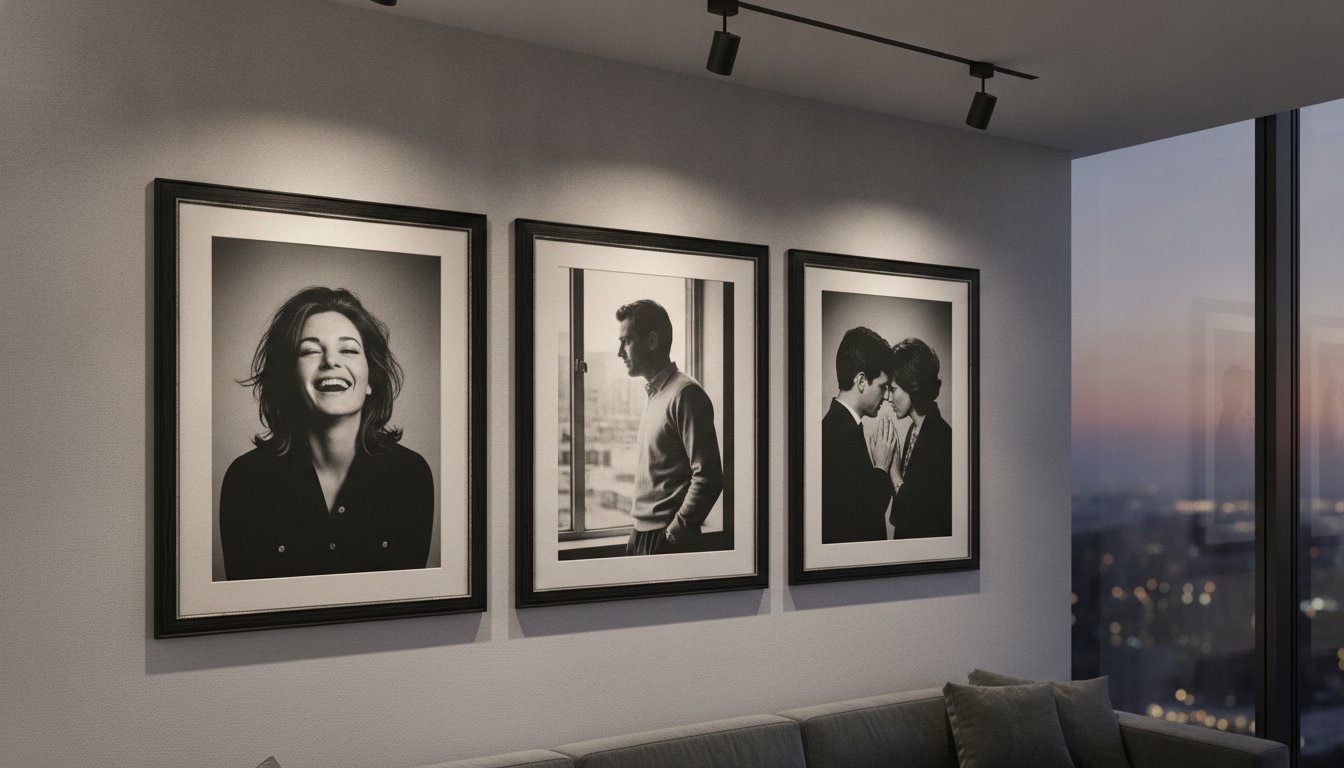
Terry O’Neill didn’t just photograph fame; he humanized the icons of the 20th century through a fly-on-the-wall intimacy that remains the gold standard for fine art portraiture. You likely recognize the effortless cool of David Bowie or the morning-after exhaustion of Faye Dunaway, yet owning a piece of this history often feels shrouded in technical mystery. It’s common to feel a sense of hesitation when faced with the complexities of editions, paper types, and the vital importance of provenance. This definitive guide to terry o’neill photography will demystify those nuances, offering you the clarity needed to invest in authentic, museum-quality prints that resonate with historical significance.
We’ll explore the evolution of his signature style that defined the Swinging Sixties and beyond. You’ll gain the confidence to navigate the secondary market and understand why certain lifetime editions command such prestige at auction. We also provide expert guidance on our bespoke framing services to ensure your chosen work is preserved with artisanal craftsmanship. By the end of this journey, you’ll possess a deep understanding of O’Neill’s legacy and the inspiration to display these timeless moments within a modern, curated home.
Key Takeaways
- Learn how Terry O’Neill transitioned from a Fleet Street photographer to a fine art legend by capturing the raw, unscripted essence of the 20th century’s most famous faces.
- Discover the technical secrets behind the O’Neill aesthetic, including his pioneering use of 35mm film to achieve a spontaneous, fly-on-the-wall perspective.
- Gain professional insight into collecting terry o’neill photography, distinguishing between rare lifetime editions and open prints to build a stable art portfolio.
- Uncover the narrative behind legendary works like Faye Dunaway’s “The Morning After,” exploring why these specific moments remain the most sought-after pieces in the archive.
- Understand the importance of museum-quality archival pigment prints and bespoke framing in preserving the historical integrity and long-term value of your collection.
The Narrative of Terry O’Neill Photography: From Fleet Street to Fine Art
The genesis of the O’Neill archive is a masterclass in serendipity and sharp instinct. In 1959, while employed by the photographic unit of British Overseas Airways Corporation at Heathrow, a young Terry O’Neill captured a candid frame of a sleeping man who happened to be Rab Butler, the Home Secretary. This single image, sold to the Sunday Dispatch, effectively ended the era of stiff, reverent reportage and launched a career that would span sixty years. While Terry O’Neill’s biography details a professional journey across every major publication in the world, it was his early days on Fleet Street that forged his instinct for the unscripted moment. O’Neill’s work stands as the definitive bridge between the raw energy of tabloid photojournalism and the refined elegance of museum-grade fine art.
The Man Who Shot the Sixties
As London transformed into the epicenter of global youth culture, O’Neill was positioned at its very heart. He wasn’t merely an observer; he was a contemporary of the icons he documented. In 1963, he took the first newspaper photograph of The Beatles, and soon after, he was the only photographer invited to document The Rolling Stones during their nascent years. This proximity allowed him to capture the birth of a new social order. Today, his work is regarded as a primary historical record, offering a window into a decade where the barriers between class and celebrity were being dismantled. The enduring appeal of terry o’neill photography lies in this authentic documentation of a cultural revolution as it unfolded in real time.
Redefining the Celebrity Portrait
Before O’Neill’s arrival, celebrity portraiture was dominated by the rigid, highly stylized studio traditions of the 1950s. He consciously rejected these formal constraints, opting instead for a psychological shift that made the world’s most famous people feel accessible. By utilizing portable 35mm cameras rather than heavy studio equipment, he gained the freedom to move with his subjects. He possessed a rare, quiet authority that allowed him to ‘disappear’ into a room, waiting hours for the moment when a star’s public mask would finally slip. This approach didn’t just produce beautiful images; it humanized the untouchable, turning gods of the screen and stage into relatable figures of flesh and blood. Through his lens, terry o’neill photography became synonymous with an intimacy that remains the gold standard for fine art portraiture today.
The O’Neill Aesthetic: Candidness as a High Art Form
While some critics suggest O’Neill was simply a witness to history, his aesthetic was a deliberate technical rebellion. He pioneered the use of 35mm film in an era when medium format was the industry standard for portraiture. This choice wasn’t merely about convenience; it was about kinetic energy. The smaller, lighter camera allowed him to move with the rhythm of his subjects, capturing the blur of a stage performance or the subtle shift in a star’s posture. This technical agility is what separates terry o’neill photography from the static, overly staged images of his predecessors.
His mastery extended to a sophisticated use of natural light. O’Neill avoided the harsh, artificial glare of traditional studio lamps, preferring the soft, directional light found in hotel suites, dressing rooms, or the pale London sun. This approach created a sense of ‘expensive’ intimacy, making the viewer feel like a privileged guest in a private world. As he transitioned into the 1970s, he translated this sensitivity into lush, saturated colors that retained his signature candidness, a transition beautifully illustrated in the retrospective a life in pictures.
Mastering the Black and White Medium
For many serious collectors, the monochrome works represent the pinnacle of his archive. The deliberate use of contrast and the visible grain of the film stock lend these images a tactile, archival quality that digital photography cannot replicate. There is a profound permanence in these frames; they strip away the distractions of fashion and era to focus entirely on the subject’s essence. You can explore this further in our guide to the timeless allure of black and white pictures.
Psychological Intimacy with the Subject
The secret to O’Neill’s ‘fly-on-the-wall’ perspective was time. He famously practiced what became known as the ‘Sinatra Protocol’ during his three-decade relationship with Frank Sinatra. On their first assignment, O’Neill spent three weeks simply existing in Sinatra’s orbit before taking a single frame. This investment built a foundation of trust that transformed him from a paparazzo into a confidant with a camera. This psychological depth is why a genuine piece of terry o’neill photography feels so remarkably alive. If you are looking to bring this level of historical prestige into your own space, you can view our curated collection of iconic prints.
The Faces of an Era: Defining Moments in the O’Neill Archive
Within the vast catalog of terry o’neill photography, certain frames have transcended their status as mere images to become cultural shorthand for 20th-century allure. These photographs aren’t just portraits; they’re narratives frozen in silver halide. O’Neill possessed an uncanny ability to capture the exact moment a public persona collided with a private reality, creating works that feel as vital today as they did when the shutter first clicked. For the serious collector, these defining moments represent the holy grails of the archive, each carrying a story that extends far beyond the edges of the frame.
Hollywood Royalty: Dunaway, Sinatra, and Bardot
Perhaps the most famous image in the collection is the 1977 portrait of Faye Dunaway at the Beverly Hills Hotel. Taken at 6:30 AM the morning after her Oscar win for Network, the photograph captures a weary, contemplative Dunaway surrounded by the morning newspapers and her golden statuette. This piece has become a cornerstone of fine art photography, representing the hollow exhaustion that often follows immense success. Similarly, his 1971 shot of Brigitte Bardot on the set of The Legend of Frenchie King in Spain remains a masterclass in raw charisma. With a cigar clenched between her teeth and wind-swept hair, Bardot’s unscripted power is palpable. O’Neill also provided the definitive look at Frank Sinatra, specifically the 1968 image of the entertainer walking onto the set of Lady in Cement in Miami Beach. Escorted by his entourage, Sinatra exudes a quiet, terrifying gravitas that only a trusted confidant like O’Neill could hope to document.
The Music Archives: From The Stones to Bowie
The transition from the silver screen to the recording studio was seamless for O’Neill. He was there in the Abbey Road backyard in 1963, capturing a rare moment of calm for The Beatles before the storm of global mania truly took hold. As the decade shifted into the theatrical 1970s, O’Neill became the primary chronicler of David Bowie’s chameleonic evolution. His work during the Diamond Dogs era in 1974, including the famous shots with the barking dog, showcased Bowie’s move into a more stylized, avant-garde territory. These images are essential entries in our broader music photography collection, serving as historical anchors for the era of glam rock. Whether it’s the vulnerability of Audrey Hepburn or the defiant energy of The Rolling Stones, the defining spirit of terry o’neill photography is found in these authentic, unmasked glimpses of greatness.
Investing in Terry O’Neill Prints: A Collector’s Perspective
Acquiring terry o’neill photography is a deliberate investment in cultural capital that transcends mere home decoration. Since his passing in 2019, the market for his work has entered a new phase of maturity. Because he can no longer hand-sign new releases, original ‘Artist Signed’ prints have become finite treasures, causing a significant shift in rarity and secondary market value. This scarcity has solidified O’Neill’s status as a stable asset, appealing to both seasoned collectors and those looking to anchor their personal archive with a piece of photographic history.
Rarity and Edition Sizes
Understanding the hierarchy of editions is essential for any discerning buyer. Limited editions are strictly capped at a specific number, which naturally protects the long-term value of the print. Within this category, ‘Artist Signed’ works represent the pinnacle of the archive, as they carry the direct physical imprimatur of the photographer himself. In contrast, ‘Estate Stamped’ prints are produced following his death, authorized by his estate to ensure his legacy remains accessible while maintaining a clear distinction for collectors. While large-scale works make a bold statement, smaller dimensions can often offer a more intimate viewing experience, allowing the tactile grain of the original film to be appreciated in a private setting.
Curating Your Space with Iconic Portraits
A large-scale O’Neill print often serves as the gravitational center of a room. When choosing a subject, consider how the narrative of the photograph interacts with your existing interior design. A monochromatic portrait of Sinatra brings a sense of mid-century gravitas to a library or study, while a vibrant, wind-swept shot of Bardot can inject a modern, rebellious energy into a contemporary living space. Many of our clients achieve a sophisticated ‘jet-set’ aesthetic by pairing the candid grit of O’Neill with the sun-drenched, aspirational leisure found in the Slim Aarons Collection. This juxtaposition of raw intimacy and polished glamour creates a nuanced visual dialogue that celebrates the very best of 20th-century style.
In 2026, the importance of provenance and gallery authentication is more critical than ever. Ensuring your print is sourced from a guardian of the archive is the only way to guarantee the historical integrity and future value of your investment. To begin your journey into serious collecting, you can explore our authenticated Terry O’Neill collection and discover the perfect piece for your home.
Acquiring Terry O’Neill Art: The Galerie Prints Experience
The transition from digital appreciation to physical ownership is a defining moment for any collector. At Galerie Prints, we treat each piece of terry o’neill photography not as a commodity, but as a preserved fragment of cultural history. Our commitment to historical integrity begins with the production process itself. We utilize museum-quality archival pigment prints, a method that ensures the depth of the blacks and the nuance of the highlights are captured with absolute precision. This technical superiority guarantees that the spontaneous energy O’Neill found on the streets of London or the sets of Hollywood is translated faithfully onto the paper, maintaining its vibrancy for generations to come.
Navigating our online gallery allows you to filter through decades of iconic imagery to find the specific work that resonates with your personal narrative. Whether you are drawn to the early reportage of the 1960s or the polished glamour of his later color work, our platform provides the high-resolution detail and provenance information necessary to make an informed investment. We act as a bridge between the vast archives and your private collection, ensuring that every acquisition is supported by expert curatorial oversight.
Bespoke Framing for Timeless Presentation
A premium photograph requires a surround that matches its prestige. Our Bespoke Framing Service is designed to elevate a print into a gallery-ready centerpiece while providing essential protection. Choosing the right frame is an exercise in curatorial judgment:
- Classic Black Wood: Offers a sharp, authoritative border that emphasizes the contrast in monochrome portraits.
- White Gallery Frames: Creates a minimalist, contemporary look that allows the subject to ‘breathe’ within the space.
- Natural Oak: Provides a warmer, organic texture that complements modern interior aesthetics and softer natural lighting.
Beyond aesthetics, we use archival mounting materials and acid-free mats to prevent the yellowing or aging that can occur with lesser production methods. This meticulous attention to detail ensures that your investment remains as pristine as the day it left the darkroom.
From Archive to Wall: The Delivery Process
Our commitment to the archive doesn’t end at the printing press. We understand that the final stage of the journey—the delivery to your home—requires the same level of care as the curation itself. Galerie Prints employs secure packaging standards specifically designed for fine art, utilizing reinforced materials to protect against the rigors of transit. With reliable worldwide shipping, we manage the logistics of international delivery with professional precision, providing a seamless transition from our gallery to your wall. It’s our mission to ensure that your chosen piece of history arrives ready to hang and inspire. You can explore the Terry O’Neill collection at Galerie Prints today to find the next cornerstone of your archive.
Securing Your Piece of Photographic History
The journey through the O’Neill archive reveals more than just famous faces; it uncovers the very soul of an era that reshaped global culture. By embracing the spontaneous and the unscripted, terry o’neill photography transformed the traditional portrait into a living historical document. Whether you’re drawn to the quiet vulnerability of Audrey Hepburn or the defiant stage presence of David Bowie, these works offer a sense of permanence in an increasingly fleeting world. Owning such a piece is an act of stewardship, a way to preserve a fragment of 20th-century elegance within your own curated environment.
At Galerie Prints, we support this journey through our hand-curated archives and museum-grade production standards. We invite you to Discover the Iconic Terry O’Neill Collection at Galerie Prints, where each acquisition is elevated by expert bespoke framing and protected by worldwide secure shipping. These frames don’t just decorate a room; they anchor it with the weight of history and the grace of a master’s eye. We hope you find a piece that speaks to your own sense of style and legacy.
Frequently Asked Questions
What makes Terry O’Neill photography so valuable to collectors?
Terry o’neill photography holds immense value due to its role as a primary historical record of the 20th century’s cultural elite. His ability to capture unscripted moments with subjects like David Bowie and Frank Sinatra created a finite archive that has seen increased demand since his passing in 2019. Collectors prioritize his work because it represents a bridge between raw photojournalism and fine art, offering a stable asset that appreciates as the availability of signed lifetime editions decreases.
Are the Terry O’Neill prints at Galerie Prints authentic?
Every print offered through Galerie Prints is a fully authenticated piece of photographic heritage. We maintain rigorous standards of provenance by working directly with the official archives, including the Getty Images Gallery. This ensures that your acquisition is a genuine representation of the artist’s vision, produced using museum-grade materials. Each piece is accompanied by the necessary documentation to guarantee its historical integrity and long-term value within your private fine art collection.
What is the most famous photograph taken by Terry O’Neill?
While his archive is vast, the 1977 portrait of Faye Dunaway poolside at the Beverly Hills Hotel is widely considered his most iconic work. Captured at dawn the morning after her Academy Award win, it perfectly encapsulates the exhaustion and surreal nature of Hollywood success. Other highly sought-after frames include his 1971 shot of Brigitte Bardot with a cigar and the 1968 image of Frank Sinatra walking onto a film set in Miami Beach.
Can I get my Terry O’Neill print framed by the gallery?
We provide a specialized Bespoke Framing Service to ensure your artwork arrives ready for immediate installation. Our curators offer a selection of premium finishes, including classic black wood, white gallery frames, and natural oak. Each frame is handcrafted using archival mounting materials to preserve the photograph’s condition. This professional finish doesn’t just protect the print; it elevates the work to a gallery standard that complements the sophisticated aesthetic of a modern home.
What is an archival pigment print and why is it used for photography?
Archival pigment prints are the gold standard for fine art photography, utilizing advanced inkjet technology and stable, pigment-based inks. Unlike traditional dye-based prints, these won’t fade or yellow over several decades when kept in proper conditions. We use this process on acid-free, 100% cotton rag paper to ensure the highest level of detail and color accuracy. It’s the preferred medium for museums and serious collectors who demand long-term preservation and technical excellence.
How do I choose the right size Terry O’Neill print for my living room?
Selecting the ideal size depends on the architectural scale of your space and the intended visual impact. A large-format piece of terry o’neill photography acts as a commanding focal point, ideal for placement above a sofa or a mantelpiece. Conversely, smaller editions are perfect for creating an intimate narrative in a study or hallway. We recommend measuring your wall space and considering the viewing distance to ensure the grain and detail of the photograph are fully appreciated.
Is Terry O’Neill still alive?
Terry O’Neill passed away in November 2019 at the age of 81. His death marked the end of an extraordinary sixty-year career that spanned from the early days of the Swinging Sixties to the modern era of celebrity culture. While he is no longer with us, his legacy is meticulously preserved through his estate and the official archives. This transition has made his existing signed lifetime prints particularly rare and highly prized by the global art community.
Do you ship Terry O’Neill prints internationally?
We offer secure, worldwide shipping to ensure our collection is accessible to international collectors. Each photograph is packaged using reinforced, art-specific materials to prevent damage during transit. Our logistics team manages the entire process with professional precision, providing a seamless journey from our gallery to your doorstep. Whether you’re located in London, New York, or beyond, we guarantee that your chosen piece of history arrives in pristine, gallery-ready condition.
