
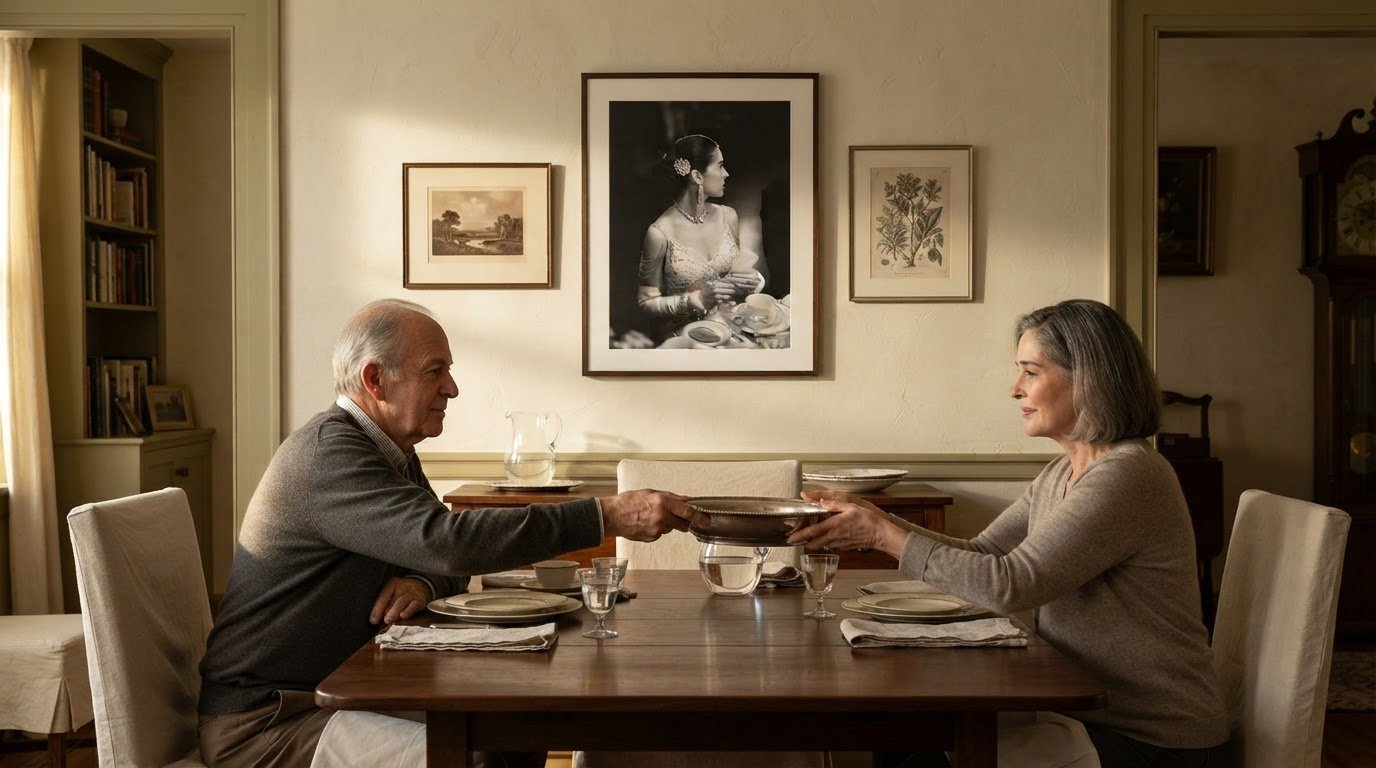
The most cohesive dining-room art doesn’t need to come as a matching set. Choose pieces that echo the room’s palette or mood, then consider their scale and placement in relation to the table, sideboard, and available wall space. When deciding what art to put in a dining room, consider photography, paintings, vintage prints, or a thoughtful mix of mediums.
It’s easy to focus on the image alone, but framing, proportion, and arrangement also shape how a room feels. A single striking work can lend a dining area quiet presence, while a considered grouping can bring personality and history to a larger wall.
This guide explores styles for modern, traditional, eclectic, and rustic interiors, along with practical ways to choose artwork and arrange it with confidence. You’ll also find ideas for balancing color and subject, choosing a suitable scale, and creating a display that feels connected to the room rather than simply added to it.
Key Takeaways
- Choose artwork that echoes your dining room’s palette, mood, and style, from pared-back modern spaces to layered eclectic interiors.
- Consider how a piece’s medium, subject, and frame contribute to the room’s overall character.
- Plan a gallery wall or grid around the wall’s shape and the furniture below it, using a paper layout to refine the arrangement before hanging.
- Explore photographic art, cinema imagery, and limited edition prints when you want a display with a distinctive sense of history and personality.
1. Dining room wall art styles and paintings
Choose dining room wall art that connects with the room’s colors, furnishings, and atmosphere. Muted paintings can soften saturated walls, while vintage fruit and vegetable prints bring playful character to a breakfast nook. Botanical imagery, including a succulent wall or wreath, can fill a broad, open surface. A hanging succulent adds living color to a small dining room or ledge. For a custom-feeling display, repeat a color or subject across several works without matching every frame.
Above a dining table, choose artwork proportionate to both the table and the wall, rather than overwhelming the setting. For a buffet or console, let the artwork span about two-thirds to three-quarters of the furniture’s width. To plan a gallery wall, cut paper templates to match each frame, tape them to the wall, then adjust the arrangement before hanging. This reveals gaps and uneven spacing without putting extra holes in the wall.
Seasonal-color art can stay in place beyond one holiday, while holiday-themed pieces help set a festive scene for family dinners and parties. For a flexible update, use a wall-mounted vase and change its flowers with the season. Vintage-inspired prints also pair naturally with related images for a collected, coordinated effect.
Adjustable lighting lets you shift attention and mood as the dining room changes from daytime meals to evening gatherings. Position art to receive natural light without direct sun, which can fade it; UV-resistant glass can help protect works exposed to sunlight. Keep pieces away from high-humidity areas and potential food splashes. Dust framed photographs and prints with a microfiber cloth, and clean glass without spraying cleaner directly onto it.
To decorate on a budget, begin with one focal print, use existing frames, or build a display gradually. Choose inviting themes such as botanicals, vintage produce, or warm seasonal colors, then repeat a hue already present in the room.
2. Art styles for modern, traditional, eclectic, and rustic rooms
In a modern dining room, choose pieces with clear shapes, restrained palettes, or graphic compositions. A monochrome architectural photograph can complement streamlined furniture without competing with its silhouette. Abstract art also suits contemporary spaces, especially when a color echoes a chair, pendant, or table setting. Let clean lines guide the frame choice, keeping attention on the image. For this style, choosing what art to put in a dining room often comes down to visual clarity.
Traditional rooms welcome subjects with a sense of history, including still lifes, portraits, and classic landscapes. A formal dining table and carved chairs can support richly toned imagery, while an ornate frame reinforces the room’s established character. For a lighter interpretation, pair traditional subject matter with a quieter frame. The result feels considered, not like a display assembled from unrelated period references.
An eclectic dining room can bring contrasting eras together, provided the display has a visual thread. Combine a contemporary abstract with a vintage portrait, then connect them through repeated colors or similar frame finishes. Alternatively, let the frames vary while keeping the artwork within one subject family. This gives dining room wall art personality without making every piece compete for attention.
Rustic interiors pair naturally with landscapes, botanical studies, and imagery recalling mountain or country life. For example, vintage skis or snowshoes can hang above a buffet alongside a vintage ski-lodge print. Wood furniture and textured finishes give these pieces a fitting setting. Keep the arrangement deliberate, so the objects feel curated rather than gathered at random.
Begin by identifying the room’s strongest feature, such as a modern light fixture or farmhouse table. Then decide what art to put in a dining room by choosing work that complements that feature or introduces a deliberate contrast. A pale landscape can soften dark timber; a bold graphic print can sharpen a rustic interior. Repeat one visual detail, such as a color, subject, or frame finish, to give the selection cohesion.
3. Art mediums and cohesive room design
The medium changes how artwork relates to dining furniture, lighting, and nearby materials. Photography offers crisp detail, from a quiet landscape to a lively street scene. A print on paper can feel refined and graphic, especially with a generous border. Canvas brings a softer surface presence, while a framed photograph can introduce sharper edges beside rounded chairs. Choose a medium for its visual character, not simply because it matches another piece.
Build cohesion through deliberate contrasts. Pair a richly textured wall with a smooth photographic print, or place a detailed image near simple, sculptural tableware. If the room already includes glass, polished metal, and glossy finishes, matte artwork can temper their brightness. In a timber dining room, a dark frame can echo the table, while a pale mount creates separation around the image.
Consider how each work’s frame, mount, and finish contribute to the whole. A narrow black frame can connect photographs with different subjects; a natural wood frame can relate a botanical print to a timber sideboard. For a more collected display, vary frame profiles but repeat one finish. This small choice helps distinct pieces feel intentional without making them identical.
Think about the view from the table as well as the room’s entrance. A large photographic image can anchor the main wall, while smaller works on an adjacent surface carry its colors or subject into the wider space. A sculptural object on a console, such as a botanical piece from Taraxacum Orbis – Dandelion Sphere, can add depth beside two-dimensional art, provided it doesn’t crowd the display. Keep the arrangement visually balanced with the furniture and table settings.
To elevate the room, select one work as the focal point, then let secondary pieces support it through tone, subject, or framing. A serene coastal photograph might sit comfortably beside a simple ceramic vessel and linen tablecloth. By contrast, a vivid print can supply the room’s strongest accent, with quieter surrounding materials giving it space to command attention.
4. Grid layouts and gallery walls
A grid gives dining room photos a measured, architectural presence. Choose frames with matching proportions, then align their edges into orderly rows and columns. This structure suits a modern interior, where repeated lines can echo cabinet fronts or a rectangular dining table. Keep the images related through a shared subject, tonal range, or frame finish. For example, black-and-white travel photographs create a unified display without repeating the same scene.
Gallery walls allow more variety. Begin with one larger image as an anchor, then arrange smaller pieces around it. A landscape photograph might sit beside a portrait and a graphic print, with a recurring color tying them together. Balance the composition around its visual center, rather than letting every frame pull to one side. This looser arrangement can bring character to a traditional or eclectic dining room.
Match the layout to the wall and the furniture beneath it. A wide wall above a sideboard can accommodate a horizontal arrangement; a narrow wall between doorways may suit a vertical grouping. Keep the display’s outer shape deliberate, even when frame sizes differ. Consistent spacing helps a varied collection feel composed. Leave enough breathing room around a standout image, so nearby photos enhance rather than diminish its presence.
Before hanging, arrange the frames on the floor and view them from the dining table and room entrance. Adjust the order until the colors and subjects move naturally across the composition. A grid depends on precise alignment, while an eclectic gallery wall benefits from a clear visual anchor. If you’re selecting a focal image for your arrangement, explore photographic prints for inspiration.
Galerie Prints
Galerie Prints offers photographic art and prints for readers shaping a dining-room display with character. Its selection includes The Slim Aarons Collection, Terry O’Neill Photography, Cinema Lobby Cards, and Star Wars Limited Edition Prints, offering distinct subjects and visual moods to consider alongside your room’s palette and furnishings. Choose a work that complements the atmosphere you want, whether that means a nostalgic image, a cinematic reference, or a vivid focal point. The Bespoke Framing Service can help complete the presentation when framing is part of your plan. If you’re narrowing down artwork for your dining room, contact Galerie Prints to discuss your choices.
Choose a Piece That Feels Like Yours
Before making a final choice, consider the atmosphere you want guests to carry with them after a meal. A dining room can feel contemplative, lively, nostalgic, or quietly refined, and artwork can help establish that character. Choosing what art to put in a dining room becomes more personal when you think beyond coordination and ask which image you’ll enjoy seeing on ordinary evenings as well as during special gatherings.
Picture the work from the seat where you spend the most time. Notice whether its subject holds your attention, whether its mood suits shared meals, and whether it feels connected to the home around it. The right choice needn’t follow a single decorating formula. It should give the room a point of view and make the space feel distinctly yours.
For thoughtful guidance as you consider your next piece, contact Galerie Prints for art advice. Let your dining room become a setting for art that continues to reward your attention.
Frequently Asked Questions
What types of art work best in a dining room?
Photography, paintings, and prints can all suit a dining room when their subject and visual intensity fit the setting. Consider how the image feels during a meal: a serene landscape creates a quieter mood, while a lively portrait or cinematic image adds energy. For a polished, personal touch, choose artwork with a subject that reflects your interests or gives guests an inviting point of conversation.
How do I choose dining room art to match my decor and color scheme?
Start with a color already present in a lasting room feature, such as upholstery, a rug, or cabinetry. Choose artwork that repeats that tone, or use a complementary color for a more pronounced contrast. For example, a print with a warm accent can connect to wood furniture without matching it exactly. Consider the colors in daylight and evening lighting before settling on your selection.
How high should art be hung in a dining room?
Hang art where it feels comfortable to view from the dining chairs, rather than positioning it solely for someone standing nearby. Sit at the table and assess the image’s center against your natural line of sight. If the piece sits above a sideboard, consider the furniture and the space between its surface and the frame. This helps the artwork feel connected to the dining area.
Should dining room art be one large piece or a gallery wall?
Choose one large piece when you want a clear focal point and the wall can give it visual space. A gallery wall works well when you want to bring several subjects or memories together. Consider the room’s existing visual activity: patterned wallpaper or decorative furniture may pair more easily with one restrained image, while simpler surroundings can accommodate a more varied display.
What materials and finishes are best for dining room artwork?
Choose a finish that suits the artwork and the room’s surfaces. A framed print can give a crisp, defined presentation, while canvas offers a less reflective appearance. Glass, metal, and wood frames each create a different relationship with nearby furniture and lighting. In a busy dining area, a frame can also separate the artwork from casual contact, while a simple finish keeps attention on the image.