
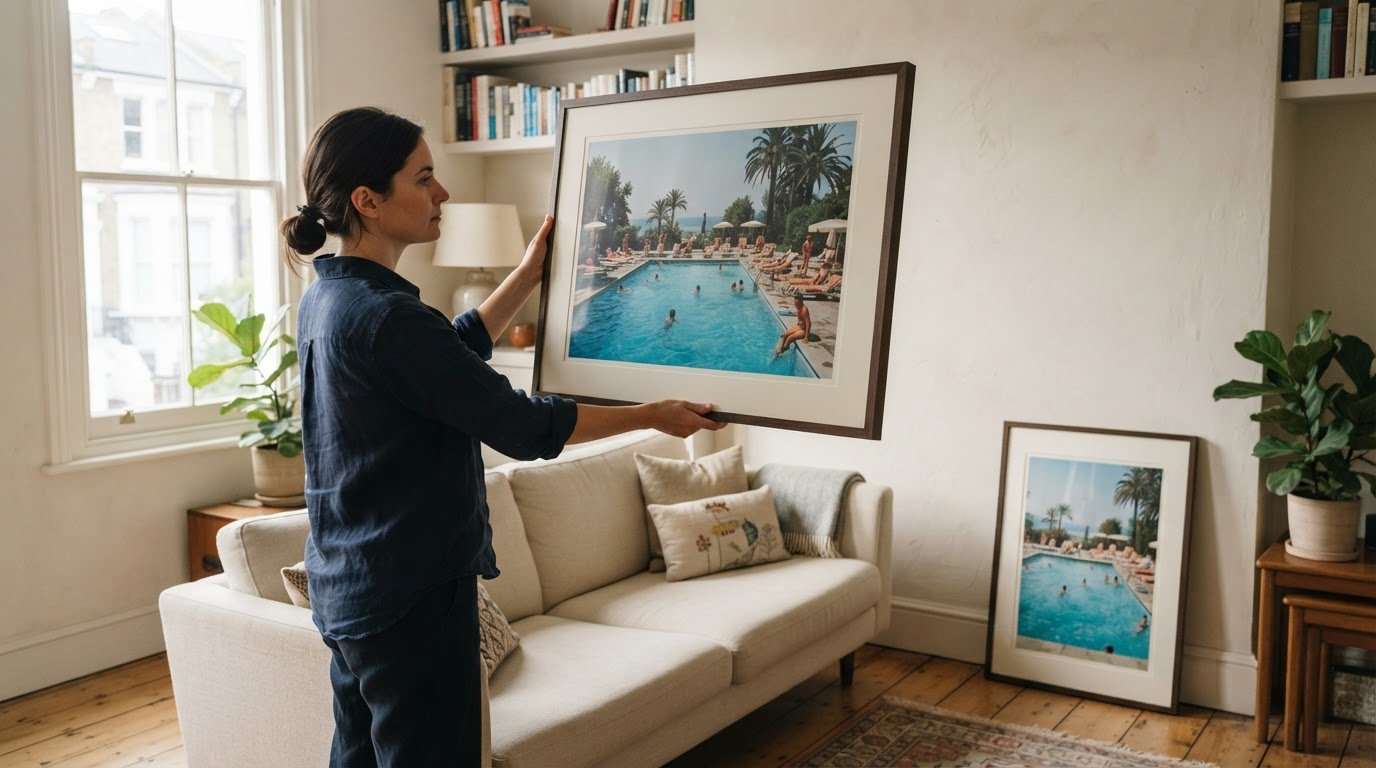
Knowing how to choose art print size begins with the image’s proportions, the available wall space, and its pixel dimensions. Common options include 5 × 7, 8 × 10, 11 × 14, 16 × 20, 18 × 24, and 24 × 36 inches, from intimate accents to room-defining statements. For a digital image, divide each pixel dimension by 300 to estimate the maximum print dimension in inches.
It’s easy to focus on the wall and overlook the image itself. A print may suit the room beautifully, yet lose detail if enlarged beyond the resolution the image can support. Knowing how to choose art print size means balancing the setting with the clarity and character that drew you to the artwork.
This guide explains how to choose art print size by comparing familiar dimensions, matching them to the artwork and display space, and considering image resolution. You’ll have a clearer way to compare options and choose a print that feels considered, not merely large enough to fill a wall.
Key Takeaways
- Compare familiar print dimensions, from compact 5 × 7-inch pieces to dramatic 24 × 36-inch displays, to find a scale that suits your space.
- Match the artwork’s proportions to a compatible print format so its composition remains balanced, whether framed, on canvas, or presented on acrylic.
- Use the wall and nearby furniture as a guide: artwork often feels balanced when it spans about two-thirds to three-quarters of the available width.
- Estimate a digital image’s suitable print dimensions by dividing its pixel measurements by 300, then consider whether its aspect ratio fits your chosen size.
What Are the Common Print Sizes for Art?
Common art print sizes range from 5 × 7 inches to 24 × 36 inches. Knowing how to choose art print size means weighing the image’s proportions against the wall and display setting.
Print formats and size comparisons
Print dimensions describe the artwork’s surface, while frames add to its overall footprint. This distinction matters when measuring a wall or selecting a frame. A frame can add 1-3 inches to the artwork’s overall size, so include its outer edges in your measurements. Canvas and acrylic prints also have stated dimensions, but their presentation differs from framed prints.
Print, mat and frame costs depend on the size and materials you choose. Compare the complete presentation: the mat and frame affect the finished artwork’s overall dimensions.
Matching print sizes to display settings
Display setting means the wall, furniture, and surrounding space where the artwork will hang. Matching the scale to that setting helps a piece feel intentional. For a small nook or gallery wall, 8 × 10-inch or 11 × 14-inch prints suit compact arrangements. Above a sofa, a 24 × 36-inch print can anchor a living room, while a larger wall can accommodate more expansive pieces.
Choose one large print when you want a singular focal point and an uninterrupted composition. Choose a gallery wall when several pieces can create a balanced visual arrangement.
Size visualization and popular uses
Size visualization means comparing a print’s dimensions with familiar objects or a measured wall outline. It helps you judge scale before choosing a format. A 16 × 20-inch print has roughly the area of two standard sheets of paper side by side; an 18 × 24-inch print resembles four sheets arranged in a grid.
Popular fine art sizes include 8 × 10 inches for small spaces, 11 × 14 inches for standalone display or collections, and 16 × 20 inches for greater presence. An 18 × 24-inch print suits a larger wall, while 24 × 36 inches creates a dramatic focal point. For how to choose art print size, keep the artwork’s composition intact when selecting a square or rectangular format.
Small, medium, large, and oversized print dimensions
Size labels indicate scale, but the wall and placement determine how the artwork reads. Measure the available space first to narrow down dimensions without letting a frame or nearby pieces crowd the composition.
Measure the wall’s width and height, then allow at least 2-3 inches of breathing room around the print. For a wall above furniture, compare the artwork’s width with the furniture beneath it; a piece spanning about two-thirds to three-quarters of the available width often feels balanced. Include the frame in your measurement.
Preview the dimensions by marking the proposed outline with painter’s tape. Leave it in place for a day, then view the shape from the room’s usual entrance and seating area. This helps you judge how the print will relate to furniture and nearby wall space before choosing a format.
Size categories offer a useful starting point:
- Small: 5 × 7, 6 × 8, and 8 × 10 inches suit shelves, compact walls, and a collection of smaller prints.
- Medium: 10 × 10 and 16 × 24 inches give artwork more presence without requiring an expansive wall.
- Large: 18 × 24 and 20 × 20 inches can hold attention above smaller furniture or on a broad wall.
- Oversized: 30 × 40 and 36 × 48 inches suit spacious rooms and open wall space.
Common frame dimensions can influence the choice. For instance, 11 × 14 inches is a familiar frame size, but it doesn’t exactly match a 4:5 image ratio, so fitting the artwork may require adjusting its crop or presentation. Hang framed art with its centre approximately 57-60 inches from the floor. Above furniture, keep the lower edge 6-10 inches above the top edge.
Choosing print size for the artwork and display space
Consider the artwork’s proportions, the wall’s dimensions and the nearby furniture. A useful starting point is to let wall art occupy about two-thirds to three-quarters of the available width, then adjust for the image format and room.
Artwork proportions around furniture
Artwork proportion describes the print’s width in relation to the furniture beneath it. This relationship matters because a piece that’s too narrow can feel detached, while an overly wide one can overwhelm the arrangement. Above a 72-inch sofa, a print spanning 48-54 inches provides a practical reference. For a pair or a gallery wall, consider the combined width of all pieces, including the gaps between them.
In a bedroom, compare the print with the bed’s width and the open wall area above it. A broad wall can support a larger format, while a smaller wall beside a doorway may suit a narrower piece. Measure the full display area before choosing a custom crop or frame.
Viewing distance and print size
Viewing distance is how far away someone typically stands or sits from the artwork. It matters because a print seen across a living room needs a clear, readable composition, while details in a smaller work may reward closer viewing. Consider the main viewpoint, such as a sofa or dining chair, when choosing dimensions.
For a gallery wall, assess each image both up close and from across the room. Smaller pieces can reward close viewing, while a larger central print gives the arrangement a visual anchor from farther away. Keep the format in proportion to the room’s sightlines.
The room’s use also shapes your choice. In a living room, a prominent landscape or portrait can anchor the main seating area; in a narrow hallway, a smaller vertical format may suit the available wall. Choose a print whose subject and composition feel at home in the setting, rather than enlarging every image to fill the space.
For your final decision, measure the furniture and display area, then compare them with the print’s full dimensions, including the frame. Leave breathing room around the piece and check that the artwork’s original proportions remain intact. A format that balances the image, furniture and viewing position will feel considered in the room.
Estimating print size from image resolution
Image resolution helps estimate how large a digital file can print while retaining detail. Divide each pixel dimension by 300 to estimate its maximum print dimension in inches. For example, a 6000 × 4000-pixel image suits a print around 20 × 13 inches or smaller at that resolution.
Calculate width and height separately while preserving the image’s aspect ratio. If a common print format has different proportions, cropping may remove part of the composition. A square crop, for instance, cannot show the full width of a rectangular image without changing its framing.
These examples show the pixel dimensions associated with several print formats at 300 DPI:
- 8 × 10 inches: 2400 × 3000 pixels.
- 11 × 14 inches: 3300 × 4200 pixels.
- 16 × 20 inches: 4800 × 6000 pixels.
- 18 × 24 inches: 5400 × 7200 pixels.
- 24 × 36 inches: 7200 × 10800 pixels.
- 30 × 40 inches: 9000 × 12000 pixels.
Compare your file with the intended dimensions before choosing a statement print, canvas, or smaller gallery wall piece. A pixel count below the example for your chosen format means the image will print at fewer than 300 pixels per inch. Enlarging it can soften fine details, especially in intricate artwork or photographs by artists where texture and clarity shape the visual impact.
Resolution is one part of the decision, not the whole composition. A versatile image can suit several formats if its proportions and important details remain intact. For a gallery wall, consider whether the image will read clearly at the planned size; avoid making a small file overwhelming through excessive enlargement.
Explore Star Wars Limited Edition Prints and consider how each composition might read at your intended scale.
Galerie Prints: The Slim Aarons Collection
Galerie Prints brings together photographic art for those choosing a print to suit a particular wall and interior. Explore the Slim Aarons Collection and consider how its compositions could work as a focal point or within a wider display. Terry O’Neill Photography, Cinema Lobby Cards and Star Wars Limited Edition Prints offer other distinct subjects to consider for your room.
Once you’ve settled on an image and display scale, Galerie Prints’ Bespoke Framing Service can complete the presentation. Framing affects the artwork’s overall footprint, so include the finished dimensions in your wall plan. Explore the collection that suits your space and contact Galerie Prints to discuss your print and framing needs.
Make the Wall Feel Like Yours
The right artwork should feel at home in the room while holding your attention over time. As you decide how to choose an art print size, consider not only what fills the wall today, but also how the image’s mood and composition will sit alongside the furnishings and objects you already value.
Take a moment to picture the finished setting. A print can become a quiet accent or the defining presence in a room; its role depends on the artwork, its placement and the atmosphere you want to create. The final choice is personal, and a thoughtful selection can make the space feel distinctly your own.
If you’re ready to find a photograph or print for your home, explore Galerie Prints. Let the image that stays with you guide the next step, and enjoy shaping a display that feels considered and enduring.
Frequently Asked Questions
What is the most popular art print size?
8 × 10 inches is a popular, versatile art print size, though the best choice depends on the image and display. It suits a modest standalone piece or a place in a gallery wall. Other widely used options include 11 × 14 and 16 × 20 inches, which offer different visual scales. Compare the image’s proportions with the space before settling on a format.
Why Does Wall Art Size Matter?
Wall art size shapes the room’s visual balance and how you experience the artwork’s details. A small piece can feel intimate and invite a closer look, while a larger one can give a room a focal point. Scale also affects how art relates to nearby objects. Consider the room’s sightlines and the image’s composition so neither feels visually lost or overpowering.
What size art print should go above a sofa, bed, or console table?
Above a sofa or console table, a 24 × 36-inch print is one suggested large-format choice. Above a queen bed, options include 16 × 20, 24 × 36, or 24 × 48 inches. Treat these as starting points, not fixed rules: compare the print’s orientation with the furniture and the wall’s shape. A wide piece may suit a long sofa better than a tall image.
How wide should wall art be compared with the furniture below it?
For art above a sofa, a useful guide is a width around 60-75% of the sofa’s width. For example, above a 72-inch-wide sofa, artwork spanning 48-54 inches is suggested. Measure the complete arrangement if displaying several pieces, counting the spaces between them. This helps the group read as one visual feature rather than separate images floating above the furniture.
What are standard art print and frame sizes in the US?
Common US print dimensions include 5 × 7, 8 × 10, 11 × 14, 16 × 20, 18 × 24, and 24 × 36 inches. The 11 × 14-inch size is also a familiar frame option, although it doesn’t exactly match a 4:5 image ratio. Check whether the frame’s opening fits the image or requires a mat before choosing the finished presentation.
How do aspect ratio and cropping affect art print size?
Aspect ratio is the relationship between an image’s width and height; cropping trims part of the image to fit another shape. For example, 2:3 proportions suit formats such as 12 × 18 inches, while 4:5 suits 8 × 10 inches. If the ratios differ, fitting the image may cut off visual details. Preview the crop to ensure the subject and composition remain intact.