
A movie poster isn’t merely an advertisement; it’s the first frame of the cinematic experience, a visual threshold that invites the viewer into the director’s psyche. Since the film’s release on February 21, 1997, the lost highway poster has stood as a haunting gateway into David Lynch’s fragmented, neo-noir reality. You likely share the common frustration of seeking this iconic imagery only to encounter low-resolution reprints on flimsy paper that curls and fades before the year is out. As a discerning collector, you know that a masterpiece of this caliber requires a level of provenance and technical excellence that mass marketplaces simply cannot provide.
We’re here to help you navigate the artistic significance and rare variations of this iconic work, ensuring your acquisition reflects the world’s finest photography. This guide reveals how to achieve a sophisticated noir aesthetic in your living space while adhering to the archival standards that prevent your investment from degrading. We will examine the nuances of bespoke framing and the superior quality of our London-based craftsmanship, offering a definitive roadmap for those who wish to own a permanent piece of cinematic history.
Key Takeaways
- Gain a deeper understanding of the burning house motif and the minimalist typography that defines the haunting visual identity of this neo-noir touchstone.
- Learn why a lost highway poster requires specific archival standards and premium ink types to maintain its provenance and value as a piece of photographic history.
- Explore the critical differences between mass-produced reprints and the exquisite quality of bespoke, gallery-standard archival reproductions.
- Discover professional curatorial advice on integrating dark, evocative cinema art into sophisticated home offices or media rooms for maximum aesthetic impact.
- Uncover the meticulous process behind our London-based craftsmanship, ensuring every print serves as a lasting bridge to the golden age of cinema.
The Haunting Aesthetic of David Lynch’s Lost Highway
David Lynch’s Lost Highway (1997 film) arrived as a seismic shift in the landscape of neo-noir cinema. It didn’t just tell a story; it dismantled the very idea of linear progression. For the serious collector, the lost highway poster serves as more than mere promotion. It’s the first invitation into a psychological labyrinth. The film’s Möbius strip structure, where the end meets the beginning in a recursive loop, is perfectly encapsulated through its visual branding. Lynch utilizes a palette of deep blacks and searing oranges, creating an aesthetic of “Lynchian” dread that has influenced designers for over 27 years. The imagery doesn’t explain the plot. It evokes a feeling of impending doom.
The visual identity of the film centers on the duality of the human psyche. By using high-contrast photography and distorted perspectives, the promotional art mirrors the split-identity themes that define the narrative. This isn’t just a movie poster; it’s a curated piece of art that captures the essence of a nightmare. The “Mystery Man,” with his pale face and unblinking gaze, becomes a haunting anchor point in the composition, representing the inescapable nature of guilt and memory. It’s this psychological depth that makes the film’s imagery so enduring in the world of fine art photography.
Surrealism in 90s Cinema Marketing
By the late 1990s, Hollywood marketing began drifting away from the literal, star-centric compositions that dominated the previous decade. Lost Highway broke the mold by prioritizing atmosphere over plot. Instead of clear character portraits, the marketing leaned into high-contrast lighting and oppressive shadows. This shift allowed the imagery to mirror the film’s split-identity themes. Bill Pullman and Balthazar Getty are often obscured, reflecting the fractured psyche of the protagonist. The role of the “Mystery Man” in these visuals creates an immediate sense of unease. It’s a masterclass in using negative space to suggest a narrative that’s both there and not there.
Why Lost Highway is a Collector’s Favorite
The film’s enduring cult status is inextricably linked to its aesthetic cohesion across music, fashion, and art. Serious enthusiasts often look for the following elements that elevate these pieces to archival status:
- The Japanese B1 variation is highly sought after for its distinct typography and rare composition.
- The US One Sheet is a classic example of 1990s minimalism that still feels contemporary in a modern interior.
- The intersection of David Bowie’s music and Lynch’s visuals creates a multi-sensory appeal that transcends the screen.
Collectors often seek out these prints for their technical excellence and historical provenance. The high-contrast photography requires a level of printing precision that mirrors the artisanal standards we uphold in our London darkroom. Whether it’s the stark typography or the haunting gaze of the characters, the lost highway poster remains an iconic piece of 1990s heritage. It’s a bridge to a time when cinema marketing was as daring as the films themselves, offering a sense of permanence in an increasingly digital world.
Decoding the Visual Language of Lost Highway Posters
The 1997 release of David Lynch’s neo-noir masterpiece brought with it a visual vocabulary that remains as haunting as the film’s jazz-infused score. Every lost highway poster functions as a window into a fractured reality. The burning house motif stands as the most potent symbol; it represents the total destruction of domestic safety, rendered in high-contrast tones that suggest a world on the brink of collapse. This imagery isn’t just decorative. It’s a thematic precursor to the protagonist’s descent into a waking nightmare.
Color choices are equally deliberate. Deep, archival blacks serve as a visual void, while the fiery oranges provide a visceral, tactile heat. This palette mirrors the 35mm cinematography of Peter Deming, who utilized shadows to create a sense of claustrophobia. The road imagery, featuring the iconic yellow lines disappearing into darkness, visualizes the infinite loop of the subconscious. It echoes the Criterion Collection’s analysis of Lost Highway regarding the film’s circular, nightmarish structure. Stark, minimalist typography ensures the imagery remains the focal point. For those looking to bring this dark elegance into their own space, exploring a curated selection of cinematic photography offers a way to capture that same noir atmosphere.
The Iconic ‘Split Face’ Design
This composition features the faces of Patricia Arquette and Bill Pullman merged into a single, unsettling portrait. It’s a direct visualization of the psychogenic fugue, a dissociative state where identity becomes fluid and unreliable. The lighting draws heavily from 1940s noir photography. Designers used harsh key lights to create deep shadows that obscure the eyes, suggesting the deep-seated secrets hidden within the character’s psyche.
International Poster Variations
Collectors often seek the French ‘Grande’ style. This format measures a substantial 47×63 inches and emphasizes the film’s grand, operatic scale. The Japanese ‘B1’ posters, sized at approximately 28×40 inches, often incorporate unique vertical graphic elements and different character crops to suit local aesthetic preferences. In contrast, the UK Quad (30×40 inches) utilizes a horizontal layout. This differs significantly from the standard US One Sheet (27×41 inches), offering a broader, more panoramic view of the film’s desolate, nocturnal highway.
Original Vintage vs. Archival Fine Art Reproductions
Choosing a lost highway poster requires a discerning eye for materiality. The market is often flooded with mass-produced reprints that fail to capture the film’s psychological depth. These low-end options frequently utilize 80lb thin paper stock and standard dye-based inks, which are prone to visible pixelation and significant fading within 24 months of display. For the serious collector, the distinction lies in the tactile quality and longevity of the medium. A gallery-quality archival print serves as a lasting investment, preserving the intricate shadow work that defines David Lynch’s 1997 masterpiece.
Galerie Prints prioritizes technical excellence by sourcing imagery from high-resolution archives, including official studio records and the Getty Images collection. This ensures that every gradient of darkness and flicker of neon is rendered with absolute clarity. This academic analysis of Lynch’s work from the University of Kentucky explores how his aesthetic choices evoke a haunting sense of American nostalgia; a feeling that only high-fidelity printing can truly honor. Without the precision of archival methods, the subtle textures of the film’s neo-noir atmosphere are lost to muddy blacks and washed-out tones.
Understanding Archival Standards
True museum-quality prints utilize the Giclée process, which employs 12-color high-density pigment inks rather than standard four-color lithography. These pigments are chemically stable, ensuring the lost highway poster retains its intensity for over 100 years. We use heavy-weight, acid-free paper to prevent the yellowing and brittleness associated with cheaper wood-pulp alternatives. This is essential for Lynch’s palette, where the “blacker than black” aesthetic requires a paper that can hold a high ink load without warping or bleeding.
The Value of Provenance
Provenance dictates the historical and financial value of any cinematic artifact. Identifying an authentic 1997 lobby card versus a modern digital scan requires an understanding of photographic heritage. Original promotional materials from the film’s release were often printed on specific cardstock that modern home printers can’t replicate. Our commitment to authenticity means we treat every piece as a guardian of film history. Collectors looking to expand their knowledge of these physical artifacts should consult our Cinema Lobby Cards guide to understand the prestige of silver-halide and official studio releases. By securing prints with clear lineage, you ensure your collection remains a definitive record of 20th-century glamour and grit.
Curating Your Space: How to Display a Lost Highway Poster
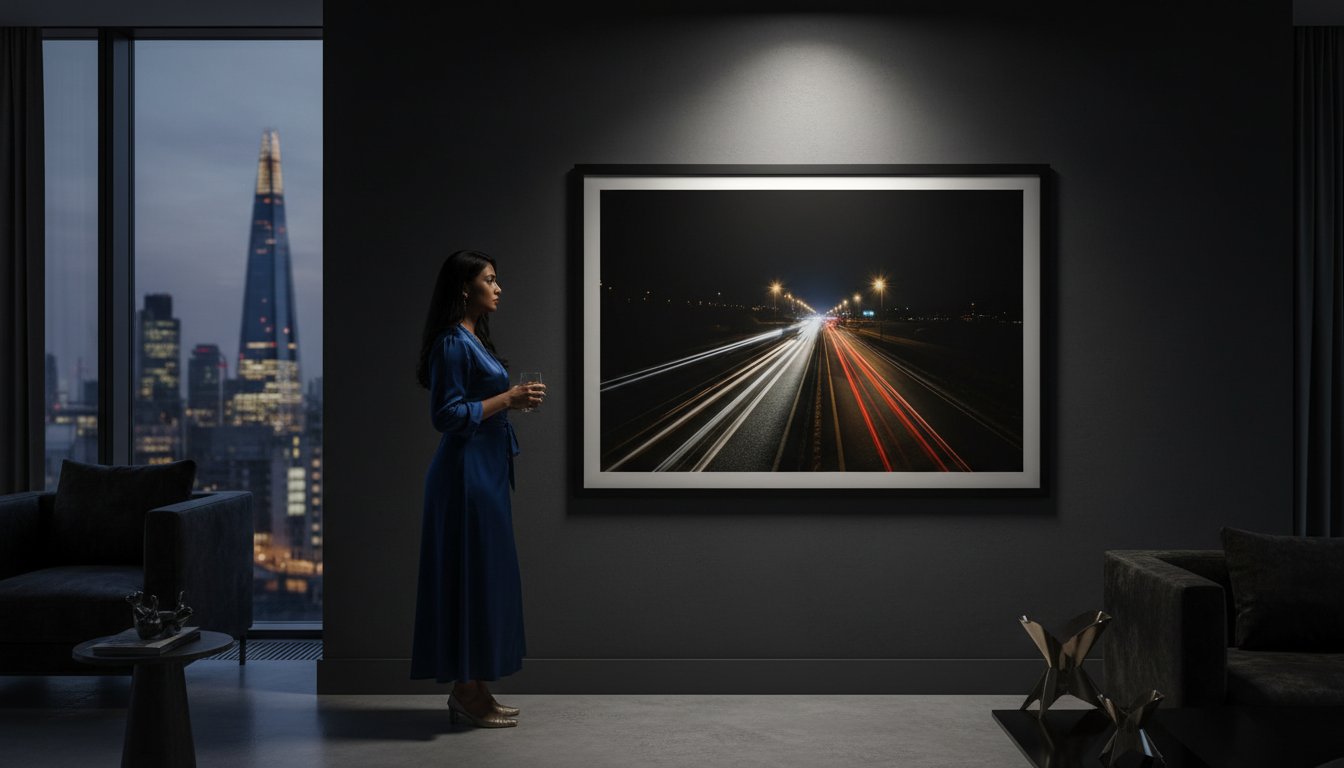
Lighting is the most critical element in preserving the “burning” palette of the artwork. Direct sunlight is the enemy of high-contrast prints, causing the rich obsidian tones to fade into a dull grey within months. Instead, utilize dedicated picture lights with 3000K LED bulbs. This specific color temperature enhances the warmth of the highway lines without emitting harmful heat or infrared radiation. When you pair cinematic history with fine art photography, you create a curated dialogue between staged narrative and captured truth. This layering of mediums is what separates a standard fan collection from a true gallery-grade interior.
Bespoke Framing for Movie Art
A standard off-the-shelf frame won’t suffice for a piece of this caliber. For a lost highway poster, a sleek black wood frame provides a classic, archival feel that recedes into the shadows. Alternatively, industrial metal frames offer a modernist edge that complements the film’s mechanical undercurrents. Always specify a deep-set mount board (mat). A 50mm acid-free mat creates a visual buffer that elevates the poster to the status of a fine art print. Most importantly, insist on museum-grade glass with 99% UV protection. This is a non-negotiable requirement for protecting the volatile inks used in 1990s high-gloss printing.
Gallery Wall Strategies
Creating a cohesive “Lynchian” wall requires a balance of scale and subject matter. You might pair a large-scale 27×40 inch one-sheet with intimate 8×10 lobby cards to create a sense of rhythmic depth. To maintain a sophisticated “mood,” ensure your framing remains consistent across the collection. Mixing the 1997 poster with black-and-white portraiture from the same era creates a powerful, monochromatic anchor for your room.
- Scale: Use the main poster as a central anchor, surrounding it with smaller, minimalist architectural photography.
- Consistency: Use identical frame profiles to unify disparate art styles.
- Provenance: Treat your movie art with the same reverence as a silver gelatin print from our London darkroom.
The Galerie Prints Standard: Archival Quality for Cinema Icons
The search for the definitive lost highway poster concludes where artisanal craftsmanship meets cinematic history. At Galerie Prints, we don’t simply print images; we preserve legacies. Our London darkroom serves as the heart of our operations, where traditional techniques are used to produce works of enduring beauty that stand the test of time. By maintaining exclusive access to the world’s most significant photography and cinema archives, we provide collectors with pieces that are often unavailable to the general public. This commitment to provenance means that every order is a genuine piece of art, reflecting the same prestige found in major international galleries.
Our artisans understand that a film like Lost Highway, released in 1997, requires a specific technical approach to honor its visual complexity. We don’t settle for mass-produced methods. Instead, we lean into the tactile nature of the darkroom, ensuring that the “world’s finest photography” is delivered with the depth and clarity it deserves. Every print is a testament to our role as guardians of photographic heritage, bridging the gap between the golden age of cinema and your personal collection.
Why Our Prints Stand Apart
The difference between a standard retail print and a Galerie Prints edition is immediately apparent to the touch. We utilize 310gsm acid-free archival paper, providing a substantial, tactile weight that prevents degradation. While commercial outlets use standard inkjet processes, our silver gelatin prints utilize a light-sensitive chemical development. This produces the richest blacks in the industry, essential for the atmospheric tension of Lynch’s work. Our London-based experts curate every image, ensuring the contrast and composition meet museum-grade standards before shipping.
Start Your Collection Today
Transforming your interior space begins with an evocative image. Browse our curated selection of vintage movie posters to find icons of the silver screen rendered in archival quality. Our bespoke framing service offers finishes from classic black to natural woods, all hand-finished by master framers and ready to hang. We provide custom sizing to ensure your lost highway poster serves as a perfectly scaled focal point for your home. From the surrealist depths of Lynch to the aspirational luxury of Slim Aarons, we offer pieces that carry our seal of excellence.
Elevate Your Space With Cinematic History
David Lynch’s 1997 masterpiece remains a cornerstone of psychological cinema; its visual identity is as fractured and haunting as the narrative itself. Selecting a lost highway poster isn’t just about home decoration. It’s an investment in a piece of film history that captures the unsettling beauty of the desert night and the psychological depth of the neo-noir genre. We’ve explored why archival fine art reproductions are the superior choice for collectors who value detail and longevity over standard commercial prints.
At Galerie Prints, we honor this cinematic legacy through meticulous artisanal craftsmanship. Every piece is hand-printed in our London darkroom on museum-quality archival paper, ensuring the deep blacks and eerie glows of Lynch’s world remain vivid for a lifetime. Our master craftsmen complete each work with bespoke framing, transforming a cinematic icon into a gallery-ready statement for your private collection. Explore our curated collection of Lost Highway and cinema art prints to discover why we’re trusted with the world’s finest photography. Your walls deserve a narrative as enduring as the films that define our culture.
Frequently Asked Questions
What size was the original Lost Highway movie poster?
The original US theatrical one-sheet for the film measures precisely 27 by 40 inches. This standardized dimension became the industry norm in the mid-1980s, replacing the slightly taller 27 by 41 inch format used in previous decades. International versions vary significantly; for instance, the British Quad measures 30 by 40 inches, while the French Grande reaches a substantial 47 by 63 inches. These specific measurements are vital for collectors verifying the provenance of a vintage find.
How can I tell if my Lost Highway poster is an original 1997 release?
Authentic 1997 theatrical releases are typically double-sided, featuring a mirrored image on the reverse to enhance luminosity when displayed in a cinema light box. You should examine the bottom edge for the 1997 copyright date and the presence of specific printer’s marks or a National Screen Service number. Original prints possess a crispness of detail and a specific paper weight that modern digital reproductions often fail to replicate, ensuring their status as a lasting piece of history.
Is it worth framing a movie poster professionally?
Professional framing is essential for preserving the long-term value and aesthetic integrity of a rare lost highway poster. A bespoke framer uses acid-free mounting materials and 99 percent UV-protective glazing to prevent the paper from yellowing or the inks from leaching. This curatorial approach ensures your investment remains a pristine centerpiece, mirroring the archival standards found in the world’s finest photography galleries while protecting the work from environmental degradation.
What is the difference between a movie poster and a lobby card?
The primary difference lies in scale and intended display; a movie poster is a large-format promotional tool, while lobby cards are smaller 11 by 14 inch prints produced in sets of eight. While posters capture a film’s singular essence, lobby cards offer a narrative sequence of specific scenes. Collectors often seek both to create a comprehensive visual history of David Lynch’s 1997 masterpiece, appreciating the tactile and historical elements of these smaller, hand-held artifacts.
Why do David Lynch posters use so much black and high-contrast lighting?
David Lynch employs high-contrast lighting and deep obsidian tones to evoke the neo-noir atmosphere and psychological fragmentation central to his storytelling. This aesthetic choice, often referred to as chiaroscuro, creates a sense of mystery and dread that mirrors the film’s non-linear narrative. The heavy use of black space focuses the viewer’s eye on the ethereal, often distorted subjects, establishing a timeless and evocative visual language that defines his iconic cinematic style.
Can I buy a Lost Highway poster with archival-quality paper?
You can acquire a lost highway poster printed on archival-quality, acid-free paper through specialized galleries that prioritize technical excellence. These premium editions use pigment-based inks on heavy-weight cotton rag or silver gelatin paper to ensure the image doesn’t degrade over decades. This meticulous production process provides a level of depth and permanence that standard commercial lithographs cannot match, making them suitable for serious art collectors who value exquisite craftsmanship and longevity.
How do I protect my movie poster from fading over time?
To prevent fading, you must shield the artwork from direct sunlight and use museum-grade acrylic or glass with a 99 percent UV-resistance rating. Maintaining a stable environment with 50 percent relative humidity and temperatures around 20 degrees Celsius prevents the paper fibers from becoming brittle. These preservation steps are vital for maintaining the deep, saturated blacks and vibrant highlights that define David Lynch’s exquisite imagery, ensuring the work remains as striking as its 1997 debut.
What is the most sought-after version of the Lost Highway poster?
The most coveted version is the 1997 US Advance Teaser poster, which features the haunting image of the burning cabin against a pitch-black background. International collectors also prize the Polish A1 version, designed by artist Wieslaw Walkuski, for its surrealist interpretation of the film’s themes. These specific editions command higher interest due to their limited print runs and the unique artistic vision they bring to Lynch’s dark masterpiece, making them prized additions to any curated collection.
