
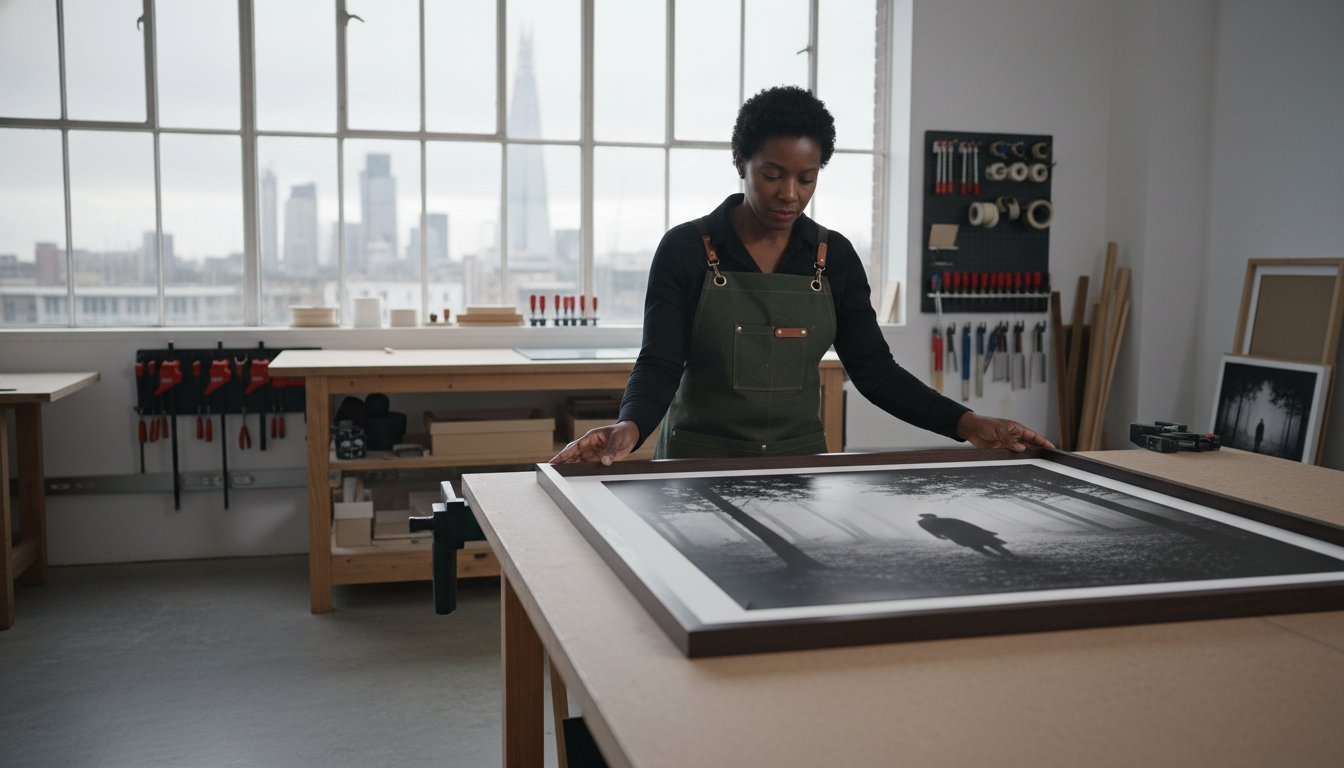
UV radiation is responsible for approximately 40% of fading in art prints, a silent environmental assault that can turn a vibrant heritage photograph into a ghost of its former self. You likely recognize that displaying the world’s finest photography requires more than just an aesthetic border; it demands a sophisticated barrier against the elements. Finding the best frames to protect art prints is often a journey through confusing terminology where ‘acid-free’ labels frequently mask wood-pulp materials that may yellow or cause paper ripples over time.
We share your commitment to preserving the evocative beauty of fine art for future generations. This guide will clarify the distinction between standard retail options and true museum-grade standards, ensuring your investment remains as pristine as the day it left our London darkroom. You’ll discover how 99% UV-protective glazing and 100% cotton rag mats create a stable, reversible environment for your collection. We provide a definitive checklist for selecting bespoke framing services that guarantee your art is protected for decades to come.
Key Takeaways
- Distinguish between purely decorative borders and museum-grade conservation techniques to shield your collection from irreversible fading and environmental foxing.
- Discover why the best frames to protect art prints utilize 99% UV-filtering glazing and 100% cotton rag matboards to create a stable, archival micro-environment.
- Evaluate the chemical stability and structural integrity of hardwoods versus aluminum to ensure your chosen frame offers lasting protection for large-scale works.
- Implement curatorial strategies for room placement to prevent paper rippling and maintain the tactile excellence of your hand-printed photography.
- Gain insight into the bespoke darkroom-to-wall process that ensures every piece is handled with the quiet authority and precision of a London-based master framer.
Beyond Decoration: Why the Best Frames are Essential for Art Conservation
A frame is more than a simple window; it is a meticulously engineered sanctuary for the image it holds. For those acquiring fine art photography, the choice is between a temporary display and a lasting legacy. While decorative framing focuses on aesthetic harmony with a room’s palette, conservation-grade preservation prioritizes the chemical stability of the work. The best frames to protect art prints function as a controlled micro-environment, shielding delicate emulsions from the volatile fluctuations of the outside world. Without this barrier, atmospheric pollutants and shifting humidity levels can induce “foxing,” those unsightly brown spots caused by fungal growth or metallic impurities reacting within the paper fibers.
The Financial Case for Archival Framing
Professional collectors understand that a print’s provenance is inextricably linked to its physical condition. When you invest in an iconic work by Slim Aarons, you are purchasing a piece of cultural history that requires a specific standard of care. High-quality archival materials prevent the need for professional restoration, which can cost between $150 and $500 per print as of May 2026. By choosing museum-grade components from the start, you secure the resale value of the piece. Modern techniques in frame conservation and restoration highlight that preventative measures are always more effective, and far less costly, than reactive repairs.
Understanding the Enemies of Art: Light and Acid
Light is a persistent thief. UV radiation triggers a photochemical reaction that breaks down the molecular bonds in photographic dyes, leading to irreversible fading. Beyond the light, the very materials touching your art can be its undoing. Lignin, a complex organic polymer found in wood-pulp paper, eventually breaks down into acid, causing the characteristic yellowing and brittleness seen in antique documents. The best frames to protect art prints utilize 100% cotton rag mats to neutralize this threat. Outgassing refers to the release of volatile organic compounds from non-archival glues, paints, or plastics that can chemically cloud a silver gelatin print and degrade its clarity over time.
True art protection isn’t about the outer frame, but the archival chemistry and curatorial craftsmanship hidden behind the glazing. By treating the frame as a protective seal, you ensure that the vibrant glamour of your collection remains as striking decades from now as it was the day it left our London darkroom.
The Anatomy of Protection: Essential Archival Components
The architecture of a museum-quality frame is a symphony of chemical purity and structural precision. To select the best frames to protect art prints, one must look beyond the timber and into the microscopic environment surrounding the image. Every component, from the outermost glazing to the hidden hinges, plays a vital role in ensuring that a silver gelatin or C-type print remains untouched by time. This meticulous layering creates a sanctuary where the art can exist in a state of suspended animation, protected from the entropy of the outside world.
Glazing: UV-Filter Glass vs. Acrylic
The first line of defense is the glazing. Standard glass allows harmful ultraviolet rays to penetrate the frame, but conservation-grade options like Tru Vue Conservation Clear® block up to 99% of UV radiation. This standard meets the ISO 18902 Conservation Standard, a critical benchmark for anyone serious about longevity. While Anti-Reflective Museum Glass® provides an exquisite, near-invisible finish for viewing “the world’s finest photography,” lightweight acrylic has become a modern industry standard. Acrylic is shatter-resistant and offers superior thermal insulation, which prevents the internal temperature spikes that can accelerate chemical decay.
The Matboard: More Than Just a Border
A common misconception is that any “acid-free” matboard suffices. Many commercial mats are simply chemically treated wood pulp that will eventually revert to an acidic state. For true archival protection, 100% cotton rag mats are essential. These are naturally pH neutral and lignin-free. Beyond chemical safety, the mat acts as a physical spacer. By creating a gap between the print and the glazing, it prevents the formation of Newton rings and stops the emulsion from adhering to the glass. For larger pieces, an 8-ply mat offers the structural rigidity needed to prevent the paper from bowing.
Reversible Mounting Techniques
According to the Canadian Conservation Institute’s guide to framing, the golden rule of conservation is reversibility. Any mounting method used must be removable without altering the original work. Professional curators avoid adhesive tapes or the destructive heat of dry mounting. Instead, they use Japanese paper hinges and wheat starch paste. This allows the art to breathe and expand naturally with temperature changes. If you are ready to elevate your collection, our artisans provide bespoke framing services that adhere to these rigorous museum standards.
The Sealed Backing
Finally, the frame must be sealed. Archival foam board backings, which are buffered and lignin-free, protect against pollutants and insects. A pack of 25 archival foam boards can cost around $56.25 as of 2026, a small price for the stability they provide. This creates a sealed sanctuary, ensuring your collection survives for generations. The best frames to protect art prints are those that consider every layer as a guardian of the photographic heritage within.
Comparing Premium Glazing and Frame Materials for Longevity
The structural integrity of a frame is the unsung hero of art preservation. While the internal chemistry prevents yellowing, the physical chassis must withstand the relentless pull of gravity and environmental shifts. Selecting the best frames to protect art prints requires a nuanced understanding of how different materials behave over decades. A frame that warps or bows can compromise the seal of the glazing, allowing humidity and dust to seep into the archival chamber. For the serious collector, the choice of molding and finish is a decision that balances aesthetic prestige with the engineering requirements of conservation.
Glass vs. Acrylic: The Collector’s Decision Matrix
Choosing between glass and acrylic often depends on the medium and the destination of the piece. Traditional conservation glass offers a heavy, classic feel and is naturally anti-static, making it the superior choice for friable media like charcoal or pastels. However, for “the world’s finest photography,” museum-grade acrylic has become the preferred standard. Its shatter-resistant nature provides an essential safety net during shipping and installation, ensuring that a broken pane never damages the underlying print. Standard 3mm conservation glass weighs approximately 7.5kg per square meter, whereas 3mm conservation acrylic weighs roughly 3.6kg, making it nearly 50% lighter for expansive, large-scale displays.
Selecting the Right Molding Material
The material of the molding itself determines the long-term stability of the display. Hardwoods like solid ash, oak, and walnut are the gold standard for large-scale works due to their dense grain and resistance to warping. In contrast, cheaper softwoods or “finger-jointed” timbers can leach resins or bow under the weight of heavy glazing. For those seeking a minimalist aesthetic, aluminum frames offer an exceptional archival advantage. Metal is naturally inert and does not outgas harmful vapors, making it a chemically safe choice for sensitive silver gelatin emulsions.
- Hardwoods: Provide maximum structural support for heavy, oversized prints.
- Aluminum: Offers a modern profile and complete chemical stability.
- Hand-Stained Finishes: More durable than veneers, which can peel or bubble in humid conditions.
Avoid “treated” or “reclaimed” woods unless they’ve been professionally sealed. These materials often harbor moisture or acidic tannins that can migrate toward the artwork. By choosing solid, stable materials, you ensure that the frame remains a rigid, protective envelope. The best frames to protect art prints are those that combine these artisanal finishes with the uncompromising strength of premium hardwoods or inert metals, reflecting the same quality found in our London darkroom.
Strategic Display: Protecting Your Prints from Environmental Degradation
Even the most meticulously crafted archival frame cannot fully compensate for poor placement. Strategic display is the final, vital step in the curatorial process. While the best frames to protect art prints provide a robust physical barrier, the macro-environment of your gallery space dictates the ultimate longevity of the work. You should treat your home as a private gallery, where light levels and atmospheric stability are managed with professional precision. Proper placement ensures that the chemical sanctuary created inside the frame isn’t overwhelmed by external forces.
Lighting Your Collection Without Damage
Light is a beautiful but dangerous necessity for art. Traditional incandescent and halogen bulbs are notorious for emitting high levels of heat and infrared radiation, which can bake the paper and accelerate chemical breakdown. For illuminating black and white pictures, LED lighting is the only acceptable modern standard. LEDs provide a crisp, clean light without the destructive UV or heat output of their predecessors. Aim for lux levels between 50 and 150 for sensitive works on paper, ensuring that the intensity never overwhelms the delicate silver gelatin layers or the nuanced tones of the print.
Climate Control for Private Galleries
Photographic paper is a hygroscopic material; it naturally absorbs and releases moisture from the air. To prevent cockling, that frustrating rippling of the paper, you must maintain a stable environment. The ideal conditions for photographic preservation are approximately 50% relative humidity and a temperature of 20°C. Seasonal shifts in the UK can cause drastic swings in indoor moisture levels, particularly when central heating is activated during the winter months. Kitchens and bathrooms are prohibited zones for high-value art due to the extreme steam and temperature spikes that occur daily.
Airflow is equally critical for long-term health. Every frame should be fitted with felt or rubber bumpers on the back corners. These small spacers create a vital gap between the frame and the wall, allowing air to circulate and preventing the formation of moisture traps that lead to mold or foxing. When cleaning, avoid spraying any liquid directly onto the glazing. Instead, dampen a microfiber cloth to prevent moisture from seeping into the rabbet and reaching the matboard. If you’re looking to upgrade your display environment, consult our London darkroom experts for guidance on professional installation standards that mirror museum protocols.
Bespoke Craftsmanship: The Galerie Prints Approach to Protective Framing
At Galerie Prints, we believe the journey of a photograph doesn’t end with the click of a shutter or the development of a negative. It concludes only when the work is safely ensconced within a structure that honors its heritage. Our integrated approach provides a rare continuity of care; we are both the artisans in the darkroom and the curators at the framing bench. This ‘darkroom-to-wall’ philosophy ensures that the best frames to protect art prints are designed with an intimate knowledge of the paper’s chemistry and the artist’s intent. By handling every stage of production in-house, we eliminate the risks associated with third-party transit and ensure that the archival seal is never compromised before it reaches your collection.
The London Darkroom Standard
Every piece of “the world’s finest photography” born in our London darkroom is treated with the reverence it deserves. Whether it’s a traditional silver gelatin print or a vibrant C-type, our curators utilize white-glove handling protocols from the moment the paper is dry. We don’t merely use “acid-free” materials as a marketing catchphrase; we commit to 100% museum-grade standards in our London workshop. This includes using alpha-cellulose and cotton rag matboards that remain chemically inert for a century or more. Our team personally oversees the mounting of every collectable item, ensuring that the mounting hinges are applied with the precision required for long-term stability and eventual reversibility.
Ready-to-Hang Luxury
The ultimate goal of our bespoke framing service is to provide the collector with absolute peace of mind. When you acquire a piece from the Slim Aarons archive, for instance, the frame must mirror the aspirational luxury and timeless quality of the image itself. We guide you through selecting the specific hardwoods and glazing options that best suit your home’s lighting and climate. This bespoke approach ensures the final presentation isn’t just a decoration, but a lasting piece of history that remains as vibrant as the golden age of glamour it depicts.
- Integrated Craftsmanship: Hand-printing and framing occur under one roof to maintain a pristine archival environment.
- Curated Selection: We help you choose materials that honor the photographer’s original vision while meeting modern conservation standards.
- Professional Delivery: Every framed work arrives ready-to-hang, secured with the best frames to protect art prints during global transit.
Choosing a frame from Galerie Prints is an investment in the permanence of your art. We combine the technical superiority of our printing processes with the meticulous hand-finishing of our London-based frames to create a sanctuary for your collection. Explore our Bespoke Framing Options for your next acquisition and ensure your investment is protected for generations to come.
Securing Your Photographic Heritage for the Next Century
True stewardship of a collection begins with the understanding that art is a living history, susceptible to the silent decay of UV radiation and acidic environments. By prioritizing 99% UV-protective glazing and 100% cotton rag matboards, you ensure that the vibrant depth of a silver gelatin or C-type print remains untarnished. Selecting the best frames to protect art prints is not merely a design choice; it’s a commitment to the longevity of the world’s finest photography. Proper placement away from the 40% fading risk associated with direct sunlight, combined with the chemical stability of museum-grade materials, creates a permanent sanctuary for your investment.
At Galerie Prints, our London darkroom artisans apply the same meticulous care to framing as they do to hand-printing original negatives. Our 100% acid-free, museum-grade materials are trusted by serious collectors and world-renowned archives to safeguard iconic imagery. Don’t leave the future of your collection to chance or inferior retail standards. Protect your investment with our Bespoke Framing Service and enjoy the peace of mind that comes with professional, curatorial craftsmanship. Your art is a lasting piece of history; let’s ensure it stays that way.
Frequently Asked Questions
What is the difference between acid-free and archival framing?
Archival framing utilizes 100% cotton rag materials that are naturally pH neutral and lignin-free, ensuring they remain chemically stable for centuries. In contrast, “acid-free” often refers to wood-pulp paper that has been chemically treated with a calcium buffer to neutralize acidity. This treatment can deplete over time, eventually allowing acids to yellow the print. True archival quality provides the permanent chemical foundation required for the best frames to protect art prints.
Does UV-protective glass really stop art from fading?
UV-protective glazing blocks up to 99% of harmful ultraviolet radiation, which is responsible for approximately 40% of all fading in fine art photography. While this significantly extends the life of your collection, it doesn’t offer absolute immunity against all forms of light damage. Visible light and heat also contribute to degradation, so even with museum-grade glass, you should avoid placing works in harsh, direct light paths.
Should I choose glass or acrylic for my art prints?
Acrylic is the preferred choice for large-scale works and high-value shipping because it is shatter-resistant and nearly 50% lighter than traditional glass. However, conservation glass is often chosen for its anti-static properties and classic weight when framing silver gelatin prints in a home setting. Both options are available with 99% UV filtration to meet the ISO 18902 standard for photographic preservation and longevity.
What is a ‘spacer’ and why is it important for art protection?
A spacer is a thin strip of archival material used to create a vital air gap between the surface of the print and the glazing. This prevents the photographic emulsion from adhering to the glass and stops the formation of Newton rings, which are oily looking interference patterns. Without a spacer or a matboard, moisture can become trapped against the print, leading to mold or permanent surface damage over time.
Can I use a standard ready-made frame for a collectable print?
Standard ready-made frames are generally unsuitable for collectable photography because they often utilize acidic wood-pulp backings and basic glass that lacks UV filtration. These materials can cause irreversible yellowing and fading within just a few years of display. Investing in the best frames to protect art prints involves bespoke assembly in a professional workshop, ensuring every component meets museum-grade conservation standards from the start.
How often should I check the condition of my framed art?
You should inspect your framed art every five to ten years to ensure the archival environment remains intact. Check for signs of “foxing,” which appear as small brown spots, or any shifting in the mounting hinges. Professional curators often recommend a full reframing after 20 years if the original materials used were not 100% cotton rag or if the UV-protective coatings have reached the end of their effective lifespan.
Is it safe to hang my art prints near a window if I have UV glass?
Hanging art near a window remains risky even with 99% UV glass because the intense heat and visible light can still cause thermal stress and gradual desaturation. UV glass acts as a powerful filter, but it shouldn’t be treated as a license to place delicate emulsions in high-exposure areas. Position your collection on walls that receive consistent, indirect light to ensure the longest possible lifespan for the photographic dyes.
What is ‘reversible’ framing and why do museums insist on it?
Reversible framing is a technique where every mounting step can be undone without leaving any residue or causing physical damage to the artwork. Museums insist on this “golden rule” to preserve the long-term integrity and resale value of the piece. By using Japanese paper hinges and wheat starch paste instead of permanent adhesive tapes, the art can be safely removed and rehoused by future conservators without any loss of quality.