
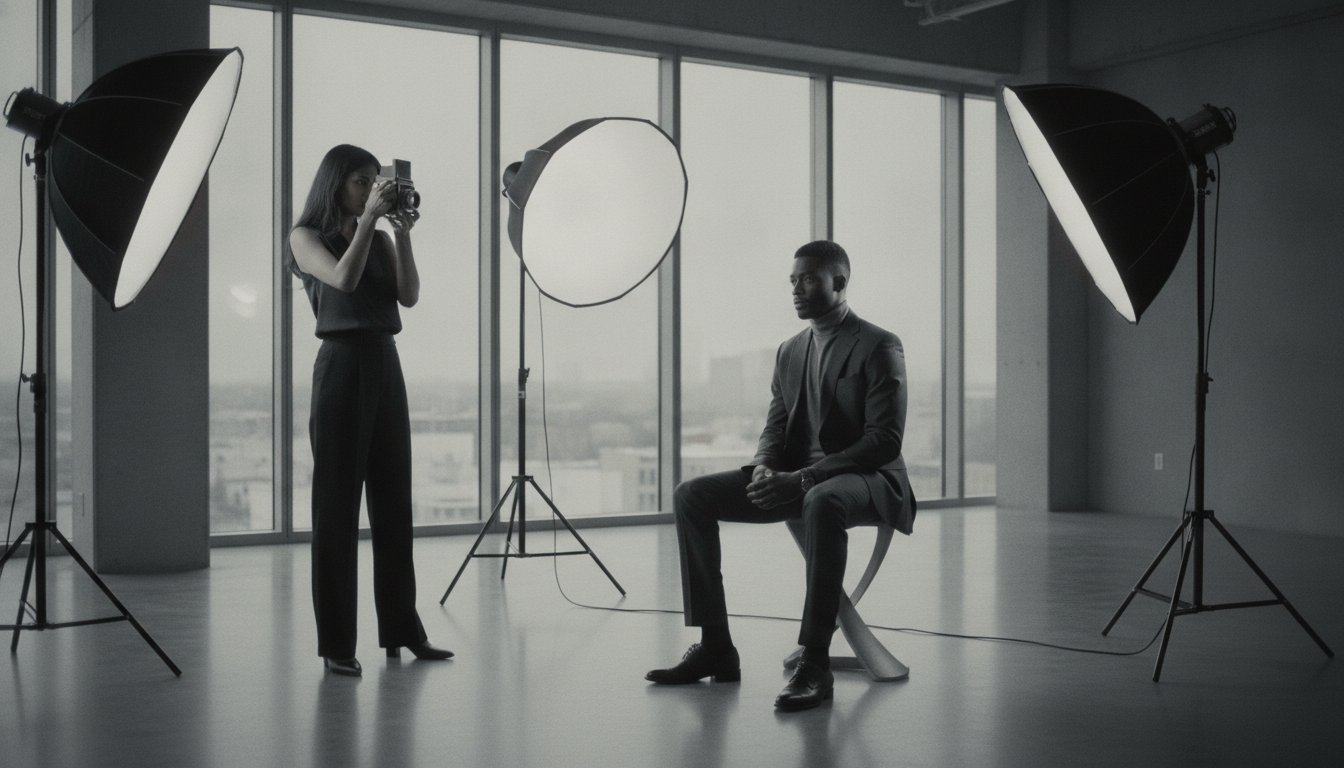
A true portrait doesn’t just capture a face; it traps the very essence of an era within a silver halide frame. While the world is saturated with fleeting digital snapshots, the works of famous celebrity photographers remain the gold standard for those seeking to bring a sense of permanent, curated elegance into their homes. It’s common to feel overwhelmed by generic posters that lack the depth and tactile authority of a true museum-quality print. Distinguishing between a mere commercial image and a piece of investment-grade fine art is a challenge many new collectors face as they search for works with long-term artistic value.
You’re about to discover the legendary visionaries who transformed candid moments into timeless masterpieces. We’ll guide you through the careers of masters like Terry O’Neill and Slim Aarons, helping you understand the nuances that make a portrait truly iconic. By the end of this exploration, you’ll possess the curatorial insight needed to begin building a photography collection that serves as both a personal sanctuary and a bridge to a bygone era of glamour.
Key Takeaways
- Discover how famous celebrity photographers bridged the gap between publicity and fine art, creating evocative images that define our shared cultural history.
- Explore the candid intimacy of Terry O’Neill and the sun-drenched, aspirational elegance found within the Slim Aarons Collection.
- Contrast the psychological depth of Richard Avedon’s minimalist portraits with the high-concept, theatrical storytelling of Annie Leibovitz.
- Learn to distinguish between transient commercial snapshots and museum-quality archival prints that offer lasting value for your personal collection.
- Understand why professional framing and archival materials are essential for preserving the tactile beauty and historical authenticity of your artwork.
The Allure of the Icon: Why Celebrity Photography Endures
The celebrity image is a profound cultural artifact; it’s a bridge between the public imagination and the private reality of those who define our times. While many view these portraits as simple records of fame, Celebrity photography actually represents a sophisticated intersection where cultural history meets the meticulous standards of the gallery world. For the discerning collector, the works of famous celebrity photographers are not merely decorations. They are windows into a bygone era of elegance and raw human emotion. These images endure because they offer more than a likeness; they provide a narrative depth that transforms a silent room into a space of historical resonance and prestige.
From Publicity to Fine Art
The evolution of the genre saw a dramatic shift from the rigid, controlled publicity stills of the early Hollywood studio system to the expressive, high-concept works that now grace the walls of major institutions. In the mid-20th century, photographers were often bound by strict contracts, tasked only with maintaining a star’s carefully polished facade. However, as the industry matured, a new wave of artists emerged who prioritized psychological depth over simple promotion. This shift allowed the photographer-subject relationship to flourish, moving away from the artificial and toward the authentic. When an artist captures the real person behind the persona, the resulting image transcends its original purpose and becomes true fine art photography. These portraits remain relevant for generations because they speak to universal human truths rather than just the trends of a specific decade.
The Power of Visual Storytelling
Terry O’Neill: Capturing the Soul of the Sixties
Terry O’Neill wasn’t just a witness to the 1960s; he was the primary architect of its visual identity. Among famous celebrity photographers, O’Neill possessed a rare, chameleon-like quality that allowed him to vanish into the background of a dressing room or a private villa. This “fly-on-the-wall” approach defined the “Cool Britannia” era, capturing the transition of figures like The Beatles and David Bowie from mere pop stars to cultural deities. While others sought the rigid perfection of the studio, O’Neill looked for the quiet, unscripted moments that humanized the legends. His lens documented the raw energy of London’s youth culture, creating a body of work that remains the definitive record of a decade in flux.
The Candid Master
O’Neill’s technique revolutionized the genre by prioritizing intimacy over artifice. He didn’t just photograph icons; he lived alongside them. Perhaps his most enduring work is the Faye Dunaway poolside series, taken at the Beverly Hills Hotel the morning after her 1977 Oscar win. It captures a weary, contemplative glamour that a staged publicity shot could never replicate. The market’s reverence for this specific vision is clear. In early 2026, a print of “Faye Dunaway, Hollywood, 1977” achieved a record auction price of $63,237. His ability to distill the raw energy of the 70s into a single frame remains unparalleled. This legacy is currently being celebrated in the exhibition “The Human Gaze,” running from June 6 to August 29, 2026, which highlights O’Neill’s mastery of the intimate portrait compared to the more theatrical, high-concept approach of contemporaries like Annie Leibovitz. By eschewing the heavy equipment of the era, he maintained a mobility that allowed him to capture Brigitte Bardot with a cigarette dangling from her lips or The Beatles in a quiet moment of reflection.
Collecting Terry O’Neill
For the serious collector, O’Neill’s work offers both aesthetic pleasure and historical weight. His prints serve as cornerstones of the Getty Images Gallery and various prestigious archives, bridging the gap between historical documentation and high art. The striking contrast found in his black and white pictures provides a timeless anchor for modern interiors, lending an air of sophisticated nostalgia to any room. With an average price of approximately $6,356 over the past year, his work is an accessible entry point into the world of high-caliber art investment. Owning an O’Neill print is more than a design choice; it’s an act of preservation. Each museum-quality print carries the prestige of the O’Neill archive, ensuring your collection holds its value for generations. You might consider viewing our curated selection of Terry O’Neill photography to find a piece that resonates with your own sense of history.
Avedon vs. Leibovitz: Two Perspectives on Fame
Richard Avedon and Annie Leibovitz represent the two distinct poles of the photographic spectrum. One found truth in the void of a white studio; the other constructed elaborate, cinematic worlds to reveal the character of her subjects. As two of the most famous celebrity photographers in history, they didn’t just document fame. They invented the visual language of the modern icon, transforming the pages of Vogue and Vanity Fair into galleries of high art. Their work challenges us to decide what is more revealing: the subject stripped of all context or the subject placed within a carefully staged masterpiece.
Richard Avedon’s Minimalist Genius
Avedon’s “stripped-back” approach was a radical departure from the cluttered sets of early fashion photography. By isolating his subjects against a stark white background, he removed all distractions, forcing the viewer to confront the subject’s raw psychological state. This minimalist genius is evident in his 1957 portrait of Marilyn Monroe, where the actress appears not as a screen siren, but as a woman lost in thought. The market’s recognition of this depth is clear. A print of this work was estimated at £400,000 to £600,000 for a Sotheby’s auction in June 2026. This prestige is further anchored by his record auction price of $1,815,000 for “Dovima with Elephants,” a testament to his status in the fine art world. Avedon’s ability to capture vulnerability in the world’s most powerful people remains a cornerstone of contemporary portraiture. He proved that the absence of props can make a subject infinitely more powerful, a technique that continues to influence photographers who prioritize psychological depth over decorative flair.
Annie Leibovitz’s Cinematic Vision
In contrast, Annie Leibovitz embraces the theatrical. Her work is often described as painterly, utilizing high-concept tableaus that feel more like scenes from a film than static portraits. Her evolution from the gritty, candid energy of her early Rolling Stone years to the polished fantasy of her later career shows a mastery of visual storytelling. Whether it’s her final image of John Lennon and Yoko Ono or her elaborate Disney-inspired series, Leibovitz uses the environment as a character. For the modern collector, her work offers a window into a world of curated luxury. With an average price of $5,586 over the last 12 months, her archival prints provide an accessible way to bring a sense of cinematic prestige into a private residence. Her work doesn’t just capture a face; it builds an entire world around the subject, ensuring the image serves as a lasting piece of history and a focal point for sophisticated interior aesthetics.
Comparing Avedon’s psychological interrogation with Leibovitz’s staged masterpieces highlights the diversity within the genre. While Avedon sought the “real” person by removing the world around them, Leibovitz reveals their essence by placing them in a meticulously crafted narrative. Both approaches have redefined how we perceive the icon, moving celebrity photography away from simple documentation and into the elite world of fine art. These visionaries ensure that a portrait is never just a snapshot, but a deliberate exploration of identity and fame.
Slim Aarons: Photography as an Aspirational Lifestyle
While Terry O’Neill captured the candid grit of London and Richard Avedon chased psychological truth, Slim Aarons pursued a different kind of perfection: the sun-drenched, unblemished world of the global elite. Among the most famous celebrity photographers of the 20th century, Aarons stands alone as the definitive chronicler of high society. His work is characterized by a vibrant, optimistic palette and a complete absence of studio artifice. He famously refused the use of stylists or artificial lights, opting instead to document his subjects in their natural habitats of Palm Springs, Capri, and the French Riviera. This dedication to “attractive people doing attractive things in attractive places” created a visual legacy that remains the ultimate benchmark for aspirational glamour.
The Master of Aspirational Glamour
Aarons’ career began in the starkest possible contrast to the luxury he would later document. As a combat photographer during World War II, he witnessed the depths of human conflict, an experience that fueled his later refusal to photograph anything that wasn’t beautiful. This transition from the battlefield to the poolside allowed him to define the “Golden Era” of travel and leisure. His Mediterranean and Palm Springs collections don’t just show celebrities; they show a way of life that feels perpetually out of reach yet deeply inviting. The enduring value of his vision is reflected in the art market today. For example, his seminal work “Poolside Glamour, 1970” achieved a record auction price of $63,000 in 2024. For those looking to invest, estate-stamped prints from the Slim Aarons collection often utilize a tiered pricing structure, with limited editions starting from £1,890 and increasing in value as the edition sells out.
Decorating with the Elite
Integrating Slim Aarons art into a residence does more than fill a wall; it creates an architectural sense of light and space. The psychological effect of his work is one of immediate elevation. His images bring a sun-drenched quality into a room, making them a favored choice for luxury interior designers. These prints pair exceptionally well with mid-century modern furniture, where the clean lines of the decor mirror the modernist architecture often featured in his backgrounds. Because his work focuses on “mood” and storytelling, it resonates deeply with a new generation of collectors who value the emotional narrative of a piece over simple decoration. To bring this sense of permanent summer into your own home, you can view the full Slim Aarons Collection here and discover a piece of photographic heritage that transcends time.
The permanence of an Aarons print serves as a bridge to a bygone era of elegance. By preserving the original source materials through high-quality archival production, these works ensure that the tactile beauty of the jet-set era remains accessible to the modern connoisseur. His photography is not just a record of fame; it is a masterclass in the art of living well, captured by a man who understood that sometimes, the most profound truth is found in the pursuit of beauty.
Building Your Gallery: The Value of Archival Prints
Transitioning from an admirer of photographic history to a serious collector requires a shift in perspective. While a commercial poster is a mere shadow of an image, a museum-quality fine art print is a tactile piece of heritage. For those looking to invest in the works of famous celebrity photographers, the distinction lies in the material execution. A digital snapshot lacks the depth and permanence found in traditional production methods. Today’s market reflects this growing desire for authenticity; Sotheby’s reported a 600% increase in participation from collectors under 40 in their photography sales, signaling a profound shift toward art that offers emotional honesty and long-term value. Acquiring a print isn’t just a design choice; it’s a commitment to preserving a moment that defined a generation.
Archival Quality and Heritage
The longevity of your collection depends entirely on the technical superiority of the print process. Sourcing from official archives, such as the Getty Images Gallery, ensures that you’re receiving a work produced from the original source material. Whether you choose the rich, tonal depth of a silver gelatin print or the vibrant precision of a Giclée process, archival standards are non-negotiable. These methods utilize acid-free materials and pigment-based inks to prevent the fading and yellowing that plague lesser reproductions. To truly safeguard your investment, utilizing bespoke framing services is essential. Professional mounting with UV-protective glass acts as a shield against environmental degradation, ensuring the image maintains its clarity and prestige for decades. This meticulous attention to detail is what separates a transient decoration from a lasting piece of history.
Curating Your Space
Building a cohesive gallery wall requires a curatorial eye that balances narrative depth with interior aesthetics. When featuring multiple famous celebrity photographers, look for a common thread—perhaps a specific era or a shared emotional tone. You might pair the stark, psychological intensity of an Avedon portrait with the candid, “Cool Britannia” energy of Terry O’Neill. To create visual rhythm, balance these monochrome masterpieces with the sun-drenched, aspirational lifestyle shots of Slim Aarons. This contrast adds layers to your home, inviting guests to linger on the page of history you’ve assembled. Final considerations should include:
- Architecture: Ensure the scale of the print complements the height and light of your room.
- Lighting: Use dedicated art lighting to highlight the tactile quality of the paper without introducing heat.
- Placement: Position iconic works at eye level to maximize their psychological impact.
From the initial selection of an image to the final professional installation, the journey of collecting is a rewarding pursuit of beauty. By prioritizing archival excellence and historical authenticity, you ensure your gallery serves as a bridge to a bygone era of elegance that will inspire wonder for years to come.
Preserving the Legacy of the Lens
The journey through the history of famous celebrity photographers reveals that an iconic image is more than a reflection of fame; it’s a bridge to a bygone era of elegance. From the candid intimacy of Terry O’Neill to the cinematic tableaus of Annie Leibovitz, these visionaries transformed fleeting moments into permanent cultural artifacts. As we’ve explored, the true value of these works lies in their material execution and historical authenticity. A museum-quality print doesn’t just decorate a room. It anchors a space in the stability of history and the beauty of artisanal craftsmanship.
Galerie Prints operates as a guardian of this photographic heritage. As an official partner of the Slim Aarons Archive and a specialist in 20th-century music archives, we ensure every piece meets the highest curatorial standards. Our master craftsmen provide bespoke framing for a ready-to-hang finish, while our worldwide shipping brings these legendary works to your door with precision and care. Explore our curated collection of iconic celebrity photography at Galerie Prints and select a piece that resonates with your personal narrative. We invite you to step into this world of timeless beauty and begin building a collection that will inspire wonder for generations to come.
Frequently Asked Questions
Who is the most famous celebrity photographer of all time?
Annie Leibovitz and Richard Avedon are widely regarded as the definitive masters of the genre. While Leibovitz is celebrated for her theatrical, high-concept tableaus, Avedon is revered for the minimalist psychological depth he achieved against his signature stark white backdrops. Their work continues to command record auction prices and remains the primary benchmark for artistic excellence in modern portraiture.
What makes a celebrity portrait considered ‘fine art’?
A celebrity portrait becomes fine art when it transcends its original commercial or publicity purpose to offer a profound psychological or cultural narrative. Unlike transient snapshots, fine art photography utilizes technical mastery in lighting and composition to create a lasting emotional resonance. It’s the difference between a fleeting record of fame and a permanent, archival exploration of the human condition.
Why are Slim Aarons prints so popular in interior design?
Slim Aarons prints are favored by interior designers for their vibrant, sun-drenched palette and the sense of architectural light they introduce to a room. His imagery of “attractive people in attractive places” pairs seamlessly with mid-century modern and contemporary furniture. These works evoke a specific mood of permanent summer and sophisticated elegance that elevates the atmosphere of any luxury residence.
Is it worth investing in physical prints in a digital age?
Investing in physical prints is highly worthwhile as they offer a tactile beauty and historical authenticity that digital images simply can’t replicate. The market for high-caliber photography is thriving; Sotheby’s recently reported a 600% increase in participation from collectors under 40 in their photography sales. A physical, museum-quality print serves as both a tangible asset and a permanent piece of photographic heritage.
How do I know if a celebrity photography print is authentic?
Authenticity is confirmed by sourcing prints from official archives, such as the Getty Images Gallery, and checking for estate stamps or artist signatures. Reputable galleries provide clear provenance that traces the print back to the original source materials. For famous celebrity photographers, this official documentation is the only way to ensure the work’s long-term artistic and investment value.
Which photographers captured the iconic ‘Golden Age’ of Hollywood?
The “Golden Age” was defined by masters like George Hurrell and Clarence Sinclair Bull, who utilized dramatic chiaroscuro lighting to create the “glamour” aesthetic of the 1930s and 40s. Their work focused on the polished, idealized facades of stars under strict studio contracts. This era laid the technical foundation for the more candid and expressive styles later popularized by photographers like Terry O’Neill.
What is the best way to frame a large-scale photography print?
The best way to frame a large-scale print is through bespoke framing that utilizes acid-free materials and UV-protective glass. Professional mounting is essential to prevent the paper from warping over time, while a deep-set frame can add a sense of museum-quality prestige. This meticulous approach ensures the print is protected from environmental degradation while enhancing its visual impact in your home.
Can I buy limited edition celebrity photography online?
You can acquire limited edition works from famous celebrity photographers through specialized online galleries that offer museum-quality archival prints. It’s important to choose a provider that offers bespoke framing and worldwide shipping to ensure the artwork arrives ready for installation. Online platforms have made high-caliber visual art more accessible, allowing collectors to browse world-renowned archives from their own residences.
