Tag: Affordable Art

The Risk of Buying Cheap Art Prints: What to Check Before You Buy

The lowest-priced art print can become the costliest choice if a soft image, inaccurate colour or fragile paper leaves you disappointed. The risk of buying cheap art prints isn’t the price itself. It’s paying without enough information to judge what will arrive, how the image may age or whether it has been reproduced with appropriate rights. A low price can still represent good value when the details stand up to scrutiny.

It’s understandable to want an affordable way to bring a photograph or artwork into your home. Before deciding, look for clear information about image sharpness, colour, paper type and printing method, along with details about the image’s source and permitted use. This guide explains how to assess those details, what “archival” claims do and don’t tell you, and how display conditions and framing can affect a print over time. You’ll be better equipped to compare listings on their merits and choose a work that suits your space and expectations, rather than relying on price alone.

Key Takeaways

  • The risk of buying cheap art prints depends on what the listing leaves unclear, not simply on its low price.
  • Check image detail, exact dimensions, paper type, finish and production information before comparing prints.
  • Labels such as “archival” or “museum-quality” are more useful when supported by specific material details.
  • Verify the artist or source, image rights and seller contact information, and read carefully how the listing describes the print.
  • A specialist gallery may make artwork and format details easier to assess, but check the specifications and policies for the individual listing.

What is the real risk of buying cheap art prints?

The risk of buying cheap art prints lies in uncertainty, not in the price tag. A low price doesn’t prove that an image is poor, unlicensed or carelessly made. It does make the listing’s details especially important. Can you identify the image’s source, understand how it was reproduced and find clear seller information in case you have a question or problem?

It also helps to distinguish the format. A mass-produced poster is generally made for decorative display and distributed in quantity. An art reproduction is a copy of an existing artwork or photograph, made using a printing process. An editioned print may be numbered or limited, but the word “print” alone doesn’t establish that it was made using an artist’s original, hands-on process. For context on traditional printmaking techniques, including processes such as etching and lithography, check how the seller uses terms such as “edition” and “reproduction.”

The listing’s evidence matters more than the price alone. Clear information lets you judge what you’re buying, while a bargain without specifics leaves too much to guess.

When is a low-priced print a reasonable choice?

A budget print may suit a temporary display, a secondary room or a decorative purpose where collectability and long-term preservation aren’t priorities. The important distinction is between an affordable print described plainly and a listing that leaves essential facts unanswered. A seller who states the format, dimensions and materials gives you a basis for deciding whether it meets your needs. A higher price, by itself, proves neither superior materials nor stronger provenance.

What risks should buyers actually look for?

Look beyond the thumbnail. A soft or pixelated image may be more noticeable at the size you plan to display, and unclear dimensions can lead to an unexpected fit. Vague material descriptions make it difficult to anticipate the print’s feel or care needs. Missing seller contact information can also leave you unsure where to turn with a question or problem.

Colour on screen is only a preview. Your device’s display settings and viewing conditions can make hues look different from those on the physical print, so treat product images as references rather than exact colour proofs. Longevity depends on more than price: paper and inks, exposure to light, handling and display conditions can all affect fading or damage. If the listing claims fade resistance or archival quality, look for product-specific details before relying on those claims.

How can you assess an art print’s image, paper, and production?

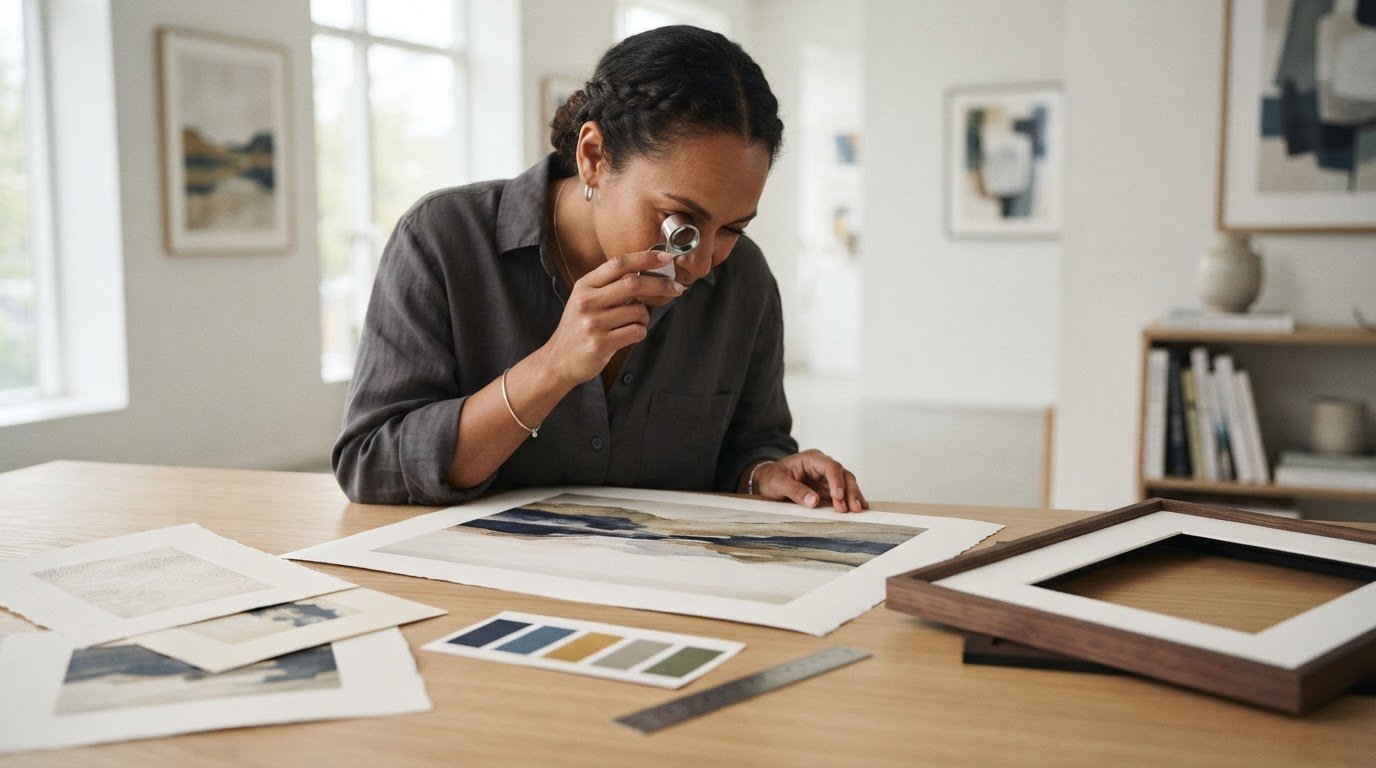
A useful listing gives you more than an attractive preview. Check the image, the physical print you’ll receive and the process used to make it. If a key detail is missing, ask the seller before ordering rather than relying on a broad quality label.

  • Image clarity: Look for enlarged product views that show fine detail. A small thumbnail can conceal softness or pixelation.
  • Crop and dimensions: Check whether the composition is cropped and confirm the finished print’s width and height, not just the image file or frame size.
  • Paper and finish: Look for a named paper type and a description of its surface, such as matte or glossy. Don’t assume a finish or substrate that isn’t stated.
  • Production: See whether the listing identifies the printing process and explains what is being reproduced.

Close-up photographs can help you inspect detail and surface, though they can’t fully convey how a print feels in person. For an introduction to how to analyze art, PBS describes techniques for examining physical works. Apply the same attentive eye online, while remembering that a listing image isn’t a substitute for inspecting the print itself.

How can you judge image resolution and colour online?

Enlarged views should remain reasonably clear rather than breaking into visible blocks or blur. Compare the preview with the stated finished dimensions, and check whether the image is shown edge to edge or with a border. Screen settings affect appearance, so an online image can’t promise an exact colour match. If faithful tonal rendering matters to you, ask the seller how colour variation is handled.

What should a paper or printing description tell you?

Compare paper type, surface finish and print process where the listing provides those details. “Inkjet” describes a method of printing, not a complete guarantee of image quality or longevity. Those depend on the specific materials and production information. Likewise, “archival” and “museum-quality” need substance behind them.

If a listing calls a print archival, check the specific paper, ink or other materials, and look for evidence supporting the claim for that particular print. The word alone doesn’t tell you how the work was made or how it may perform over time. For broader context on choosing and displaying photographic work, consult Fine Art Photography: A Curator’s Guide to Collecting and Decorating.

Print size and paper choices can shape both the presentation and the finished work. Galerie Prints offers options across its photographic prints, but check each listing for its own specifications. Explore photographic prints to compare formats before you decide.

How do cheap posters, art reproductions, and collectable prints differ?

These labels describe different things, but sellers don’t always use them consistently. A poster is usually a format intended for display; an art reproduction describes an image copied from an existing work; and a collectable print may carry additional significance because of its subject, history or documented edition. None of these labels alone tells you the print’s quality or value. Read the listing for specifics.

Format Typical purpose Information to verify Questions to ask
Poster Decorative display or promotion Dimensions, paper, finish, image source Is this a reproduction, promotional item or another format?
Art reproduction Display of an existing artwork or photograph Creator, image attribution, reproduction method, materials What original image is reproduced, and who authorized it?
Collectable or editioned print Display and, in some cases, collecting Edition size, number, signature status, issuer and provenance What supports the edition or collectable claim?

For historic printed objects such as cinema lobby cards, the format itself can carry cultural and visual interest beyond its decorative use. Galerie Prints offers cinema memorabilia, including Cinema Lobby Cards. Its guide, Cinema Lobby Cards: A Collector’s Guide to Hollywood’s Photographic Heritage, explores this category of collectable object. As with any listing, check what is being sold and how its history or edition status is described.

What is the difference between a poster and an art reproduction?

A poster is best understood as a display format, not automatically as a low-grade product. Paper, printing and image quality can vary. A reproduction, by contrast, tells you that an existing image has been copied, but the term doesn’t specify how well or on what materials. For either format, confirm the creator or image attribution, exact dimensions, paper and finish. If the listing doesn’t name the source, ask.

What does limited edition mean on a print listing?

Scarcity language needs evidence. Look for the edition size, whether the print is numbered or signed, and who issued the edition. Ask whether the stated edition refers to this format or to all reproductions of the image. A claim of rarity is not the same as documented edition information, and neither collectability nor future resale value should be assumed without evidence specific to the work.

Clear distinctions matter: the risk of buying cheap art prints rises when a category label stands in for facts about the object. Compare the description with the actual format and ask for clarification if the wording is ambiguous.

What should you check before ordering an inexpensive art print?

A quick review before checkout can reveal whether a listing gives you enough information to make a considered choice. The risk of buying cheap art prints often comes down to details that are easy to overlook when a compelling image and low price take centre stage. Use this checklist:

  1. Confirm the artwork attribution. Is the artist, photographer or other creator named clearly?
  2. Check the image source and rights information. Does the seller explain where the image comes from and how it is authorized for reproduction?
  3. Verify the finished dimensions. Compare the print size with your intended wall space and frame, and check whether the dimensions include a border.
  4. Read the material and production details. Look for the stated paper, finish and printing process. If the listing makes claims about longevity, look for product-specific information to support them.
  5. Find the seller’s contact details. Make sure you know how to ask questions or report a problem after ordering.
  6. Review delivery and display terms. Check how the print is protected in transit, what to do if it arrives damaged, the current return policy and whether made-to-order conditions apply.
  7. Clarify framing. Confirm whether a frame is included, optional or unavailable for the chosen format, and review any framing terms before purchase.

A specialist gallery may present artwork, archive and format information together, but details can differ from one listing to another. Galerie Prints offers choices in print size, paper type and bespoke framing. Review the specific artwork listing rather than assuming every option applies to every print. Explore photographic prints and framing options as you compare what each purchase includes.

Which questions should you ask the seller?

If anything important is unclear, ask directly: who created or licensed the image, and how is this print described? Request the exact paper type, print process and finished size if they aren’t stated. Before choosing a frame, ask whether it’s included or optional for that format. Clear answers help you compare the product with your expectations before placing an order.

How do shipping, returns, and display affect the decision?

Packaging matters. Find out how the print is protected and what steps to take if it arrives bent, marked or otherwise damaged. Read the seller’s current return policy before checkout, paying attention to any conditions for made-to-order items. Once displayed, the surroundings matter too. Consider direct light, humidity and handling, and choose framing with the room and your care expectations in mind.

A specialist gallery can provide useful context for a purchase: who made the image, where it comes from, and which formats or framing choices are available. That context helps you assess a print as more than a pleasing image on a screen. It may also be easier to compare options when listings explain their specifications and the seller makes its policies accessible.

Curation is a starting point, not a substitute for checking the individual work. Image rights, edition status, paper, production method and framing details can vary between listings, even within the same gallery. If a point matters to your decision and isn’t clear, ask the seller or look for item-specific information before ordering.

What can a curated gallery offer beyond the image?

Collection and photographer context can make a work more meaningful by helping you understand its place within a broader archive or body of photography. Galerie Prints presents selections that include the Slim Aarons Collection and Terry O’Neill Photography, alongside posters and collectable cinema memorabilia. For readers interested in the background to Aarons’ work, Slim Aarons: The Definitive Guide to the Master of Aspirational Photography offers additional archive context. Use that history to learn about the image, while checking the specifications of the particular print you’re considering.

Format choices matter, too. Galerie Prints offers print sizes, paper types and a bespoke framing service. These options can help you plan the presentation, but don’t assume every format or framing choice applies to every listing. Confirm what’s available for the specific work and review the relevant terms.

How should you make the final decision?

Compare like with like: the same finished dimensions, stated paper details, framing status and level of seller information. Then weigh those facts against your budget, where the print will hang and how long you expect to display it. If collectability matters, look for evidence such as clear edition details rather than relying on claims of rarity alone.

The risk of buying cheap art prints is easier to judge when you compare a listing’s claims with your own expectations. A specialist gallery can make that evaluation more informed, but your decision should rest on details you can verify for the specific piece. Take a considered look through curated photography prints and framing options, and assess each listing on its own specifications.

Choose a print with confidence and care

The risk of buying cheap art prints isn’t defined by price alone. It comes from unclear information about the image, materials, edition or seller. Before you decide, look for specific listing details, compare like with like, and consider how the print’s dimensions and materials suit your space and expectations. A poster, reproduction and collectable print aren’t interchangeable terms, so check what the seller means for the particular work.

A well-chosen print can bring character and history into a room, whether you’re drawn to a striking photograph or a piece of cinema heritage. Galerie Prints presents curated selections including the Slim Aarons Collection and Terry O’Neill Photography, with choices of print sizes, paper types and bespoke framing. Specifications and options can vary by listing, so review the details for the artwork that catches your eye.

Let the image inspire you, then let clear information guide your decision. Explore curated photography prints and bespoke framing to find a work that suits your home and expectations.

Frequently Asked Questions

Is it always risky to buy cheap art prints?

No. A low price alone doesn’t show that a print is poorly made or that its image rights are questionable. The risk of buying cheap art prints comes from uncertainty: missing information about the image, materials, dimensions or seller can make it hard to know what you’ll receive. A clearly described print may suit a decorative purpose or shorter display period. Compare its stated qualities with your expectations, rather than assuming price determines quality.

Can cheap art prints fade quickly?

They can fade, but price alone doesn’t predict how quickly. Fading depends on the print’s materials and production as well as its display conditions, including exposure to light. Handling and framing can also affect its condition. Look for specific information about the paper and inks, and treat claims such as “fade-resistant” or “archival” as claims to verify against the particular print. For longer display, consider reducing direct light exposure.

How can you tell whether an art print is good quality online?

Look for enlarged product views that remain clear, then check the stated finished dimensions, crop, paper type, surface finish and printing process. The listing should identify the artist or image source and give enough detail to understand what’s being sold. Screen images can’t guarantee an exact colour match, so ask about colour variation if accurate tones matter. Clear seller contact information and straightforward product descriptions add useful reassurance.

What happens if an art print listing does not name the paper?

An unnamed paper doesn’t automatically mean the print is poor, but it leaves you without an important point of comparison. Ask the seller for the paper type and surface finish, and whether the listing provides information about the production process. If you can’t get details that matter to your decision, consider whether the uncertainty fits your budget and intended use. Check the return policy before ordering, too.

Are limited-edition prints worth more than open-edition prints?

Not necessarily. “Limited edition” describes a claimed restriction on the number of prints, but it doesn’t by itself establish desirability or future resale value. Check the edition size, numbering, signature status, who issued the edition, and whether those details apply to the specific format. Compare the documentation with the seller’s description. An open-edition print may still be the right choice if you value the image for display rather than collectability.

Should I buy an art print framed or unframed?

Choose based on your space, presentation preferences and plans for display. An unframed print gives you flexibility to select a frame later, while a framed option may offer a more finished presentation. Before ordering, confirm whether framing is included or optional for that particular print, and check the dimensions and framing terms. Galerie Prints offers a bespoke framing service, but available choices should be confirmed for the individual listing.

What should I check before buying a photographic art print?

Confirm the photographer or image attribution and look for information about the image’s source and reproduction rights. Check the finished dimensions, crop, paper, finish and printing process, then review the seller’s contact details, delivery protection and return policy. The risk of buying cheap art prints is easier to judge when those facts are clear. Finally, consider where the photograph will hang and how light, handling and framing may affect its condition over time.

How to Build an Art Collection on a Budget: A Curator’s Guide to Accessible Elegance

The most evocative art collections aren’t defined by the staggering prices paid at auction; they’re defined by the cultural weight and historical narrative of the pieces within them. You might feel that the world of high-end galleries is an exclusive club reserved for the elite, yet understanding how to build an art collection on a budget is actually about strategic curation rather than compromise. It’s a common frustration to feel trapped between the intimidating “white cube” scene and the fear of buying “cheap” art that lacks soul or lasting value.

We’re here to bridge that gap by showing you how to secure accessible elegance through archival photography and limited editions. You’ll discover how to distinguish a high-quality fine art print from a mere poster, ensuring your home is filled with iconic imagery that sparks conversation and carries genuine prestige. By focusing on technical excellence and provenance, you can own a piece of photographic heritage that feels both timeless and deeply personal. We’ll guide you through selecting investment-worthy works, from the Slim Aarons collection to rare music archives, that offer a sophisticated aesthetic without the blue-chip price tag.

Key Takeaways

  • Embrace a curator’s mindset by prioritizing narrative and historical significance over simply filling empty wall space.
  • Master how to build an art collection on a budget by leveraging limited editions and archival photography to secure iconic imagery.
  • Uncover high-character entry points such as Cinema Lobby Cards and music archives that add a unique, soulful layer to your personal space.
  • Learn why bespoke framing is the essential final step to elevate a modest print into a gallery-worthy centerpiece.
  • Gain confidence in the technical quality and provenance of your acquisitions by sourcing from established guardians of photographic heritage.

The Philosophy of Budget Art Collecting: Curation Over Consumption

To the uninitiated, the term “budget” might suggest a sacrifice in quality or a settling for the mundane. In the context of a sophisticated interior, however, learning how to build an art collection on a budget is an exercise in intentionality. It’s the art of selecting works that possess enduring historical or aesthetic significance within a defined financial framework. This isn’t about filling empty wall space with transient trends. It’s about the deliberate acquisition of pieces that resonate with a specific narrative and carry the weight of a bygone era.

Adopting a “Curator’s Mindset” transforms a simple purchase into a meaningful investment. Instead of looking for something that merely matches the upholstery, a true collector searches for provenance and a story that transcends the frame. The Philosophy of Art Collecting teaches us that the value of a collection lies in its cohesion and the dialogue between individual pieces. By viewing your home as a private gallery, you shift from being a consumer of decor to a guardian of culture. You’re no longer just buying; you’re building a legacy.

There is a sharp distinction between disposable decor and collectable assets, even when the price point is accessible. A mass-produced print from a high-street retailer is a temporary solution; a limited edition archival photograph or an artist book from Gallery Har-El is a legacy. Focusing on technical excellence ensures your collection maintains its integrity over time. Building a thematic collection, perhaps centered around a specific era or a particular photographic style, provides a professional, unified feel that commands respect and sparks deeper conversation among guests.

Quality Over Quantity: The Collector’s Golden Rule

When you understand how to build an art collection on a budget, you realize that a single, high-quality archival print carries more weight than a dozen mass-produced posters. The psychological satisfaction of owning a work with a documented heritage is profound. It’s better to save for one exceptional piece than to clutter your environment with items that lack soul. Setting a realistic starting budget allows you to approach your first acquisition with confidence, knowing you’re investing in material quality that will last for generations without fading into obscurity.

Defining Your Personal Aesthetic Heritage

Finding your voice as a collector requires exploration. You might find yourself drawn to the aspirational luxury found in the Slim Aarons collection or perhaps the raw, intimate celebrity portraits captured in Terry O’Neill photography. Digital galleries and social media serve as a risk-free classroom, allowing you to refine your eye before committing. However, nothing replaces the tactile experience of visiting a fine art photography gallery in London or your local city. Seeing the depth of tone and the texture of the paper in person is essential for understanding the true value of fine art and the prestige of the artists involved.

Strategic Entry Points: Limited Editions and Archival Photography

Photography serves as the ultimate equalizer for those discovering how to build an art collection on a budget. While an original oil painting by a historical master remains locked behind the vault of a billionaire, a fine art photograph offers a direct, tangible connection to that same level of cultural prestige. It allows you to step away from the mass-produced and into the realm of the curated. By utilizing photographic archives, such as those maintained by Getty Images, professional galleries can provide access to iconic moments in history, printed from original negatives with a level of detail that a digital download simply cannot replicate.

Understanding the distinction between edition types is vital for your collection’s future. Limited editions are the cornerstone of the market; the scarcity created by a fixed number of prints inherently protects the value of your acquisition. However, you shouldn’t overlook “Open Editions” if they’re produced to the same exacting standards. When an open edition is sourced from a reputable archive and printed with artisanal care, it remains a high-caliber asset that tells a powerful story on your walls. It’s about the quality of the production rather than just the number on the corner.

The Allure of the Masters: Slim Aarons and Terry O’Neill

For many, the journey begins with Slim Aarons. His work, famously described as “attractive people doing attractive things in attractive places,” remains the ultimate entry point for the aspirational collector seeking a slice of mid-century elegance. Similarly, Terry O’Neill photography captures the 20th century’s most iconic faces, from Hollywood royalty to rock legends, offering an investment in cultural history that only grows more poignant with time. These archive-backed prints ensure you’re buying a piece of the original legacy, preserved with the same reverence as the day the shutter clicked. You might explore the Terry O’Neill collection to find a piece that resonates with your personal narrative.

Archival Standards: The Technical Side of Value

A collector must look beyond the image to the material itself. Traditional silver gelatin prints, known for their deep blacks and silvery highlights, offer a classic aesthetic, while modern C-types provide vibrant, lush color depth. The role of museum-quality paper is paramount in preventing the fading and degradation that plagues standard posters. Archival photo paper is a 100-year commitment to visual integrity. By choosing these materials, you ensure that your collection doesn’t just decorate a room but endures as a lasting piece of history. This technical superiority is what distinguishes a genuine collector’s piece from mere home decor.

Hidden Gems: Cinema Lobby Cards and Music Memorabilia

While large-scale archival prints offer a sweeping visual statement, the discerning collector knows that smaller, niche categories often provide the most intimate connection to cultural history. Developing a strategy for how to build an art collection on a budget often involves looking where others don’t, specifically toward the world of collectable ephemera. These pieces aren’t merely decorations. They’re artifacts that bridge the gap between fan appreciation and serious curatorial investment. By integrating cinema and music history into your home, you create a space that feels both intellectually stimulating and deeply personal.

The crossover appeal of these items lies in their dual nature as visual assets and historical documents. A vintage lobby card or a candid shot from a music archive carries a sense of “lived-in” history that a modern reproduction simply cannot mirror. Spotting rare collectables in these archives requires an eye for detail and an appreciation for the “unseen” moment. Whether it’s a behind-the-scenes glimpse of a legendary film set or a quiet moment before a sold-out concert, these pieces offer a unique perspective that adds significant weight to a growing collection.

Lobby Cards: Small Scale, Large Impact

Originally produced in sets of eight to entice theatergoers, lobby cards have transitioned from promotional tools to highly sought-after artifacts. Their smaller dimensions make them a high-character, low-cost entry point for those learning how to build an art collection on a budget. While a full-sized vintage movie poster might command a premium, a well-preserved lobby card offers the same cinematic prestige at a fraction of the cost. Framing these small-scale works with generous mounts can transform them into sophisticated centerpieces for a study or a curated gallery wall. Their rarity, compared to mass-market posters, ensures they remain a distinctive addition to any home.

Music Photography: Capturing Sound and Soul

Music photography represents a powerful intersection of sound and soul, allowing you to build a collection around the cultural icons who shaped your world. From the rebellious energy of the Beatles to the chameleonic presence of Bowie, these images capture the essence of an era. Professional music photography bridges the gap between fan memorabilia and fine art, elevating the subject matter through technical excellence and historical context. Look for “unseen” or candid moments within the Music Archives. These intimate perspectives provide a more nuanced narrative than standard publicity shots, ensuring your collection remains a true reflection of your personal aesthetic heritage.

Maximizing Value Through Preservation and Bespoke Framing

The most common error in learning how to build an art collection on a budget is treating the frame as an afterthought. You’ve spent time researching the Slim Aarons collection or Terry O’Neill photography, only to place that archival print in a generic, off-the-shelf frame. This is a critical mistake. A professional frame doesn’t just hold the art; it elevates a modest print into a gallery-worthy centerpiece. It provides the necessary gravitas and presence, ensuring the work commands the room’s attention while bridging the gap between a simple image and a curated asset.

Preservation is a meticulous science. Without UV-protective glass, the vibrant hues of a C-type print or the rich tonal range of a silver gelatin print will inevitably fade when exposed to natural light. Acid-free mounting is equally vital. Standard adhesives can leach chemicals into the paper, causing irreversible yellowing or brittle edges. By choosing museum-grade materials, you’re protecting the historical authenticity and material quality of your purchase. A bespoke frame acts as a tailored suit for your art, enhancing its aesthetic presence and ensuring it sits with quiet authority on your wall.

The Anatomy of a Professional Frame

Material choice is paramount for longevity. Natural wood offers a stability and timeless feel that synthetic alternatives simply cannot mirror. Beyond the exterior, a curator focuses on “breathing room.” Using high-quality mounts keeps the print’s surface from touching the glass, preventing moisture damage or “cockling” over time. A bespoke frame is an insurance policy for your art’s physical and financial value. Investing in professional craftsmanship ensures that the technical superiority of the print is matched by its presentation. To ensure your new acquisitions receive this level of care, consider utilizing a Bespoke Framing Service that understands the nuances of archival preservation.

Creating the Gallery Wall on a Budget

This is where the strategic nature of how to build an art collection on a budget truly shines. You don’t need a wall of massive, expensive prints to make an impact. Instead, use a “hero piece”—perhaps a larger iconic image from the music archives—to anchor the space. Surround it with smaller, more accessible works like cinema lobby cards or limited edition Star Wars prints. This mix of sizes and mediums creates visual interest and narrative depth. Remember, a collection is a marathon, not a sprint. A “rotation” strategy allows you to build your gallery over years, replacing entry-level pieces as your discerning eye matures and your collection grows in prestige.

Galerie Prints operates as a vital bridge to a bygone era, offering a sanctuary for those seeking to master how to build an art collection on a budget without sacrificing the prestige of historical authenticity. While digital marketplaces are often flooded with reproductions of dubious origin and inconsistent quality, our gallery functions as a trusted guardian of photographic heritage. We meticulously curate the world’s most iconic archives, ensuring that every piece within our collection meets the rigorous standards expected by serious collectors and connoisseurs alike. Buying from a specialist gallery offers a level of security and documented provenance that generic, high-volume retailers simply cannot match. It’s the difference between a fleeting purchase and a permanent investment in visual history.

From Archive to Your Wall

The journey of a single print is one of meticulous care and technical reverence. We source directly from the most prestigious repositories, including the expansive Getty Images archives and the intimate Terry O’Neill archives, to bring you imagery that has shaped the global cultural consciousness. Once an image is selected, it undergoes an artisanal production process that prioritizes material quality and historical accuracy above all else. By combining these archive-quality prints with our bespoke framing service, we offer a seamless “ready-to-hang” advantage. This ensures that the technical superiority of the print is immediately protected by gallery-standard presentation. Our curators are also available to provide personalized advice, helping you select your first piece with the confidence of a seasoned expert.

The Legacy of Your Collection

As you refine your approach to how to build an art collection on a budget, you’ll realize that each acquisition is far more than a decorative choice; it’s a lasting piece of history that will endure for generations. By choosing works that carry the profound weight of the past, you join an elite community of discerning collectors who value authenticity over the ephemeral nature of mass-market trends. Your home becomes a testament to your personal taste and a sophisticated spark for conversation, reflecting a world of elegance, stability, and heritage. This is the moment to transition from an admirer of beauty to a custodian of it. Explore our curated collections and start your journey today.

Cultivating Your Legacy of Elegance

True collection building is an intentional journey that transcends mere decoration. By shifting your focus from volume to value, you’ve learned that how to build an art collection on a budget is essentially a study in discerning curation. Whether you’re drawn to the cinematic charm of vintage lobby cards or the cultural resonance of the music archives, the key lies in selecting pieces with documented heritage and material integrity. As official partners of the Getty Images Gallery and the Terry O’Neill archives, we provide the security of provenance that every serious collector requires.

Your journey doesn’t end with the selection of an image; it’s solidified through our commitment to artisanal craftsmanship. Every ready-to-hang order includes bespoke, museum-grade framing, ensuring your durable, archival-quality prints are preserved for generations. This technical excellence transforms a simple photograph into a lasting piece of history. We invite you to begin your collection with our curated Slim Aarons archives and discover the profound satisfaction of owning a masterpiece. Your home is a canvas for your personal narrative, and the first iconic chapter is waiting to be told.

Frequently Asked Questions

Is photography considered “real” art for a collection?

Photography is absolutely recognized as a premier fine art medium, held in the permanent collections of prestigious institutions like the Victoria and Albert Museum and MoMA. For those learning how to build an art collection on a budget, it offers a sophisticated way to own iconic cultural moments. Unlike unique paintings, photography’s reproducibility through authorized archives allows for a more accessible entry into high-end collecting while maintaining technical and historical prestige.

What is the difference between an open edition and a limited edition print?

A limited edition print is produced in a strictly fixed quantity, which naturally creates scarcity and protects future value. Once the edition sells out, no further prints are ever made. In contrast, an open edition has no set limit on the number of prints produced. While limited editions are the gold standard for long-term investment, high-quality open editions from reputable archives still offer immense aesthetic and curatorial value for a growing collection.

How much should I expect to spend on my first collectable print?

Your initial investment depends on the rarity of the artist, the physical size of the work, and the edition type. Generally, entry-level archival prints or vintage ephemera allow you to start a meaningful collection without a massive financial hurdle. It’s best to prioritize a single piece of documented quality over several lower-grade items. This strategic approach ensures every acquisition contributes to the overall prestige of your home gallery.

Does framing really affect the value of my art collection?

Professional framing is essential for both the aesthetic impact and the long-term physical integrity of your art. Poor framing with acidic materials or standard glass can lead to irreversible fading and degradation, effectively devaluing your investment over time. A bespoke, museum-grade frame acts as a protective seal, ensuring the work remains in pristine condition while enhancing its presence as a centerpiece in your room.

Can I build an art collection entirely online?

You can certainly build a sophisticated art collection entirely through digital platforms, provided you source from established specialist galleries. Online access allows you to research archives and compare movements with ease. When buying online, look for detailed information regarding production methods, paper types, and provenance. This transparency is crucial for anyone discovering how to build an art collection on a budget while seeking the security of a professional gallery.

What are the best artists to look for when starting on a budget?

Focus on artists whose work is preserved in major archives, such as the legendary Slim Aarons or the iconic Terry O’Neill. These photographers captured a bygone era of elegance that remains timelessly aspirational. Additionally, exploring music archives for candid shots of cultural icons or Star Wars limited edition prints can provide high-character entry points. These names carry established market recognition, making them safer choices for new collectors.

How do I know if a print is “archival quality”?

Archival quality is defined by the use of acid-free, museum-grade papers and specialized printing processes like silver gelatin or high-end C-types. These materials are specifically designed to resist fading and degradation for over a century. You should look for galleries that explicitly state their production standards and use of original source materials. This technical excellence is what distinguishes a lasting collectable from a disposable commercial poster.

What is a lobby card and why is it collectable?

A lobby card is a small, photographic promotional piece originally displayed in cinema foyers to highlight scenes from a film. Because they were produced in limited sets and often feature iconic actors or pivotal moments, they’ve become highly sought-after historical artifacts. Their compact scale makes them an exquisite choice for creating detailed gallery walls or intimate displays, offering a slice of Hollywood heritage at an accessible price point.