
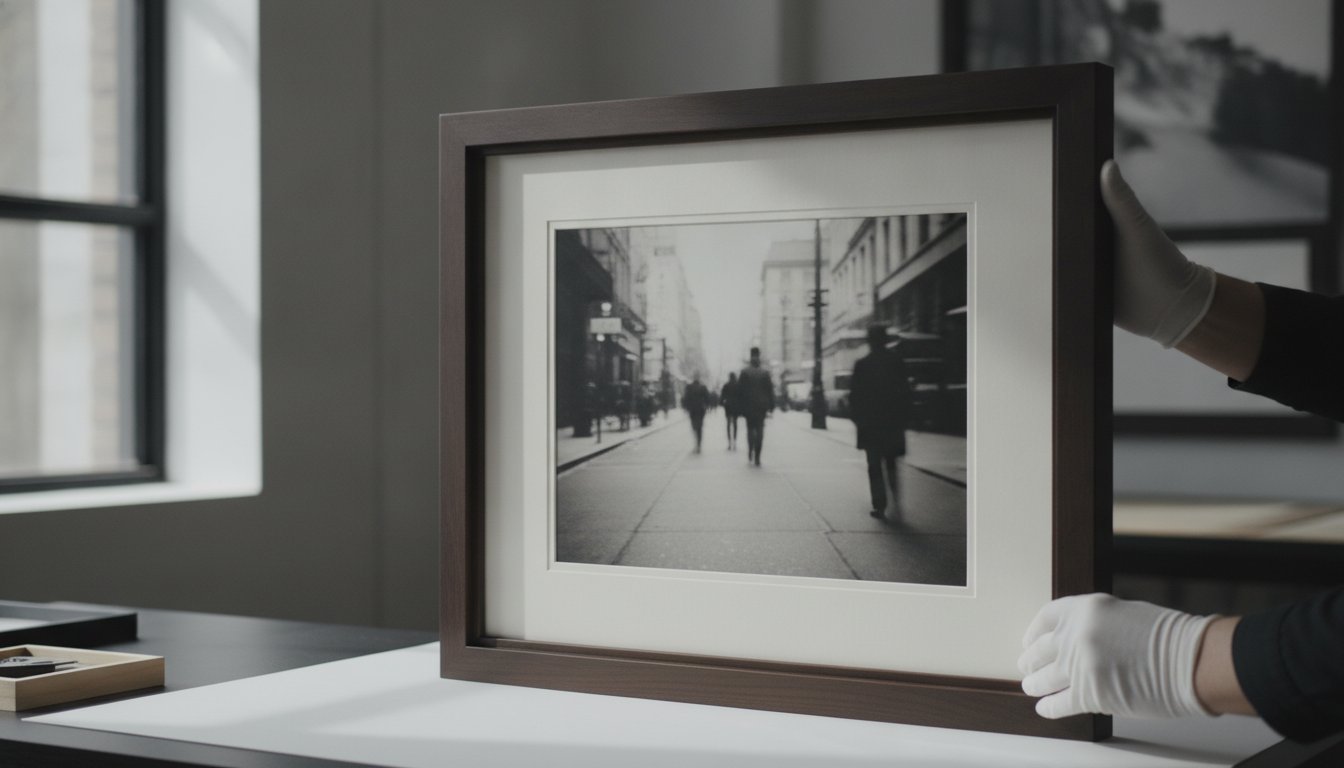
A fine art print is a silent witness to history, yet without the correct sanctuary, its voice begins to fade the moment it meets the light. Many collectors understandably hesitate to display their most prized acquisitions, fearing that acidic mounts or inferior glazing will slowly erode the vibrant hues of a Slim Aarons poolside or the sharp contrast of a Terry O’Neill original. Choosing professional art print framing is not merely a decorative decision; it’s an act of stewardship. You want to ensure that the elegance of a bygone era survives for future generations while instantly elevating the atmosphere of your home.
Key Takeaways
- Learn why archival-grade materials, such as acid-free mounting and UV-protective glazing, are essential to prevent the yellowing and fading of valuable photographic works.
- Discover how professional art print framing bridges the gap between historical significance and modern interior design, specifically tailored to iconic collections like Slim Aarons and Terry O’Neill.
- Understand the artisanal process of handcrafted bespoke framing, where each piece is treated with the meticulous care and technical precision of a museum artifact.
- Gain insights into selecting frame profiles that complement specific artistic eras, ensuring your presentation honors the original spirit and prestige of the photography.
- Explore the seamless transition from gallery to home with ready-to-hang solutions that guarantee safe global transit and immediate aesthetic impact in luxury spaces.
Why Professional Art Print Framing is an Essential Investment for Collectors
For a discerning collector, the acquisition of a work from the Slim Aarons Collection or a Terry O’Neill archive is merely the beginning of a journey. The true fulfillment of that investment lies in its presentation. While a standard retail frame might provide a temporary border, professional art print framing serves as a permanent archival sanctuary. It transitions the piece from a transient image to a legacy asset. Beyond mere decoration, it acts as a guardian of photographic heritage, ensuring that the chemical stability and visual clarity of the work remain uncompromised by the passage of time.
This approach establishes a sense of quiet authority within a room. A bespoke frame doesn’t shout for attention; instead, it commands respect through its precision and material quality. When understanding the basics of picture frames, one realizes that the structural choices made during the assembly process dictate whether a piece will retain its value or slowly deteriorate. For high-value archives, a ready-made solution is often a liability, as it lacks the specialized barriers required to block atmospheric pollutants and acidity.
The Protective Function of Professional Framing
The Aesthetic Value of a Curated Presentation
Archival Excellence: The Technical Anatomy of Museum-Quality Framing
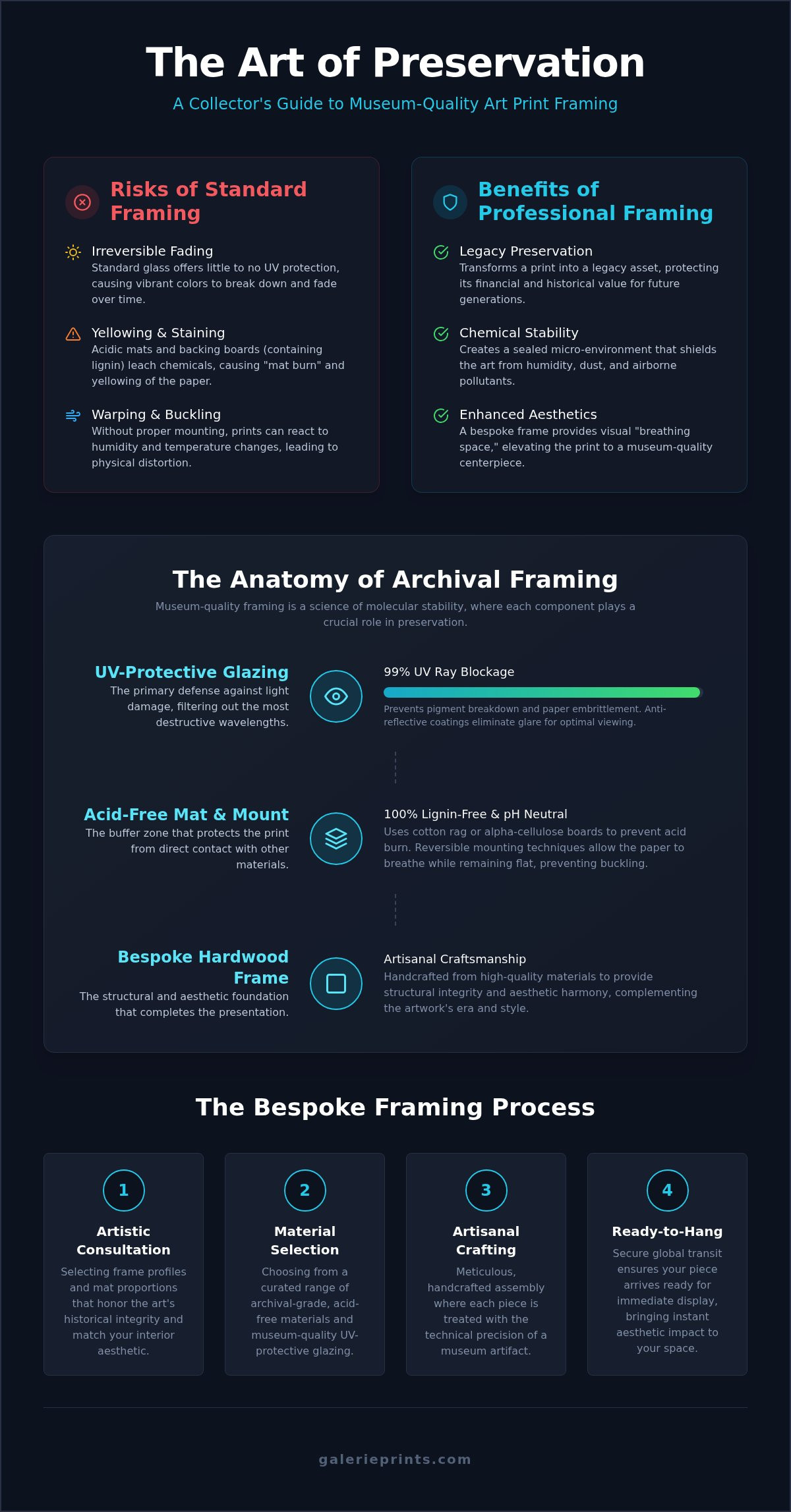
The true longevity of a photographic masterpiece depends on the invisible chemistry occurring behind the glass. Professional art print framing is, at its core, a science of molecular stability. It creates a controlled micro-environment where the artwork is shielded from the volatile organic compounds found in standard, wood-pulp based materials. By utilizing museum-grade components, collectors ensure that the deep blacks and nuanced shadows of a Terry O’Neill portrait or the saturated blues of a Slim Aarons poolside scene remain as vibrant as the day they were captured. This technical precision transforms a simple display into a lasting piece of history, capable of surviving for future generations without the threat of yellowing or chemical degradation.
Glazing and Light Protection
Standard glass acts as a window, while museum-quality glazing functions as a sophisticated filter. Standard glass and basic acrylic often allow harmful ultraviolet rays to penetrate the frame, causing pigments to break down and paper to become brittle. In contrast, premium options like Museum Glass offer 99% UV protection, effectively neutralizing the most destructive spectrums of light. For high-gloss photographic prints, anti-reflective coatings are equally vital, as they remove distracting glints and allow the viewer to appreciate the tactile depth of the archival photo paper. UV-glazing serves as the primary defense against pigment fading and the irreversible loss of detail.
Mounting and Matting Standards
The choice of matting is often where the battle for preservation is won or lost. Standard boards contain lignin, a natural component of wood that turns acidic over time, resulting in the dreaded “mat burn” or yellowing at the edges of the print. Professional standards dictate the use of 100% cotton rag matboards, which are naturally acid-free and lignin-free. These materials provide a stable, alkaline environment that actively protects the paper fibers.
Equally important is the method of attachment. A core principle of conservation is reversibility. All mounting techniques must be completely removable without causing any damage or alteration to the original artwork. This is typically achieved through archival hinges or corners rather than permanent bonding. Beyond protection, the matting serves an aesthetic purpose. Utilizing weighted bottoms, where the lower margin is slightly wider than the top and sides, creates a balanced, gallery-style proportion that grounds the artwork. This level of detail is a hallmark of our bespoke framing service, where every material is selected to honor the integrity of the print.
Aesthetic Harmony: Matching Frame Styles to Iconic Photographic Collections
Framing is the final act of curatorial intent, serving as an aesthetic bridge between the artwork’s origin and the modern interior. When considering the works of Slim Aarons, the choice often leans toward mid-century modern aesthetics. These photographs, capturing a world of aspirational leisure, harmonize beautifully with warm, natural wood tones or slim, understated profiles. Such choices evoke the sun-drenched environments of the 1950s and 60s without distracting from the vibrant, often saturated, color palettes that define his career.
The approach for Terry O’Neill photography often demands a sharper, more contemporary impact. His iconic 1960s celebrity portraits, frequently captured in striking black and white, benefit from a sleek professional art print framing solution. Utilizing the “white cube” gallery aesthetic, such as a minimalist black or white frame, emphasizes the graphic quality of the image. This allows the subject’s personality to dominate the space, ensuring the piece feels as relevant today as it did during the height of the Swinging Sixties.
Material selection also influences the “temperature” of the piece. Natural oak or walnut finishes add a layer of historical authenticity and organic warmth, which is ideal for softening a minimalist room. Conversely, metal or high-gloss finishes cool the presentation, lending a sense of clinical precision to fine art photography in luxury interiors. This choice dictates how the art interacts with existing furniture and architectural details.
Wood vs. Metal: Material Narratives
Executing professional art print framing at this level requires a marriage of traditional production methods and modern interior aesthetics. Our craftsmen operate with a seal of quality that automated labs simply cannot replicate. They understand how light interacts with paper grain and how a frame’s profile influences the viewer’s perception of depth. By positioning ourselves as guardians of photographic heritage, we ensure that the artisanal marker of our work acts as a permanent seal of quality for your collection.
Step-by-Step Artisanal Workflow
The process begins with the selection of museum-quality archival paper, specifically chosen to honor the photographer’s original intent. For a Terry O’Neill portrait, this might mean a paper that preserves the stark, high-contrast grain of the 1960s. Next, expert craftsmen undertake the precision cutting of bespoke frames and acid-free mounts. Every corner is joined with millimetre-perfect accuracy. The final assembly takes place in a controlled environment to ensure a dust-free, perfectly aligned presentation that mirrors the atmosphere of a physical gallery.
Customization Without Compromise
Collectors often require bespoke solutions to fit specific architectural niches or to complement a particular luxury interior. We tailor frame depths and mat colors to these unique requirements without ever compromising archival integrity. Our curators act as trusted guides, helping you navigate the delicate balance between aesthetic impact and preservation. A hand-finished frame possesses a quiet authority that anchors the artwork in its physical space. This bespoke approach ensures that your investment is protected by the highest standards of professional art print framing.
Experience the difference of a museum-grade presentation by exploring our Bespoke Framing Service.
Securing Your Legacy: The Value of Bespoke Framing and Ready-to-Hang Luxury
Ready-to-Hang Convenience
The transition from a shipping crate to a gallery wall should be effortless. We provide professional-grade hanging hardware as standard, ensuring precise alignment and long-term safety. These components are specifically chosen to support the weight of solid wood frames and museum-grade glazing, preventing the structural failures common with generic retail kits. This ready-to-hang approach also significantly mitigates the risk of post-purchase damage. Entrusting a raw print to a local, third-party framer introduces unnecessary variables, such as environmental contaminants or physical mishandling. By receiving a finished work, the unboxing experience becomes a refined extension of the gallery visit. You can enjoy the piece immediately, free from the friction of additional logistics.
International Shipping Excellence
For the global collector, the primary concern is often the safe passage of fragile, glazed works across international borders. We address this through specialized crating and multi-layered protective packaging designed specifically for framed photography. Each shipment is treated with the same meticulous care as the framing process itself. Our commitment to secure delivery ensures that even the most delicate Star Wars Limited Edition Prints or oversized Slim Aarons works arrive in pristine condition. This logistical precision provides peace of mind. It reassures the collector that their piece of history is protected from the moment it leaves our London gallery until it reaches its final destination.
Elevating Your Collection for Generations
Professional art print framing is the final, essential step in a collector’s journey, transforming a vulnerable print into a permanent piece of history. By prioritizing archival-grade materials and artisanal craftsmanship, you don’t just decorate a room; you safeguard the legacy of masters like Slim Aarons and Terry O’Neill. Every selection, from UV-protective glazing to the specific frame profile, ensures your investment remains as vibrant and stable as the day it was captured.
As an Authorized Getty Images Gallery Partner, we understand the technical and aesthetic nuances required to honor these iconic archives. Our commitment to excellence extends from our workshop to your wall through global white-glove delivery, ensuring your ready-to-hang artwork arrives in pristine condition. Whether you’re anchoring a luxury interior or beginning a new archive, our artisanal hand-finished frames provide the quiet authority your collection deserves.
Discover the Bespoke Framing Service at Galerie Prints and elevate your artwork to its full museum-quality potential. Your collection is a window into a bygone era of elegance; let’s help you preserve that view forever.
Frequently Asked Questions
What is the difference between archival framing and standard framing?
Archival framing focuses on long-term preservation using pH-neutral materials and UV-protective glazing to create a stable micro-environment. In contrast, standard framing is purely decorative and often utilizes wood-pulp boards that release harmful gases. Choosing professional art print framing ensures that your artwork is shielded from environmental pollutants. It prevents the irreversible yellowing and fading that typically occurs when using non-archival, retail-grade components that prioritize low costs over historical longevity.
Does professional framing increase the value of my art prints?
While framing itself is a separate asset, its primary contribution to value lies in condition preservation. A print that has been expertly shielded from acid burn and light damage will always command a higher premium on the secondary market. Poorly framed art often suffers from “mat burn” or pigment loss, which significantly reduces its collectability. By investing in high-quality presentation, you signal to future collectors that the work has been treated with professional curatorial care.
What type of glass is best for protecting photography from sunlight?
Museum-quality glazing with 99% UV protection is the most effective choice for protecting photography from solar damage. Standard glass allows a significant portion of the ultraviolet spectrum to pass through, which leads to the rapid degradation of photographic pigments. Additionally, premium glazing often features anti-reflective coatings. These technical layers eliminate distracting glints and shadows, allowing you to appreciate the depth and detail of your archive even in rooms with abundant natural light.
Can I order a framed print for international delivery?
Galerie Prints specializes in the global transit of fragile, handcrafted artworks. We utilize specialized crating and multi-layered protective packaging to ensure that every framed work arrives in pristine condition. Our white-glove delivery service removes the logistical friction for international collectors, providing a seamless journey from our London gallery to your wall. This commitment to secure logistics ensures that your investment is protected during every mile of its journey to its new home.
How do I choose the right frame color for a black and white photograph?
Selecting a frame color for monochrome photography depends on the desired atmosphere of your interior. A sleek black frame provides a strong graphic border that emphasizes the contrast within the image, while a white frame offers a minimalist, gallery-style aesthetic. For those seeking a sense of organic warmth, natural wood finishes like oak or walnut provide an elegant counterpoint to the cool tones of a silver gelatin print. The goal is always to complement rather than compete.
What are acid-free materials and why are they necessary for photography?
Acid-free materials are components, such as 100% cotton rag matboards, that have a neutral or slightly alkaline pH level. Traditional wood-pulp products contain lignin, which breaks down over time and releases acids that cause paper to become brittle and yellowed. For fine art photography, these materials are non-negotiable. They provide a chemically stable environment that prevents the deterioration of the paper fibers, ensuring the artwork remains a lasting piece of history for decades.
How long does the bespoke framing process typically take?
The timeline for our bespoke framing service reflects the artisanal nature of the work. Every frame is precision-cut and hand-finished by expert craftsmen in our London workshop to meet museum-grade standards. Because we treat each print as a unique curatorial project, we prioritize technical excellence over high-speed production. This measured pace allows for a final inspection that ensures a dust-free, perfectly aligned assembly. Choosing professional art print framing is an investment in quality that rewards the collector’s patience.
Is it better to frame a print with or without a mat (mount)?
Framing with a mat, or mount, is generally the superior choice for both aesthetic and archival reasons. A mat creates a vital air gap between the photographic surface and the glazing, which prevents the print from adhering to the glass due to changes in humidity. Visually, a mat provides “breathing space” that separates the art from the frame’s edge. This focus on proportion helps to ground the image and elevate its status within a luxury interior.