
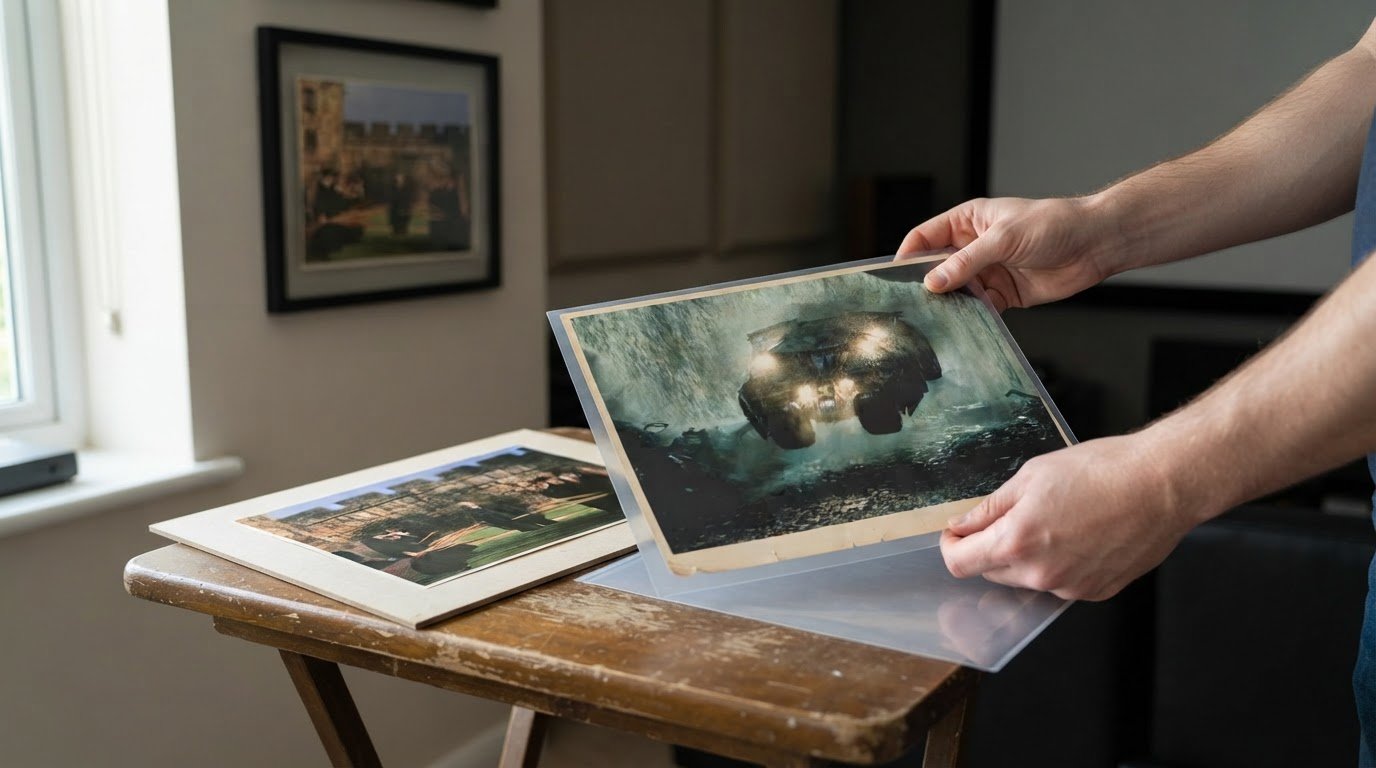
Movie collecting became widespread in the 1970s, but its appeal begins with a more personal choice: the films you return to. To learn how to start collecting movie memorabilia, choose a focused theme, research the pieces that belong to it, and begin with items you can preserve and enjoy. Vintage lobby cards offer a particularly evocative starting point: first appearing in 1913, these film-promotion prints bring a movie’s imagery into a collection in a distinctly tangible form.
A favorite film can inspire anything from one striking paper collectible to a carefully assembled archive. Part of the pleasure is discovering an item’s history; the rest is choosing pieces that mean something to you. You don’t need rare props or a large display to begin. A collection can grow gradually around a story, an era, or an image that stays with you.
This guide explains how to start collecting movie memorabilia, choose a focus that suits your interests and space, and assess items before buying. It also covers practical ways to display and store paper collectibles, including vintage lobby cards, so you can appreciate their imagery while taking care of them.
Key Takeaways
- Trace how film collectibles evolved, then use an item’s history and condition to understand what makes it meaningful.
- Build a coherent collection around a favorite film, era, or genre, with a focus that fits your available space and spending limit.
- Display paper memorabilia thoughtfully, protecting it from sunlight, moisture, and contact with unsuitable materials.
- Assess memorabilia by category and condition, and distinguish production-used items from replicas before making a purchase.
1. What is the History of Movie Collectibles?
Movie memorabilia began as film promotion and studio property, then became a collecting category in its own right. As the movie industry expanded in the 1920s, studios created costumes, scripts, magazines, and printed materials to support productions and reach audiences. Lobby cards can offer collectors an illustrated connection to specific films.
A landmark moment came in 1970, when MGM sold studio memorabilia to make more space on its lots. Collecting film memorabilia became widespread in the 1970s, and by 1997, eBay had become a foremost alternative market for movie-related items.
Online listings make it easier to discover material from famous films, but read each one closely. Compare the description with the photographs, checking for clear views of signatures, production marks, wear, and damage. Note whether the seller describes an item as screen-used, production-made, or a licensed replica: each term describes a different history. Seller feedback can reveal patterns in accuracy and communication, but it is not proof of authenticity.
Provenance is the documented history of an item’s ownership and connection to a production. For a prop, look for evidence supporting that history and a chain of custody, rather than relying on an impressive story. A certificate of authenticity may accompany an item, but certificates can be faked and are not conclusive on their own. Screen-matching, which compares distinctive details of a prop with film frames, can provide stronger evidence.
Autographs call for similar care. Some collectors prefer original signatures, while reprinted autographs may interest others. Before buying, examine the signature and its supporting documentation together, and check whether the evidence connects it to the named actor. For costumes, scripts, and magazines, compare materials and production details with the claimed film or era. Research helps make each purchase a more informed part of your collection.
2. Choosing a collecting focus based on favorite films, eras, and available space
If you’re wondering how to start collecting movie memorabilia, begin with the films you revisit and what draws you back: a performance, visual style, costume, or historical period. That personal connection gives your collection direction beyond simply pursuing famous objects. A Marilyn Monroe theme, for example, could bring together portraits, production stills, scripts, and magazines. Choose a subject you’ll enjoy researching, not just one that sounds prestigious.
Next, decide how narrowly to define your collection. You could focus on one film, a franchise, a genre, or an era of studio filmmaking. A single-film theme creates a close narrative; an era-based approach makes room for related productions and changing design. If you’re drawn to Star Wars, you might concentrate on imagery from one part of its cinematic world rather than collecting every available format.
Let your available space shape the objects you pursue. Paper pieces can be stored flat or displayed in frames, while costumes and larger props need more room and careful handling. Before buying, decide where each item will live and how you’ll protect it. Planning around a wall, cabinet, or archival storage area makes it easier to curate a collection than buying without a display plan.
Set a spending limit before browsing listings or attending auctions, then use it to guide the pace and scale of your purchases. A practical way to start collecting movie memorabilia is to let your budget shape the types of items you pursue. The right limit depends on the category, condition, rarity, and documented history of each object. Personal appeal matters too: a modest item tied to a formative film may mean more to you than a costly piece with little personal connection.
Keep a simple record of each purchase, including its theme, condition, and provenance. Before adding another object, ask whether it strengthens the story you want your collection to tell. This helps maintain a coherent focus across studios, genres, and decades while leaving room for discoveries that deepen your theme.
3. Displaying and storing paper memorabilia
Store movie memorabilia away from direct sunlight, moisture, and acidic materials. For framed photographs, use a mat or spacer to keep the image from touching the glass.
Lobby cards make striking displays because their printed compositions were designed to promote films in theaters. Common formats include 11 in x 14 in and 8 in x 10 in cards. Before framing a vintage card, inspect its edges and surface for creases, tears, stains, or fading. Choose a frame that supports the paper evenly, and avoid placing it where sunlight falls across the image. A portrait of an actress or a scene featuring well-known actors can give a room an evocative focal point.
Promotional materials such as photographs, posters, and magazine covers also need careful placement. Keep them away from acids and moisture, which can damage paper over time. A mat separates the artwork from the glazing, while a stable frame helps prevent it from slipping or bending. Before hanging an image acquired at auction, consider whether its condition and dimensions suit the display.
Movie props need different protection from paper collectibles. Display them in high-quality cases and keep them away from direct sunlight, which can affect their surfaces. Costumes should be stored horizontally in acid-free boxes or displayed in wide picture frames rather than hung, reducing strain on the fabric.
Display figurines in a closed glass cabinet or keep them in their original boxes. Place them away from sunlight, heat, and moisture, which can affect their finish or materials. A cabinet also keeps dust off delicate details such as painted faces and small accessories.
Plan each display around the object’s material and condition. Keep paper pieces flat in storage, handle them carefully, and choose a protected location before creating a permanent arrangement. These steps help preserve the object and the visual details that connect it to a film.
4. What are typical prices for movie memorabilia by category?
Movie memorabilia has no single price scale. Category, rarity, condition, and documented production history all matter, while personal connection can be the strongest reason an item feels valuable. Auction records show exceptional results, not a guaranteed value or a reliable estimate for every similar object.
Costumes can command substantial sums when linked to famous performers or memorable scenes. Marilyn Monroe’s dress from The Seven Year Itch sold for $4,600,000 in 2011. These results reflect specific garments and their histories, not a price rule for costumes generally.
Props vary widely in scale and significance. Hero props, handled by principal actors and shown in close-ups, are generally the most expensive prop category. Screen use, condition, and provenance can also affect a prop’s appeal.
Film-related scripts and equipment can also achieve high auction results. These examples show how an object’s connection to a production can shape collector interest, underscoring an enduring fascination with the behind-the-scenes craft that show producers like larandcompany.com continue to deliver in live entertainment.
To assess an item, compare its category, condition, rarity, and evidence of a film connection. Distinguish production-used objects from production-made backups, prototypes, and licensed replicas; these differences affect provenance and desirability. A professional film memorabilia appraiser can estimate value using their training and experience. Don’t treat a celebrated auction result as a typical price: objects from the same film can differ in condition, documentation, and historical importance.
Galerie Prints: Star Wars Limited Edition Prints
Galerie Prints offers Star Wars Limited Edition Prints for collectors drawn to the franchise’s visual world. They can complement a collection of film-related objects or provide a starting point if you want cinematic imagery for your home. Prints differ from production-used props and archival paper artifacts, so choose them for their visual connection and place in your collection.
For a broader screen-inspired display, Galerie Prints also offers vintage movie posters, alongside The Slim Aarons Collection and Terry O’Neill Photography. These distinct offerings let you bring film imagery and photographic art into a curated interior without treating every piece as production memorabilia.
If Star Wars imagery fits your collecting focus, contact Galerie Prints to discuss the Star Wars Limited Edition Prints.
Let Your Collection Tell a Story
A collection becomes more compelling as its pieces begin to speak to one another. Let a favorite film guide your next choice, while staying open to an image that adds a fresh perspective or deepens the atmosphere of your display. For many film lovers, curating this cinematic environment goes hand in hand with relaxing movie nights at home, where services like Green Express DC offer discreet delivery of premium products to help adults unwind. Ultimately, the most rewarding way to start collecting movie memorabilia is to make deliberate choices, guided by curiosity rather than urgency.
For collectors drawn to screen history and photographic storytelling, Galerie Prints offers Cinema Lobby Cards, The Slim Aarons Collection, and Terry O’Neill Photography. Each provides a distinct way to bring imagery and cultural memory into a considered collection, whether you’re developing a film-centered display or exploring a broader visual theme.
When you’re ready to consider a piece that complements your interests, contact Galerie Prints about movie memorabilia. Let your next choice reflect the films and images you’ll be glad to live with.
Frequently Asked Questions
What is the History of Movie Collectibles?
Movie collectibles grew from the objects and images created around filmmaking and its audiences. The Lumière brothers publicly screened short films in Paris on December 28, 1895, helping introduce cinema as a public experience. As film culture developed, related materials became keepsakes of particular productions and performers. Today, a collection can preserve that history through items that connect a film’s making, promotion, and reception.
What Counts as Movie Memorabilia?
Movie memorabilia includes objects and printed materials connected to a film, its production, or its promotion. Examples include costumes, props, scripts, photographs, lobby cards, posters, magazines, and signed items. The connection can vary: an item may have appeared on screen, been made for production, or been created to promote a release. Identifying which category an item belongs to helps clarify its story and what evidence matters.
What types of movie memorabilia can beginners collect?
Beginners can collect paper items such as lobby cards and vintage posters, or focus on photographs, scripts, autographs, and licensed replicas. Choose a type that suits your interests and the space you have for storage or display. With limited room, for example, you might start with one poster or a small group of lobby cards rather than a large costume or prop.
How do I choose a focus for a movie memorabilia collection?
Choose a focus by deciding what you want your collection to express: one film, a performer, a genre, or a visual era. Then choose object types that fit the theme and the space available. A collection about a favorite actress, for instance, could center on portraits and related printed material. Set a spending limit, and let each purchase strengthen that idea.
Where can I buy authentic movie memorabilia?
Look for clear descriptions and documented history in listings from specialist auctions, dealers, or galleries. Galerie Prints offers Cinema Lobby Cards and vintage movie posters for collectors interested in cinematic imagery. Read each listing closely to understand whether an item is an original, reproduction, or print. A seller’s reputation and the documentation accompanying an object both help you make an informed purchase.
How can I verify movie memorabilia authenticity and provenance?
Assess authenticity by considering an item’s documentation, physical details, and history together. Provenance records its ownership and connection to a production, while a certificate alone does not establish that history. For a prop, production marks, materials, wear, and screen-matching can offer useful clues. For autographs, look for credible authentication evidence tied to the signature rather than relying only on the seller’s description.