
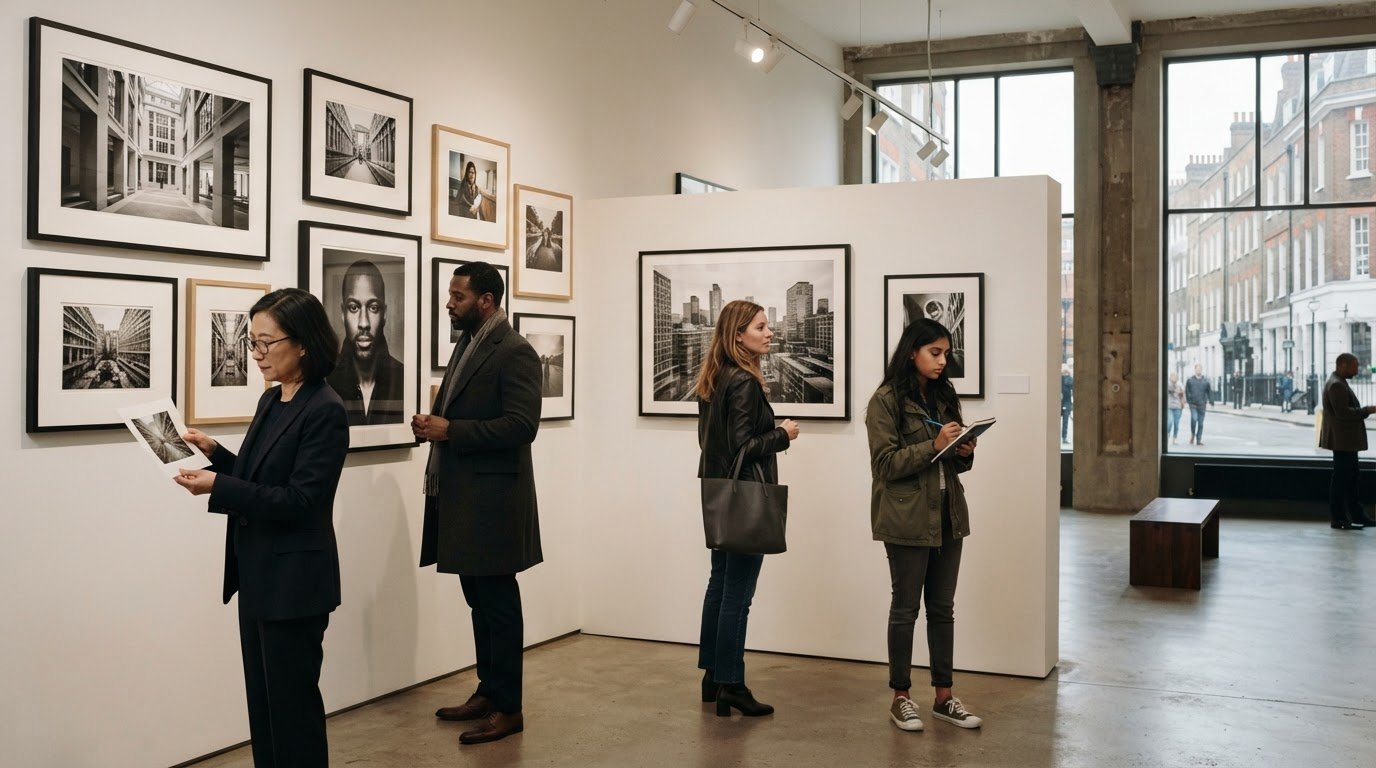
Finding a fine art photography gallery London collectors can explore is about more than recognising a famous name. A photograph can hold a moment of glamour, intimacy or history, but before choosing a print, it helps to know who made the image, what collection it belongs to, how it was printed and how it might work in your space.
A striking image is a good place to start, but artwork details make it easier to compare options with confidence. This guide explains what to look for in a specialist photography collection, how to compare artists, archives, subjects and formats, and what to consider when choosing paper, dimensions and framing. It also explains why a photographic print and an original photograph are not necessarily the same thing.
From the sunlit world of the Slim Aarons Collection to the portraits of Terry O’Neill, a curated collection can offer different routes into photographic history. Follow your interests, assess the details behind each print and choose a work that resonates with you and suits the place you have in mind for it.
Key Takeaways
- Assess a fine art photography gallery London search by the depth of its curation, artist context and clarity of artwork information.
- Look for details such as the photographer, image date, print process and source to better understand a photographic work.
- Compare photographs by subject, mood, dimensions and display setting to find work that suits your interests and available wall space.
- Use a practical checklist to move from initial subject preferences to informed decisions about print and framing.
- Explore distinct routes into photographic history through curated archives, including the Slim Aarons Collection, Galerie Prints, and Terry O’Neill Photography.
What to look for in a fine art photography gallery in London
Searching for a fine art photography gallery London collectors can explore is about more than finding an address. Look for work that holds your attention, context that helps you understand it and enough detail to make an informed choice. A specialist photography collection puts the artists, archives, image histories and print processes at the centre of how the work is presented.
Fine art photography can include images made with artistic intention rather than solely for documentary or commercial purposes. For an introduction to the history and idea behind the medium, see What is Fine Art Photography? To assess an individual photograph, move from that broad context to specific questions: who made it, which body of work it belongs to and how the print was produced.
How a specialist photography gallery differs from a general art gallery
A focused collection lets you follow a subject or photographic period across different artists and images. Knowledge of archives and image histories can show why a photograph matters beyond its immediate visual appeal. Print information, meanwhile, helps you understand the physical work you are considering. Galleries present photography in different ways: an exhibition offers a selection in a physical setting, while an appointment can provide a more focused viewing. Events bring people together around a subject, and online collections make it possible to browse beyond a single show. Each format offers a different way to discover work.
What London gallery listings can, and cannot, tell you
A directory listing is a starting point, not a complete measure of a gallery’s curatorial depth. For example, the AIPAD profile for Augusta Edwards gives practical information such as a Cromwell Place address and appointment-based visiting arrangements, alongside represented artists. Those details describe where and how to view, but they do not tell you whether the selection suits your interests.
Exhibition pages can provide more artwork context. Atlas Gallery’s Fashion Show page, for instance, introduces a theme through named photographers and selected works. Details such as artist, date, process and dimensions help readers look beyond the image and make more meaningful comparisons.
Gallery listings and event information are time-specific, so treat them as a snapshot rather than a permanent guide. When comparing collections, look beyond location: does the curation give you enough artist context and artwork information to assess the photographs? A considered experience may come through a physical exhibition, an appointment or a well-presented online collection. An address tells you where a gallery is; interpretation and artwork details help you decide what the work means to you.
How to assess fine art photography, its creator, and its source
When comparing prints, look beyond the image to understand what the work is, who made it and how the print relates to the photograph’s history. Provenance means the documented history or source of a work. Information can differ between prints, so read the description for each piece instead of assuming every listing includes the same records.
What photographer, archive, and image history reveal
The photographer’s name and the image’s history place a photograph in context. They can help you connect it to an artist’s wider practice, a particular era or an archive. An archive gives you a way to explore a photographer’s body of work and historical images beyond a single celebrated photograph. Galerie Prints’ curated photographic archives include the Getty Images Gallery and The Slim Aarons Collection, each offering a distinct route into photographic history and subject matter.
As you browse, note whether a listing identifies the image title and date, and whether that date refers to when the photograph was made. A print can also have its own production date and process, which are separate details. For a broader framework on choosing and living with photographic work, see this fine art photography collecting guide. The Learn How to Collect Photography resource from Sotheby’s Institute of Art also offers a useful collecting perspective.
How to read photographic print details
Process labels describe how a print was made; they are not automatic rankings of quality. Gelatin silver and C-Type, for example, identify different photographic print processes. Consider the stated process alongside the image, photographer and intended presentation rather than treating one term as proof that a print is superior.
Dimensions matter, too. Check whether measurements refer to the image or the overall framed work, if specified, and compare like with like across listings. Scale affects how a photograph reads on a wall and whether it suits the space you have in mind. Paper type and framing also shape the final presentation. Galerie Prints offers a choice of print dimensions and paper types, as well as bespoke framing.
Compare the photographer, image title, image date, print process, stated source and dimensions across listings before deciding. This gives you a clearer basis for comparison without assuming that a brief description guarantees a particular edition status or authentication. Put the approach into practice by exploring curated photographic prints and reading each artwork description closely.
Compare photographic prints by subject, format, and intended setting
Choosing between photographs is a matter of personal and curatorial judgement, not a ranking of artists or a prediction of future value. Ask what you will enjoy living with, what interests you in the image and how it might sit in the room. A portrait can create an intimate focal point. Fashion photography may draw attention to clothing, gesture and changing visual conventions, while music and cinema imagery can evoke performers, performance and a particular cultural moment. Lifestyle photography offers a different pleasure, drawing you into a scene and its atmosphere.
Choose a photographic subject that will hold your interest
Compare the feeling and story each subject offers. Then consider whether you want one image to stand alone or sit alongside related works. If lifestyle imagery appeals to you, the Slim Aarons Collection is a recognised photographic archive to explore. For more context on its photographer and visual world, read this Slim Aarons photography guide.
Match image scale and paper choice to the room
Dimensions influence how a photograph reads from across a room and how much wall space it occupies. Before comparing formats, measure the area you have available and consider the distance from which you will usually view the work. Paper selection is another practical consideration: compare the options stated for each print and choose according to your preferences rather than assuming one paper suits every image. Framing can help connect the finished work with the room’s palette and style.
Use the comparison below as a starting point, not a set of rules. Each photograph and room will suggest its own balance.
| What to compare | Questions to consider |
|---|---|
| Subject | Does portraiture, fashion, cinema, music or lifestyle imagery hold your attention? |
| Mood | Do you want the image to feel intimate, animated, reflective or transporting? |
| Photographic period | Are you drawn to a particular era, and does the image’s history interest you? |
| Dimensions | Will the stated print size suit your wall area and viewing distance? |
| Paper choice | Which of the options described for the print best suits your preferences? |
| Display setting | Will the work be a focal point, or part of a considered grouping? |
For anyone exploring a fine art photography gallery London search, this method makes comparisons more purposeful. Weigh the image’s subject and period against its dimensions, paper options and intended setting. A compelling choice is one that continues to reward your attention and feels at home in your space, regardless of how celebrated its creator may be.
Use this London fine art photography gallery checklist before choosing a print
A useful shortlist starts with what draws you to a photograph, then moves through the details that shape how you will experience it at home. Use this five-step method when browsing a fine art photography gallery London listing, viewing an exhibition or comparing an online collection.
- Start with your interest. Identify the photographer, subject or photographic period you are genuinely drawn to. A personal connection is a more useful starting point than reputation alone.
- Read the artwork details. Compare the image title, photographer and date. Note whether the date refers to when the image was made, and look for any source or archive information provided.
- Understand the print. Read the stated process and paper options for each individual work. Treat them as descriptive details to consider, not automatic rankings of quality.
- Check scale and setting. Compare the print dimensions with your available wall space and usual viewing distance. Consider how the image’s mood and visual character will relate to the room.
- Picture the finished presentation. Think about framing alongside the room’s existing palette and style. Decide whether the work should stand alone or sit within a grouping.
Save this summary: follow your interest, compare the artwork details, check the dimensions, then picture the framed work in its intended space.
Plan a London gallery visit around current information
Evaluation criteria apply from one gallery to another, but exhibition schedules and visitor arrangements can change. Treat dates and visiting information in directories or older pages as a snapshot. During a visit, note the titles and details of works you want to compare later. A few precise notes make it easier to move from a vivid impression to a considered comparison.
In-person viewing lets you encounter a selection in its exhibition setting. Online browsing can complement that experience by making it easier to compare a wider curated collection at your own pace, including images beyond a single show. An exhibition may help you respond to a photograph in person, while an online collection can support closer comparison of subject, format and artwork information.
Continue your shortlist with physical photographic prints in Galerie Prints’ curated photography collection, where you can consider print dimensions, paper choices and bespoke framing alongside the image.
Discover curated fine art photography and choose a print with confidence
A search for a fine art photography gallery london can lead from a London exhibition to a curated online collection, where you can browse photographic archives at your own pace. Galerie Prints brings together physical photographic prints and related collectables, offering a way to discover artists and subjects beyond the scope of a single show. Online browsing complements seeing work in person: you can revisit an image, compare options and consider how it might fit into your collection.
Explore photography through distinct archives and artists
Different archives open different paths into photographic history. The Slim Aarons Collection speaks to collectors drawn to lifestyle imagery, while Getty Images Gallery offers a broad photographic archive to explore. Terry O’Neill Photography brings another perspective, including portraiture and images connected with music and culture. If music photography is your particular interest, discover more in this music photography collection guide. Moving between these collections lets you follow a subject, mood or era that resonates with you instead of relying on reputation alone.
Choose the print presentation that suits your collection
Once a photograph catches your eye, its presentation helps determine how it will live in your space. Buyers can select print dimensions and paper types through the online purchasing experience, making it possible to consider scale and finish alongside the image itself. Compare the available dimensions with your wall area and viewing distance. A format that feels balanced in one room may have a different presence in another.
Paper choice is another personal consideration. Read the options shown for the individual print and choose according to your preferences, without treating one option as universally best. Galerie Prints’ professional bespoke framing service offers a considered way to complete the presentation, helping the framed work relate to the room’s palette and style. The aim is not simply to fill a wall, but to choose an image and format you will continue to enjoy.
With the subject, artwork details and setting in mind, take time to find a photograph that feels at home in your collection. Explore fine art photography prints.
Choose a photograph you’ll treasure in your collection
A thoughtful search for a fine art photography gallery london collectors can trust begins with more than a striking image. Look for meaningful curation and clear artwork details, then compare the photographer, image history and print information. The right choice is personal: a photograph should hold your interest and feel at home in the space you have chosen for it.
Galerie Prints brings together curated photographic archives, including the Slim Aarons Collection and Getty Images Gallery, alongside works by Terry O’Neill. As you explore, consider how print dimensions, paper types and bespoke framing can shape the finished presentation. These choices connect the photograph’s story with the room where you will live with it.
Take your time, follow the subjects and images that resonate, and let careful comparison guide your decision. Explore fine art photography prints and discover a work for your collection.
Frequently Asked Questions
Is there a fine art photography gallery in London?
Yes, London has specialist photography galleries, dealers, exhibitions and photography events. A “fine art photography gallery London” search can also lead to online collections, where you can explore artists and compare works beyond a single exhibition. Focus on the curation, artwork details and presentation options that matter to you.
What should I look for in a fine art photography gallery?
Look for clear artwork information and curation that reflects your interests. Useful details may include the photographer, image title and date, print process, dimensions and the work’s source. Consider whether the selection and descriptions help you understand the image, rather than relying on reputation or appearance alone. Paper choices, print size and framing options can also help you decide how a work might fit your collection.
Can I buy fine art photography prints online from a gallery?
Yes, online galleries let you browse photographic collections, compare artwork details and select from available print and presentation options. Read each artwork description carefully, paying attention to its dimensions and any stated process details. Galerie Prints offers physical fine art photography prints, with choices of print dimensions and paper types, as well as professional bespoke framing. You can consider the image and its presentation together as you make your selection.
How do I know whether a photographic print is right for my home?
Start with the image itself. Its subject and the feeling it creates should matter, since you will live with the work beyond its decorative role. Then compare the print’s dimensions with your available wall space and viewing distance. Think about how the image will relate to the room’s light, palette and furnishings. Consider paper options and framing alongside the photograph rather than as afterthoughts.
What is the difference between a photographic print and an original photograph?
A photograph is the image; a print is a physical rendering of that image. The print’s process, date and edition information can vary, so listing terms may describe different aspects of the work. Read the details attached to the specific piece instead of assuming all prints are alike. For a useful comparison, note the photographer, image title, stated process, dimensions and source information.
Do fine art photography galleries offer framing?
Framing options vary between galleries. Where offered, framing gives a print a finished presentation and can help it sit comfortably in a room. Galerie Prints provides professional bespoke framing alongside its physical photographic prints. Before choosing, consider the artwork’s dimensions and intended display space, as well as the room’s existing style. The frame is part of how the image will appear in your collection.
Is it better to visit a photography gallery or browse online?
Each approach offers a different way to discover work. A current exhibition lets you experience photographs in person and see how a gallery presents them, while online browsing makes it easier to compare artists and artwork details across a wider curated collection. You can use both: visit an exhibition to encounter a subject or period, then continue exploring related photographs and presentation choices online at your own pace.