
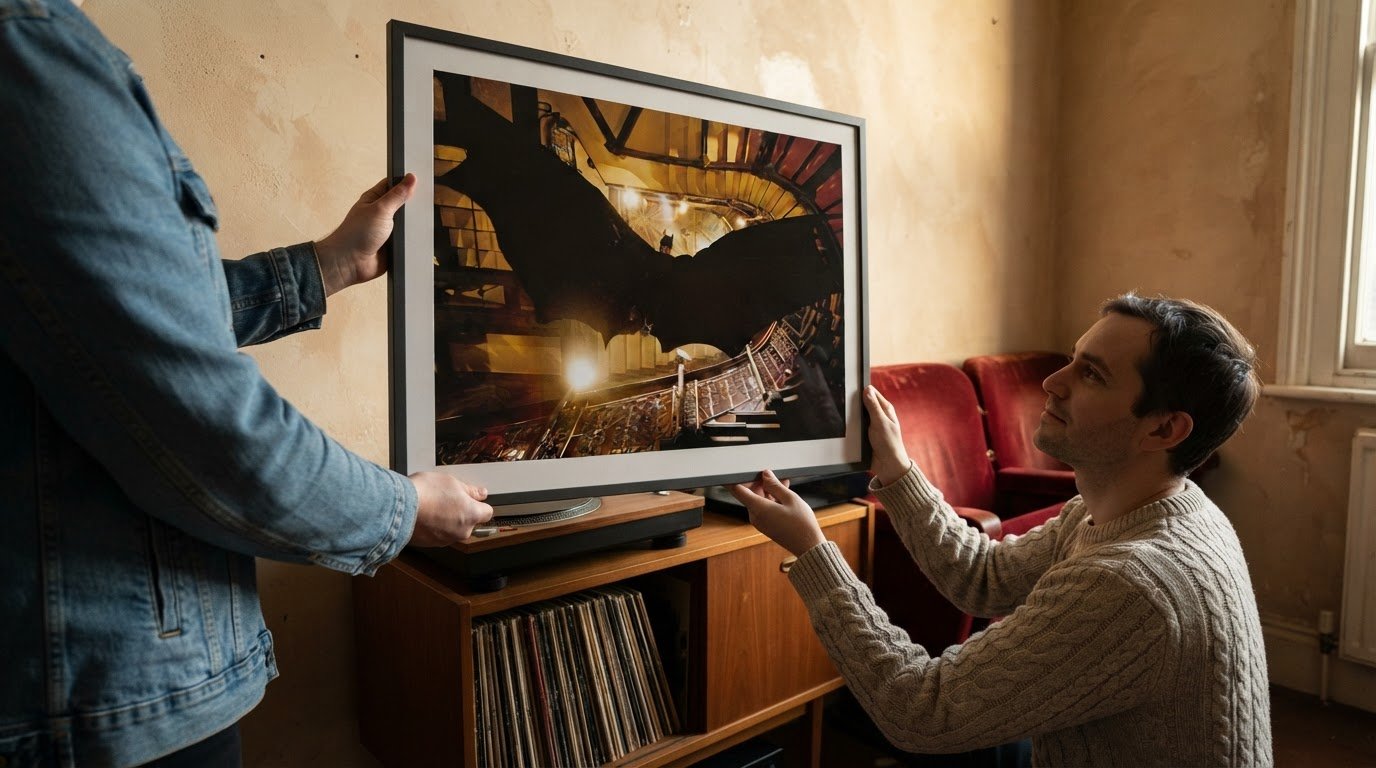
The right artwork doesn’t need to impress everyone; it needs to mean something to you. Feeling confident about buying art can start with noticing the image, memory or mood that keeps drawing you back, then learning about the story and choices behind the work.
It’s natural to want reassurance when a piece will become part of your home. A personal connection is a more lasting guide than trying to follow someone else’s taste: it helps you understand why a work belongs in your life and what you want it to bring to a room.
Your motivations, an artwork’s history and the way you encounter it online can all make a decision clearer. Familiarity with an artist or subject can deepen that connection, helping you choose with greater ease and appreciate the work beyond its first impression.
Key Takeaways
- Notice the feelings and atmosphere you want a work to bring into your home; those personal motives can help guide your choice.
- Explore the story behind an artwork to discover details that deepen your connection beyond its first impression.
- When viewing art online, take time to consider how the image, its context, and its place in your space come together.
- Familiarity with an artist, subject, or visual style can make it easier to recognize what resonates with you.
Emotional motivations for buying art
Feeling confident about buying art often starts with naming the feeling you want a work to evoke. A peaceful landscape in a bedroom can suggest rest and escape, while a dynamic abstract work in a living room can bring energy to gatherings. These responses give your choice a personal purpose beyond filling a wall.
Notice your reaction before judging whether a piece suits a trend. Does a particular image bring back a place, person or season? A floral painting in a hallway, for example, can create a quiet pause between rooms. That response can help you decide whether you want the work close to daily life or as a focal point.
An original is a unique work, while a print reproduces an image; a limited edition is a print produced in a stated, finite edition. Whatever the format, let your emotional connection guide you, then consider the physical work and its documentation. A Star Wars Limited Edition Print, for instance, may appeal because of your personal connection to its imagery.
Set a budget that fits your overall spending plans, then account for the artwork’s format, framing, delivery and applicable taxes. The total depends on the specific work and purchase terms, so decide which factors matter most before becoming attached to one option.
To understand authenticity and provenance, look for records connecting the artwork to its artist or source, such as a certificate, invoice or edition information. Find out who created the work, how it was produced, what documentation accompanies it, and what framing or care it needs.
In the United States, return terms depend on the seller’s stated policy, while sales tax and shipping charges depend on the transaction and delivery details. Before purchasing, review the written terms for return conditions, tax, packaging, shipping and any delivery-related costs. Clear details help you weigh the practical commitment alongside your emotional response.
A dynamic abstract work in a living room can energize social interaction and bring a livelier atmosphere to shared time. A delicate floral painting in a hallway can create a quiet moment of beauty, softening the transition between rooms.
Stories and connections behind artworks
An artwork’s story can add context without dictating what it should mean to you. Learn where it came from, why it was made and what choices shaped its subject. A photograph of a crowded street, for example, may document a specific place while also recalling a viewer’s travels. Its history gives you more to notice, not one correct interpretation.
People respond differently because they bring distinct life experiences, personalities, education and aesthetic preferences to the same image. One viewer might see a portrait as a record of a particular era; another may focus on its expression or lighting. Neither response cancels the other. Recognizing these different readings can help you distinguish your own connection from the opinions you imagine others might hold.
Context can also make conversation more meaningful. If you know why an artist chose a subject or how a scene relates to a place, you can describe what draws you to it. In a coastal image, for example, the horizon might recall a family holiday, while the composition draws your attention to changing light. Personal memories and visible details can coexist, giving the work layers of meaning—an approach equally valued in custom mediums, where studios like Sash Tattoo work closely with clients to translate personal narratives into bespoke art.
A reported example from Coronado Beach shows how conversation can deepen a connection. An artist painted there for three days, and three people bought artwork after engaging in conversation. This does not prove every story leads to a purchase. It illustrates how discussion can help someone understand an artwork beyond its surface. Ask yourself what drew you to the image, then explore its subject, setting and making. These details can clarify whether your interest is a passing impression or a connection you want to live with.
Other people’s reactions can offer useful perspectives, but they stem from their own life experiences, personalities, education and aesthetic preferences. Knowing where an artwork came from and why it was made can make it easier to discuss, giving you specific details to share beyond your immediate response.
An artist who painted at Coronado Beach for three days said 3 people bought artwork after engaging with them in conversation. These examples show how discussion and personal feeling may accompany a purchase, without promising the same outcome for every artwork.
Choosing art online
Online listings let you study an artwork’s image and details at your own pace. Compare its presentation with the room and purpose you have in mind.
Assessing Whether Art Is Worth Buying
An artwork is worth buying when its appeal, documented details and practical fit justify the commitment for you. Visual impact alone may not tell you what you’re receiving. Compare the listing’s description with the image, including the medium, dimensions and whether it’s an original or reproduction. Consider lasting enjoyment rather than assuming the work will increase in value; an image alone cannot establish future resale value.
Online Buying Risks and Scams
Online buying risks include misleading images, incomplete descriptions and sellers misrepresenting a work. Screens can alter colour, and a photograph may conceal scale or condition. Before purchasing, review the seller’s identity, artwork description, provenance details, payment terms and written return policy. Compare the text with the images, and be wary of pressure to pay through an unusual method. If dimensions or condition are unclear, pause rather than make assumptions.
Matching Art to Taste, Space, and Goals
Matching art to your taste, space and goals means choosing a work whose subject and scale suit your preferences and its intended setting. A favourite image can feel different when it overwhelms a narrow wall or disappears above a sofa. Measure the available area, then compare it with the listing’s dimensions. A broad landscape, for example, may anchor a long living-room wall, while a small portrait can suit a reading nook. Consider whether you want a lasting personal presence or a piece for a particular room, rather than treating art as a guaranteed investment.
Familiarity in art buying
Familiarity grows through repeated encounters with artists, subjects and visual styles. It helps first-time buyers recognise their preferences and make considered choices.
Preparing for a First Art Purchase
A first art purchase is a chance to learn what matters to you as a buyer. Before choosing, decide where the work will go and what you want to understand about it. Note its medium, dimensions and whether it is an original or a print. Read the purchase terms, too. These details help you understand the object and the commitment, not just the image.
Building Familiarity With Art Buying
Familiarity means recognising patterns in the art you return to, from recurring subjects to a particular photographic style. A considered preference can feel more reliable than choosing under pressure. Save examples that hold your attention, then compare their composition, mood and subject. If a portrait by one artist repeatedly draws you in, explore what appeals to you: the expression, lighting or historical setting.
Give your eye time to develop. Revisit an image another day and notice whether its details still interest you. A familiar subject, such as a cinema scene, may feel accessible, while a less familiar style can invite a fresh perspective. You don’t need specialist vocabulary to describe what you like. “The quiet composition” or “the vivid sense of movement” can express a real preference.
Use each encounter to refine your choices: make a short note about the work’s subject, your response and where it might fit. Over time, your notes can show whether you prefer intimate portraits, expansive landscapes or lively scenes. Growing familiarity supports choices based on your own eye, rather than assumed rules about what a collector should choose.
Explore photographic art with a story as you continue shaping your taste.
Galerie Prints
Galerie Prints brings together photographic art and image-led pieces to help you explore what resonates with you. Its offerings include The Slim Aarons Collection, Terry O’Neill Photography, Cinema Lobby Cards, Star Wars Limited Edition Prints and a Bespoke Framing Service. Each offers a distinct subject and visual language, from portraits and cinematic imagery to photographs associated with particular places and eras.
If you’re still discovering your taste, browsing these collections can help you notice which subjects, moods and stories hold your attention. If you’ve chosen a work, bespoke framing is a natural next step to consider when deciding how to present it in your space. Take the time you need to find a piece that feels personal and enduring.
For help exploring art that speaks to you, contact Galerie Prints.
Let your next choice reflect your own eye
A meaningful art purchase can become part of how you experience a room, not simply an object placed within it. Return to the work that has held your attention and decide what you would like to live with every day. Feeling confident about buying art comes from making a personal choice, rather than trying to satisfy an imagined standard.
Galerie Prints offers The Slim Aarons Collection, Terry O’Neill Photography, and Cinema Lobby Cards, each opening a different path into photographic and cinematic imagery. You can explore which subjects and visual histories speak most clearly to your taste, then take time to consider how a chosen piece might belong in your space.
If you’re ready to explore a piece that feels right for you, contact Galerie Prints about buying art. Trust your curiosity, follow the images that stay with you, and let your collection begin with meaning.