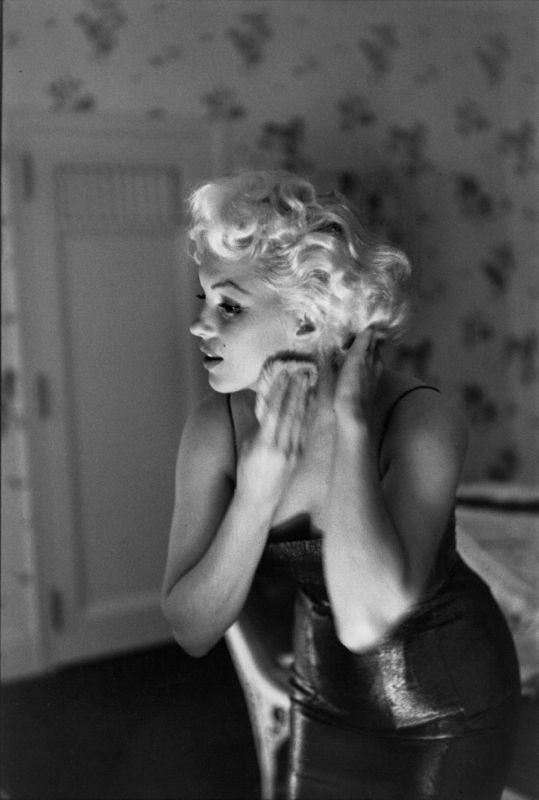
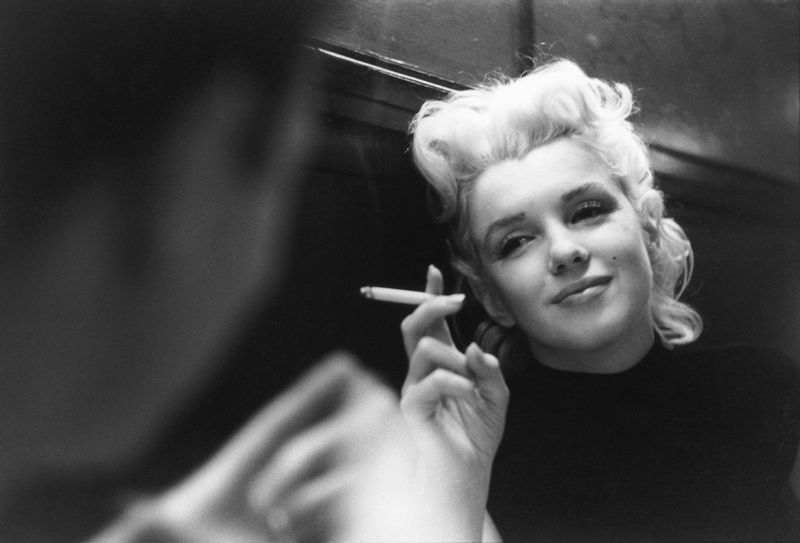
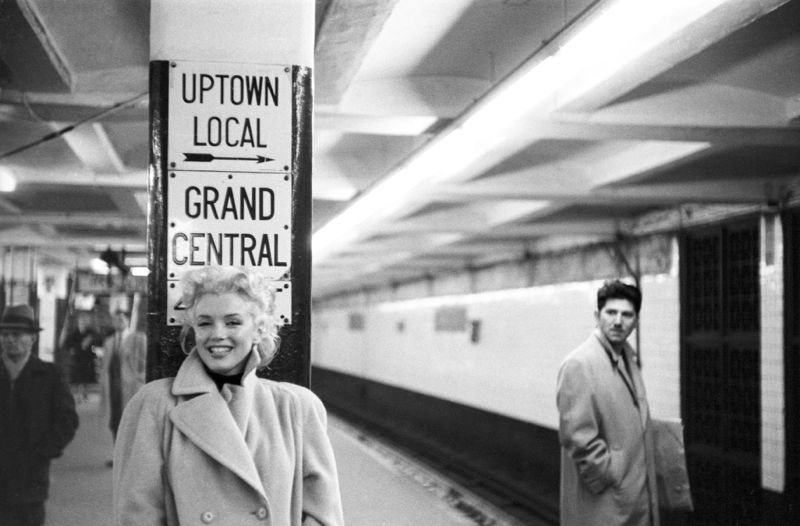
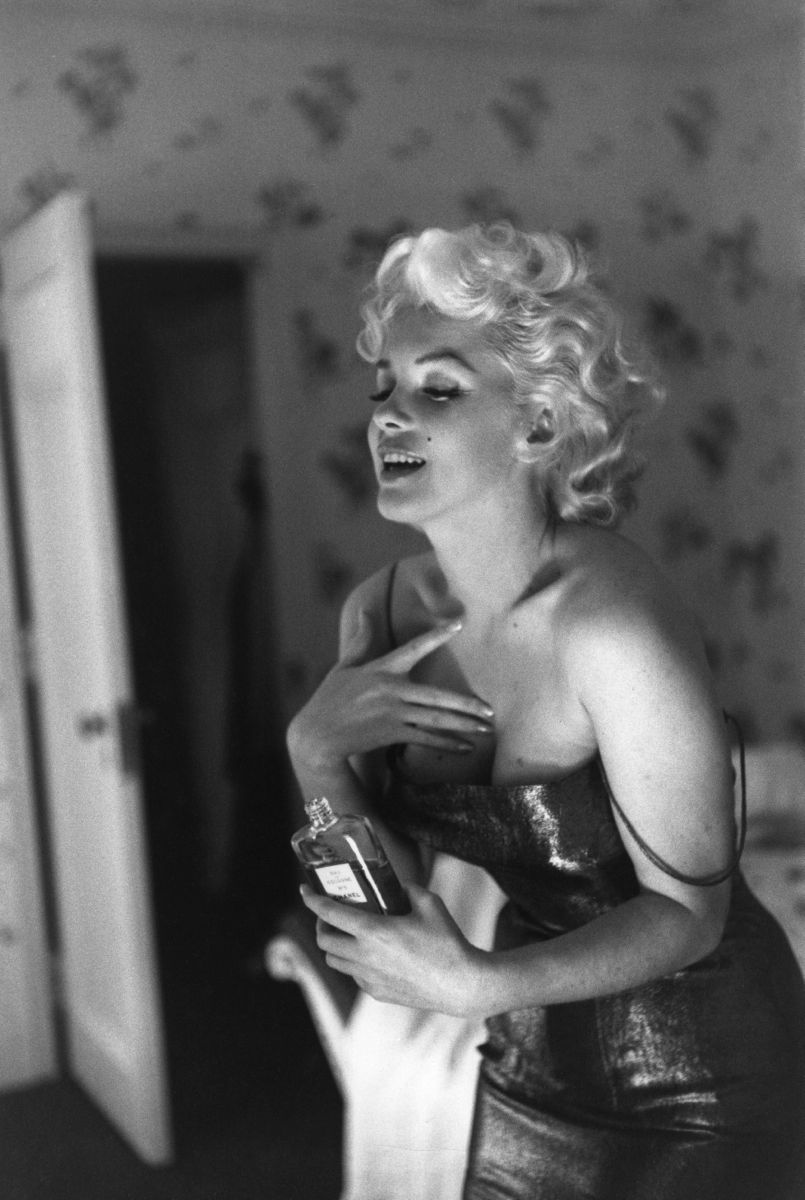
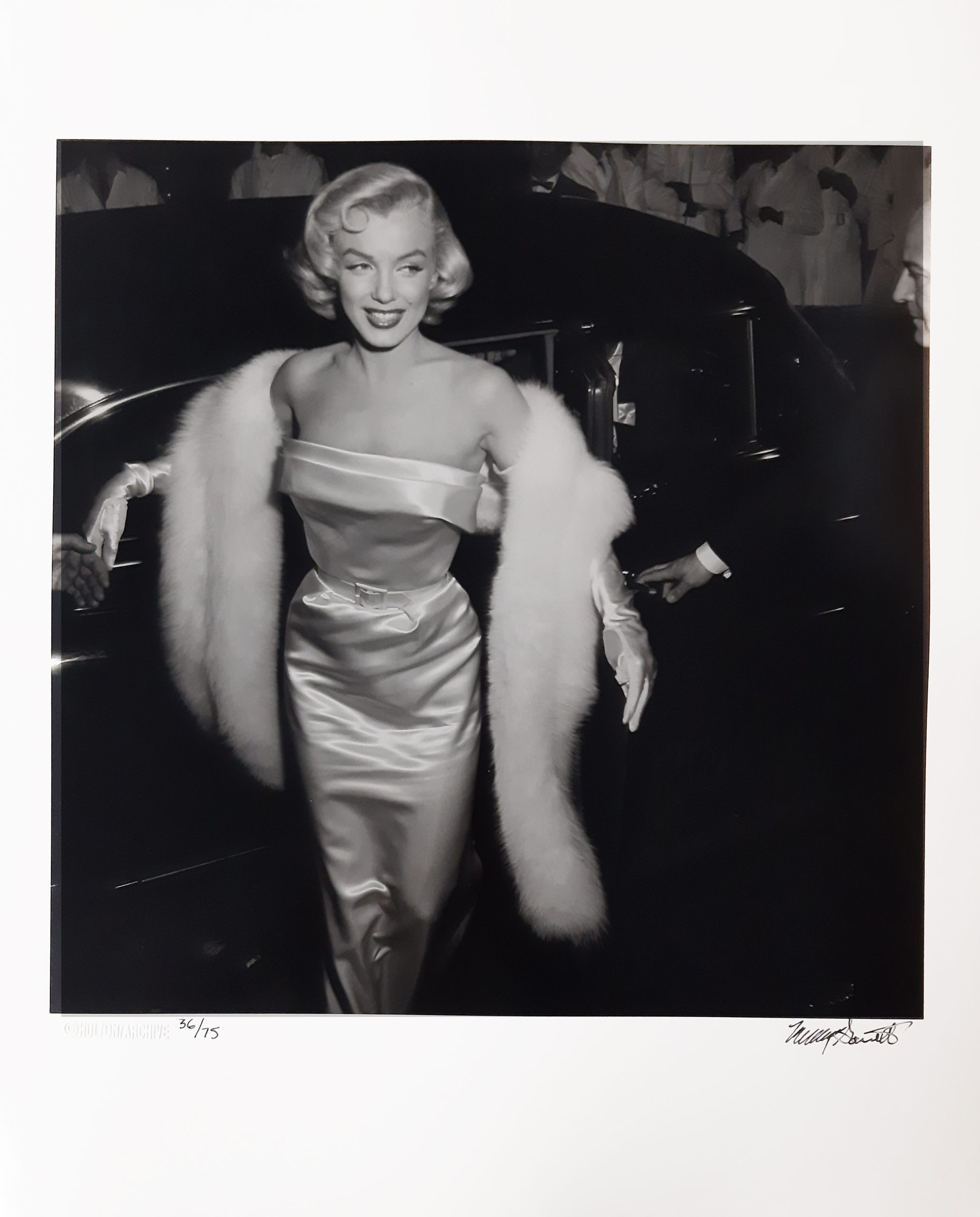
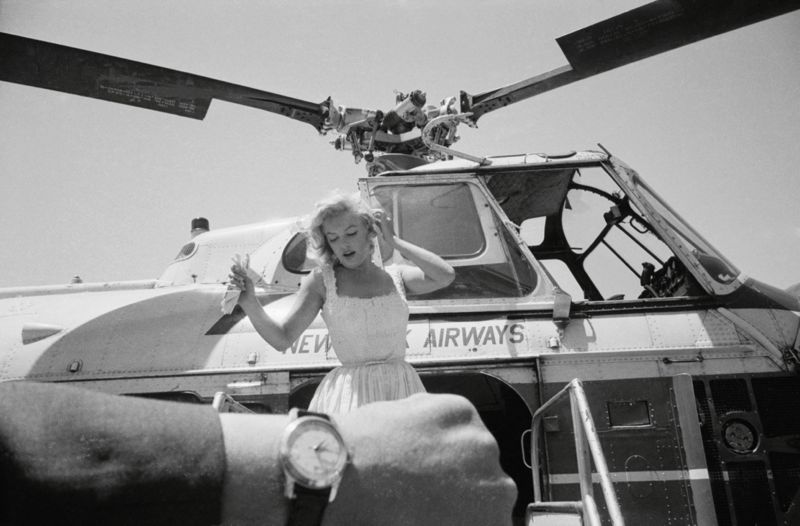
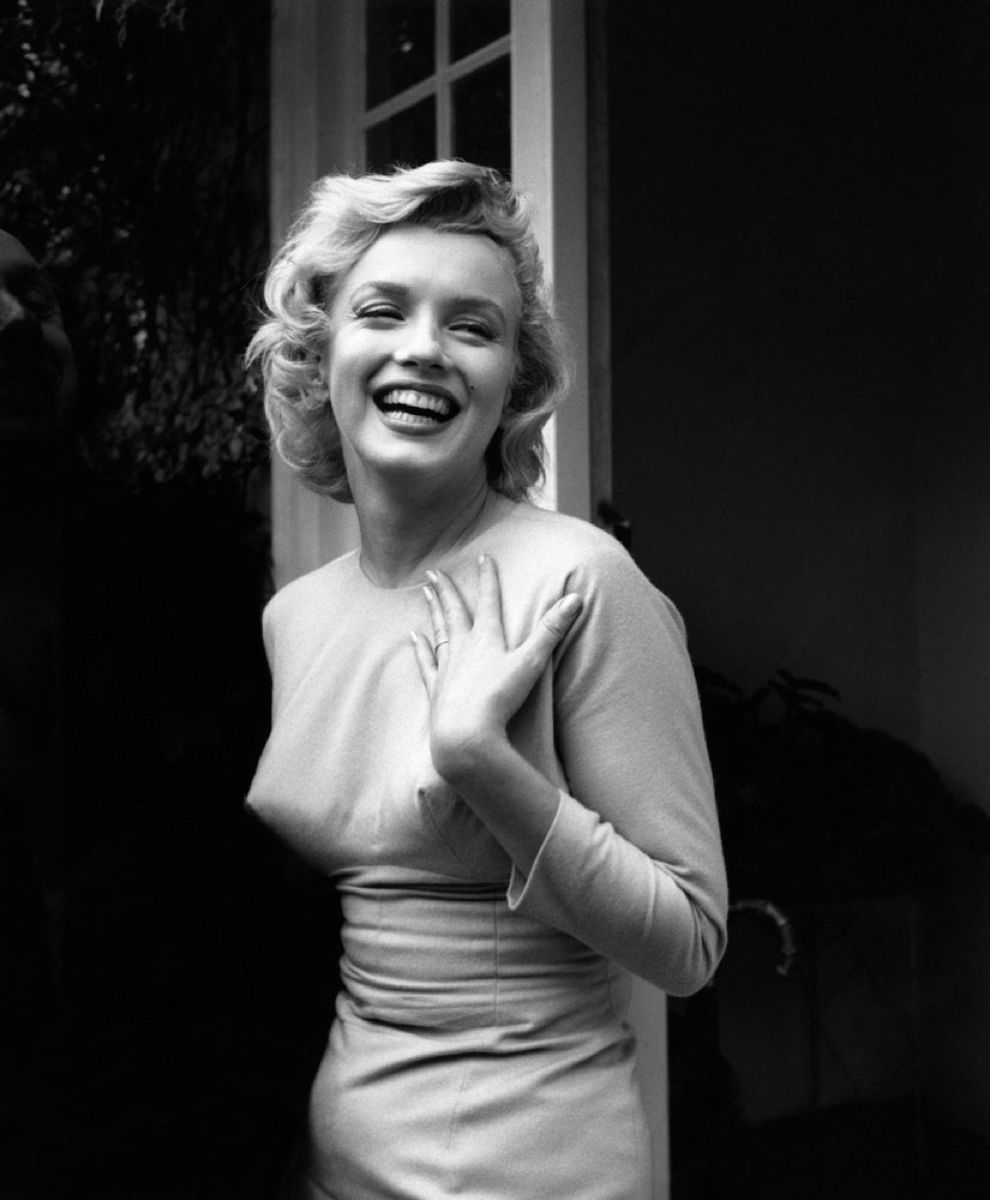
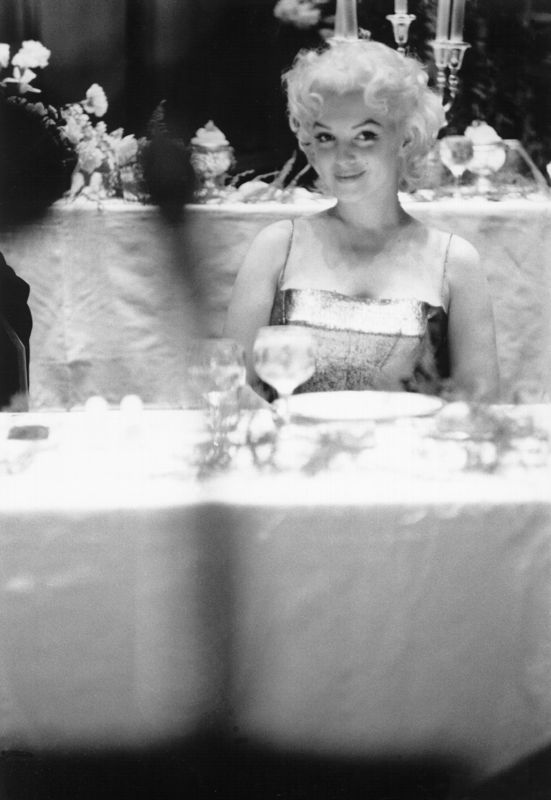
Actress Marilyn Monroe gets ready to go see the play ‘Cat On A Hot Tin Roof’ playfully applying her make up and Chanel No. 5 Perfume on March 24, 1955 at the Ambassador Hotel in New York City, New York. (Photo by Ed Feingersh)
Actress Marilyn Monroe takes the subway in Grand Central Station on March 24, 1955 in New York City, New York. March 24, 1955. (Photo By Michael Ochs Archives)
Marilyn Monroe gets ready to go see the play ‘Cat On A Hot Tin Roof’ playfully applying her make up and Chanel No. 5 Perfume on March 24, 1955 at the Ambassador Hotel in New York City, New York. (Photo by Ed Feingersh)
The transition of a stark, flash-lit crime scene from the ephemeral pages of a tabloid to the hallowed walls of a gallery is a journey few photographs ever make. Yet, it is precisely this remarkable ascent that defines the legacy of Arthur Fellig, the self-proclaimed nocturnal prophet of New York City better known as Weegee. His lens captured the city’s raw, unguarded soul with an unflinching honesty that was, at the time, simply news. Today, however, these same images are regarded as masterworks of 20th-century photojournalism, their gritty provenance adding to their profound allure for the discerning collector.
Join us as we venture into the visceral, high-contrast world of this iconic photographer. In this curated exploration, we will not only uncover the stories behind his most celebrated works but also demystify the very qualities that elevate his photography from historical document to exquisite fine art. Discover the technical superiority of an archival silver gelatin print and gain the confidence to select a timeless piece that brings a powerful, narrative depth to your interior space.
Key Takeaways
Learn the technical mastery behind the iconic film noir aesthetic, from the choice of camera to the pioneering use of the flashbulb.
Uncover the profound social commentary by looking beyond the crime scene to the captivated, and often revealing, faces of the spectators.
Receive curatorial advice on how to seamlessly incorporate the raw, dramatic energy of a Weegee photograph into a sophisticated and modern interior.
Understand what distinguishes a collectible, archival-quality print and why the artisanal hand-printing process is essential for preserving photographic legacy.
Who was Weegee? The Myth of the Nocturnal Speed Graphic
Before the legend, there was Usher Fellig, an Austrian-American immigrant who would become the definitive chronicler of New York City’s nocturnal soul. He adopted the moniker Arthur Fellig, but the name that entered the annals of photographic history was far more evocative: Weegee. A phonetic play on the Ouija board, the name was a nod to his seemingly psychic ability to appear at the scene of a crime or catastrophe moments after it occurred, his enormous Speed Graphic camera and flashbulb at the ready. As detailed in Weegee’s biography, this uncanny prescience was less supernatural and more a masterstroke of ingenuity and grit that would forever alter the course of photojournalism.
The Man with the Police Radio
The secret to his spectral speed was a 1938 permit-the only one of its kind issued to a civilian-allowing him to install a police-band shortwave radio in his car. This unprecedented access, combined with a mobile darkroom ingeniously fitted into the trunk of his Chevrolet coupe, allowed him to deliver startlingly immediate silver gelatin prints to the news desks while the story was still breaking. For the voracious tabloid media of the 1940s, this was revolutionary. Weegee lived his work, often sleeping in his clothes with his camera by his side, a lifestyle that immersed him completely in the city’s underbelly and infused his photographs with an unvarnished, visceral authenticity that could not be feigned.
From Tabloid Grit to Gallery Walls
For years, his work was the lifeblood of the Daily News, yet its raw power caught the eye of New York’s art establishment. The Photo League, a cooperative of photographers dedicated to social realism, championed his unique vision, recognizing that his lens captured more than mere events; it captured the human condition. This culminated in a pivotal 1943 exhibition at the Museum of Modern Art (MoMA), which firmly transitioned his work from the ephemeral pages of the newspaper to the permanent collection of a world-class institution. His photographs transcended reportage because they possessed a stark, compositional drama and an unflinching empathy for their subjects, whether they were murder victims or society doyennes, forever cementing Weegee as an artist of profound significance.
The “Naked City” Aesthetic: Mastering the Flash
To comprehend the visceral power of a Weegee photograph is to first understand the deliberate, almost confrontational, technique behind it. His iconic “Naked City” aesthetic was not a product of happenstance but of a masterful command over the crude tools of his trade. In the nocturnal theatre of 1940s New York, his camera and flash were not merely instruments of documentation; they were narrative devices, transforming grim reality into a stark, unforgettable vision that would define the visual language of film noir and street photography for decades to come.
The Speed Graphic and the 4×5 Negative
The cumbersome Graflex Speed Graphic press camera was Weegee’s chosen instrument. Its considerable weight and slow operation demanded a direct, intentional approach, forcing him to get close to his subjects. The camera’s greatest asset was its large 4×5-inch negative, which captured an extraordinary level of detail, ensuring that his prints possessed a startling clarity and depth that remains potent in archival reproductions today. This combination of unwieldy equipment and a high-fidelity format produced an unflinching, head-on perspective that became his artistic signature.
Chiaroscuro of the Streets
More than any other element, it was Weegee’s revolutionary use of the flashbulb that separated him from his contemporaries. He wielded its harsh, instantaneous glare to create a dramatic chiaroscuro, carving his subjects out from the impenetrable blackness of the city night. This signature lighting, a stark contrast that sliced through the darkness, is central to his enduring legacy, a technique now studied in the archives of institutions like the International Center of Photography. The psychological effect of this “sudden white glare” is profound; it freezes his subjects in moments of unguarded shock, vulnerability, or grief, presenting a raw, unfiltered humanity.
His aggressive, on-camera flash technique, born of nocturnal necessity, would become the foundational grammar for generations of street photographers to follow.
The resulting images are often filled with what might be considered technical imperfections-motion blur, harsh shadows, and flattened perspectives. Yet, these are not flaws. They are the very essence of his authenticity, the visual evidence of a photographer working under immense pressure, capturing the chaotic pulse of the city in real-time. These imperfections are the provenance of the moment, cementing the raw, immediate power that makes his work timeless.
Beyond the Crime Scene: The Spectators of the Night
While the stark brutality of his crime photography secured his legend, the true genius of Weegee often resided in the periphery. His lens, frequently turned away from the central tragedy, found its true subject in the sea of faces that gathered in the shadows. It was here, amongst the onlookers and the gawkers, that he composed his most profound social commentary, capturing the raw, unguarded humanity of a city that never truly slept. From the poignant desperation of the Lower East Side to the stark class divisions laid bare at a society gala, he documented the full, unvarnished spectrum of New York life.
The Art of the Reaction
In what is arguably his most iconic work, The Critic (1943), Weegee stages a masterful confrontation between the city’s elite and its forgotten. The sneer on the face of an impoverished woman as she glares at two opulent society doyennes is more damning than any headline. This image exemplifies his unique focus: the reaction is the event. His spectator photographs are a study in voyeurism, capturing the morbid curiosity, profound grief, and detached amusement of crowds drawn to disaster. He understood that the faces of bystanders-from solemn police officers to wailing relatives-held a more universal and emotionally resonant truth.
Naked Hollywood and the Distortion Series
In the late 1940s, Weegee traded the grit of New York for the manufactured glamour of Hollywood, a transition that prompted a radical evolution in his style. His book Naked Hollywood offered a cynical, behind-the-scenes look at the film industry, but it was his experimental “Distortions” project that marked his most significant artistic departure. Using trick lenses and darkroom manipulation, he transformed portraits of celebrities like Marilyn Monroe and Vincent Price into grotesque, surreal caricatures. This avant-garde phase, well-documented by collecting institutions like the Museum of Modern Art, revealed a desire to deconstruct fame, moving from documenting reality to artistically warping it.
Decorating with Drama: Bringing Weegee into Modern Interiors
The enduring allure of black and white photography lies in its ability to transcend time, distilling a scene to its essential emotional and compositional elements. While often associated with serene landscapes or poised portraiture, the raw, high-contrast world of Arthur Fellig-the inimitable Weegee-offers a surprisingly potent tool for the modern interior designer. The key is in the curation: balancing the visceral grit of his street-level chronicles with the refined lines of sophisticated furnishings. A Weegee print is not merely decoration; it is a piece of narrative history, a jolt of authentic drama that can anchor an entire design scheme.
The Sophisticated Noir Palette
The deep, velvety blacks of a hand-printed silver gelatin print provide a powerful graphic anchor, particularly in minimalist or industrial spaces. Paired with the clean lines of mid-century modern furniture or the raw textures of a converted loft, the photograph introduces a cinematic, film noir quality. The stark monochrome palette strips away distraction, focusing the eye on the human story and emotional weight within the frame, infusing the room with a profound sense of mood and history.
Curating a Narrative Gallery Wall
Creating a collection that tells a story is the essence of a successful gallery wall. For a truly dynamic display, consider juxtaposing Weegee’s unflinching realism with the polished glamour of other masters. Pairing his work with the celebrity cool of Terry O’Neill or the sun-drenched leisure of Slim Aarons creates a compelling dialogue between different facets of the 20th century. Elevate these tabloid-born images with bespoke, archival framing to transition them from historical documents to exquisite fine art pieces. For more guidance, explore our guide on how to create a gallery wall.
Beyond the gallery wall, consider the commanding presence of a single, large-format print. An oversized photograph, such as The Critic, becomes more than an image; it is an immersive portal to another era. Its scale demands attention, transforming a passive wall into a dynamic focal point and a subject of endless fascination. By investing in such an iconic piece, you are not just acquiring art-you are bringing a fragment of New York’s untamed soul into your home. Explore the world’s finest photography at galerieprints.com to find your own piece of history.
Collecting Weegee: The Galerie Prints Standard
The raw, ephemeral moments captured by Weegee-once destined for the fleeting pages of the daily news-transcend their origins to become enduring works of twentieth-century art. To own such a piece is to hold a fragment of history, but its longevity and value are entirely dependent on the quality of its production and presentation. At Galerie Prints, we believe that collecting fine art photography is an investment in permanence. Our curatorial standard ensures that each photograph, from the starkest crime scene to the most candid society portrait, is preserved with the archival excellence it deserves, transforming it into an heirloom for generations to come.
The Archival Silver Gelatin Process
We honour the historical weight and unique aesthetic of Weegee’s work by employing the archival silver gelatin process-the undisputed gold standard for black and white fine art photography. Hand-printed with meticulous care in our London darkroom, this traditional technique imbues each image with an unparalleled depth of tone, rich blacks, and luminous highlights that digital methods simply cannot replicate. The inherent stability of silver within the fibre-based paper guarantees exceptional longevity, protecting the image from fading and degradation. Sourced directly from the world-renowned Getty Images Archive, the provenance of each print is impeccable, ensuring its authenticity and historical significance.
Bespoke Framing and Curation
A masterwork of photography demands a presentation that both protects and elevates it. Our expert bespoke framing service, offered through our London gallery, uses only museum-grade, acid-free materials to create a sealed, protected environment for your artwork. This crucial step safeguards your investment against environmental damage and the effects of time. Professional mounting is essential, particularly for large-scale photographic works, as it prevents warping and ensures the print remains perfectly flat, allowing the image to command its space with the intended gravitas. This meticulous curation transforms a photograph into a definitive statement piece for any sophisticated interior.
A physical print from a curated archive is more than a decoration; it is a tangible connection to the past, a lasting piece of history captured by a master of the medium. The visceral energy of a Weegee photograph, rendered through an artisanal process and protected by expert framing, offers an enduring source of fascination and a prestigious addition to any collection. It is an affirmation of the power of a single, perfectly captured moment.
Arthur Fellig, the self-styled nocturnal poet of New York, did more than merely document the city’s midnight dramas; he immortalized them. Through the stark, revealing burst of his flashbulb, he captured a raw, unfiltered humanity, transforming the grim realities of the street into compelling works of art. His “Naked City” aesthetic, once the pulse of daily newspapers, now stands as a timeless testament to an era of grit and glamour, proving that true photographic genius is found in an unflinching gaze upon the truth of a moment.
Today, the power of these images resonates more deeply than ever, offering a dramatic and sophisticated edge to the most discerning modern interiors. To own a print by weegee is to possess not just a photograph, but a piece of social history-a narrative fragment from the golden age of photojournalism, curated for the contemporary connoisseur.
At Galerie Prints, we honour this profound legacy. Each iconic image is meticulously hand-printed in our London darkroom from negatives sourced from the world’s most prestigious photographic archives, ensuring unparalleled depth and authenticity. Presented with expert bespoke framing trusted by top interior designers, these prints become lasting statements of artistic heritage. We invite you to experience this history for yourself. Browse the Iconic Weegee Collection at Galerie Prints and bring a piece of New York’s indelible story into your home.
Frequently Asked Questions About Weegee
What is the most famous photograph by Weegee?
While many of his images are iconic, “The Critic” (1943) is arguably Weegee’s most celebrated photograph. The image masterfully captures two society women, adorned in jewels and furs, being confronted by a dishevelled onlooker. This single, flash-illuminated frame is a powerful and unflinching piece of social commentary, embodying the stark contrasts of New York City that defined the photographer’s legendary career and unique artistic vision.
Why did Arthur Fellig call himself Weegee?
Arthur Fellig adopted the pseudonym “Weegee” as a phonetic spelling of “Ouija,” as in the Ouija board. This name was a clever piece of self-branding that alluded to his seemingly supernatural ability to arrive at the scene of a crime or emergency, often even before the police. This moniker became synonymous with his uncanny instinct for capturing the city’s most dramatic and fleeting moments, cementing his almost mythical status as a news photographer.
What camera did Weegee use for his New York street photography?
Weegee’s signature style was achieved with a 4×5 Speed Graphic press camera, a robust and standard piece of equipment for photojournalists of his era. He typically set the camera to a fixed aperture and shutter speed and used a powerful flashbulb, which created the harsh, high-contrast lighting that defines his work. This specific technique allowed him to capture his subjects with stark, unsparing clarity, freezing moments of raw human drama with startling immediacy.
Are Weegee prints considered a good investment for art collectors?
Authentic Weegee prints are indeed considered a significant investment for discerning art collectors. As a pivotal figure in 20th-century photography, his work holds immense historical and artistic value. When acquiring a piece, collectors should consider its provenance, condition, and whether it is a vintage print-made by the photographer himself-or a later estate print. Owning a work by this master offers a tangible connection to the gritty soul of mid-century New York.
What is the “Naked City” in the context of Weegee’s work?
“Naked City,” published in 1945, is Weegee’s seminal and most famous photobook. It is a profound and unflinching visual chronicle of New York City life, primarily after dark, presenting a world of crime, tragedy, and candid street scenes. The book’s raw, voyeuristic style was revolutionary, solidifying his reputation as a master documentarian. It later inspired a 1948 film noir and a television series, cementing its place in the cultural lexicon.
How did Weegee get a police radio in his car?
In 1938, after years of cultivating relationships and proving his unparalleled speed, Weegee was granted official permission to install a police-band shortwave radio in his Chevrolet. He was the only civilian photographer with this privilege. This unique access was the secret to his method, allowing him to monitor emergency calls and race to incidents across the city, transforming his car into a mobile darkroom and command center for his nocturnal pursuits.
Is Weegee’s photography too dark for home decoration?
While Weegee’s subjects are often raw and gritty, his work possesses a profound narrative depth and historical gravitas that can anchor a sophisticated interior. For the discerning collector, his photographs are not mere decoration but compelling pieces of art history. A thoughtfully chosen and exquisitely framed Weegee print can serve as a powerful focal point, introducing a timeless, cinematic quality and a compelling story into the curated modern home.
What is the difference between a silver gelatin print and a digital print?
A silver gelatin print is the traditional, archival photographic medium, created by hand in a darkroom by exposing light-sensitive paper containing silver halides. This classic process is renowned for its rich tonal range, deep blacks, and exceptional longevity. In contrast, a digital or Giclée print is a modern reproduction made with an inkjet printer. While capable of high fidelity, it lacks the unique tactile quality and historical authenticity of a silver gelatin print.
A single photograph possesses the power to transport us, to capture a fleeting moment of glamour or a quiet, timeless truth. Yet, the path from captivated viewer to confident collector can often feel shrouded in mystery. Faced with a world of exquisite imagery, one might wonder: what truly elevates a photograph to the realm of fine art? How can one be certain of its quality, its longevity, its provenance? The search for exceptional fine art photography prints for sale is not merely about decoration; it is about acquiring a piece of history, an image with a story to tell that resonates deeply.
This collector’s guide is designed to be your trusted companion on this rewarding journey. We will demystify the art of collecting, illuminating the distinctions that define a truly archival piece of enduring value. From exploring the technical mastery behind an iconic image to selecting the perfect bespoke frame that will preserve its legacy, you will gain the knowledge to choose a work of art that not only enhances your home but enriches your life for generations to come. Consider this your personal curatorial advice for investing in the world’s finest photography.
Key Takeaways
Learn to distinguish a true work of fine art from a decorative picture by understanding the crucial role of the artist’s vision and intent.
Develop a discerning eye for selecting a photographic print that not only elevates your interior but also establishes a profound personal connection.
When considering fine art photography prints for sale, discover how archival papers and master printing techniques are essential to the permanence and value of your investment.
Understand why bespoke framing is not merely an accessory, but a critical component for preserving the artwork’s condition and completing its aesthetic presentation.
What Truly Defines ‘Fine Art’ Photography?
In a world saturated with images, the distinction between a simple photograph and a true work of art has never been more crucial. Fine art photography transcends mere decoration; it is a medium through which an artist communicates a deliberate vision, emotion, or aesthetic concept. Unlike a fleeting snapshot, a fine art print is the final, intended expression of that vision-a meticulously crafted object of lasting value. The foundational principles of What is Fine Art Photography? reveal that its value is derived not just from the image itself, but from a trinity of crucial elements: the artist’s intent, the archival quality of the print, and its verifiable provenance.
The Artist’s Vision and Intent
At its core, fine art photography begins long before the shutter is released. It is born from the artist’s unique perspective-a conscious decision to frame the world in a way that conveys a specific narrative or feeling. This separates it from commercial photography, which aims to sell a product, or photojournalism, which documents an event. The fine art photographer acts as an author, using light, composition, and subject matter as their language to create a statement that is both personal and universal.
The Superiority of the Printing Process
The physical print is where the artist’s vision is ultimately realised. The difference between a mass-produced poster and an archival print is profound. When you explore high-quality fine art photography prints for sale, you are investing in unparalleled craftsmanship. Gallery-standard methods, such as traditional Silver Gelatin prints developed by hand in a darkroom or vibrant archival C-Type prints, ensure tonal depth and longevity. This process is often a collaboration between the photographer and a master printer, whose expertise is essential in translating the nuances of the negative into an exquisite final object.
Limited Editions, Rarity, and Provenance
A key factor that elevates a photograph to a collectible art piece is its rarity. By producing an image in a limited edition, the artist ensures that each print retains its value and exclusivity. This scarcity is documented through its provenance-the artwork’s history of ownership. Prints sourced from world-renowned archives carry an intrinsic historical weight. Every authentic print should be accompanied by a Certificate of Authenticity, which verifies the edition number, the artist’s approval, and the print’s origin, securing its status as a tangible piece of cultural history.
How to Select the Perfect Photographic Print for Your Space
Selecting a photographic print is an act of personal curation, an opportunity to infuse your space with a narrative that is uniquely yours. Beyond mere decoration, the right piece of art fosters an emotional connection, transforming a room into a sanctuary of personal expression. When you explore the world of fine art photography prints for sale, think not just of filling a wall, but of making a long-term investment in your environment-choosing an image that will resonate and inspire for years to come.
Considering Scale and Wall Dimensions
The physical presence of an artwork is its first introduction to a room. A large-scale, singular print can serve as a commanding focal point, defining the room’s atmosphere with bold confidence. Conversely, a thoughtfully arranged gallery wall creates a more intimate, storied experience, inviting closer inspection. As a general rule of curation, hang artwork so its centre is at eye level, approximately 57-60 inches from the floor, ensuring it integrates harmoniously with the human scale of the space.
Matching Photography to Your Interior Style
A photograph should not only speak to you but also converse with its surroundings. For interiors graced with mid-century elegance, the sun-drenched glamour of a Slim Aarons print feels entirely at home. For minimalist or classic spaces that prize form and shadow, the timeless depth of a black and white silver gelatin print offers a sophisticated, textural counterpoint. A vibrant, saturated colour photograph, such as an iconic work by Terry O’Neill, can act as the perfect accent, either introducing a bold new hue or tying together a room’s existing palette with curatorial precision.
Building a Cohesive Collection
Your collection begins with a single print-the one that captures your imagination. From there, a cohesive narrative can be built by connecting pieces through a shared theme, be it a particular era, a recurring subject like portraiture, or a consistent aesthetic. This approach allows you to mix different artists and styles into a harmonious whole that tells your story. Ensuring each piece possesses lasting value is paramount; the permanence of a collection is secured not only by the image itself but by the technical excellence of archival-quality printing, which guarantees its beauty and integrity for generations.
Exploring Iconic Genres: Find a Style You Love
Embarking on the journey to acquire a fine art print is, above all, an exploration of personal taste. The world of photography is vast, but by navigating its most iconic genres, you can begin to identify the aesthetic that truly resonates with you. At its core, the answer to What is fine art photography? lies in the artist’s vision-the conscious act of transforming a captured moment into a statement of intent and beauty. Below, we journey through the defining styles represented in our curated collections.
The Golden Age: Icons of Film & Music
There is a potent nostalgia captured in photographs from the mid-20th century, an era defined by Hollywood glamour and the raw energy of rock ‘n’ roll. Photographers like the legendary Terry O’Neill possessed an uncanny ability to access the unscripted moments of the world’s most famous faces, from Faye Dunaway the morning after the Oscars to the Rolling Stones backstage. Sourced from prestigious collections like the Getty Images Archive, these prints offer a tangible connection to cultural history and its most indelible icons.
Timeless Elegance: Black and White Photography
By stripping away the distraction of colour, monochrome photography distils an image to its essential elements: form, light, texture, and emotion. This classic medium possesses a unique power to lend a sense of drama and sophistication to any subject, whether it be an intimate portrait, a high-fashion editorial, or a stark landscape. An iconic black and white print of a figure like Marilyn Monroe, for example, transcends time, its emotional depth amplified by the subtle interplay of shadow and light.
Aspirational Lifestyles: Slim Aarons and Beyond
Famed for photographing “attractive people doing attractive things in attractive places,” Slim Aarons defined a genre that continues to captivate. His sun-drenched images of high society at leisure-by the pool in Palm Springs or on the slopes in Gstaad-evoke a powerful sense of escapism and effortless luxury. This style is perfect for interiors seeking to cultivate an atmosphere of aspirational elegance, offering a window into a world of perennial glamour.
The Abstract and The Conceptual
For those drawn to mood and form over a clear narrative, abstract photography offers a compelling alternative. This genre moves beyond literal representation to explore the artistic possibilities of light, shadow, colour, and perspective. An abstract piece can serve as a powerful focal point in a minimalist space or introduce a specific colour story to a room, inviting contemplation and personal interpretation. Our diverse selection of fine art photography prints for sale includes exquisite examples from every one of these celebrated genres.
The Unseen Quality: Printing, Paper, and Permanence
A photograph’s journey from a moment captured in time to a tangible work of art is a story of meticulous craftsmanship. The elements you cannot immediately see-the chemistry of the paper, the precision of the printing process, the guarantee of its origin-are what transform a beautiful image into a lasting investment. This commitment to technical excellence is the foundation of every piece we offer, justifying its place as a collectable work of art.
Archival Papers Explained
The terms ‘archival quality’ and ‘museum-grade’ signify a promise of permanence. These papers are acid-free and lignin-free, engineered to resist fading and yellowing for over a century under optimal conditions. The choice of finish is a crucial curatorial decision, designed to enhance the photographer’s original vision:
Lustre: A professional favourite, this finish offers rich colour saturation and fine detail with a subtle sheen that minimises glare.
Glossy: Delivers maximum visual impact, with deep, resonant blacks and vibrant colours for a sharp, contemporary look.
Matte: A smooth, non-reflective surface that imparts a soft, painterly elegance, ideal for classic portraiture and fine art compositions.
C-Type vs. Silver Gelatin: A Masterclass
Understanding the printing method is essential when browsing fine art photography prints for sale. Our collection utilizes two of the most revered processes in photographic history, each hand-printed in our specialist London darkroom.
The Silver Gelatin print is the definitive, traditional process for black and white photography. Created through a chemical development process, it produces images of unparalleled tonal depth, with rich, velvety blacks and subtle gradations that are impossible to replicate digitally. For colour, the C-Type (Chromogenic) print is the gold standard, renowned for its exceptional vibrancy, clarity, and stable, accurate colours that remain true for a lifetime.
The Assurance of Authenticity
An authentic print is an authentic piece of history. Provenance-the documented origin and history of the artwork-is non-negotiable in the world of fine art. Every photograph from Galerie Prints is either officially estate-stamped or accompanied by a gallery Certificate of Authenticity. This documentation is your absolute guarantee that you are acquiring a fully licensed, genuine artwork, sourced directly from the photographer’s archive or official estate, ensuring its value and integrity for generations to come.
The Final Touch: Why Bespoke Framing is an Art in Itself
An iconic photograph deserves more than a simple container; it requires a presentation that honours its legacy. Bespoke framing is not an accessory but the final, essential act of curation. It is the bridge between the artist’s vision and your interior, transforming a beautiful print into a timeless piece of decor that is both protected and perfectly showcased, distinguishing it from common posters or mass-produced wall art.
Preserving Your Investment for a Lifetime
The passage of time can be unkind to art. Common off-the-shelf frames often use acidic materials that cause “mat burn,” yellowing and degrading your print, while standard glass offers little protection from the fading effects of UV light. Our archival process uses only acid-free, museum-grade mounting boards and UV-protective glazing to safeguard your photograph, ensuring its tones and details remain as vivid as the day it was printed. A professional seal further protects it from dust and humidity, preserving its condition and value for generations.
Choosing a Frame to Complement the Artwork
The ideal frame elevates the art without overpowering it. A few guiding principles can assist your selection:
Style and Colour: A slim black or white frame lends a contemporary, graphic feel, ideal for iconic black-and-white portraits. Natural woods like oak or walnut can introduce warmth that complements images with richer, earthier palettes.
The Window Mount: A generous window mount (or mat board) provides essential breathing room, drawing the viewer’s eye towards the image itself while preventing the print from making direct contact with the glazing.
Ultimately, the frame should act as a subtle link between the artwork and your interior, echoing a metallic finish or wood tone found elsewhere in the room for a harmonious, curated aesthetic.
The Convenience and Quality of a Ready-to-Hang Piece
When you invest in one of the world’s finest fine art photography prints for sale, the final presentation should be equally exceptional. Opting for professional framing ensures your piece arrives flawlessly finished and ready for immediate display. This is the culmination of meticulous, London-based craftsmanship, from precision-cut mounts to perfectly joined corners. It is the assurance of quality, delivered directly to your door. Explore our bespoke framing options for your chosen print and allow our experts to complete your work of art.
Your Journey into Curated Photography Begins
Acquiring a fine art photograph is more than a purchase; it is an investment in a story, an artist’s vision, and a moment captured in time. As we’ve explored, the collector’s path is one of discerning taste-understanding the nuances of genre, the importance of archival printing, and the transformative power of bespoke framing. The finest collections are built on this foundation of knowledge and an appreciation for unparalleled quality.
At Galerie Prints, our commitment to this ethos is absolute. When you explore our curated selection of fine art photography prints for sale, you are accessing a legacy. We offer exclusive entry to the iconic Slim Aarons and Getty Images archives, with each piece brought to life by master technicians, hand-printed in our London darkroom, and finished with museum-quality framing for lifelong preservation.
What is the difference between a fine art print and a poster?
A fine art photograph is an archival object, meticulously crafted to last for generations. It is produced using superior, museum-grade materials and specialised printing techniques to ensure exceptional detail and permanence. In contrast, a poster is a mass-produced reproduction, printed on lower-quality paper with inks prone to fading. It is an ephemeral decoration, whereas a fine art print is a lasting piece of cultural heritage, chosen for its artistic and historical significance.
Is buying fine art photography a good financial investment?
While many collectors see significant appreciation in their acquisitions, the primary value of fine art photography lies in its profound aesthetic and historical merit. A print connects you to an iconic moment in time. However, works by renowned photographers, particularly limited editions with clear provenance, have historically proven to be sound long-term investments. When you browse our curated collection of fine art photography prints for sale, you are considering pieces with inherent cultural value and potential for future growth.
How should I care for my photography print once it’s on my wall?
To preserve the archival integrity of your print, it is essential to display it away from direct sunlight and sources of high humidity, as UV light can degrade the image over time. We recommend using UV-protective glazing and archival, acid-free materials for all framing. For cleaning, gently dust the glazing with a soft, dry microfibre cloth, avoiding any direct contact with the surface of the print itself. Proper care ensures your artwork remains a timeless treasure.
Do your fine art prints come with a certificate of authenticity?
Indeed. Every print acquired from Galerie Prints is accompanied by a Certificate of Authenticity. This essential document verifies the artwork’s provenance, detailing the photographer, image title, and specific printing details. For limited editions, it will also specify the edition number. This certificate is our guarantee of the work’s legitimacy and a vital component of its history and value, confirming you have acquired an authentic piece from the world’s finest photography collections.
What does C-Type or Silver Gelatin print mean?
These terms refer to two distinct, revered photographic printing processes. The Silver Gelatin print is the definitive method for black and white photography, a traditional darkroom process where the image is formed by silver crystals on fibre-based paper, yielding unparalleled depth and tonal range. A C-Type, or Chromogenic print, is the archival standard for colour photography, created by exposing light-sensitive paper to produce an image with rich, stable, and vibrant colours. Both represent the pinnacle of photographic craftsmanship.
How long will it take to receive my framed print?
As each frame is a bespoke creation, hand-crafted to order by our specialists in London, please allow approximately 10-14 working days for production and dispatch. This considered timeline ensures that every detail, from the hand-cut mount to the final fitting, meets our exacting gallery standards. For unframed prints, the dispatch time is typically shorter, around 5-7 working days. You will receive a notification with tracking information once your exquisite piece has been dispatched.
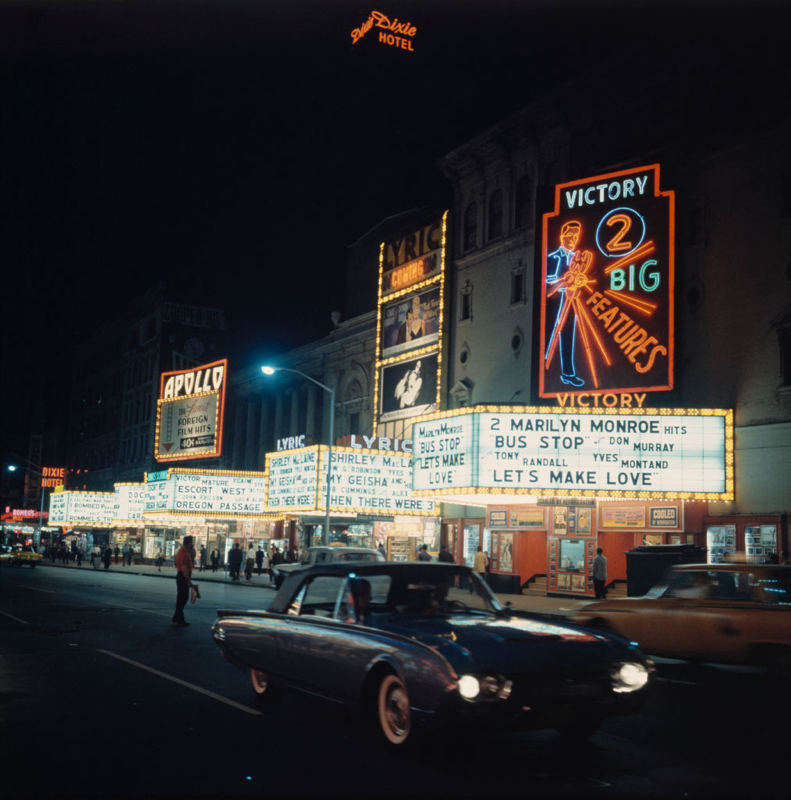
The Apollo, Lyric and Victory movie theatres on West 42nd Street, Manhattan, New York City, 1962. The Victory is showing the Marilyn Monroe double bill ‘Bus Stop’ and ‘Let’s Make Love’. Photo by Byron Coroneos/The Getty Archive London England
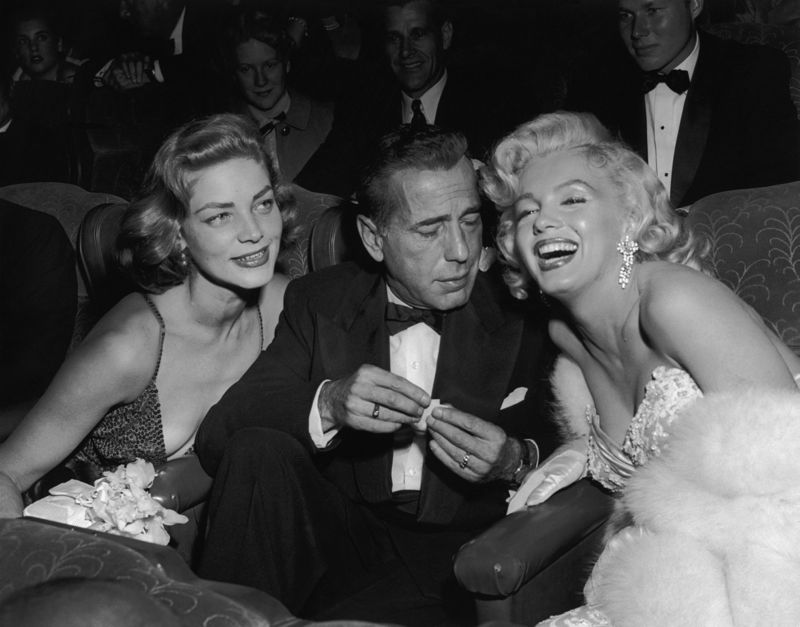
Married American actors Lauren Bacall (L) and Humphrey Bogart (1899 – 1957) pose with American actor Marilyn Monroe (1926 – 1962) at the premiere of director Jean Negulesco’s film, ‘How to Marry a Millionaire’. Bacall and Monroe costarred in the film. January 01, 1953. (Photo By Darlene Hammond)
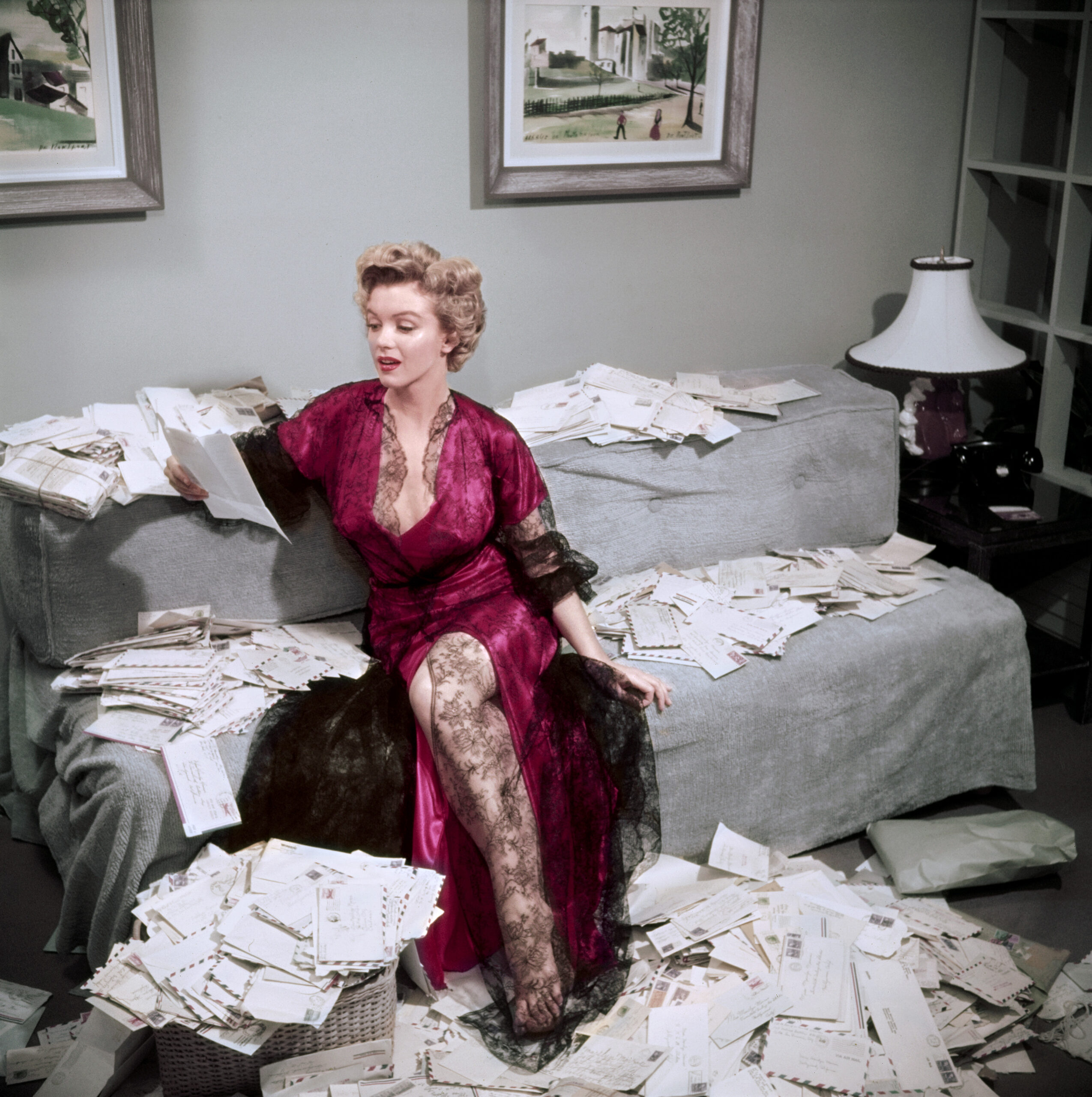
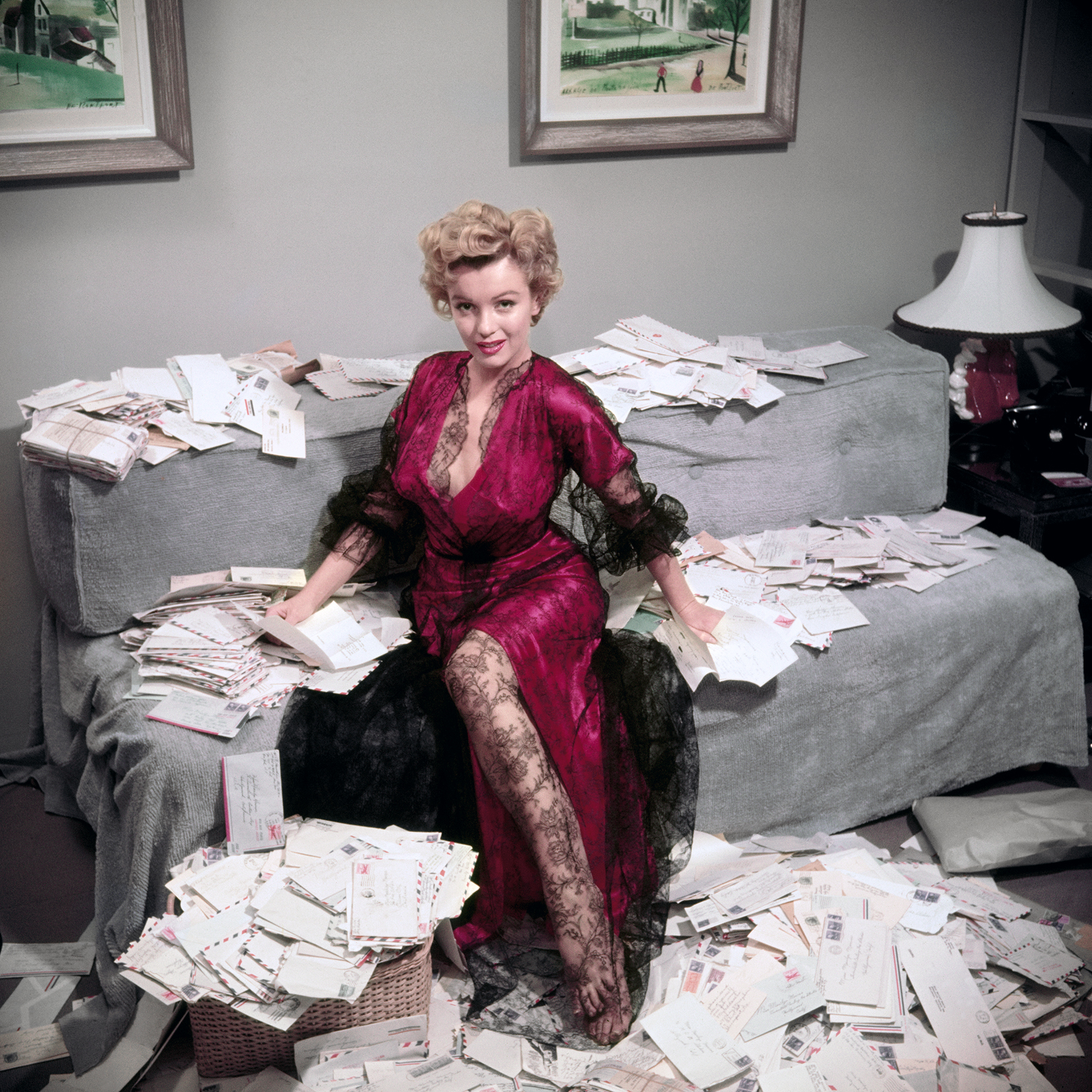
Note this image is available as an Open Edition or Limited Edition Estate Stamped Print (edition size 1/150). Marilyn Monroe (1926 – 1962), wearing a red negligee trimmed with black lace, sorts out her fan mail shortly after her film ‘The Asphalt Jungle’ had been released, Beverly Hills, 1952. (Photo by Slim Aarons)
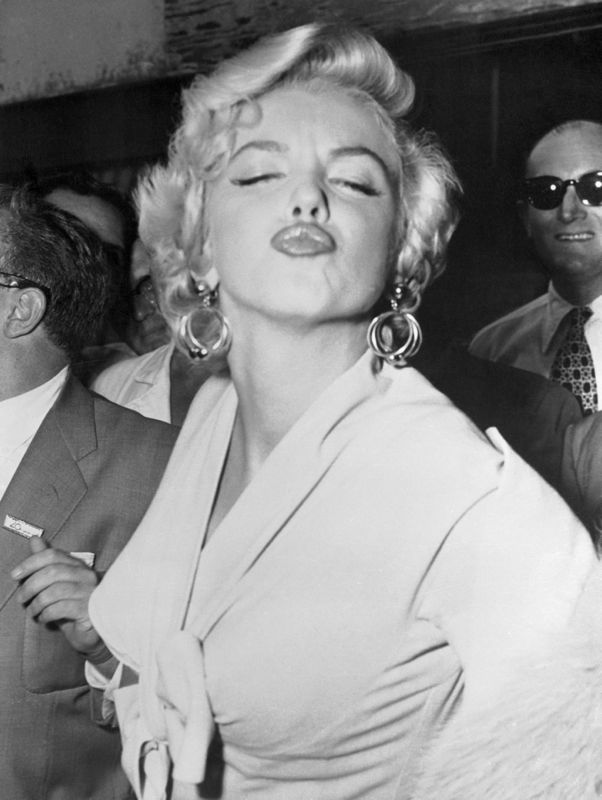
Marilyn Monroe puckers with her infamous pout for photographers in Idlewild Airport after a cross-country flight from Los Angeles. She has arrived in New York to work on The Seven Year Itch. 10th Septmember, 1954. (Photo by Bettmann)
Note this image is available as an Open Edition or Limited Edition Estate Stamped Print (edition size 1/150). Marilyn Monroe (1926 – 1962), wearing a red negligee trimmed with black lace, sorts out her fan mail shortly after her film ‘The Asphalt Jungle’ had been released. Original Publication: A Wonderful Time – Slim Aarons
We offer a completely bespoke service and can cater to any Size & Framing requirements.
We also offer a Specialist Image Research service, in case you do not see the photograph you are looking for immediately – we will find it for you.
[hr]
Production Time
Prints Only – approximately 2 working weeks
Framed Prints – approximately 4 working weeks
Perspex Aluminium Dibond mounted Prints – approximately 2 working weeks
[hr]
Delivery Time
Prints Only – approximately 2 working days
Framed Prints – approximately 3 working days
(dependent on size of order & destination)
Special Delivery Date Requests
If you need an order delivered for a specific date – simply contact us and we will always try and accommodate if at all possible.
[hr]
Returns Policy
We at GALERIE PRINTS believe that Life is simply too short for mediocrity.
Therefore we want you to be absolutely happy with the high quality prints and framing that we provide.
As such, we accept returns within 7 days of purchase, as long as prints are returned in the same pristine condition in which they are sent out (we cannot accept returns of even slightly damaged goods, understandably).
In the extremely rare circumstance that a print (framed or unframed) should arrive damaged in any way, please mark it as such when accepting delivery, provide photographic proof and we will replace your print(s) right away and free of charge of course.
Paramount to us is your satisfaction and we want you (as most of our clients already do all over the world )
to become a returning client and for you to recommend our beautiful prints and our service to everyone, everywhere.