
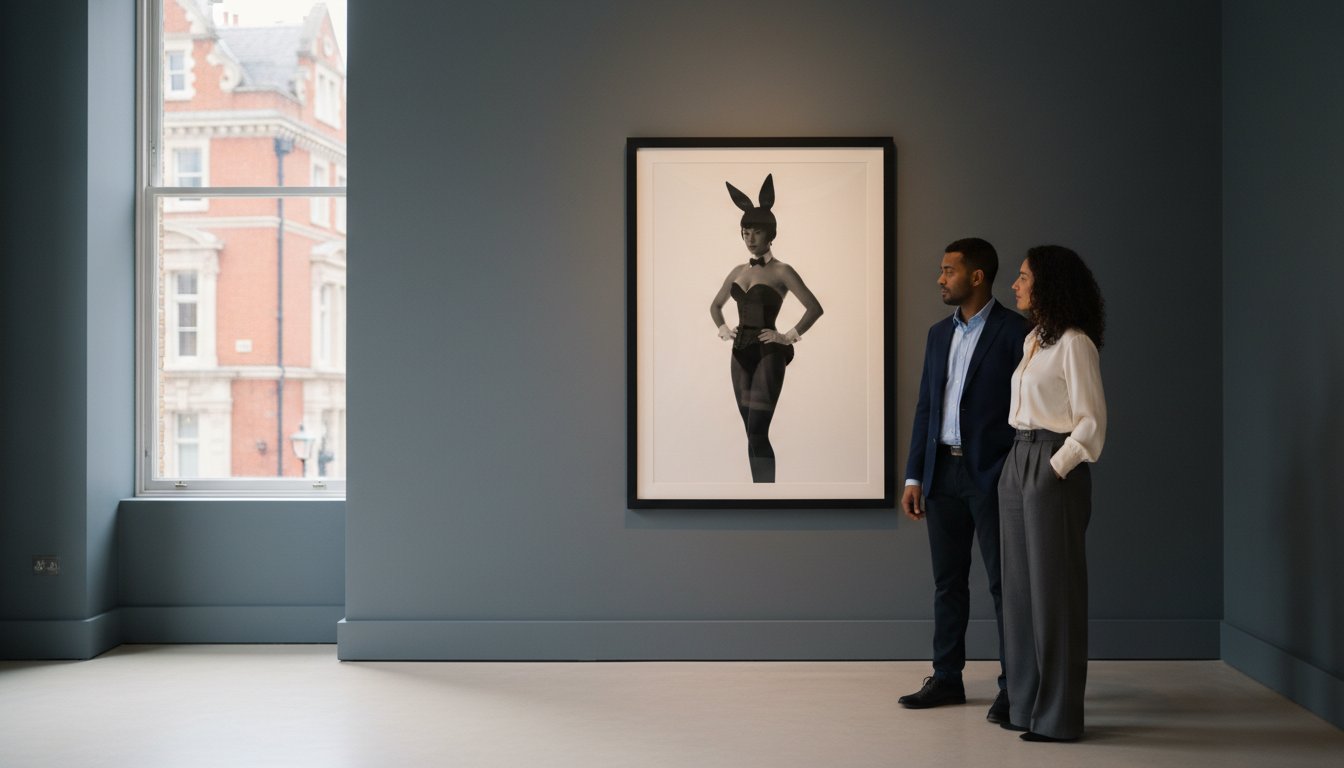
The distinction between a mass-produced souvenir and a piece of cultural history lies entirely in the provenance of the lens. While many seekers of mid-century style today might search for the playboi bunny aesthetic across fleeting digital feeds, they often miss the rigorous artistry that defined the golden age of glamour beginning in 1953. You likely recognize the silhouette as a global icon of 20th-century rebellion. However, finding a print that captures the authentic, archival spirit of that era is an increasingly rare pursuit. It’s exhausting to sift through pixelated reproductions when your curated interior space demands the depth and texture of a true silver gelatin masterwork.
This article will bridge the gap between commercial kitsch and the world’s finest photography. You’ll discover how legendary artists transformed a simple costume into a symbol of sophisticated allure through meticulous composition and lighting. We’ll explore the rare archives of the 1960s to identify museum-quality prints that serve as both a historical record and a bespoke investment for your home.
Key Takeaways
- Explore the cultural genesis of a mid-century icon and its pivotal role in defining the era’s standard for sophisticated nightlife and luxury.
- Uncover the meticulous craftsmanship and symbolism inherent in the original costume design, from the architectural satin ears to the signature ‘cottontail’.
- Trace the artistic evolution of the playboi bunny as it transitioned from a promotional symbol into a subject of prestigious fine art portraiture.
- Discover professional techniques for curating and displaying large-scale archival prints to elevate your contemporary or mid-century modern home decor.
- Learn how the traditional hand-printing processes in our London darkroom preserve the provenance and exquisite quality of these timeless photographic treasures.
The Cultural Genesis of the Playboy Bunny Icon
The 1960 opening of the first Playboy Club at 116 East Walton Street, Chicago, marked a transformative shift in global hospitality and visual culture. It wasn’t just a venue; it was the physical manifestation of a curated lifestyle that promised sophistication to the urban gentleman. This era defined the Bunny not as a mere employee, but as a 20th-century symbol of aspirational luxury and elite nightlife. While modern digital culture often references the term playboi bunny in connection with contemporary music and fashion trends, the original icon was a meticulously crafted ambassador for “the good life” during the post-war boom.
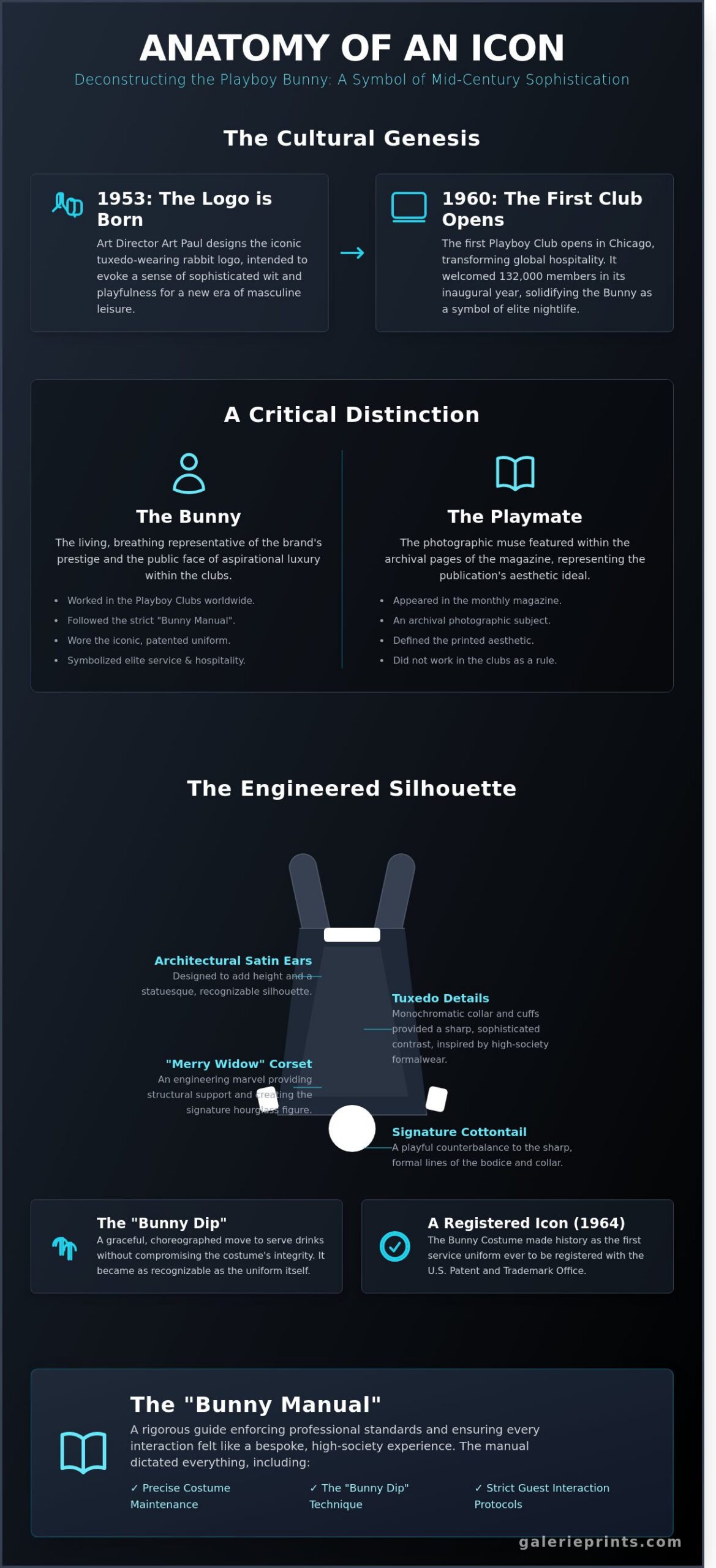
The distinction between a Bunny and a Playmate was absolute. While the Playmate existed within the archival pages of the magazine, the Bunny was the living, breathing representative of the brand’s prestige. Every woman who wore the suit operated under the strict guidance of the “Bunny Manual,” a document that enforced rigorous professional standards. This manual dictated everything from the “Bunny Dip” serving technique to the precise maintenance of the satin costume. These women were the face of a new era of leisure, bridging the gap between high-society glamour and the accessible optimism of the 1960s.
Origins and the Hugh Hefner Vision
The silhouette of the rabbit didn’t emerge by accident. Art Director Art Paul designed the tuxedo-wearing rabbit in 1953, intending to evoke a sense of playfulness and wit. Hefner’s vision was to move away from the heavy, traditional aesthetics of old-world gentlemen’s clubs. He sought to create an atmosphere that was sophisticated, yet playful. This visual identity drew heavily from the golden age of glamour, utilizing sharp lines and monochromatic elegance to ensure the brand felt timeless. By the time the Chicago club welcomed its first 132,000 members in its inaugural year, the rabbit head was already an established mark of provenance in the art of masculine leisure.
A Symbol of the Mid-Century Aspirational Lifestyle
During the 1960s, the Bunny became synonymous with the jet-set era often captured in the photography of Slim Aarons. It represented a world where travel, cocktail culture, and fine art intersected seamlessly. The Playboy Bunny Icon stood as a beacon of post-war optimism, reflecting a society that was finally embracing the fruits of its labor. The role was highly coveted; in 1960, thousands of women applied for the few available positions, drawn by the promise of professional independence and the status associated with the uniform. It’s this enduring legacy that makes the playboi bunny aesthetic a recurring theme in contemporary photography collections today. The rigorous training ensured that every interaction in a Playboy Club felt like a bespoke experience, reinforcing the brand’s position as a guardian of photographic and cultural heritage.
- 1960: The year the first Playboy Club opened in Chicago.
- Art Paul: The designer responsible for the iconic rabbit head logo.
- The Bunny Manual: The essential guide for maintaining the “sophisticated yet playful” brand standard.
- The Bunny Dip: A graceful, choreographed movement designed to serve drinks without compromising the costume’s integrity.
Anatomy of an Icon: The Design and Symbolism of the Bunny Costume
The original costume arrived as a masterclass in structural engineering, debuting at the Chicago Playboy Club on February 29, 1960. It wasn’t merely a garment; it’s a bespoke silhouette designed to emphasize the hourglass figure through an architectural “merry widow” corset. This internal structure provided the necessary support for the heavy satin and velvet fabrics that defined the look. Each component served a specific purpose in this theatre of hospitality. The satin ears sat high to add height, while the signature cottontail offered a playful counterbalance to the sharp lines of the bodice. This careful construction ensured that the playboi bunny remained a symbol of refined allure rather than common fashion.
To maintain decorum and ensure the strapless garment remained secure, the brand developed the Bunny Dip. This was a choreographed gesture where the server would bend at the knees and arch backward while serving drinks. This movement became as recognizable as the outfit itself, adding a layer of performance to the service. In 1964, this ensemble made history as the first service uniform registered with the U.S. Patent and Trademark Office. This legal milestone transformed a piece of clothing into a protected corporate identity, ensuring its provenance remained tied to a single, exclusive brand.
The Architecture of Glamour
Early iterations of the costume required meticulous hand-fitting for every individual. Each woman underwent a bespoke tailoring process to ensure the bodice adhered perfectly to her frame. Designers selected heavy-gauge satin and silk that captured light with an exquisite glow, a quality that translated beautifully into the silver gelatin prints of the era. The sharp, clean lines of the ears and the cinched waist directly influenced the 1960s mod aesthetic, mirroring the decade’s obsession with bold, graphic shapes and structured femininity.
From Uniform to Pop-Art Motif
By 1967, the playboi bunny silhouette transcended its role as a club uniform. It became a powerful symbol of American consumerism, adopted by the art world as a shorthand for mid-century luxury. The motif appeared in pop art and media as an international icon that required no text for recognition. It stood as a visual marker of Hollywood’s golden age, representing a curated world of high-society glamour. Today, the image remains a timeless piece of photographic history, preserved in archival collections that document the evolution of 20th-century style and the enduring power of a well-crafted icon.
Through the Lens: Legendary Photographers and the Bunny Aesthetic
The transformation of the playboi bunny from a club mascot into a cornerstone of fine art photography owes everything to the visionaries behind the camera. During the 1960s and 1970s, what began as promotional imagery for the global Playboy Club network evolved into sophisticated portraiture. Archives like the Getty Images Gallery have played a vital role in this preservation. They act as custodians for thousands of original negatives that document this era, ensuring these moments aren’t lost to time. These images don’t just show a uniform; they capture a specific, fleeting moment of mid-century cultural history. They serve as a bridge, connecting the modern collector to the golden age of glamour through a lens of prestige and technical excellence.
Terry O’Neill: Capturing the Soul of the Sixties
Terry O’Neill brought a unique, reportage-style intimacy to his subjects. His work at the London Playboy Club in 1963 captured the Bunnies with a blend of professional poise and behind-the-scenes vulnerability. These frames define the O’Neill approach, where the subject feels both legendary and approachable. Collectors often seek his work because it represents the pinnacle of black and white pictures. He utilized high contrast to highlight the satin sheen of the ears and the sharp tailoring of the corsets, creating a visual narrative that feels as fresh today as it did sixty years ago.
Slim Aarons and the Jet-Set Bunny
Slim Aarons famously avoided “bad” subjects, preferring to document “attractive people doing attractive things in attractive places.” While his lens usually focused on socialites in Marbella or Palm Springs, he occasionally integrated the playboi bunny icon into his sun-drenched, aspirational compositions. These rare shots place the Bunny within a world of extreme luxury, moving the icon from the nightlife of the clubs to the poolside of the elite. This perspective is a core component of the broader Slim Aarons collection, emphasizing a lifestyle of leisure and high-society glamour that remains a hallmark of the world’s finest photography.
The Technical Mastery of Archival Photography
Achieving the “ethereal glow” found in vintage prints required more than just a good subject. Photographers in the 1960s utilized complex lighting setups to manage the reflective surfaces of the costumes. Today, the most prestigious way to own these images is through silver gelatin prints. This traditional darkroom process uses silver salts to create a deep, rich tonal range that digital methods simply cannot replicate.
- Silver Gelatin: Provides unparalleled archival stability and tonal depth.
- Original Negatives: Essential for producing museum-quality art that retains every detail.
- Hand-Printing: Our London-based craftsmanship ensures each print is a bespoke piece of history.
By working directly from original negatives, artisans can produce prints that preserve the tactile details of the 1950s and 60s. This commitment to quality ensures the legacy of these photographers remains a permanent, stable investment for any serious art collector.
Collecting and Decorating with Iconic Playboy Photography
Integrating these bold, historical images into a contemporary residence requires a curator’s eye for balance. While the subject matter is inherently provocative, the transition from the printed page to a gallery wall elevates the playboi bunny from a mere pop culture symbol to a piece of serious photographic history. These works serve as a bridge to the 1950s and 60s, offering a glimpse into a world of curated glamour that remains unmatched in modern digital media. The prestige of these images lies in their ability to command attention while maintaining an air of mid-century sophistication.
The Power of the Large-Format Print
A statement piece often dictates the energy of an entire room. In a lounge or a dedicated home bar, a large-format print creates an immediate conversational focal point. For a minimalist interior, a monochrome silver gelatin print provides a sophisticated, noir-inspired atmosphere. Conversely, high-saturation color prints captured on Ektachrome film in the 1960s bring a vibrant, retro-futuristic energy to mid-century modern spaces. Owning one of these prints isn’t just about decoration; it’s about possessing a tangible artifact of the world’s finest photography. A 40×60 inch print, for instance, transforms a blank wall into a window to the golden age of glamour.
Bespoke Framing for the Discerning Collector
The longevity of your investment depends on the quality of the materials used. To preserve the rich tones and delicate highlights of these iconic shots, we utilize archival photo paper that meets the rigorous ISO 9706 standards for permanence. Framing choice is equally vital to the final aesthetic:
- Sleek Black Wood: Ideal for contemporary galleries, providing a sharp border that focuses the eye on the subject.
- Vintage Gilt: A nod to the 1950s Hollywood Regency style, adding a layer of opulent warmth to the piece.
- UV-Protective Glass: Essential for blocking 99% of harmful rays, ensuring the playboi bunny imagery doesn’t fade over the decades.
Our professional framing services provide a ready-to-hang solution, with each piece hand-finished in our London darkroom. This artisanal approach ensures that the provenance and prestige of the image are matched by its physical presentation. Each frame is selected to complement the era while protecting the silver-based emulsions of the original negatives.
To create a broader narrative, you might build a gallery wall. You can pair these bold subjects with other fine art photography, such as the aspirational poolside scenes of Slim Aarons or the candid celebrity portraits of Terry O’Neill. This juxtaposition contextualizes the Bunny within the wider spectrum of mid-century luxury and high-fashion photography. The result is a curated collection that feels both personal and historically significant.
Archival Excellence: Why Galerie Prints is the Destination for Fine Art
Galerie Prints functions as a dedicated guardian of photographic heritage, bridging the gap between historical archives and the modern collector’s home. Our mission centers on the preservation of 20th-century glamour, ensuring that iconic imagery, including the classic playboi bunny aesthetic, remains accessible in its most authentic form. We source directly from prestigious institutions like the Hulton Archive and Getty Images, maintaining a chain of provenance that guarantees every piece is a genuine artifact of cultural history. By upholding our promise to provide “the world’s finest photography,” we offer more than just prints; we provide a tangible connection to the golden age of film and fashion.
The selection process is rigorous. Only a fraction of the millions of images housed in world-renowned archives meets our standards for composition, historical significance, and technical clarity. This curatorial precision allows us to present a collection that isn’t just vast, but meaningful. Whether you’re a seasoned collector or a first-time buyer, the assurance of quality remains the same across every era we represent.
Craftsmanship in the London Darkroom
The distinction of a Galerie Prints piece lies in its physical creation. We don’t rely on mass digital reproduction. Instead, our team utilizes a “Hand-printed in our London darkroom” approach that honors traditional silver gelatin techniques. Working from original negatives allows us to capture the depth, grain, and tonal range that digital sensors often flatten. Each print possesses tactile and historical elements, such as the specific chemical bloom of the paper, making it a unique piece of art. This artisanal process ensures archival stability for over 100 years, protecting your investment against the fading common in standard inkjet prints. Each piece feels substantial, carrying the weight of the history it depicts.
A Curated Path to Ownership
We’ve streamlined the acquisition process for our international clientele, offering a seamless transition from the gallery to your private wall. Our bespoke framing and mounting service utilizes acid-free materials and museum-grade glass to preserve the integrity of each image. Beyond the allure of the playboi bunny era, we invite you to explore our Cinema Lobby Cards and other rare collections that define the 20th-century experience. Every order is handled with precise care, from the initial curation to the final global shipping logistics. Choosing a print here is a decision to invest in a lasting piece of history that will resonate for generations. We don’t just sell images; we preserve the moments that shaped our visual culture.
Bringing the Golden Age of Glamour Into Your Space
The cultural impact of the playboi bunny icon remains a defining element of 20th-century visual history, tracing its roots back to the 1953 debut that transformed editorial photography into high art. This journey through mid-century aesthetics highlights the meticulous design of the bunny silhouette and the technical mastery of photographers who defined the era. It’s a legacy built on the intersection of fashion, celebrity, and a specific brand of aspirational luxury that feels just as evocative today as it did seven decades ago.
Owning a piece of this history requires a commitment to archival integrity. Our collection draws directly from the prestigious archives of Getty Images and the sun-drenched portfolios of Slim Aarons, providing a bridge to a vanished world of elegance. Every artwork is hand-printed in our London darkroom to ensure the rich, tactile quality that only traditional methods can achieve. To complete the presentation, we offer bespoke museum-quality framing that protects the provenance of your print for a lifetime. Your walls deserve a narrative that transcends the temporary. Explore our curated collection of the world’s finest photography and find a timeless piece that speaks to your discerning eye.
Frequently Asked Questions
What is the difference between a Playboy Bunny and a Playmate in photography?
A Playboy Bunny was a professional hostess at the Playboy Clubs, first established in Chicago in 1960; whereas a Playmate was a model featured in the magazine’s monthly editorial centerfold. While the Bunny wore the signature satin ears and tail designed by Zelda Wynn Valdes, the Playmate sessions were distinct photographic features. Collectors often distinguish between the two based on the 28 year era of the original international clubs.
Are these Playboy Bunny prints considered fine art?
These photographs are widely recognized as fine art because they represent the intersection of mid-century social history and high-fashion portraiture. Galerie Prints offers silver gelatin prints and C-type editions that meet museum-grade standards for collectors. When a print is hand-produced from the original negative, it transcends commercial photography to become a collectible piece of 20th-century heritage that holds its value over time.
Who are the most famous photographers who shot the Playboy Bunny?
Legendary photographers such as Slim Aarons, Terry O’Neill, and Burt Glinn captured the most enduring images of the playboi bunny. O’Neill’s 1970s sessions and Aarons’ lifestyle shots provide a sophisticated lens on this cultural phenomenon. Each artist brought a distinct perspective, ranging from the candid reportage of the London Park Lane club to the highly stylized glamour of the Hollywood era.
What makes an archival print different from a standard poster?
An archival print is produced on acid-free paper using pigment-based inks, ensuring a lifespan of over 100 years without fading or yellowing. Standard posters are mass-produced on thin, acidic paper that often degrades within 5 to 10 years. Our bespoke prints are hand-finished in our London darkroom, maintaining the precise tonal range and deep blacks required for a true investment-grade piece of art.
How should I frame a vintage-style Playboy Bunny photograph?
You should frame a vintage-style photograph using UV-protective glass and acid-free mounting boards to prevent light damage and discoloration. A simple, elegant black wooden frame with a white window mount is the classic choice for these 1960s icons. This minimalist approach ensures the focus remains on the exquisite composition of the original 35mm or medium-format shot without distracting from the subject.
Where were the original Playboy Bunny photographs taken?
The original photographs were primarily taken at the Playboy Clubs in Chicago, which opened in 1960, and the London location, established in 1966. Many iconic lifestyle shots were also staged at the Playboy Mansion in Chicago or the later Los Angeles estate purchased in 1971. These locations served as the authentic backdrops for thousands of images that defined the mid-century aesthetic for a global audience.
Can I buy authentic Slim Aarons or Terry O’Neill prints of this subject?
Authentic prints by Slim Aarons and Terry O’Neill are available through our curated collection, sourced directly from the Getty Images Gallery and the artists’ estates. We provide high-quality C-type and silver gelatin prints that capture the playboi bunny in her most glamorous settings. Each piece comes with the necessary provenance to ensure its status as a genuine work of photographic art for your home.
Why is the Playboy Bunny still considered a fashion icon today?
The Bunny remains a fashion icon because the original 1960 costume represents a masterclass in mid-century silhouette and branding. It has influenced high-fashion designers for over 64 years, appearing in various iterations on global runways from New York to Paris. The imagery evokes a specific era of 1960s optimism and sophisticated nightlife that continues to inspire modern interior designers and fashion historians alike.