
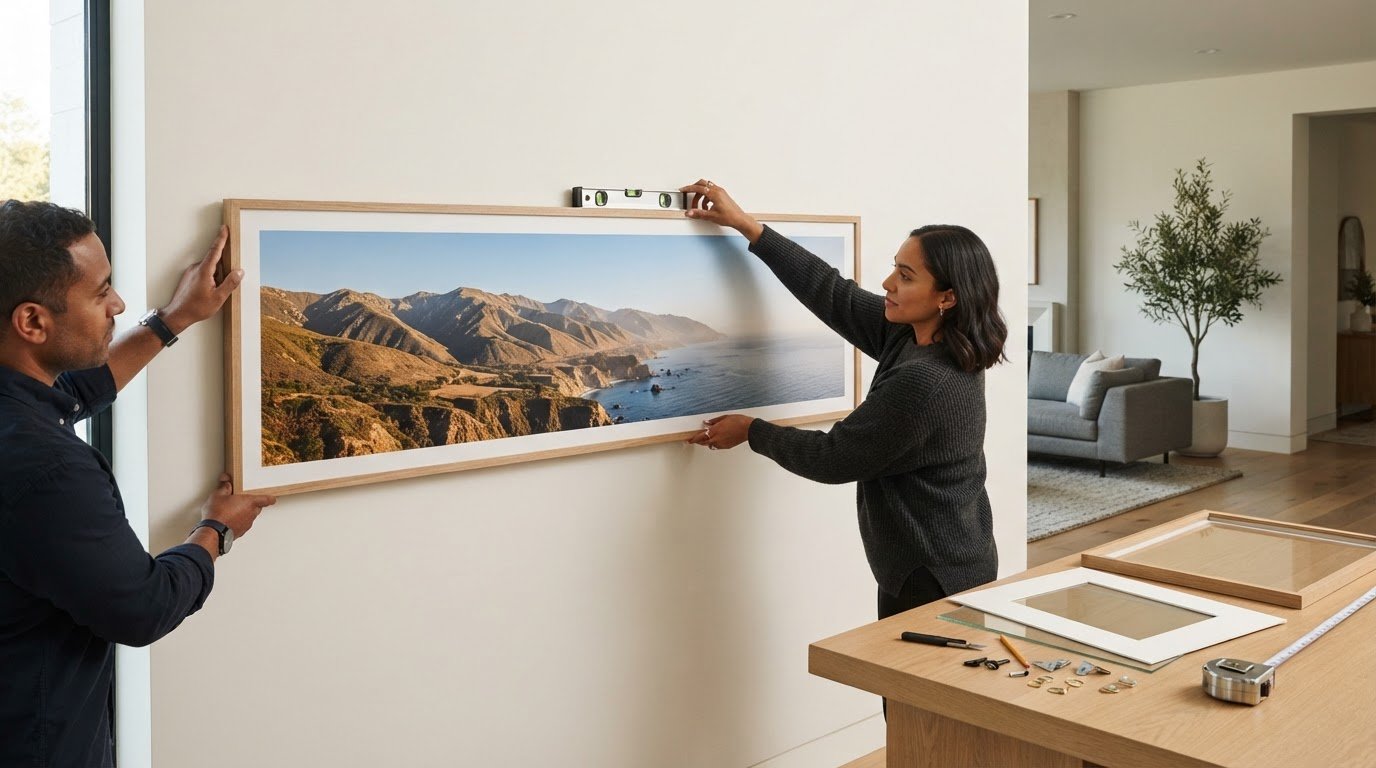
When framing a large panoramic photo, start with the print’s exact proportions and the space where it will hang. An unusually wide image can be difficult to fit, and the wrong mount or glazing can distract from the composition. It’s worth planning ahead, especially when the finished frame may be heavy or awkward to handle.
Careful choices can give the image room to breathe and help you display it with confidence. This guide explains how to measure the print and account for the mount, compare frame and glazing options, and decide whether ready-made or bespoke framing is a better fit. You’ll also find practical steps for preparing to hang the finished piece. The aim is a balanced presentation that keeps the full panorama in view and feels at home in your space.
Key Takeaways
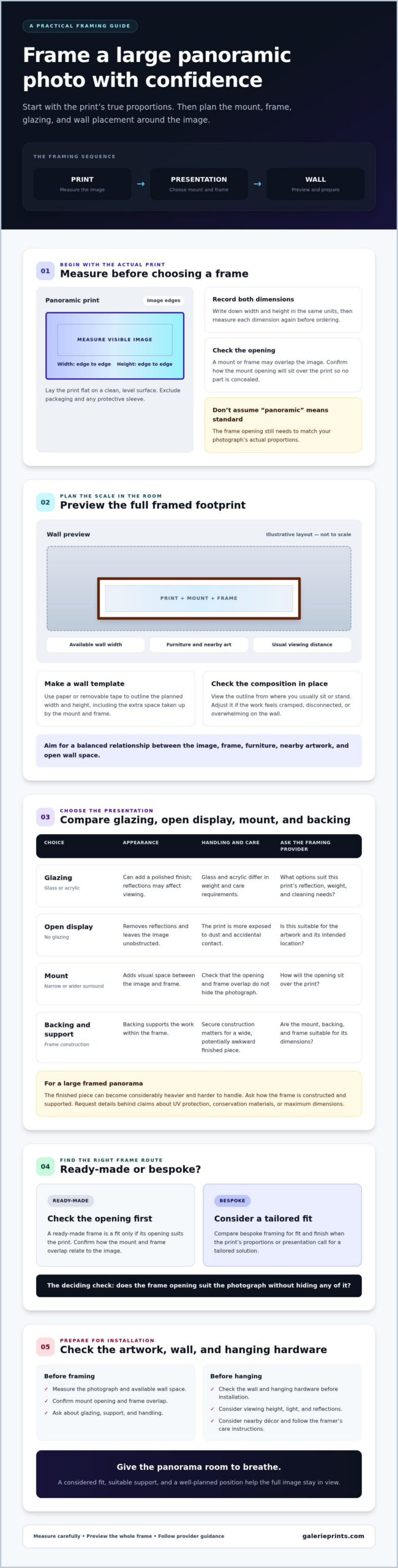
- Measure the photograph and the available wall space instead of assuming the print matches a standard panoramic size.
- When framing a large panoramic photo, consider how glazing, mounting, and support affect both presentation and handling.
- Compare ready-made and bespoke framing for fit and finish. Choose a ready-made frame only if its opening suits the print.
- Measure and prepare the artwork, then check the wall and hanging hardware before installation.
- Consider viewing height, light, reflections, and nearby décor, and follow the framer’s care instructions.
Framing a large panoramic photo starts with the print and the wall
A panoramic photograph draws the eye across a scene, so its frame should support that horizontal sweep rather than compete with it. Panoramic framing means choosing a frame and, if appropriate, a mount that suit the image’s proportions. Start with the photograph’s actual dimensions: a panoramic label does not guarantee that a frame opening will match your print.
A picture frame presents an image, but its overall footprint also affects how the work sits in a room. Before choosing a frame, consider the wall’s available width, the usual viewing distance, and the position of furniture and nearby artwork. A long frame may work above a sofa but feel crowded between a doorway and a cabinet. Aim for a balanced relationship between the image, frame, and setting.
How to measure a panoramic photo for framing
Lay the print flat on a clean, level surface. Measure the visible image from edge to edge, excluding any packaging or protective sleeve, and record the width and height in the same units. Measure each dimension again before ordering. If you’re adding a mount, ask how its opening will sit over the print. The mount or frame may overlap the image, so confirm the specifications before settling on dimensions.
How to judge the frame’s scale on your wall
Preview the full framed footprint, not just the print. Use a paper template or removable tape to outline the planned width and height on the wall, allowing for the added space taken up by a mount and frame. View the outline from where you’ll usually sit or stand, and check how it relates to furniture, nearby art, and open wall space. For more ideas on arranging photography at home, explore this fine art photography collecting and decorating guide.
Step back and adjust the outline if the composition feels cramped or disconnected from its surroundings. The frame should give the panorama presence without overwhelming the wall or competing with other pieces. Measure both the artwork and the available wall space before choosing a frame.
Choose glazing, mounting, and support for a large panoramic photo
Glazing, mounting, and backing affect how a wide print looks and how the finished piece is handled. Glazing creates a transparent barrier between the photograph and its surroundings. An open display avoids reflections, but leaves the print more exposed to dust and accidental contact. The right choice depends on the artwork, its setting, and the care you’re prepared to give it. Ask the framer which options suit your print’s dimensions instead of assuming every material works for every format.
A mount creates visual space between the image and frame, helping the photograph feel considered rather than pressed against an edge. A narrow border keeps attention close to the image, while a wider surround can give it more presence on a large wall. Neither is right for every print. Preview the proportions and confirm that the mount opening and frame overlap won’t conceal any part of the photograph.
Compare the choices before ordering
| Choice | Appearance | Handling | Ask the framing provider |
|---|---|---|---|
| Glazing | Can add a polished finish; reflections may affect viewing. | Glass and acrylic differ in weight and care requirements. | What glazing is available, and how do its reflection, weight, and cleaning needs suit this print? |
| Open display | Removes reflections and leaves the image unobstructed. | The print is more exposed to dust and contact. | Is this presentation suitable for the artwork and its intended location? |
| Mount and backing | A mount adds separation; backing supports the work within the frame. | Secure construction matters for a wide, potentially awkward finished piece. | How will the print be held in place, and are the mount, backing, and frame suitable for its dimensions? |
A large panoramic photo can become considerably heavier and harder to handle once framed. Ask how the frame is constructed and supported, and request details behind any claims about UV protection, conservation materials, or maximum dimensions. The Canadian Conservation Institute offers further guidance on framing structure and safe handling. Follow the framing provider’s advice for your photograph.
If your print needs a tailored presentation, Galerie Prints offers bespoke framing and mounting as an add-on for purchased prints. Explore Galerie Prints and confirm which options suit the panoramic print you have in mind.
Custom or ready-made framing: which suits a panoramic photo?
Ready-made framing can work when the frame opening suits the print and its proportions look right in your room. Bespoke framing gives you more scope to account for the image’s exact dimensions, mount width, and preferred finish. Neither route is automatically better. Choose based on fit and presentation, and on whether the available options can accommodate the photograph without altering it.
When framing a large panoramic photo, check the frame’s stated image opening, not only its outside dimensions. The outside measurement gives the full footprint; the opening shows the area intended for the artwork and may be smaller. Confirm whether the print fits as-is or needs a mount, and don’t trim the photograph to force a mismatch. Ask about construction and hanging hardware, too, because the finished frame may be more awkward to handle than the print alone.
When can a ready-made frame work?
Choose a ready-made frame only if its opening accommodates the print and any planned mount. Compare the stated measurements with your own, and check whether the mount reduces the visible area. Before ordering, make sure the frame’s construction and hardware suit its finished size. Follow the maker’s instructions for handling and hanging.
When should you consider bespoke panoramic framing?
Consider a bespoke enquiry if standard openings don’t match the print’s proportions or you want more control over the border and overall presentation. Discuss the photograph’s exact dimensions, desired mount, glazing, and display conditions before confirming an order. Specifications and selected options affect any quote, so request details based on your particular print rather than relying on a general estimate.
A framing provider can help clarify which materials and construction are appropriate for your artwork. The Professional Picture Framers Association (PPFA) is another place to explore framing information. For broader guidance on how a frame relates to the work and its surroundings, see this guide to choosing a frame for art.
Galerie Prints offers bespoke framing and mounting as an add-on for purchased prints. Confirm panoramic specifications before ordering. You can explore fine art photography prints at Galerie Prints and check which options suit the dimensions and finish you have in mind.
Measure, prepare, and hang a large panoramic photo safely
The finished frame can be heavier and more awkward to carry than the print alone. Plan for the complete piece, including its final outside dimensions, route into the room, wall fixings, and safe lifting. Preparing in advance helps protect both the artwork and the people handling it.
What to confirm before ordering or collecting the frame
Before the frame is made or collected, verify its outside width and height, the direction it will hang, and the intended hanging method. This helps you check whether it will fit through doorways and into the planned space. Ask the framing provider for handling advice specific to the selected frame, and confirm how delivery or collection is arranged for a large, fragile, or unusually shaped piece.
How to plan a secure, level installation
Identify the wall construction, then choose fixings suited to that wall and rated for the complete framed piece. If you’re unsure what the wall or hardware can support, consult a qualified installer rather than guessing. Have another person help lift and position a large frame. Once it’s hung, check that it sits level, feels stable, and isn’t putting strain on its hanging points.
Safe hanging depends on both the wall and the complete framed piece. Use this sequence to prepare for installation:
- Recheck the measurements: Confirm the frame’s outside dimensions and compare them with the wall space and access route.
- Review the hanging plan: Confirm the frame’s orientation, hanging method, and any handling instructions from the framer.
- Assess the wall: Identify its construction and select compatible fixings rated for the finished frame.
- Lift with care: Ask another person to help guide and support the frame as you position it.
- Inspect after hanging: Check that it is level and stable and that the hanging points aren’t strained. If anything shifts or appears strained, take the frame down and reassess the installation.
For a purchased print that calls for a tailored finish, Galerie Prints offers bespoke framing and mounting as an add-on. Confirm the available options and dimensions before ordering. Explore fine art photography prints and consider how you’d like the finished work to be presented.
Finish and display your framed panoramic photo with confidence
Placement brings the composition into conversation with the room. Give the photograph enough horizontal space to read as a continuous scene, and think about where people will view it from most often. A position that works across a living room may feel too high or visually compressed in a narrow hallway. Step back and assess the image from a natural viewing distance before choosing its place.
Where should a panoramic photograph be displayed?
Consider how light changes throughout the day, including reflections from windows and lamps if the work is glazed. Shift your viewing position and check whether glare obscures important details. A small change in placement may improve the view. Nearby furniture and artwork should complement the photograph’s wide sweep rather than make the wall feel crowded. If you’re choosing a monochrome image, this collector’s guide to black and white pictures offers further inspiration.
What to ask a bespoke framing provider
A coordinated frame and mount can bring a print closer to a finished display, but confirm what’s included before ordering. Ask which frame, mount, and glazing choices suit the photograph’s exact dimensions, then check the final outside measurements and hanging arrangements. Confirm how the framed piece will be delivered and whether it arrives ready to hang. Request handling and cleaning guidance for the selected materials, and follow the framer’s instructions when caring for the finished work.
For a purchased print with unusual proportions or a particular presentation in mind, bespoke framing is an option to explore. Confirm current choices and panoramic specifications before ordering.
With framing a large panoramic photo, the details matter: the image should remain easy to appreciate, reflections shouldn’t distract from the scene, and the frame should suit its surroundings. Explore Galerie Prints’ fine art photography and framing options, and check which current choices suit your print.
Give your panoramic photograph a considered finish
A confident result starts with the artwork’s actual dimensions and the space where it will hang. Measure the print and wall before choosing a frame, then consider how the mount, glazing, and overall proportions will shape the image. Before installation, make sure the complete framed piece and the wall are suited to the hanging plan.
These details turn framing a large panoramic photo from a sizing challenge into a considered part of displaying the work. Galerie Prints lets customers customise print size and paper type through its online platform and offers bespoke framing and mounting as an add-on for purchased prints. Confirm panoramic specifications and current framing choices before ordering.
Explore Galerie Prints’ fine art photography and bespoke framing to consider a print and presentation suited to your space. Plan the fit, finish, and hanging before ordering.
Frequently Asked Questions
How do you frame a large panoramic photo?
Measure the print’s visible width and height, then decide how its proportions should relate to the wall and surrounding décor. Choose a frame opening that fits without trimming the image. Consider whether a mount, glazing, or open display suits the photograph and its setting. Before ordering, confirm the final outside dimensions and construction details. For a large piece, plan how you’ll carry, handle, and hang the complete frame.
Can you buy a ready-made frame for a panoramic photo?
Yes, ready-made panoramic frames are available, but check the stated image opening rather than relying on the outside dimensions. Common print formats include 12 × 36 inches, though your photograph may differ. Confirm that the artwork fits as-is or with the intended mount, without trimming or hiding any part of the image. Also check that the finished frame’s construction and hanging arrangements suit its size and weight.
Should you use a mount when framing a panoramic photograph?
A mount is optional. It can create breathing room between the photograph and frame, giving the image a distinct visual boundary. A narrower border keeps attention close to the panorama, while a broader surround can give it more presence. Choose according to the print and space rather than a fixed proportion. Check that the mount opening and frame overlap won’t cover any part of the photograph.
What size frame do you need for a panoramic photo?
Choose a frame with an image opening that accommodates the print and any planned mount. Measure the visible artwork’s width and height, then check the frame’s opening separately from its outside size. The mount can change the visible area, while the outside measurements determine how much wall space the frame occupies. Confirm both with the framing provider before ordering, especially if the print has unusual proportions.
Is glazing necessary for a large framed photograph?
No, glazing isn’t essential for every display. It creates a clear barrier over the photograph, while an open presentation avoids reflections but leaves the print more exposed to dust and accidental contact. If you choose glazing, ask what options are available and how they affect reflections, weight, and cleaning. Consider the room’s light and the print’s display conditions, and confirm material claims with the framing provider.
How do you hang a large panoramic picture safely?
Identify the wall construction and choose compatible fixings rated for the weight of the complete framed piece, not just the print. Follow the frame maker’s hanging instructions, and ask a qualified installer for help if you’re unsure about the wall or hardware. Have another person assist with lifting and positioning a large frame. After hanging, check that it sits level and stable and that its hanging points aren’t strained.
What should you ask for when ordering bespoke panoramic framing?
Share the print’s exact dimensions and ask which frame, mount, and glazing options suit its proportions. Confirm the visible opening, final outside dimensions, hanging arrangements, and any handling or cleaning guidance. Ask how the print will be held in place, and clarify delivery or collection details for the finished piece. Confirm current choices and panoramic specifications before ordering.