
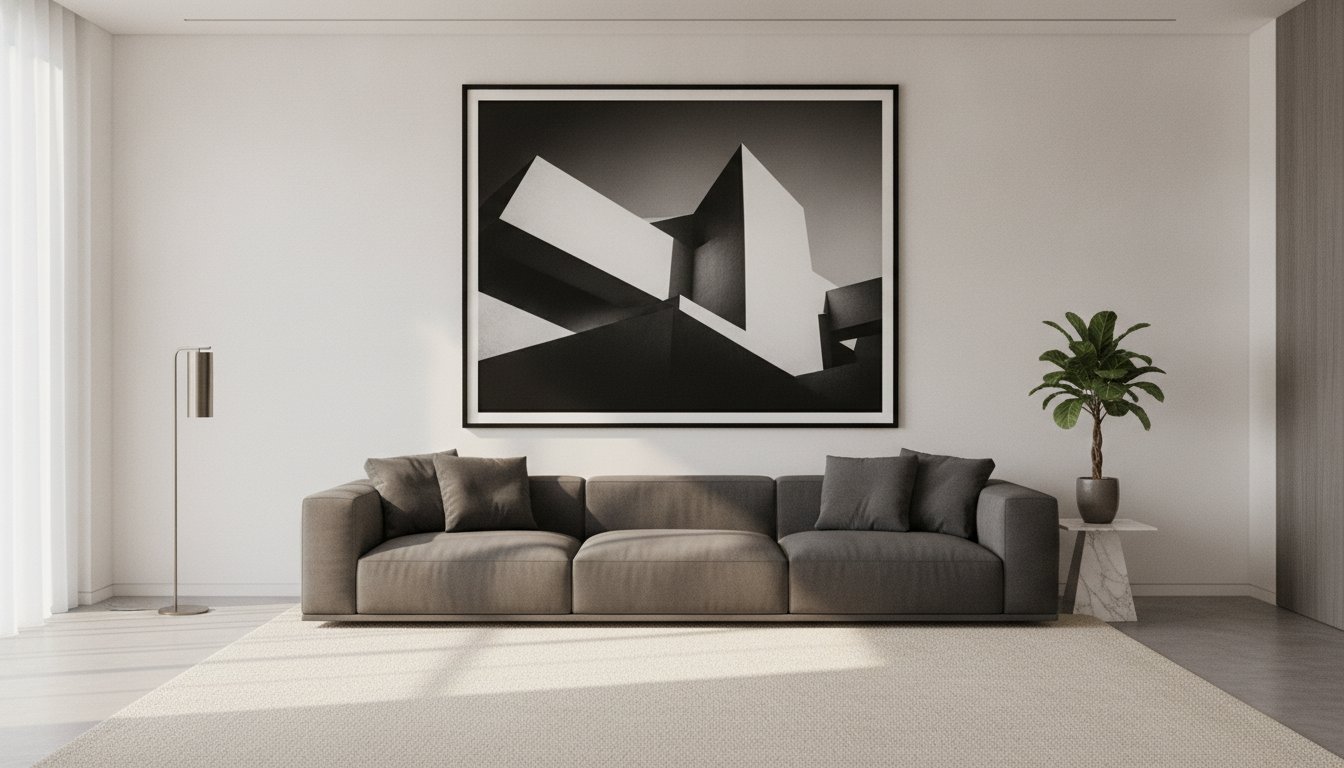
A truly sophisticated interior does not rely on a vibrant palette to command attention; it relies on the structural elegance and quiet authority of shadow and light. You likely understand that a home should feel like a curated sanctuary, yet the prospect of decorating with black and white photography often brings a hesitation that the space might feel cold or clinical. It’s a common concern for those who appreciate the prestige of fine art but fear losing the warmth of a lived-in environment. By treating monochrome imagery as a source of visual silence and a narrative anchor, you can elevate a room from a mere living space to a gallery of photographic heritage.
This guide serves as your curatorial compass, showing you how to transform your home using the narrative power of archival-quality works. You’ll discover how to move beyond simple decoration to create a residence that reflects deep personal taste and historical appreciation. We’ll explore practical layout rules for different rooms, the technical importance of bespoke framing, and how to mix legendary archives like Terry O’Neill or Slim Aarons with contemporary aesthetics to ensure your investment stands as a lasting piece of history.
Key Takeaways
- Master the concept of visual silence to reduce aesthetic clutter and seamlessly bridge the gap between historical photographic archives and modern interior design.
- Gain confidence in decorating with black and white photography by selecting subjects that evoke either intimate human connection or atmospheric architectural drama.
- Learn the curator’s golden rule of scale to match print sizes with wall dimensions while discovering why bespoke framing is essential for both protection and prestige.
- Explore room-specific styling techniques to create sophisticated social hubs in living areas or tranquil, restful retreats in your private quarters.
- Understand the technical superiority of archival-quality prints over standard posters to ensure your art investments remain heirloom-quality pieces of history.
The Timeless Allure: Why Black and White Photography is a Design Essential
Black and white photography is frequently mischaracterized as a safe or neutral design choice. In reality, it acts as a deliberate structural anchor that provides a necessary sense of “visual silence” within a modern home. By stripping away the distraction of color, the viewer is forced to engage with the composition, the interplay of light, and the raw emotion of the subject. This reduction of visual noise creates a calming effect, making decorating with black and white photography an essential strategy for those looking to balance complex interior textures or bold architectural features. It’s the gold standard for “quiet luxury,” offering a level of sophistication that color prints often struggle to match.
The psychological impact of high-contrast imagery shouldn’t be underestimated. Darker tones provide a sense of grounded stability, while bright, blown-out highlights can make a small room feel airy and expansive. This duality allows monochrome art to bridge different design eras effortlessly. You might place a legendary Terry O’Neill portrait in a room filled with mid-century modern furniture, and the result feels cohesive rather than cluttered. Monochrome photography functions as a bridge to a bygone era of elegance, providing a sense of permanence in an age of fleeting digital trends.
Creating a Narrative Anchor
A narrative anchor is a focal point that tells a story. In high-end interior design, this is often achieved through a single, large-scale iconic piece that sets the emotional tone for the entire room. There is a profound difference between “decorative” photography, which merely fills a void, and “collectable” photography, which carries the weight of history. When you choose a print from a prestigious archive, you aren’t just hanging a picture; you’re installing a piece of photographic heritage that invites curiosity and commands respect. This singular focus prevents a room from feeling fragmented, giving the eye a sophisticated place to rest—an effect that can be further enhanced by pairing the work with themed collections, such as aviation history books for sale alongside archival flight imagery.
The Versatility of the Monochrome Palette
One of the greatest strengths of the monochrome palette is its ability to complement vibrant accent colors without clashing. Whether your space features deep emerald velvets or burnt orange linens, black and white art provides a crisp counterpoint that lets those colors sing. Beyond simple black and white, the vast tonal ranges of greyscale add incredible depth to minimalist interiors. The tactile quality of a silver gelatin print or a high-end archival pigment print introduces a physical texture that color photography often lacks, emphasizing the artisanal craftsmanship behind the work.
- Visual Silence: Reduces room clutter by focusing on form over color.
- Heritage: Connects modern spaces with historical significance.
- Contrast: Adds dramatic weight and architectural definition to walls.
Selecting Your Subject: From Iconic Portraits to Atmospheric Architecture
Choosing the right subject is where the curator’s eye truly reveals itself. While landscapes offer a serene escape, portraits provide an unrivaled emotional depth. When you are decorating with black and white photography, the subject matter acts as the soul of the room, dictating whether the space feels like a high-energy social hub or a quiet, contemplative retreat. Portraits, in particular, strip away the noise of color to focus on the raw essence of human connection, making them ideal for intimate spaces like libraries or private lounges.
For the ultra-modern, structured home, architectural prints and abstract compositions offer a different kind of strength. These pieces emphasize the geometry of the built environment, providing a sense of order and rhythm. This sculptural quality is especially potent when you invest in works that prioritize archival-quality prints and preservation, ensuring that the stark contrasts and deep blacks of the original negative are captured with absolute fidelity. Whether you are drawn to the moody edge of a misty landscape or the sharp lines of a skyscraper, the subject should serve as a reflection of your personal narrative rather than a generic design choice.
Iconic Portraiture and Celebrity Heritage
Integrating Terry O’Neill photography into your interior brings an immediate touch of 60s glamour and sophisticated wit to a wall. O’Neill’s ability to capture icons in candid, unguarded moments adds a layer of authenticity that contemporary celebrity photography often lacks. Similarly, exploring the Music Archives offers a way to celebrate cultural heritage in home offices and lounges, balancing the “cool factor” of fame with genuine artistic merit. It’s about choosing an image that resonates with your own history as much as the subject’s, creating a space that feels both prestigious and deeply personal.
Cinema and Cultural Milestones
Social spaces benefit immensely from the conversational power of cinema heritage. Vintage movie posters and Cinema Lobby Cards are not just memorabilia; they are graphic artifacts that capture the essence of a specific era. These pieces work beautifully alongside fashion photography, which often possesses a sculptural quality perfect for dressing rooms or hallways. By exploring the timeless allure of black and white pictures, you can find heritage inspiration that transcends fleeting interior trends. For those seeking to begin their own collection, exploring the Music Archives and limited edition prints at Galerie Prints provides a gateway into this world of prestige and artisanal craftsmanship.

The Curator’s Eye: Mastering Scale, Framing, and Layout
Precision is everything. When decorating with black and white photography, the physical presentation is just as vital as the image itself. A common error in high-end interiors is selecting a piece that is swallowed by the wall. To avoid this, follow the Golden Rule of Scale: art should typically occupy two-thirds to three-quarters of the available wall space above a piece of furniture. This ensures the work feels intentional rather than like an afterthought. A large-scale print from the Music Archives, for instance, requires breathing room to maintain its prestige and visual impact.
The frame is not merely a border; it’s an extension of the artwork. Utilizing a Bespoke Framing Service allows you to select materials that honor the historical authenticity of the print. A “Museum Mount” adds professional depth through high-quality, acid-free matting, which creates a necessary buffer between the glass and the photograph. This technique draws the eye inward, emphasizing the tonal ranges of the greyscale. To preserve the clarity of the work, consider anti-reflective glass. It eliminates distracting glares from windows or lamps, allowing the intricate details of the silver gelatin process to remain visible from every angle.
Step-by-Step: Creating a Balanced Gallery Wall
Building a gallery wall requires a measured approach to avoid a cluttered appearance. It’s about finding a rhythm between different eras and subjects.
- Step 1: Choose a central “anchor” piece. This should be your largest or most evocative print, perhaps a Terry O’Neill classic, placed slightly off-center for a modern feel.
- Step 2: Mix orientations. Intersperse landscape and portrait formats to create a dynamic flow that keeps the viewer engaged.
- Step 3: Maintain consistent spacing. A gap of two to three inches between frames is a standard rule for a professional, curated look.
- Step 4: Decide on your framing strategy. Uniform black frames provide a sense of cohesive stability, while eclectic framing can add individual character to a more personal collection.
The Power of the Oversized Print
The impact of decorating with black and white photography at a grand scale cannot be overstated. An oversized “hero” image can transform a room’s architecture, acting as a window into another era. This statement piece approach works best in dining rooms or entryways where the art has the space to command the entire environment. When hanging these heavy, large-scale framed pieces, structural safety is paramount. Professional installation ensures that your investment in photographic heritage is securely anchored, allowing the artisanal craftsmanship of the frame and the narrative power of the image to shine without compromise.
Room-by-Room Styling: Applying Monochrome Magic Across the Home
The emotional architecture of a home is defined by the art that occupies its walls. When you’re decorating with black and white photography, each room demands a specific tonal and thematic approach. It’s not just about filling space. It’s about matching the narrative of the print to the rhythm of the room. A living room requires the prestige of heritage, while a bedroom calls for the visual silence of soft-focus imagery. By tailoring your selection to the function of each space, you ensure the art feels like a permanent, integrated part of the home’s history.
The Social Spaces: Living and Dining Rooms
Living and dining rooms serve as the social heartbeat of the residence, requiring art that is both commanding and conversational. In these environments, monochrome photography acts as a sophisticated anchor for the surrounding decor. Pairing these prints with organic textures, such as aged leather, polished walnut, or raw linen, creates a rich and multi-layered sensory experience. Even when presented without his signature poolside colors, Slim Aarons prints evoke an unmistakable sense of high-society elegance and an aspirational lifestyle. For maximum engagement during gatherings, position these works at eye level. This placement ensures the art remains part of the social dialogue, inviting guests to linger over the meticulous details and historical provenance of each piece.
Transition Spaces: Hallways and Entryways
Hallways and staircases are frequently overlooked, yet they offer the perfect “runway” for a chronological gallery or a thematic visual journey. Smaller, related prints from the Music Archives or Terry O’Neill collections can tell a compelling story as one moves through the home. The sharp, structural contrast of black-framed art against a crisp white wall provides a rhythmic architectural element that guides the eye. By utilizing dedicated gallery lighting, you turn a simple corridor into a private exhibition space. This approach honors the artisanal craftsmanship of the frames while highlighting the subtle tonal ranges of the archival prints.
The private quarters of the home require a shift in intensity. In the bedroom, the goal is tranquility, making it the ideal setting for soft-focus landscapes or intimate portraits that promote a restful atmosphere. Conversely, the home office benefits from the structured lines of architectural or abstract photography. These images provide a sense of order and mental focus, inspiring productivity through their geometric precision and quiet authority. Whether you’re selecting a Star Wars limited edition print for a touch of cinematic nostalgia or a stark architectural study, the art should reflect the room’s unique purpose and your personal narrative.
Ready to begin your journey into fine art collecting? Browse our curated selection of archival-quality photography to find the perfect narrative anchor for your home.
Investing in Quality: Why Archival Prints and Professional Framing Matter
Distinguishing between a mass-market poster and a fine art print is a vital step for any serious collector. When you’re decorating with black and white photography, the physical medium acts as the vessel for the artist’s vision, carrying the weight of history into your modern space. Mass-produced posters often rely on thin, acidic paper and standard digital inks that lose their vibrancy within a few years. In contrast, an archival-quality print is crafted to be an heirloom, possessing a tactile weight and a depth of tone that transforms a simple image into a piece of photographic heritage. By choosing museum-quality materials, you ensure that the narrative anchor you’ve selected for your home remains as striking in fifty years as it’s today.
The Galerie Prints difference lies in our commitment to artisanal craftsmanship and the preservation of original source materials. Accessing world-renowned archives, such as the Terry O’Neill and Getty Images collections, requires a production process that honors the technical superiority of the original work. We treat each print not as a product, but as a lasting piece of history. This dedication to material quality serves to justify the premium positioning of our collections, offering a sense of permanence and stability that fleeting interior trends can’t provide.
Understanding Museum-Quality Materials
Technical excellence is the foundation of a true collector’s piece, ensuring the longevity of the work’s emotional impact. The use of acid-free matting and UV-protective glass is essential to shield the work from environmental degradation and light-induced fading. Silver gelatin-style printing is particularly revered in the art world for its ability to preserve the deep, velvety blacks and nuanced greys found in original negatives. Museum-grade paper prevents yellowing over decades, maintaining the crisp contrast that makes monochrome art so evocative. These production standards represent the bridge between contemporary home decor and historical artistic movements.
The Final Touch: Bespoke Framing
The presentation of the work is the final layer of the curatorial process, providing the necessary context for the imagery. A professional bespoke framing service allows you to customize your frame to match your home’s specific interior palette, ensuring the art feels integrated into its environment. The reassurance of hand-finished frames, crafted by experts in a specialist London gallery, adds a palpable sense of prestige to the finished piece. This ready-to-hang convenience means your investment is protected and perfected from the moment it arrives. Decorating with black and white photography is an invitation into an elite world of beauty; explore our bespoke framing service to complete your collection with the authority it deserves.
Elevate Your Home with Photographic Heritage
Decorating with black and white photography isn’t merely about filling wall space; it’s about establishing a narrative anchor that bridges the past and the present with quiet authority. You’ve discovered how the structural elegance of monochrome art provides essential “visual silence” in a modern home and how mastering scale and bespoke framing can transform a standard room into a sophisticated gallery. By prioritizing archival-quality prints over mass-produced alternatives, you’re ensuring that your collection remains a cherished heirloom that withstands the test of time. It’s a commitment to material quality and historical authenticity that reflects a truly discerning eye.
Galerie Prints offers a gateway to this world of prestige and artisanal craftsmanship. With direct access to the Terry O’Neill and Slim Aarons archives, we provide more than just imagery; we offer a connection to a bygone era of elegance. Every print is produced on museum-quality archival paper and can be hand-finished with bespoke framing by London artisans, ensuring your art arrives ready to command the room. Curate your home with the world’s most iconic black and white archives at Galerie Prints. Your journey toward a more cultured and evocative living space starts with a single, timeless frame.
Frequently Asked Questions
Is black and white photography better for modern or traditional homes?
Black and white photography is exceptionally versatile, functioning as a bridge between diverse design eras. In modern homes, it provides a structural anchor that emphasizes clean lines and minimalist architecture. In traditional settings, it adds a layer of historical weight and heritage, ensuring that the space feels curated rather than dated. This adaptability makes it a premier choice for any refined interior.
How do I choose the right frame for a black and white photo?
The choice of frame should reflect both the era of the photograph and the room’s architectural character. A slim black frame offers a contemporary, gallery-like finish, while a wider, hand-finished wood frame can evoke a sense of traditional prestige. Utilizing a Bespoke Framing Service ensures that the materials used are museum-quality, providing a seamless transition between the artwork and your wall.
Can I mix black and white photos with colour prints in a gallery wall?
What is the best way to light black and white photography at home?
Dedicated picture lights or adjustable ceiling-mounted LEDs are the ideal choices for highlighting the tonal ranges of a print. Position the light source to avoid direct glare on the glass, which can obscure the deep blacks of a silver gelatin print. Anti-reflective glass is highly recommended for spaces with significant natural light, as it preserves the intricate details of the work from every viewing angle.
Does black and white photography make a room look smaller?
No, monochrome art often has the opposite effect by introducing “visual silence” and reducing aesthetic clutter. By stripping away distracting colors, the eye focuses on the composition and depth of the image, which can make a space feel more expansive and airy. High-contrast architectural prints or vast landscapes are particularly effective at adding a sense of three-dimensional depth to smaller rooms.
How do I know if a black and white print is ‘archival quality’?
An archival-quality print is defined by its use of acid-free museum-grade paper and lightfast pigment inks or traditional silver gelatin processes. These materials ensure the work won’t yellow or fade over several decades. When investing in fine art, look for prints sourced from world-renowned archives that emphasize artisanal craftsmanship, as these are designed to be lasting heirlooms rather than temporary decorations.
Should I use a mat (mount) when framing black and white pictures?
A museum-quality mat is essential for both the aesthetic impact and the long-term preservation of the photograph. The mat creates a physical buffer between the print and the glass, preventing moisture buildup and sticking. Visually, it provides a “window” that draws the eye into the image, emphasizing the prestige of the work and giving it the breathing room it requires to command attention.
What subjects work best for a large statement piece in a living room?
Iconic portraits and atmospheric landscapes are the most effective subjects for a large-scale focal point. A legendary Terry O’Neill portrait or a Slim Aarons social study brings immediate narrative depth and a touch of glamour to a social space. When decorating with black and white photography at this scale, choose an image that reflects your personal history, ensuring the room feels like a sophisticated, lived-in gallery.