
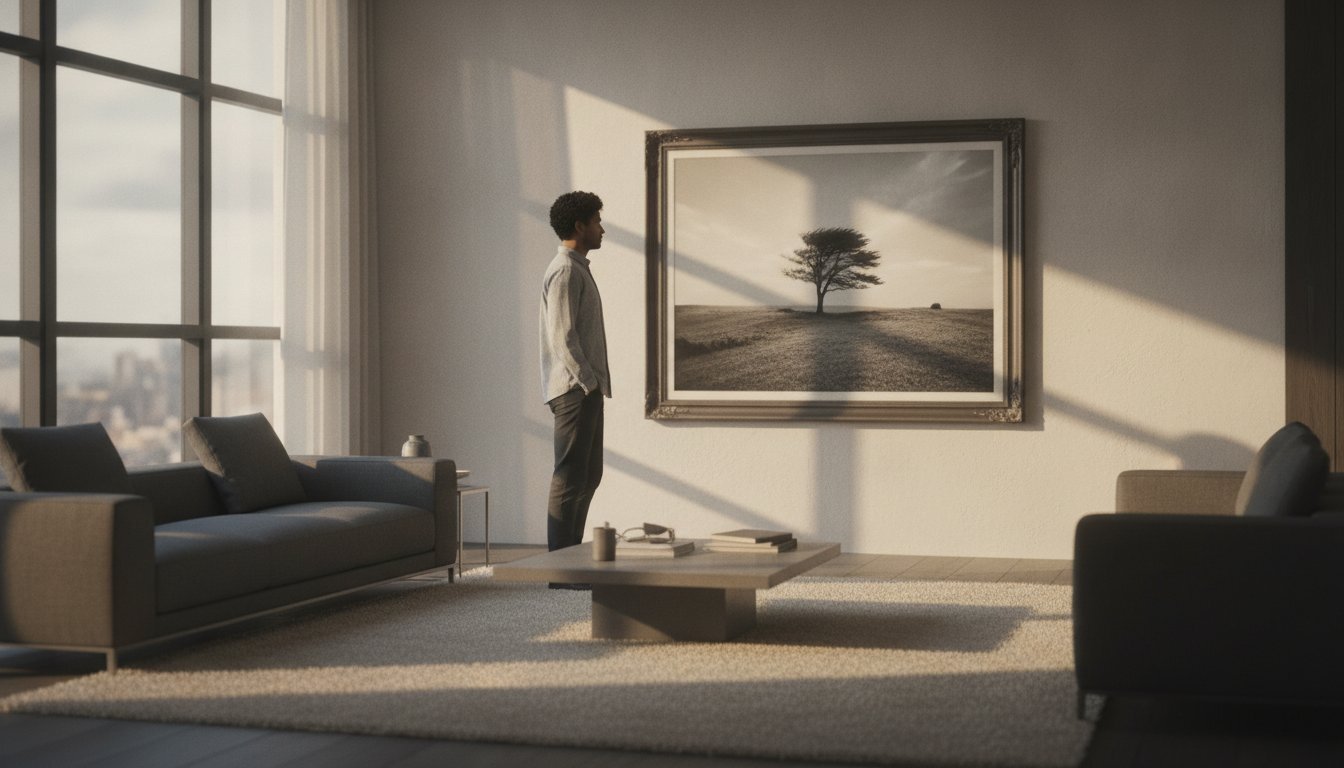
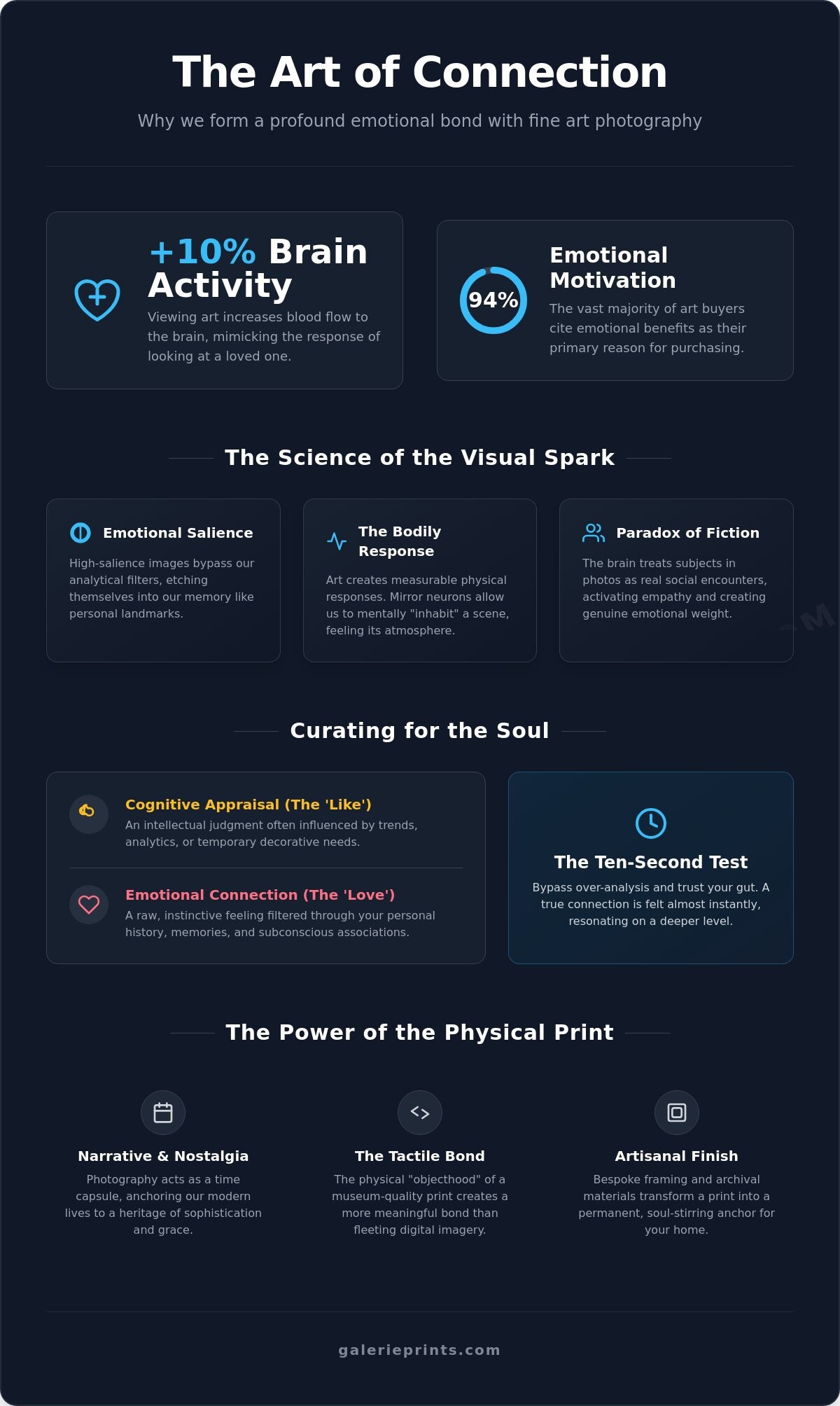
Have you ever stood before a photograph and felt a sudden, inexplicable rush of nostalgia for a place you have never even visited? Research in neuroaesthetics confirms this is not mere sentimentality; viewing art can increase blood flow to the brain by ten percent, mimicking the physiological response of looking at a loved one. It is a striking reality that ninety-four percent of art buyers cite these emotional benefits as their primary motivation, yet many collectors still find themselves in homes that feel sterile or soulless, unable to bridge the gap between a fleeting trend and a true investment.
We understand that a deep emotional connection to artwork is an embodied dialogue between your personal history and the curated narrative of the piece. You deserve a sanctuary that reflects this prestige rather than echoing the empty aesthetics of mass production. This article will guide you through the psychological, historical, and tactile factors that transform a fine art print into a profound emotional anchor for your home. We will explore how to discern lasting value from passing fads, ensuring your collection provides enduring joy while maintaining the archival integrity required to preserve these photographic legacies for generations.
Key Takeaways
- Understand the science of “Emotional Salience” to identify why certain images trigger a profound physiological response and stay anchored in your memory.
- Learn how a deep emotional connection to artwork is forged through the narrative power of photographic heritage and the evocative allure of nostalgic elegance.
- Discover why the physical “objecthood” of an archival print creates a more meaningful bond than digital imagery through the tactile warmth of museum-quality materials.
- Master the “Ten-Second Test” to bypass intellectual over-analysis and select pieces that resonate instinctively with your unique visual vocabulary.
- Appreciate how artisanal craftsmanship and bespoke framing transform a photographic print into a permanent, soul-stirring anchor for a sophisticated home.
The Science of the Visual Spark: Why Art Moves Us
An emotional connection to artwork is far more than a simple visual preference; it is a profound, “embodied” response that resonates through the entire nervous system. When you encounter a piece that truly speaks to you, the experience transcends the boundaries of the frame. Your body reacts with a sudden stillness or a quickening pulse before your mind can even begin to articulate why the image matters. This physiological dialogue is what transforms a decorative print into a permanent psychological anchor within your home.
This reaction is driven by “Emotional Salience,” a cognitive process that prioritizes certain visual information in our memory based on its perceived significance. High-salience images are etched into our consciousness because they bypass our analytical filters, making them feel like personal landmarks rather than mere objects. Scientists exploring The Science of Art and Emotion have found that these connections are often as potent as our interactions with the physical world, explaining why we return to the same images year after year for comfort or inspiration.
This neurological bridge is particularly evident in how we process human subjects. The brain often treats a photograph of a person as a real social encounter, activating the same neural pathways used for empathy and recognition. This leads to the “Paradox of Fiction,” where we experience genuine joy or grief for subjects we know are geographically or historically distant. Whether it’s a candid moment in a Terry O’Neill archive or a cinematic still, the emotional weight is real, even if the subject exists in a world far removed from our own.
The Bodily Response to Visual Harmony
Research from the Turku PET Centre has mapped how art engages the physical body, showing that visual harmony triggers specific bodily signatures. Visual “tension,” created by a daring composition or sharp contrast, can measurably alter heart rate and skin conductance. This physical resonance is amplified by “mirror neurons,” which allow us to mentally inhabit the scenes we view. When you gaze at a Slim Aarons poolside scene, your brain doesn’t just see the water; it invites you to feel the Mediterranean sun and the relaxed atmosphere of a bygone era of elegance.
Cognitive Appraisal vs. Raw Feeling
There is a vital distinction between “liking” a photograph and establishing an emotional connection to artwork that lasts a lifetime. Liking is often a result of cognitive appraisal, influenced by contemporary trends or temporary decorative needs. A true connection, however, is filtered through your personal “schema,” the unique tapestry of life history and subconscious associations that define your world. While one person might see a vintage movie poster, another sees a symbol of their own aspirations or a nostalgic anchor to their youth. An Aesthetic Experience is the seamless blend of immediate sensory input and the resonant echoes of personal memory.
Narrative and Nostalgia: The Emotional Weight of Photographic Heritage
Photography possesses a singular ability to arrest the relentless march of time, acting as a curated capsule for human sentiment. Unlike other mediums, a photograph captures a precise, unrepeatable instance, preserving the light and the mood of an era long since passed. This inherent quality is what fosters such a deep emotional connection to artwork; we aren’t merely observers, but travelers invited into a historical narrative. Nostalgia functions here as a curative tool, allowing us to find solace in the refined elegance of the mid-twentieth century. By integrating these pieces into our homes, we anchor our modern lives to a heritage of sophistication and grace.
For many collectors, the work of Slim Aarons represents the pinnacle of this evocative power. His ability to document a world of leisure and beauty offers more than a visual treat; it provides a psychological sanctuary. To understand the breadth of this influence, one might explore Slim Aarons: The Definitive Guide to the Master of Aspirational Photography, which details how his lens captured a lifestyle that remains the gold standard for interior aesthetics. These images do not merely decorate a wall, they perform as windows into a world where beauty and composure were the primary objectives.
The Guardian of Memories: Terry O’Neill and Iconic Portraits
The portraits captured by Terry O’Neill, a master of the candid moment, do not merely depict celebrities; they archive the vulnerability of icons. This intimacy creates a sense of shared history, as if the viewer was present during those quiet, unscripted moments between the flashes. There is an emotional honesty found in black and white photography that color often obscures. By stripping away the distraction of hue, the viewer is forced to confront the raw expression and textural depth of the subject. This process of Creating Meaningful Connections Through Art is essential for those seeking pieces that resonate on a level far deeper than surface-level decor. O’Neill’s work invites a certain empathy, bridging the distance between the viewer and the legendary figure on the paper.
Aspirational Photography as Emotional Anchor
Surrounding oneself with imagery of leisure and grace serves as a vital psychological escape from the frantic pace of contemporary life. A Slim Aarons print functions as an emotional anchor, inviting the viewer into a sun-drenched world of “attractive people doing attractive things.” This aspirational pull is not about envy; it is about the joy of witnessing human harmony and architectural beauty in perfect alignment. For those navigating the nuances of his legacy, our guide on Aaron Slims or Slim Aarons? A Guide to the Master of Aspirational Photography clarifies why his work remains a cornerstone of high-end collections. If you find yourself drawn to the quiet authority of these historical moments, you might consider how the Terry O’Neill photography collection could transform your own space into a gallery of narrative depth.
The Tactile Bond: How Material Quality Deepens the Connection
The “objecthood” of a physical print creates a visceral resonance that digital images simply cannot replicate. In a world saturated with fleeting pixels, a tangible piece of art serves as a permanent anchor within a room. This physical presence is foundational to the emotional connection to artwork; it transforms a visual concept into a living, breathing part of your environment. When you can see the subtle grain of the paper and the rich depth of the ink, the image ceases to be a distant representation and becomes an intimate, tactile reality that you share space with every day.
Material quality acts as a subtle but powerful signal to the brain. Museum-quality archival paper doesn’t just preserve the image; its specific texture influences the perceived “warmth” or “distance” of the photograph. A heavy, fibrous paper can make a candid portrait feel approachable and human, while a sleek, high-gloss finish might reinforce the polished distance of a high-fashion archive. The sheer scale of a large-format print further deepens this bond. By enveloping your field of vision, a significant piece demands your full attention, creating an immersive experience that temporary, smaller decorations fail to provide. These technical choices signal to the subconscious that the image is valuable, intentional, and permanent.
The Psychology of the Frame
Bespoke framing acts as a crucial threshold between the chaotic real world and the curated art world. It’s the final, authoritative touch that signals the prestige of the work within. The choice of finish carries its own emotional weight; a minimalist black frame offers a modern, window-like clarity, whereas a classic wood finish provides a sense of organic history and warmth. Galerie Prints’ commitment to artisanal craftsmanship ensures that every frame isn’t just a border, but a guardian of the piece’s historical stability. This meticulous attention to detail reinforces the feeling that you’re not just hanging a picture, but installing a legacy.
Longevity and the Legacy Connection
There is a profound emotional comfort in knowing that a piece is built to last for generations. Archival standards are often discussed in technical terms of pH levels and UV protection, but they are ultimately a commitment to future memory. Investing in high-caliber materials ensures that the vibrancy and emotional clarity of the work won’t fade with time. For those looking to build a collection that stands the test of years, our Fine Art Photography: A Curator’s Guide to Collecting and Decorating offers deeper insights into selecting pieces that maintain their soul and value. This permanence is what allows a emotional connection to artwork to evolve from a personal joy into a cherished family heritage.
Curating for the Soul: How to Choose Art That Resonates
Identifying your visual vocabulary is the first step toward a true emotional connection to artwork. It involves looking beyond what is merely “pretty” to discover the recurring themes, eras, or landscapes that offer you genuine peace. Do you gravitate toward the sun-drenched architectural symmetry of the 1960s or the gritty, intimate energy of the 1970s London music scene? By recognizing these patterns, you stop purchasing isolated items and start building a narrative that reflects your inner world. This shift from consumer to curator ensures that every piece you acquire serves as a meaningful extension of your personality.
When evaluating a new piece, employ the “Ten-Second Test.” Trust your immediate bodily response before your intellectual critique has time to intervene. As we explored regarding the physiological dialogue between viewer and image, your heart rate and skin conductance react to visual harmony almost instantly. If a photograph makes you catch your breath or feel a sudden surge of nostalgia, it has already passed the most significant hurdle. Intellectualizing a purchase often leads to safe, sterile choices that lack the long-term resonance required to anchor a room.
Consider the emotional function of the specific space you are curating. A dining room might benefit from the vibrant, social energy of a Slim Aarons poolside gathering, while a private study requires the quiet, contemplative authority of a monochromatic portrait. Balance aesthetic beauty with the historical interest of the piece to ensure it remains intellectually stimulating over time. A great photograph should be a conversation starter, both for your guests and for your own daily reflection.
Building a Cohesive Personal Archive
Creating a cohesive personal archive doesn’t require sticking to a single artist or style. You can bridge the gap between the aspirational leisure of Slim Aarons and the raw celebrity of Terry O’Neill by finding a common emotional thread, such as a shared reverence for mid-century elegance. The use of black and white pictures is particularly effective here, as it grounds a colorful room and provides a sense of timelessness that ties disparate subjects together. For a deeper look at this technique, consult The Timeless Allure of Black and White Pictures: A Collector’s Guide. Additionally, incorporating Cinema Lobby Cards adds a layer of nostalgic storytelling, turning your walls into a curated history of cultural milestones.
Avoiding the “Trend Trap”
Avoid the trap of selecting art based on “current colors” or seasonal home decor fads. This is the fundamental difference between decorating and collecting. Decorating is transient and often shallow; collecting is an act of preservation and self-discovery. When you choose a piece solely because it matches a rug or a cushion, you weaken the potential emotional connection to artwork. Instead, buy the story, not the swatch. A piece with narrative depth and historical weight will survive every renovation and move, becoming a permanent fixture of your life’s journey. If you are ready to begin your journey with a piece of true historical significance, explore The Slim Aarons Collection to find a narrative that speaks to you.
The Galerie Prints Philosophy: Preserving the Emotional Heritage
At Galerie Prints, we operate with a deep reverence for the photographic legacies we represent. We aren’t merely retailers; we are guardians of a legacy, acting as a bridge to a bygone era of elegance. Our philosophy is rooted in the belief that a true emotional connection to artwork is only possible when the image is treated with the respect its historical significance demands. We don’t just sell prints. We offer a curated passage into 20th-century heritage, ensuring that each piece functions as a lasting piece of history within your home.
Our commitment to artisanal craftsmanship serves as a seal of quality that justifies our place in the world’s most discerning interiors. We understand that the transition from a historic archive to a physical object is a meticulous journey requiring technical superiority and localized expertise. By utilizing traditional production methods and the finest museum-quality materials, we preserve the original source material’s soul. As seasoned curators, we act as your trusted guide, helping you identify the specific narratives that resonate with your personal history and your unique, aspirational lifestyle.
Beyond the Print: The Full Curatorial Experience
The presence of a piece is defined as much by its presentation as its subject matter. Our bespoke framing and mounting services are not secondary additions; they are essential components that establish the art’s physical threshold. A museum-quality production ensures that the perceived warmth and depth of the photographic grain remain vibrant for decades. This enduring emotional connection to artwork is the cornerstone of a truly sophisticated collection. Ultimately, art is not just what you see on the wall. It is the profound sense of stability and wonder you feel when you are home, surrounded by images that reflect your highest values.
Start Your Collection Today
Transforming your living space into a gallery of personal resonance begins with a single, meaningful choice. Whether you find yourself drawn to the legendary energy of our music archives, the cinematic allure of vintage film, or the sun-drenched compositions of the Slim Aarons Collection, your journey toward a more soulful home is just beginning. We invite you to explore our world of beauty and history, where every acquisition is an investment in your own emotional heritage. Explore our curated collections at Galerie Prints and find the anchor your home has been waiting for.
Cultivating a Sanctuary of Visual Resonance
Choosing art is a refined journey that begins with a visceral spark and culminates in a lifelong dialogue with your personal sanctuary. We’ve explored how the physiological impact of an image is deepened by the historical weight of its narrative and the tactile excellence of its production. By prioritizing your unique visual vocabulary over transient trends, you’re ensuring that every acquisition fosters a profound emotional connection to artwork rather than serving as mere decorative filler. Your walls should tell a story that is authentically yours.
At Galerie Prints, we act as your trusted guide to the official archives of Slim Aarons and Terry O’Neill, ensuring every image carries the prestige of its historical origins. Each piece is meticulously rendered on museum-quality archival paper and completed with expert bespoke framing for a prestigious, ready-to-hang finish. This commitment to artisanal craftsmanship ensures your collection remains a source of enduring joy and stability for generations to come.
Discover the photographic masterpiece that resonates with your story at Galerie Prints. Your home is the ultimate gallery of your life’s journey; we invite you to begin your next chapter of collecting with us today.
Frequently Asked Questions
Why do I feel an emotional connection to art that I don’t fully understand?
Your reaction is an embodied response triggered by the brain’s neuroaesthetic pathways. Research indicates that viewing significant art increases blood flow to the brain by as much as ten percent, mimicking the physiological feeling of looking at a loved one. This subconscious emotional connection to artwork often precedes intellectual understanding, as your personal life history filters the visual information before you can even begin to articulate its meaning.
Can black and white photography evoke more emotion than color?
Black and white photography often carries a greater emotional weight by stripping away the distraction of color. By focusing exclusively on tonal contrast, light, and shadow, the viewer is forced to confront the raw expression and textural depth of the subject. This creates a sense of “honest” history, particularly in archival portraits, where the absence of hue allows the underlying narrative to speak with more clarity and authority.
How does the size of a print affect its emotional impact?
The size of a print fundamentally alters its psychological presence by either inviting intimacy or commanding awe. Large-format prints serve to envelop your entire field of vision, creating an immersive experience that signals the image is both valuable and permanent. This physical scale demands your full attention, transforming a simple decorative piece into a dominant emotional anchor that defines the atmosphere of a room.
What is the “Paradox of Fiction” in art appreciation?
The “Paradox of Fiction” describes the phenomenon where we experience genuine grief or joy for subjects we know are distant or fictional. In photography, the brain often processes an image of a person as a real social encounter. This neurological bridge allows you to feel a deep empathy for a figure in a vintage archive, bridging the gap between your reality and their captured moment.
Does the frame really change how I feel about a piece of art?
The frame acts as a vital threshold between the real world and the curated space of the art. It establishes the work’s presence and signals its prestige, providing a sense of historical stability. Whether you choose a minimalist black frame or a classic wood finish, the framing informs the viewer’s perception of the piece’s “warmth” or “distance,” making it an essential component of the overall experience.
Is it better to choose art that matches my decor or my personality?
It is always better to prioritize your personal narrative over current decor trends. Decor is transient and often shallow; choosing art based on your personality creates a lasting emotional connection to artwork that will survive every move or renovation. When you buy the story rather than matching a color swatch, the piece becomes a permanent reflection of your inner world rather than a temporary accessory.
How can I tell if an artwork is a good long-term emotional investment?
A good emotional investment passes the “Ten-Second Test,” where your immediate bodily response is one of sudden stillness or nostalgia. Beyond this raw feeling, look for archival quality and historical significance. A piece printed on museum-quality paper with archival ink ensures that the visual integrity of the work remains intact for generations, allowing your personal connection to evolve into a family legacy.
Why does nostalgia play such a big role in art collecting?
Nostalgia serves as a curative tool that anchors us to a bygone era of elegance and composure. In a fast-paced digital world, collecting images from 20th-century archives offers a psychological sanctuary. These pieces provide a window into a world of leisure and grace, allowing you to curate a home environment that feels more like a sophisticated heritage than a sterile, modern space.