

What if the most effective antidote to the relentless pace of the modern world isn’t a temporary digital detox, but a deliberate return to the physical permanence of a curated wall? We often find ourselves overwhelmed by a sea of fleeting pixels and mass-produced prints that lack soul, yet the right art to create a calming atmosphere, characterized by its orderly composition and evocative depth, acts as a vital visual anchor for the spirit. It’s about more than just filling a void. It’s about inviting a profound sense of stillness into your private sanctuary through imagery that speaks of heritage and quiet elegance.
You probably feel the subtle exhaustion that comes from living in a home cluttered by the visual noise of the everyday. This guide will show you how to transform your living space into a prestigious gallery sanctuary by selecting high-end photographic art and embracing the quiet power of archival craftsmanship. We’ll explore how the intersection of nostalgic escapism and technical excellence, the very hallmarks of a serious collection, ensures your art becomes a lasting piece of history that fosters genuine mental peace.
Key Takeaways
- Understand the neurological link between aquatic “Blue Space” imagery and the parasympathetic nervous system’s ability to trigger deep relaxation.
- Discover how the aspirational leisure of Slim Aarons photography provides a psychological escape from digital noise through scenes of timeless elegance.
- Learn why black and white photography serves as a visual detox, allowing the mind to rest by focusing on light and form rather than color saturation.
- Master the “Hero Piece” strategy to select the perfect art to create a calming atmosphere without the visual clutter of traditional gallery walls.
- Recognize the critical role of archival photo paper and bespoke framing in reducing glare and preserving the serene integrity of your investment-grade art.
The Science of Stillness: How Art Influences a Calming Atmosphere
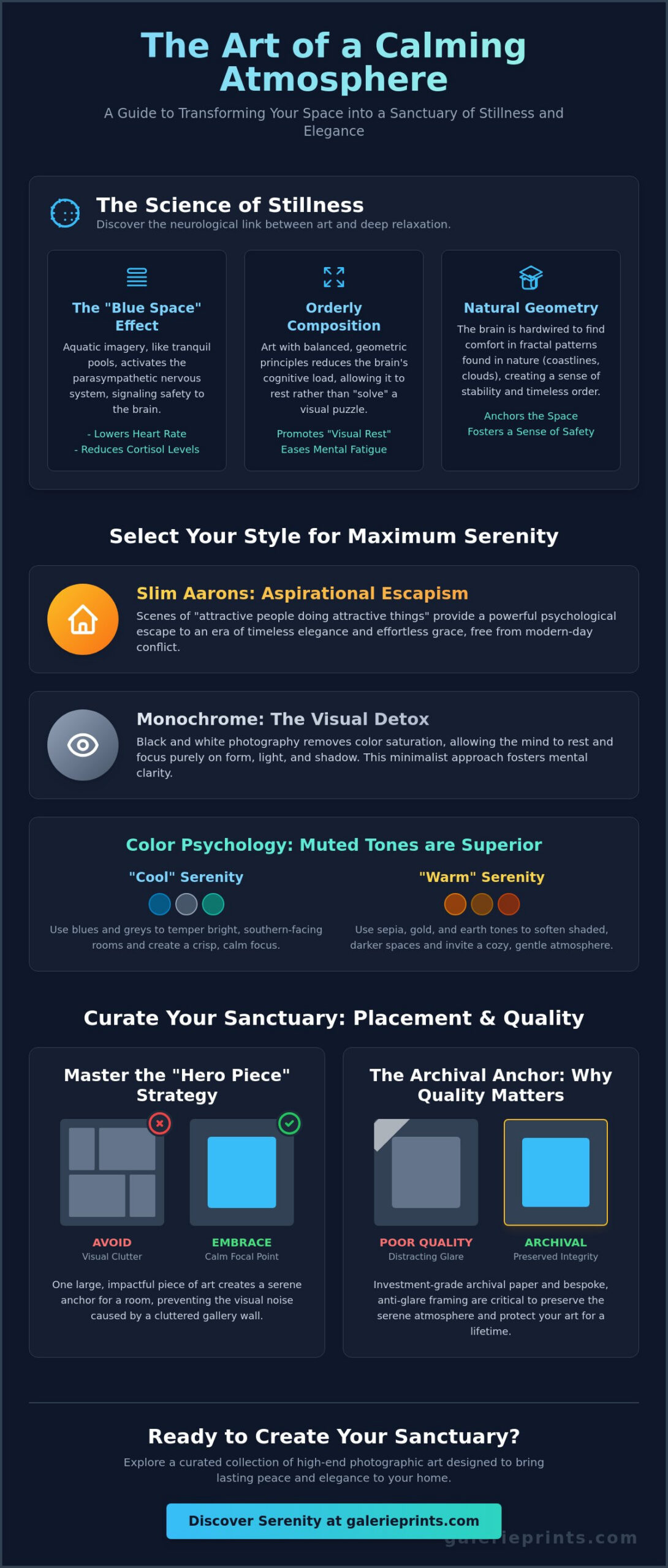
In an era defined by digital saturation and the incessant flicker of screens, our cognitive resources are often pushed to their limits. Finding the right art to create a calming atmosphere isn’t merely a decorative choice; it’s a strategic restoration of “Visual Rest.” When the eye meets a high-end photographic print, it stops scanning for information and begins to linger. This shift allows the brain to transition from a state of high alert to one of quiet contemplation, providing a much-needed reprieve from the noise of modern life.
Scientific research into the “Blue Space” effect suggests that aquatic imagery, such as the crystalline pools found in the Slim Aarons Collection, triggers a parasympathetic response. These vast, tranquil expanses of water signal safety and abundance to the primitive brain, effectively lowering heart rates and reducing cortisol levels. It’s a biological homecoming facilitated by archival craftsmanship. By placing these scenes within your home, you invite a permanent sense of shore-side serenity into your daily environment.
Orderly composition and deliberate balance serve to reduce the cognitive load placed upon the viewer. When an image follows established geometric principles, the mind doesn’t have to work to “solve” the visual puzzle. This ease of processing is a cornerstone of The Science of Art Therapy, which explores how structured visual stimuli can improve emotional well-being. Biophilic design, when expressed through fine art photography, bridges the gap between the built environment and the restorative power of the natural world, turning a simple wall into a window for the soul.
Color Psychology Beyond the Basics
Muted pastels and desaturated tones are inherently superior to high-contrast palettes for those seeking true relaxation. Vibrant, clashing colors demand immediate attention, whereas the soft earth tones found in vintage photography or the gentle hues of a Mediterranean coast invite the viewer to exhale. Depending on your room’s natural light, you might choose “Cool” serenity through blues and greys to temper a bright, southern-facing office, or “Warm” serenity using sepia and gold to soften a shaded library.
Fractal Patterns and Natural Geometry
The human brain is evolutionarily hardwired to recognize and find comfort in fractal patterns, the repeating geometries found in coastlines, clouds, and even classical architecture. Landscapes that feel “orderly” provide a sense of predictability and safety. Minimalist compositions, which strip away the unnecessary, reflect a desire for mental clarity. By choosing art that mirrors these natural geometries, you create a space that feels inherently stable and permanent, anchoring your home in a sense of timeless order.
The Luxury of Leisure: Slim Aarons and the Art of Aspirational Escapism
The unique “Leisure” aesthetic of Slim Aarons is far more than a historical archive; it’s a meticulously curated vision of a golden era. Aarons famously spent his career capturing “attractive people doing attractive things in attractive places,” a philosophy that translates into a powerful form of aspirational escapism. Unlike the raw, unpredictable nature of traditional landscapes, these images present a world that’s perfectly composed, sun-drenched, and entirely without conflict. This specific brand of visual storytelling provides a positive psychological escape, allowing the viewer to momentarily inhabit a space of effortless grace and social harmony.
Engaging with these scenes does more than decorate a room. A World Health Organization report on arts and health has highlighted how consistent engagement with art can reduce stress and improve mental health outcomes. Within the domestic sphere, a well-chosen piece from the Slim Aarons Collection serves as a primary anchor for tranquility. The iconic “Poolside” motif stands as a pinnacle of art to create a calming atmosphere, utilizing the orderly, bright, and airy compositions that define the Aarons archive to soothe the modern mind.
The Orderly Beauty of the Mediterranean and Palm Springs
The architectural lines of mid-century modernism, frequently featured in Aarons’ work, promote a sense of structural calm. These clean, horizontal planes mirror the stability we crave in our private sanctuaries. The deliberate use of turquoise and azure, colors synonymous with the infinite horizon and the refreshing depth of a pool, acts as a dominant, soothing anchor for any room. These images don’t just hang on a wall. They function as a “permanent holiday,” offering a window into a world where the sun never sets and the water is always still.
Social Serenity vs. Solitary Calm
While many seek peace in solitary landscapes, there’s a unique benefit to “peopled” environments that evoke feelings of belonging and joy. Aarons’ subjects are often seen in states of relaxed interaction, which can foster a sense of social serenity and connection. The nostalgic fashion and mid-century settings provide a comforting buffer from the frantic pace of the 21st century. By curating a space with these high-caliber works, you create an environment that feels both sophisticated and profoundly relaxed, bridging the gap between historical prestige and modern wellness.
Monochrome Mastery: Why Black and White Photography Soothes the Mind
While the previous exploration of aquatic blues highlighted the biological pull of nature, there’s a distinct, distilled power in the absence of color. Choosing monochrome works as your primary art to create a calming atmosphere offers a sophisticated visual detox for the modern home. By stripping away the sensory demands of a full color spectrum, black and white photography allows the viewer to engage with the core elements of a composition: the interplay of light, the richness of texture, and the strength of form. This reduction in visual complexity creates a space where the mind can finally rest.
There’s a reason why collectors gravitate toward the timeless allure of black and white pictures. These works don’t compete for attention; they command it with a quiet authority. This phenomenon is supported by scientific evidence of how we respond to the arts, which indicates that viewing well-structured imagery can actively lower cortisol levels and induce a state of “flow.” In an eclectic room filled with diverse furniture and fabrics, a large monochrome print acts as a vital visual anchor, bringing a sense of cohesive order to an otherwise busy environment.
The masters of this medium, such as those found in our Terry O’Neill Photography archives, understood that what’s left out is just as important as what’s included. Whether it’s the stark, elegant lines of a Herb Ritts portrait or the candid poise of a 1960s icon, these images provide a sense of stability. They aren’t fleeting snapshots; they’re enduring legacies that foster a profound sense of peace through their sheer permanence. They offer a window into a world of refined stillness that remains untouched by the frantic pace of the present.
Reducing Visual Noise with Minimalism
The “less is more” philosophy is central to creating a domestic sanctuary. High-key lighting, often used in archival portraiture, floods a scene with light, creating an immediate sense of openness and air. This technique, combined with a generous use of negative space, gives the eye a “place to land.” When a composition isn’t crowded, your brain isn’t forced to work to categorize every detail. This simplicity is the ultimate luxury in a world that’s often too loud, providing a silent invitation to simply be.
The Emotional Stability of Heritage
Iconic, historical images provide a sense of cultural permanence that modern snapshots cannot replicate. In a rapidly changing world, the “timelessness” of a classic black and white print offers a comforting psychological buffer. Selecting portraits that evoke a sense of quiet confidence and poise can influence the mood of the entire room. These images serve as silent companions, reminding us of a bygone era of elegance and providing a steady, calming presence that anchors your home in a sense of history and grace.
Curating Your Sanctuary: Placement and Scale for Maximum Peace
The curation of a serene home requires more than just selecting beautiful imagery; it demands a sophisticated understanding of scale and spatial integrity. While the temptation to create a dense gallery wall is often strong, true visual serenity is usually achieved through the “Hero Piece” strategy. Investing in a single, large-scale print serves as a definitive anchor for a room, whereas a cluttered arrangement of smaller works can inadvertently introduce visual friction. Choosing a significant work of art to create a calming atmosphere allows the eye to settle on one harmonious focal point, immediately lowering the room’s “volume.”
Spatial breathing room is equally vital. Allowing a generous amount of wall space to remain unoccupied around your chosen piece reinforces its importance and prevents a sense of enclosure. This deliberate use of negative space on the wall mirrors the minimalism within the art itself, providing a physical manifestation of the stillness you seek to cultivate. Lighting also plays a decisive role. A high-quality photographic print will react differently to the soft glow of a dusk lamp than it does to the direct brilliance of the morning sun, shifting its emotional weight as the hours pass.
Bedroom Art: The Final Frontier of Relaxation
The sleeping area is a sanctuary where visual input should be strictly curated to support sleep hygiene. Soft horizons and low-contrast images are essential here, as they don’t demand active cognitive engagement. Avoiding “aggressive” subjects or frantic compositions is paramount. Instead, look toward the tranquil expanses found in fine art photography that emphasizes atmospheric depth and gentle transitions. A well-placed landscape above the headboard can act as a nightly invitation to disconnect from the digital world and transition into a state of rest.
The Home Office: Calm Meets Focus
In the workspace, art must balance tranquility with intellectual clarity. Utilizing “Deep Perspective” images, such as long, winding roads or distant mountain ranges, can physically reduce eye strain by allowing the gaze to travel into the distance. These works act as a “Micro-Break” during a demanding day, providing a moment of mental expansion. By selecting imagery that inspires quiet productivity rather than frantic energy, you transform your office into a space of measured focus. To ensure your chosen piece is displayed with the prestige it deserves, explore our bespoke framing service to perfectly match your interior’s architectural profile.
The Archival Anchor: Why Quality and Framing Define the Atmosphere
True visual serenity is rarely achieved through the image alone; it requires a physical vessel that honors the stillness of the subject. When selecting art to create a calming atmosphere, the material quality of the print becomes an essential component of the sensory experience. High-end archival photo paper offers a sophisticated, tactile depth that standard commercial prints simply cannot replicate. These heavy-weight, fiber-based papers are designed to absorb light rather than bounce it back. This technical detail eliminates the harsh glare that often plagues lower-quality, glossy reproductions, preventing the visual agitation that disrupts a room’s harmony.
Investing in archival permanence, where vibrancy is preserved for 75 years or more, provides a subconscious sense of security. There’s a profound psychological comfort in knowing that the beauty on your wall is not fleeting. It’s a lasting piece of history that remains unchanged while the world outside continues its frantic pace. This stability anchors the home, transforming a decorative choice into a legacy of stillness that persists for generations.
The Role of Bespoke Framing in Visual Harmony
Bespoke framing acts as the architectural skeleton of your mental sanctuary. It bridges the photograph’s narrative with your home’s physical textures, such as natural wood grains or soft linens. The “Shadow Box” effect adds three-dimensional depth and prestige by setting the work back from the glass. Professional mounting ensures the print remains perfectly flat, eliminating the wavy distractions and ripples common in mass-produced frames.
Museum-Grade Materials as a Seal of Quality
Museum-grade materials ensure every nuance of shadow and light is preserved with absolute clarity. Unlike standard prints, pigment-based archival versions offer a tonal richness that brings the image to life. Non-reflective glass is a non-negotiable for those seeking the perfect art to create a calming atmosphere. It removes reflections, allowing the eye to enter the scene without the barrier of domestic clutter. We invite you to explore the bespoke framing services at Galerie Prints to preserve your collection with artisanal excellence.
Cultivating Your Private Gallery Sanctuary
Transforming your living space into a haven of tranquility is a deliberate act of curation. By moving beyond the flicker of digital screens and embracing the physical permanence of the Slim Aarons and Getty Images archives, you create a home that resonates with quiet authority. We’ve explored how the intersection of orderly composition, nostalgic escapism, and the tactile depth of archival paper provides the essential visual rest needed in a chaotic world. Selecting the right art to create a calming atmosphere is not merely an aesthetic choice; it’s a commitment to your long-term mental well-being.
At Galerie Prints, we honor this commitment through our bespoke, museum-grade framing, which is handcrafted in the UK to provide an architectural anchor for your collection. Our prints are lab-tested to remain vibrant for over 75 years, ensuring your investment becomes a lasting piece of history. We invite you to explore our curated collections of calming fine art photography and begin your journey toward a more serene domestic life. Your sanctuary is waiting to be realized.
Frequently Asked Questions
What colors are most effective in art to create a calming atmosphere?
Muted palettes featuring sage greens, soft azures, and warm sepias are most effective for fostering tranquility. These desaturated tones don’t demand immediate cognitive processing, which allows the nervous system to remain in a state of rest. When selecting art to create a calming atmosphere, avoiding high-chroma pigments like neon or aggressive reds is vital. Instead, look for hues that mirror the soft transitions found in the natural world.
Can black and white photography be as relaxing as color landscapes?
Monochrome imagery is profoundly relaxing because it eliminates the sensory complexity of a full color spectrum. By stripping away color, the eye focuses on the rhythmic interplay of light and shadow. This reduction in visual noise acts as a detox for the mind. It allows you to appreciate the architectural form and tactile texture of a subject without the frantic energy of vibrant tones.
How large should a calming art piece be for a standard living room?
A calming art piece should be substantial enough to anchor the room, typically occupying two-thirds to three-quarters of the wall space above a sofa or sideboard. Small, scattered prints can create a sense of visual clutter that increases anxiety. A large-scale work provides a singular, expansive window for the gaze to settle. This sense of scale fosters a feeling of openness and grandeur within the domestic sanctuary.
Why is archival quality important for a peaceful home environment?
Archival quality ensures that the visual integrity of your investment remains stable for decades, which fosters a subconscious sense of security. Cheap prints often fade or yellow, creating a subtle feeling of decay that disrupts a peaceful environment. Using acid-free materials and pigment-based inks guarantees that the work stays vibrant for over 75 years. This permanence anchors your home in a sense of lasting history and stability.
What is the best subject matter for art in a high-stress home office?
Deep perspective imagery, such as distant horizons or winding paths, is ideal for high-stress workspaces. These compositions encourage the eye to “travel” into the distance, which physically relaxes the ocular muscles and reduces strain from screen use. Such subjects provide a necessary mental escape. They invite a sense of expansive possibility and quiet productivity rather than the claustrophobia of a busy, detail-heavy composition.
How does framing affect the calming potential of a photograph?
Professional framing acts as an architectural boundary that separates the art from the chaos of the everyday world. Using museum-grade, non-reflective glass is essential to eliminate distracting glare and reflections. A well-chosen frame finish, such as natural oak or a matte black shadow box, complements the room’s textiles. This harmony ensures the photograph remains a serene focal point rather than a source of visual friction.
Is it better to have one large print or a gallery wall for a zen space?
One large, high-caliber print is significantly better for creating a zen space than a traditional gallery wall. Multiple frames create a “puzzle” that the brain must constantly work to organize. A singular hero piece provides an immediate destination for the eye, lowering the cognitive load. This simplicity is the ultimate luxury, allowing the viewer to engage deeply with one narrative rather than scanning many.
What is biophilic art and how does it reduce stress?
Biophilic art incorporates natural patterns and fractals, such as the repeating geometry of clouds or shorelines, to lower stress levels. Humans are evolutionarily hardwired to find safety in these organic forms. This type of art to create a calming atmosphere triggers a parasympathetic response, effectively reducing cortisol. By bringing the outside world into the home through fine art photography, you bridge the gap between modern living and natural restoration.