
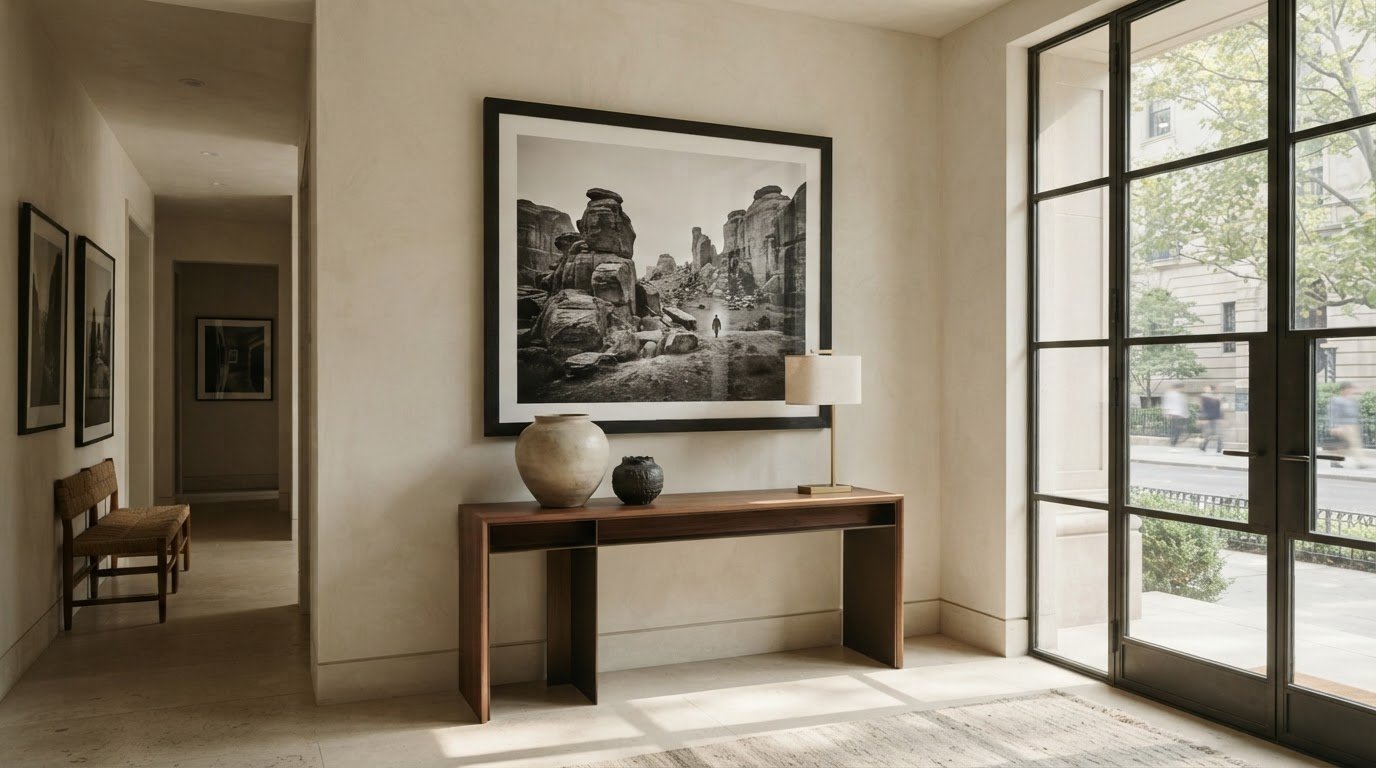
Your entryway isn’t just a hallway; it’s the visual prologue to your life, establishing your home’s narrative authority in the first seven seconds a guest crosses the threshold. Most homeowners settle for mass-produced decor that feels transient, yet they crave a space that resonates with the quiet prestige of a curated gallery. Finding the definitive statement art piece for entryway walls often feels like a choice between the generic and the unattainable. You understand that this first impression shouldn’t just fill a void; it should anchor the room with historical significance and a sense of permanence.
In this guide, you’ll discover how to transform your foyer into a sophisticated arrival experience using high-end photographic heritage and iconic archives. We’ll explore the technical nuances of selecting investment-grade works, from the sun-drenched society of Slim Aarons to the cinematic intensity of Terry O’Neill. You’ll learn the precise museum standards for hanging and lighting these large-scale works, ensuring your chosen piece commands the “wow-factor” it deserves. We also detail our bespoke, ready-to-hang process that utilizes conservation-grade materials to preserve these lasting pieces of history for generations.
Key Takeaways
- Master the art of the “visual prologue” by choosing imagery that establishes your home’s narrative authority the moment guests arrive.
- Apply the curator’s 60/40 rule to select a statement art piece for entryway walls that perfectly balances scale with your existing architecture.
- Implement the 57-60 inch hanging standard used by world-class galleries to ensure your artwork sits at the most engaging, ergonomic eye-level.
- Learn why museum-grade bespoke framing is essential for protecting your investment against the unique light and humidity challenges of a foyer.
- Discover how iconic archives, such as the Slim Aarons Collection, provide a sense of cultural heritage that mass-produced decor can’t replicate.
The Visual Prologue: Why an Entryway Statement Piece Matters
Within the first seven to ten seconds of entering a residence, a guest has already subconsciously cataloged the aesthetic authority and emotional resonance of the entire home. This initial encounter is what curators call the “visual prologue.” It’s the primary visual anchor that links the transition from the exterior world to the private sanctuary within. Choosing a definitive statement art piece for entryway walls is a deliberate act of storytelling, moving past the mundane utility of furniture to establish a narrative that lingers long after the door has closed.
Most retail advice suggests choosing art that complements a rug or a console table, yet this approach reduces art to mere accessory. A true statement piece functions as a cultural anchor. When you select a work from the Slim Aarons Collection or the Terry O’Neill archives, you aren’t just decorating; you’re signaling a reverence for historical significance. Iconic photography carries a weight of authenticity that mass-produced prints simply cannot match. It suggests a household that is cultured, discerning, and deeply connected to the heritage of the twentieth century’s most evocative moments, positioning the owner as a guardian of photographic history rather than a consumer of temporary trends.
Setting the Aesthetic Tone
Bridging the gap between exterior architecture and interior life requires a work of significant presence. A large-scale photographic work acts as a transition point, grounding the space and providing a sense of permanence. By installing a singular, monumental piece, you often eliminate the need for excessive foyer furniture, allowing the hallway to breathe with gallery-like clarity. In these high-traffic transition spaces, monochrome works from our Music Archives provide a timeless stability, while saturated color prints can inject a sense of sun-drenched escapism that defines the mood for the rest of the house.
The Conversation Starter
Imagery from the Terry O’Neill Photography collection or our Cinema Lobby Cards provides an immediate point of human connection. These are pieces guests recognize and gravitate toward, sparking dialogue before a single word is exchanged in the living room. Aspirational photography creates a sense of wonder, inviting the viewer into a world of elegance and historical charm. A true statement art piece for entryway displays is defined as a seamless fusion of monumental scale, an evocative subject, and a narrative story that commands immediate attention while retaining its cultural value over time.
Choosing Your Narrative: Iconic Archives vs. Contemporary Prints
Selecting the right narrative for your foyer is a deeply personal endeavor. It isn’t merely about matching a color palette to your walls; it’s about choosing the era and energy you want guests to inhabit the moment they arrive. While contemporary graphics often feel fleeting or trend-dependent, archival photography offers a sense of permanence and cultural weight. The choice between vibrant color and stark monochrome defines the frequency at which your home communicates its identity.
The Timeless Appeal of Slim Aarons
Slim Aarons famously documented “attractive people doing attractive things in attractive places,” creating a body of work that serves as the ultimate visual anchor for a residence. His work brings a saturated, sun-drenched vibrancy to entryways that might otherwise feel dim or uninspired. These prints act as windows into a mid-century jet-set lifestyle, offering a refreshing sense of escapism every time you walk through the door. Whether your home features modern minimalism or mid-century textures, Slim Aarons captures a world of effortless elegance that remains eternally aspirational.
Black and White Authority
For the collector seeking a more measured, worldly atmosphere, monochrome photography remains the gold standard. Black and white pictures provide a “quiet authority” that commands respect through contrast and composition. The Terry O’Neill Photography collection, characterized by intimate and candid celebrity captures, turns a simple transition space into a gallery of iconic faces. These works are incredibly versatile, anchoring homes with bold wall colors or complex architectural details without competing for attention. A monochrome statement art piece for entryway displays establishes a sophisticated focal point that transcends seasonal decor.
Beyond traditional portraits, our Cinema Lobby Cards and Star Wars Limited Edition Prints offer a playful yet prestigious alternative for those who view the entryway as a space for nostalgia. These pieces ground the home in the cultural milestones of cinema history, proving that a statement art piece for entryway walls can be both a significant investment and a personal reflection of one’s passions. You might find your perfect narrative anchor within our curated Music Archives, where the legends of sound are preserved in museum-quality detail.

Scale, Proportion, and Placement: The Curator’s Framework
Achieving a gallery-level entrance requires more than selecting a beautiful image; it demands precise architectural harmony. A statement art piece for entryway walls should never feel like an afterthought or a filler for empty space. Instead, it must be scaled to the volume of the room, adhering to the professional curator’s framework of proportion and placement to ensure the work commands the space with quiet authority.
The foundational guideline for a singular work is the 60/40 rule. Your artwork should ideally occupy between 60% and 75% of the available wall width to anchor the room effectively. For an uninterrupted wall, the museum standard places the vertical center of the piece at 57 to 60 inches from the floor. This ergonomic height ensures the viewer’s eye lands naturally on the most compelling elements of the composition, regardless of the ceiling height.
In narrow hallways, large-scale works can surprisingly expand the visual field rather than overwhelm it. The key lies in managing the “breathing room” around the frame. Lighting remains equally critical, especially in entryways prone to harsh natural light from open doors. Utilizing museum-grade glass, which reduces reflections to under 1% and blocks 99% of UV rays, ensures that the clarity of the photographic emulsion is never compromised by environmental glare or environmental shifts.
Determining the Right Dimensions
Begin by measuring the total width of your focal wall and subtracting 12 to 24 inches to create a necessary visual border. This negative space prevents the art from feeling cramped. If you are hanging the work above a console table, the frame’s width should measure roughly two-thirds to three-quarters of the furniture’s width. A vertical gap of 6 to 8 inches between the tabletop and the bottom of the frame is ideal to anchor the composition. Before finalizing your acquisition, use masking tape to outline the proposed dimensions on your wall to visualize the physical impact.
The Multi-Piece Entryway
While a single massive print offers a singular punch, longer corridors often benefit from a curated pair or a rhythmic series. Using fine art photography to create a mini-gallery allows you to build a more complex narrative as guests move through the space. When opting for multiple pieces, maintain a consistent narrative through shared framing styles or a unified color story. This ensures the collection feels like a deliberate, professional installation rather than a fragmented assortment of decor.
The Role of Bespoke Framing in Defining “Statement Art”
A true statement art piece for entryway walls isn’t defined by the image alone; it’s the culmination of the print and its presentation. In the world of high-end curation, the frame accounts for roughly 50% of the artwork’s visual impact. It acts as the bridge between the photographic heritage of the piece and the architectural soul of your home. Without a gallery-grade housing, even the most iconic Slim Aarons print can lose its authority, appearing transient rather than permanent.
Entryways are notoriously volatile environments. They’re the primary transition zones where your collection faces rapid shifts in humidity, drafts, and direct sunlight from frequent door openings. Archival integrity isn’t just a buzzword; it’s a necessity for protecting your investment. High-quality bespoke framing ensures that your statement art piece for entryway displays remains a lasting piece of history, shielded from the environmental stressors that typically cause paper rippling or photochemical fading over time.
Museum-Quality Materials
Standard framing glass reflects roughly 8% of ambient light, often turning a beautiful photograph into a mirror in a bright foyer. We utilize museum-grade glazing that reduces reflections to less than 1%, providing an optical clarity that appears virtually invisible. This is paired with acid-free, 100% cotton rag matting to prevent the yellowing and embrittlement often seen in mass-market products. The tactile weight of the premium paper and the hand-finished texture of the wood create a sensory experience that signals quality before a guest even gets close to the work.
Choosing the Frame Style
The choice of finish should echo your home’s existing trim while respecting the era of the photography. Minimalist black or white frames offer a sharp, contemporary edge for music archives or mid-century jet-set scenes. Conversely, more classic or deep-set profiles add a sculptural element to the wall, perfect for our vintage lobby cards or Terry O’Neill portraits. This depth creates shadows and presence, ensuring the art doesn’t just sit on the wall but inhabits it.
Every work we produce arrives with professional-grade mounting and hardware, offering a “ready-to-hang” luxury that removes the uncertainty of installation. This seamless process ensures that your acquisition is as effortless as it is beautiful. To begin curating your foyer with a professional touch, explore our bespoke framing service and discover the difference of artisanal craftsmanship.
Curating Your Entrance with Galerie Prints
At Galerie Prints, we operate as more than a gallery; we are the guardians of a photographic heritage that spans decades of cultural significance. We serve as the definitive bridge between world-renowned archives and the private walls of your home. Selecting a statement art piece for entryway placement is a significant investment in your home’s narrative authority. Our curated collections, ranging from the sun-drenched society of the Slim Aarons Collection to the raw, monochromatic energy of our Music Archives, ensure that your first impression is anchored in historical authenticity rather than fleeting trends.
Our commitment to artisanal craftsmanship defines every work we release. Founded by artist and curator Stuart Möller, Galerie Prints prioritizes a sophisticated acquisition process that mirrors the prestige of the images themselves. We utilize localized, expert production to maintain the highest technical standards, ensuring that each large-format work possesses the material quality required to command a luxury foyer. We don’t deal in mass reproductions; we provide investment-grade art that retains its cultural and aesthetic value for a lifetime.
From Archive to Entryway
The journey of your chosen piece begins deep within the Getty Images and Slim Aarons archives. We source from original negatives to produce traditional C-type prints on Fuji Crystal Archive paper or darkroom-processed silver gelatin prints. These methods offer a colorfast, archival durability of 75 to 100+ years, far surpassing the lifespan of standard commercial prints. Each work is authenticated with an official embossed archive stamp and accompanied by a Certificate of Authenticity. This meticulous process transforms a photograph into a lasting piece of history, ready to withstand the environmental demands of a high-traffic entrance hall.
Start Your Entryway Transformation
Finding the perfect statement art piece for entryway walls is a journey of discovery. You can browse our collections by theme, artist, or specific color palette to find the work that resonates with your architectural style. For those with high-ceiling foyers or unique spatial requirements, our team provides personalized curation advice to help you navigate scale and framing choices. We understand that a premier destination for serious collectors must offer both intellectual stimulation and practical support. Explore our curated collections and find your statement piece today.
Elevating Your Arrival Experience
Transforming your foyer into a visual prologue requires more than just filling a wall; it’s about the deliberate marriage of scale, historical narrative, and material excellence. By adhering to the curator’s 60/40 rule and ensuring your artwork is hung at a precise gallery height, you create a space that feels both intentional and authoritative. A definitive statement art piece for entryway walls doesn’t merely decorate. It establishes a sense of permanence and cultural depth that resonates with every visitor who crosses your threshold.
At Galerie Prints, we believe your home deserves the same level of curation as a world-class gallery. Our collection offers museum-quality archival prints sourced from original negatives, paired with bespoke framing as standard to ensure your investment is protected for generations. With our secure global shipping for large-scale art, acquiring a masterpiece is a seamless and refined experience. Whether you’re drawn to the sun-soaked elegance of the jet-set era or the raw energy of music history, your perfect focal point is waiting to be discovered. Browse the Slim Aarons Collection for your entryway and begin the journey of defining your home’s story today.
Frequently Asked Questions
What is considered a “statement piece” of art for an entryway?
A statement piece is a work of significant scale and cultural weight that immediately anchors the room’s narrative. It isn’t merely decor; it’s a conversation starter that establishes the home’s aesthetic authority. For a definitive statement art piece for entryway walls, we recommend iconic photography from the Slim Aarons Collection or Terry O’Neill archives. These works combine monumental presence with a sense of historical permanence that mass-produced prints simply cannot replicate.
How large should art be for a two-story entryway?
Two-story foyers require monumental scale to avoid looking swallowed by the architecture. You should aim for a piece that occupies roughly 60% to 75% of the available wall width. In these high-volume spaces, vertical orientation often works best to draw the eye upward. Large-format framed works from our archives provide the necessary visual weight to balance high ceilings, ensuring the art feels like a deliberate architectural choice rather than a small afterthought.
Should entryway art be colorful or black and white?
The choice depends on the emotional tone you wish to set. Vibrant color prints, such as those in the Slim Aarons Collection, inject a sense of sun-drenched escapism and energy into the home. Conversely, black and white photography offers a quiet authority and timeless sophistication. Monochrome works are exceptionally versatile, anchoring spaces with bold wall colors or complex architectural details without competing for attention. Both styles effectively establish a cultured, discerning atmosphere.
How do I protect my fine art photography from sunlight in a foyer?
Protecting your investment in a high-traffic foyer requires museum-grade glazing. Standard glass reflects roughly 8% of light and offers minimal protection. We utilize specialized gallery glass that blocks 99% of harmful UV rays and reduces reflections to under 1%. This ensures your statement art piece for entryway displays remains vibrant and free from photochemical fading, even when exposed to the frequent light fluctuations common in transition spaces near exterior doors.
Can I use multiple smaller pieces instead of one large statement piece?
While a single massive print offers a singular punch, a curated pair or a rhythmic series can be equally effective in longer corridors. Using multiple works allows you to build a more complex narrative as guests move through the space. To maintain a sophisticated look, keep the framing styles or color stories consistent across all pieces. This ensures the collection feels like a professional, deliberate installation rather than a fragmented assortment of smaller, unrelated items.
What is the best height to hang a statement art piece in a hallway?
We follow the museum standard of hanging art so the vertical center of the piece sits 57 to 60 inches from the floor. This ergonomic height ensures the viewer’s eye lands naturally on the composition’s most compelling elements. If you’re hanging the work above a console table, maintain a gap of 6 to 8 inches between the tabletop and the frame’s bottom. This spacing anchors the piece to the furniture while maintaining gallery-level clarity.
Why is bespoke framing important for large-format photography?
Bespoke framing accounts for roughly half of the artwork’s visual impact and is essential for structural stability. Large-format works require precision mounting to prevent paper rippling over time, especially in volatile entryway environments. Our in-house service uses museum-quality materials and acid-free matting to preserve the photographic emulsion. This process transforms a high-quality print into a gallery-grade installation that arrives ready-to-hang, removing the logistical uncertainty of finding a third-party framer for oversized works.
How does shipping work for large, framed statement pieces?
We provide secure global shipping for all our large-format framed works, utilizing specialized, impact-resistant packaging to ensure safe transit. Each piece is handled with the care befitting a fine art acquisition, from our London-based production facility to your doorstep. We manage the logistics of oversized items so you can focus on the curation of your space. This professional support ensures your investment arrives in pristine condition, ready to transform your home’s first impression.